

Wrexham
Formed
1864. Wound up in 1883.
Reconstituted one month later.
Founder member of Division Three (North). Relegated to the National Conference 2008.
Kit History
Wrexham
1864-1883
Club wound up 1883
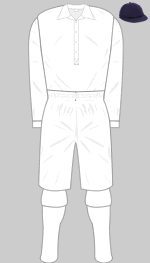
October 1873 o p
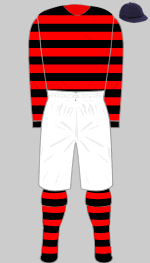
Oct 1876-1878 a p A
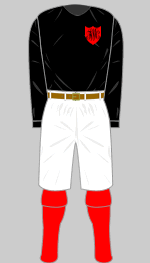
1879-1880 v A
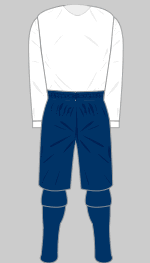
1882-1883 a
Re-formed as Wrexham Olympic
1883
Renamed Wrexham 1886

1883-1888
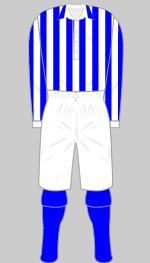
1888-1889 a
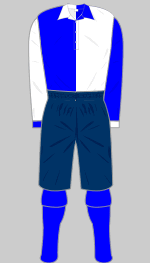
Feb 1890-1891 p A
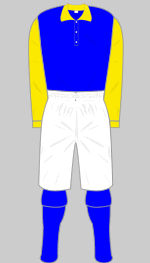
1892-1893 a s
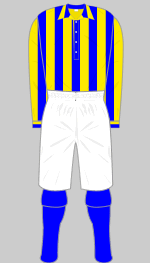
1893-1894 u
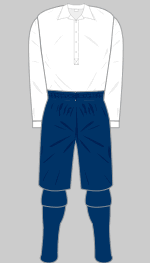
1894-1895 t
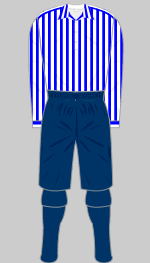
1896-1897 a
1897-1900 a
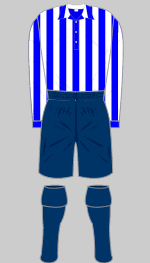
1900-1901 a
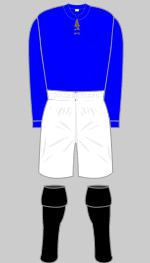
1902-1904 a p
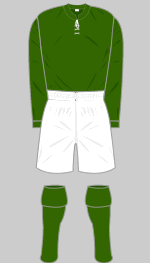
1904-1908 a
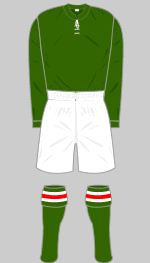
1908-1911 a
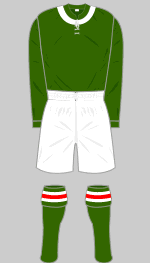
1914-1915 a
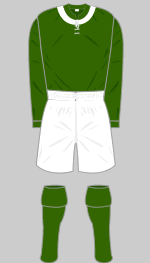
1919-1921 a
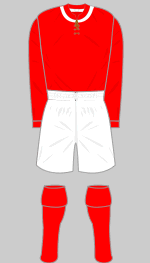
1921-1925 a q w
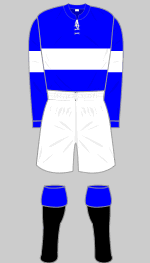
1925-1926 a p x
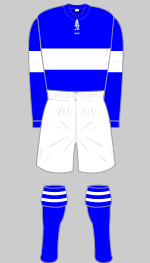
1927-1928 a
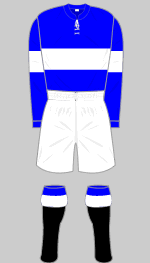
1928-1930 a
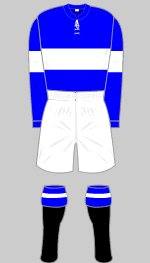
1930-1931 a
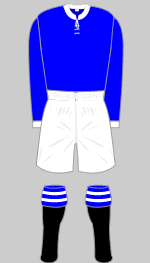
1932-1933 a
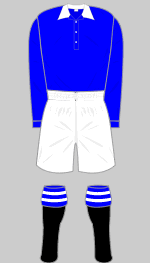
1933-1934 a
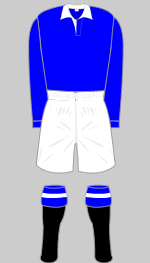
1934-1937 a
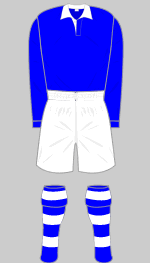
1937-1939 a
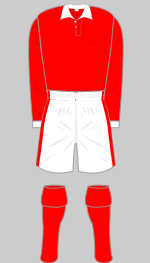
1939-1940 a
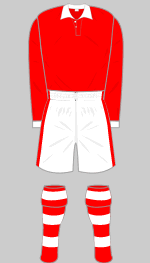
Oct 1939-1948 a
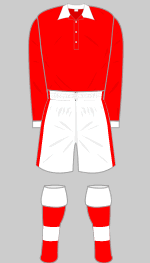
1948-1950 a
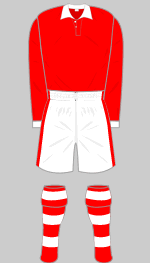
1951-1956 b
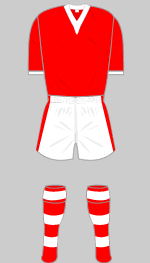
1956-1959 b y
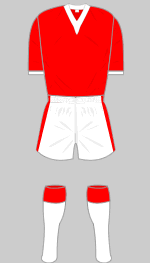
1959-1960 b j

1960-1961 b
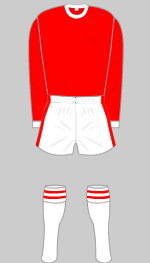
1961-1963 b j
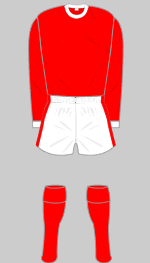
1964-1965 b
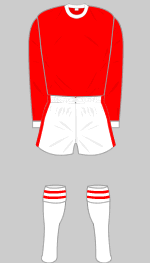
1965-1966 b
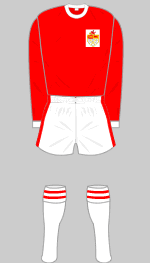
1967-1970 b

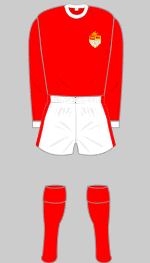
1970-1972 b
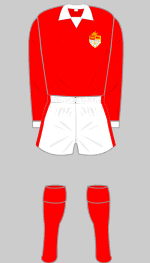
1972-1974 b f g
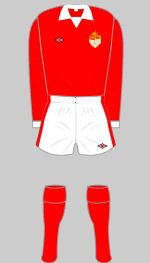
1974-1975 j
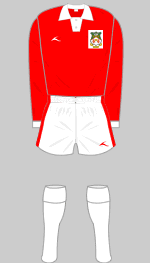
1975-1976 b j
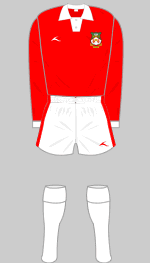
1976-1977 j
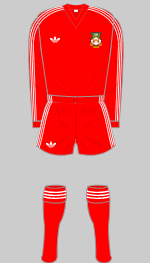
1976-1977 Euro
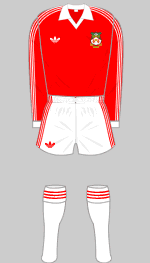
1977-1978 b g j
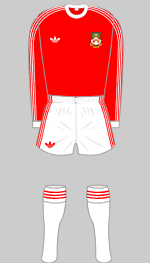
1978-1980 b
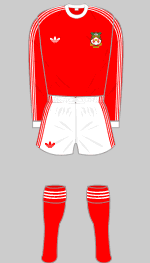
1980-1981 e
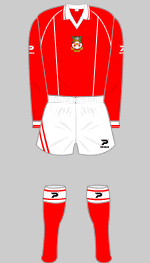
1981-1984 b
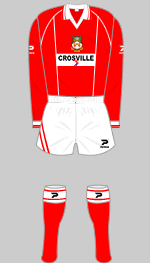
1984-1985 b n
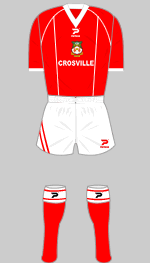
1984-1985 ECWC z
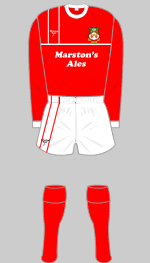
1985-1987 b h
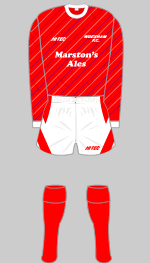
1987-1988 e m
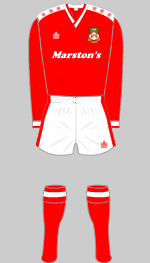
1988-1989 b
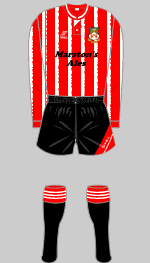
1989-1990 e
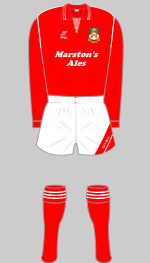
1990-1991 b
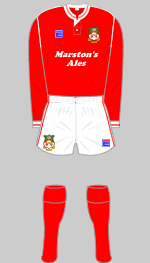
1991-1992 b
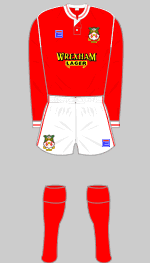
1992-1993 b
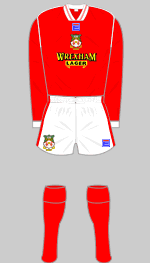
1993-1994 b i
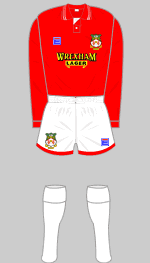
1994-1995 c
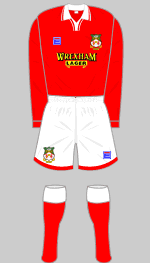
1995-1996 b
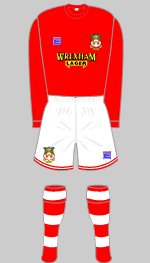
1996-1997 c
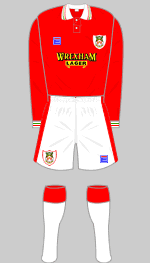
1997-1998 c g
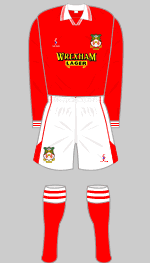
1998-2000 c
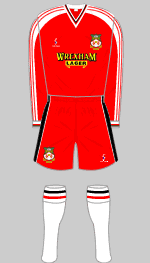
2000-2001 b
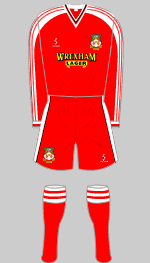
Aug - cSept 2001 e
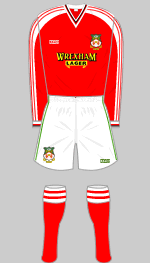
cSept 2001-2002 e z
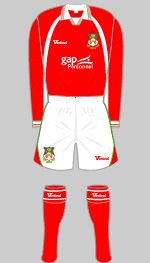
2002-2003 c
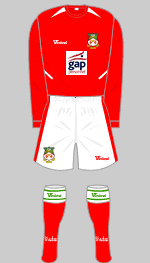
2003-2004 c
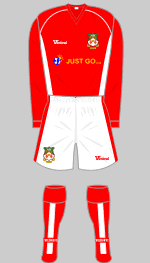
2004-2005 c
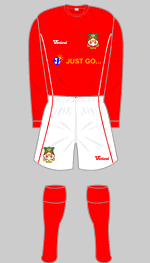
2005-2006 d
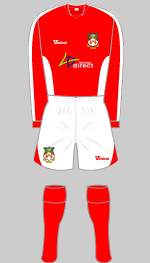
2006-2007 d
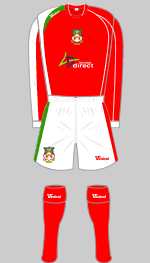
2007-2008 d
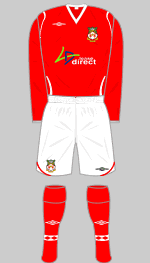
2008-2009 d
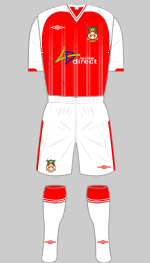
2009-2010 d
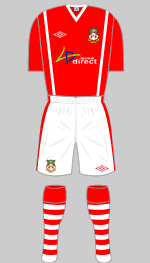
2010-2011 d
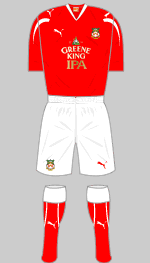
Aug-Dec 2011 d
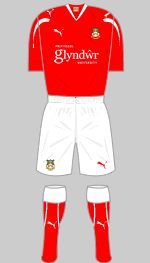
Dec 2011-2012 d
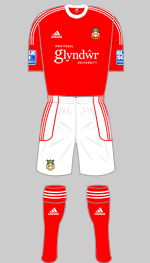
2012-2013 d
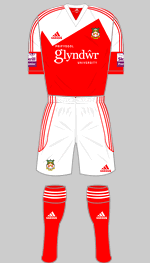
2013-2014 d
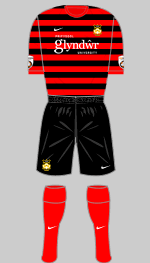
2014-2015 d
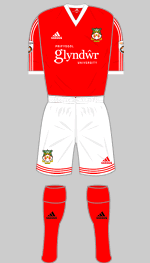
2015-2016 d
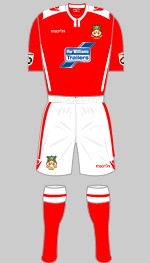
2016-2017 d
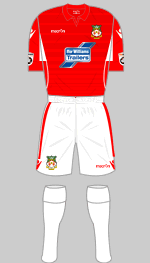
2017-2018 d
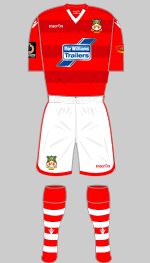
2018-2019 d
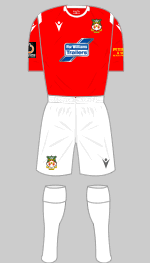
2019-2020 d
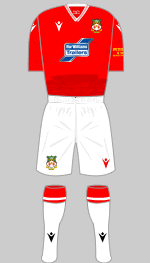
2020-2021 d
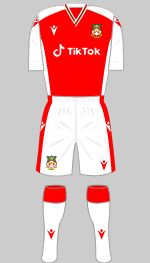
2021-2022 d
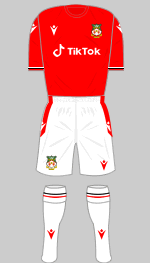
2022-2023 d
Background
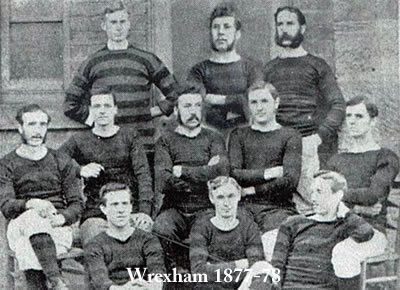 Until 2012 it was believed that Wrexham FC was formed by the members
of the town's cricket club as a way to stay together during the winter
months in 1872 or 1873. New evidence has now come to light from copies of the Wrexham Advertiser on file at the National Library of Wales that the club was in fact formed in October 1864 and played its first game on 22 October against Prince of Wales Fire Brigade at the Racecourse. This version of events has now been adopted officially and Wrexham claims to be not only the oldest football club in Wales but the third oldest professional club in the world. It should, however, be borne in mind that the original club was wound up in 1883.
Until 2012 it was believed that Wrexham FC was formed by the members
of the town's cricket club as a way to stay together during the winter
months in 1872 or 1873. New evidence has now come to light from copies of the Wrexham Advertiser on file at the National Library of Wales that the club was in fact formed in October 1864 and played its first game on 22 October against Prince of Wales Fire Brigade at the Racecourse. This version of events has now been adopted officially and Wrexham claims to be not only the oldest football club in Wales but the third oldest professional club in the world. It should, however, be borne in mind that the original club was wound up in 1883.
The team did not have a uniform strip until 1873. In March the Wrexham Advertiser commented on how smart the Chester College team looked in their blue guernseys in comparison to "the nondescript outfits of... the Wrexham team (who) never present a neat and uniform appearance." When the return fixture was played in October 1873 the Advertiser reported that "the Wrexham club, carrying out a resolution passed at the opening meeting, were dressed in white, a few wearing blue caps, and looked very well indeed."
Alongside neighbours Druids FC and Chirk FC, Wrexham were pioneers of association football in North Wales. In 1876 Wrexham, having adopted scarlet and black colours, became founder members of the Welsh FA and won the first Welsh FA Cup competition in 1878. Because funds were so short, they did not receive a trophy until the following year. In 1883, Wrexham entered the English FA Cup for the first time and were expelled from the competition following crowd disturbances during their game with Oswestry Town. The club was disbanded and reformed one month later as Wrexham Olympic, reverting to its original name in 1886.
In 1890, Wrexham joined the Football Combination with a team that featured two players with only one arm each. Rising costs led to a decision to play in the Welsh League for two seasons 1894-96 but despite winning the championship in both seasons, support dwindled so the club rejoined the Combination, winning the title four times. Having played in a variety of blue kits, the club settled on green shirts in 1904. In 1905 Wrexham joined the Birmingham & District League where they remained until the formation of Division Three (North) in 1921, which they were invited to join. On joining the League, Wrexham adopted red shirts and white knickers.
The Athletic News reported at the start of the 1925-26 season that the team were now wearing blue and white shirts which earned them the nickname of "The Sugarbags." The North Wales fans had little to cheer about and the club's best performance came in 1933 when they finished as runners-up in Division Three (North).
Immediately before the Second World War Wrexham
adopted the plain red shirts with white collars and cuffs that are now firmly associated with the club.
The Welshmen were distinguished from other
teams by the distinctive red stripes on their shorts. During the 1950s the club struggled
in the League and were relegated to Division Four in 1960. Promotion followed
in 1962 but two years later they were down once again and in 1966 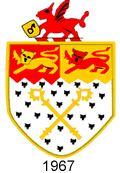 the
team had to apply for re-election.
the
team had to apply for re-election.
The following season the club crest was added to the team shirts, loosely based on the Wrexham coat of arms. This appeared on a white patch at first but from 1970 it was applied directly onto the shirts.
The arrival of John Neal as manager in 1970 heralded a new period of success for the club. Promotion to Division Three was followed by success in the Welsh Cup which in turn led to entry into the European Cup Winners' Cup in 1972-73, the first of eight European campaigns before the restructuring of Welsh football closed the door. In 1974 Wrexham reached the FA Cup quarter-finals.
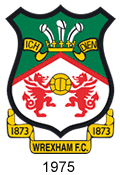 The old crest was retired in 1975 and a new version introduced that drew heavily on Welsh iconography rather than local influences.
Wrexham qualified for the European Cup Winners' Cup again in 1976-77 reached the quarter-final. Prior to the first leg against Anderlecht, Wrexham were presented with a set of all-red strips by Adidas. At the time the German sportswear company was trying to break into to UK market and although Wrexham were not allowed to wear the new strip in domestic matches, they were among several teams that adopted Adidas the following season.
 Hard times followed in the 1980s when successive
relegations saw the club drop back to the Fourth Division in 1983.
Hard times followed in the 1980s when successive
relegations saw the club drop back to the Fourth Division in 1983.
The familar crest was briefly dropped when Hi-Tec supplied the team's kit in 1987-88 but was reinstated the following season.
In 1991 Wrexham finished bottom and would have been relegated had the League not been restructured. A year later the Welsh club achieved their greatest giant-killing act knocking champions Arsenal out of the FA Cup and in 1993 they were promoted to the new Barclays Division Two (previously Division Three). In 2004-05, Wrexham became the first League club to suffer an automatic ten-point penalty after they went into administration. With relegation to League Two (formerly the Fourth Division) inevitable, the survival of this proud old club, twenty-three times winners of the Welsh Cup, remained in doubt until agreement was reached between the administrators and local car dealer, Neville Dickens in April 2006.
In 2007-08 the club struggled and finished in last place in League Two, losing their Football League status after 87 years. In May 2011 the club was sold to former Commercial Director, Jon Harris for £1, who now became Managing Director. A rival bid from the Wrexham Supporters' Trust was rejected by the owners, Geoff Moss and Ian Roberts but the following month, Moss announced that agreement in principle had been reached for the Supporters' Trust to take over. Although the immediate threat of being wound up was removed, it emerged in July that staff and players had not been paid and the club had run out of money. Two pre-season matches were cancelled and the directors were summoned to a meeting of the Conference to give assurances that the club would be able to fulfil its programme for 2011-12. In the meantime a deal was brokered with Glyndwr University who would buy the Racecourse while the Supporters' Trust would take over the club itself. Thanks to the generosity of supporters, an emergency fund raised sufficient cash in very short order to satisfy the Conference and, with just days to go before the new season, Wales' oldest 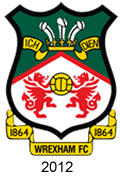 professional club survived.
There was an curious footnote to the takeover. The new owners of the Racecourse had a beer sales agreement with a different brewery so Greene King could no longer sell their own products at the ground as part of their sponsorship deal with the club. Their contract was amicably terminated in September but the Greene King sponsored shirts were worn until new sets with the Glyndwr University logotype were delivered just before 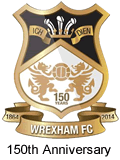 Christmas.
In July 2012 the official date of the club's formation was accepted as being 1864 and the crest was revised to reflect this.
To mark their 150th anniversary, Wrexham planned to wear replicas of their first recorded strip but Adidas were unable to supply these. Umbro were then approached but were unable to supply kits in the required quantity so the club turned to Nike, who were able to supply appropriate tops straight from their catalogue. These were naturally adorned with a suitable anniversary crest.
In November 2020 Hollywood actors Reynolds and Rob McElhenney made a surprise announcement that they intended to take over the club through their company, RR McReynolds LLC. The deal was completed the following February with the overwhelming support of the Supporters Trust, the previous owners. The team finished as runners-up in 2022 but were surprisingly beaten in the play-off semi-final by Grimsby Town. They also reached the final of the FA Trophy but lost 1-0 to Bromley.
Sources
- a Wrexham FC 1872-1950 (Images of Sport: GM Davies & P Jones)
- b Wrexham FC 1950-2000 (Images of Sport: GM Davies & P Jones). Two invaluable volumes.
- c empics
- d Wrexham Official Website
- e Jon Jones
- f Welsh Football Data Archive
- g Pete's Picture Palace
- h Neil Hanaby
- i Spencer Williams
- j Keith Ellis
- k Daily Post
- l crookedtongues.com found by Tony Sealey
- m Oleg Baranov
- n John Hague
- o The Wrexham Advertiser (22 March 1873 and 25 October 1873) submitted by Andy Boocock
- p Kingsley (Wrexham FC)
- q Athletic News (19 February 1923) submitted by Kingsley (Wrexham FC)
- r Liverpool Evening Express 12 July 1939) submitted by Kingsley (Wrexham FC)
- s Athletic News (23 October 1893) submitted by Kingsley (Wrexham FC)
- t Montgomeryshire Express (23 April 1895) submitted by Kingsley (Wrexham FC)
- u The Wrexham Advertiser (23 September 1893) submitted by Adam Squire
- v Charles Alcock's Football Annual 1879 researched by Robin Horton
- w Liverpool Echo (29 November 1924) submitted by Richard Essen
- x Athletic News (28 September 1925) submitted by Richard Essen
- y seniortigers.org.uk
- z Aled Williams
- A Charles Alcock's Football Annuals 1869-1891 researched by Robin Horton
Crests are the property of Wrexham FC.