Wigan
Athletic
Formed 1932
Elected to Division Four 1978
Kit History
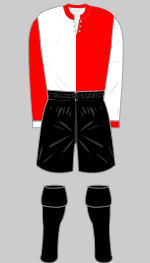
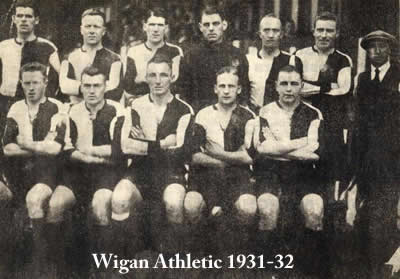
1931-1932 o
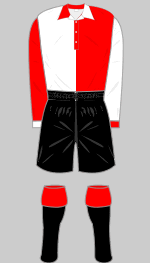
1933-1934 a
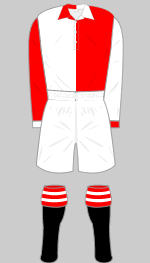
Aug-Dec 1934 a
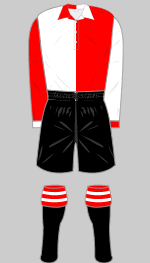
Jan-May 1935 a
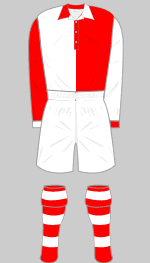
1935-1939 a o p q
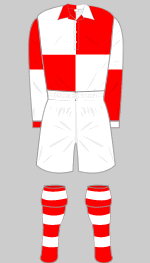
1946-1947 r
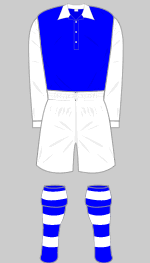
1947-1950 a o r
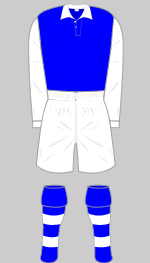
1952-1953 a k o
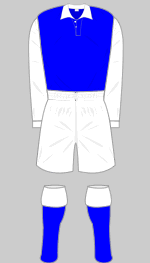
1953-1955 o p
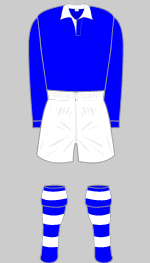
circa1955-c1958 b

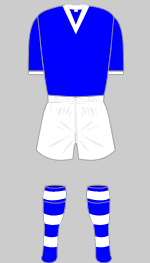
1957-1958 o p
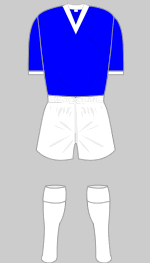
1958-1959 o
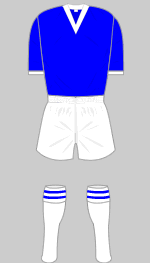
1959-1960 a j
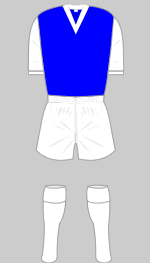
1960-1961 l

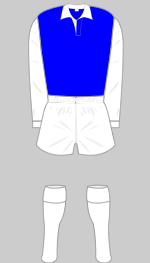
1962-1963 p
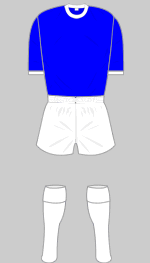
1963-1964 p
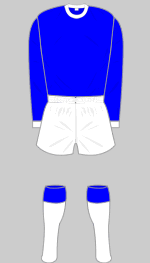
1964-1965 p
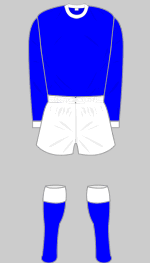
1965-1967 a o p
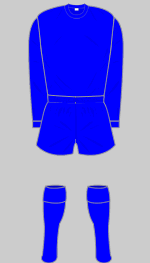
1967-1968 p
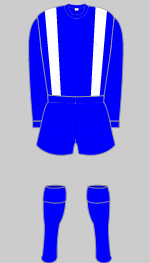
1968-1970 a o p
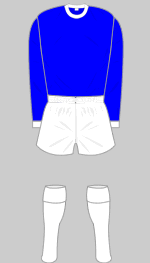
1970-1972 a
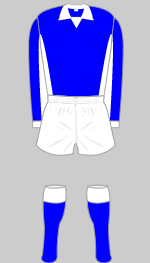
1972-1973 e f
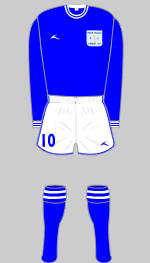
73 FA Trophy Final p
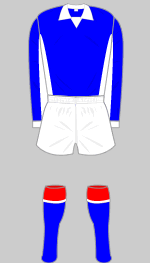
1973-1974 p
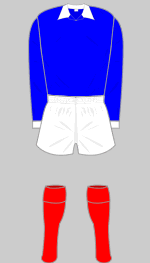
1974-1977 p
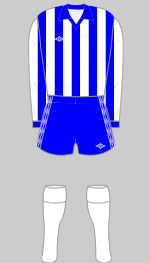
1977-1978 m p
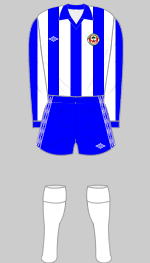
1978-1980 a
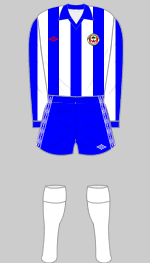
1980-1981 m n
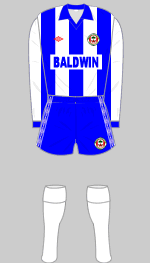
1981-1982 1 d h o
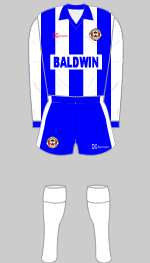
1981-1982 2 s
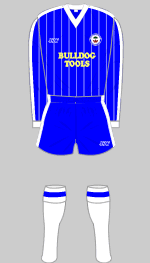
1982-1983 d h
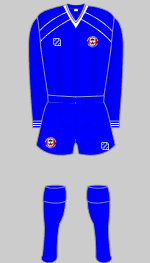
1983-1984 a d e h
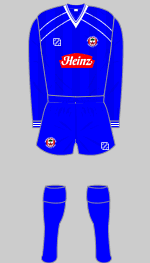
August 1984 d e
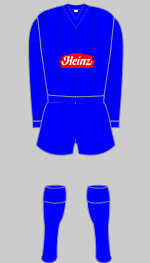
Sept 1984-1985 d e
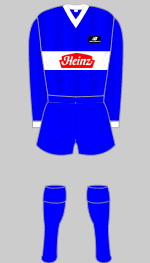
1985-1986 a e h
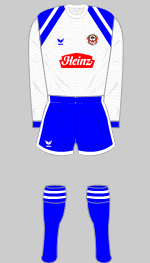
1986-1987 d h
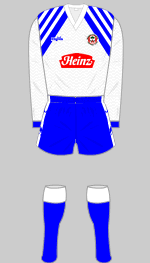
1987-1988 a d
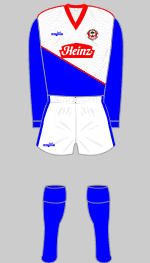
1988-1989 a h
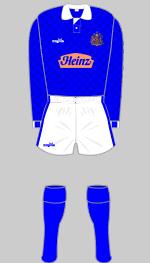
Aug-Sept 1989 e
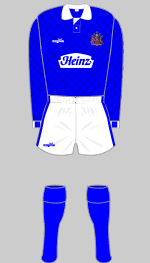
1989-1991 c
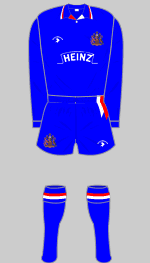
1991-1993 c d
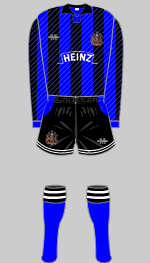
1993-1994 a
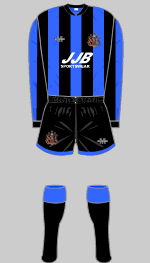
1994-1995 c i
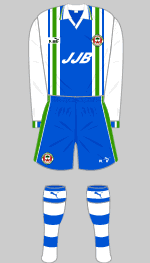
1995-1998 c i
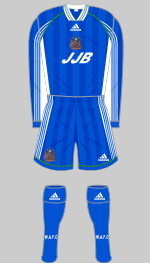
1998-2000 c d
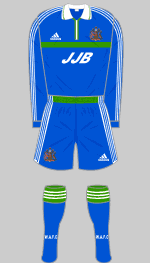
2000-2002 c d
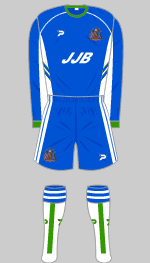
2002-2003 c
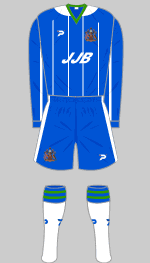
2003-2005 c i
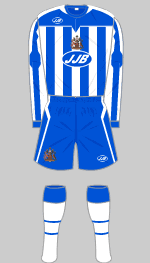
2005-2006 c

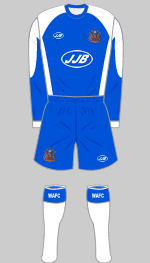
2006-2007 f
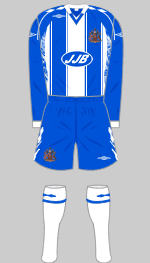
2007-2008 f
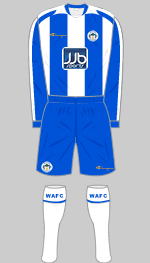
2008-2009 f g
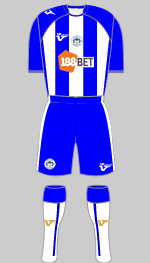
2009-2010 f
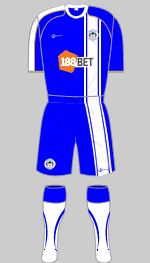
2010-2011 f
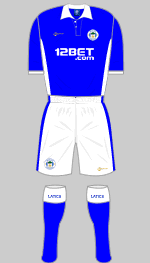
2011-2012 f
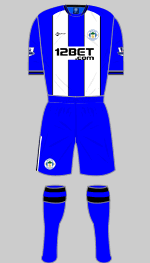
2012-2013 f
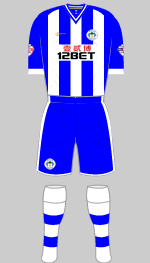
2013-2014 f
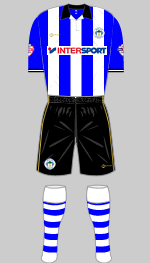
2014-2015 f
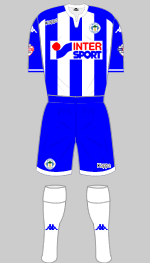
2015-2016 f
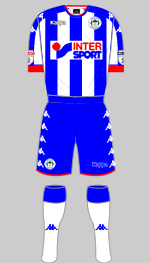
2016-2017 f
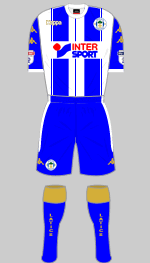
2017-2018 f
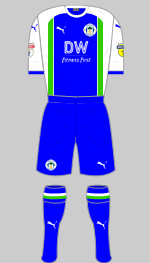
2018-2019 f
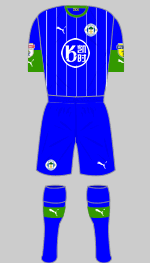
2019-2020 f
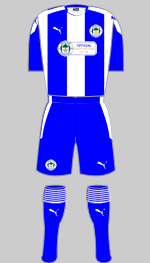
2020-2021 f
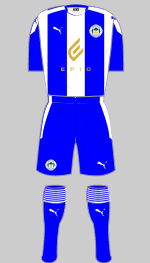
2021-2022 f
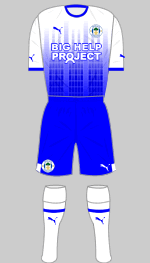
2022-2023 f
Background
 The first professional football
match in Wigan was between Wigan County and Burton Swifts in 1897. County
collapsed three years later ans Wigan United took over the lease of
Springfield Park. The facilities were shared with Wigan RLFC during 1901-02. In 1905 the newly formed Wigan Town moved into Springfield Park but they collapsed in May 1908 and the town was dominated by rugby league until the formation of
Wigan Borough in 1920.
The first professional football
match in Wigan was between Wigan County and Burton Swifts in 1897. County
collapsed three years later ans Wigan United took over the lease of
Springfield Park. The facilities were shared with Wigan RLFC during 1901-02. In 1905 the newly formed Wigan Town moved into Springfield Park but they collapsed in May 1908 and the town was dominated by rugby league until the formation of
Wigan Borough in 1920.
Borough were elected to Division Three (North) in 1921 but after eleven years of struggle, they resigned at the beginning of the 1931-32 season.
The "Latics" were formed a year after the demise of Borough and joined the Cheshire League, winning the championship three times before the outbreak of World War Two. They wore red and white halved shirts with black knickers (although these were often washed out and appear as dingy grey in some photographs). White shorts were adopted for the 1934-35 season but when the team met Millwall in the 3rd Round of the FA Cup in January 1935 it appears they had reverted to black knickers.
When league football resumed after the war, turned out in quartered shirts. After finishing bottom of the Cheshire League in 1947, Wigan joined the Lancashire Combination and introduced blue shirts with white sleeves, which were worn for the first time in their opening Combination game at home to Fleetwood. They finished the season as champions and over the next six campaigns, the Latics won the title three more times.
In 1950 the Football League was extended with the
addition of two clubs to each of the regional Third Divisions. Wigan Athletic
applied for membership: competition was fierce and it took three ballots
before the issue was decided - Shrewsbury and Scunthorpe were elected
and Wigan would have to wait. In 1954 Wigan took Newcastle United to a
replay in the FA Cup Third Round and again applied for membership of the
League but were unsuccessful. In 1961 Wigan rejoined the Cheshire League
and in 1968 they became founder members of the Northern Premier League
(NPL). In 1971 the Latics won the title and played an epic FA Cup match
against European Cup Winners' Cup holders, Manchester City, which they
narrowly lost 0-1. Hopes of election to the Football league were, however,
again dashed. In 1972, perhaps to make a point, the club 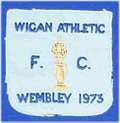 applied for election
to the Scottish League. The stunt backfired - Latics received no votes
at all when the League met to vote on re-election and Hereford United
replaced Barrow.
applied for election
to the Scottish League. The stunt backfired - Latics received no votes
at all when the League met to vote on re-election and Hereford United
replaced Barrow.
In 1973 Wigan played at Wembley for the first time in the FA Trophy final wearing a kit designed for the occasion with a special crest. They lost the match 1-2 to Scarborough.
In 1975 Wigan won the NPL for the second time but
a financial crisis was looming and the club was forced to sell off its
players. With fewer than 650 supporters turning up and Latics barred from
further applications to join the League until they sorted out their financial
problems, it looked like they would go the way of all the other Wigan
clubs. The following season, they finished second in the NPL behind Boston
United after another successful FA Cup campaign. The League had decided
that only the champions of the NPL would be considered for election but
as Boston's ground failed to meet safety standards, Wigan were allowed
to apply in their place, the 35th time Wigan had attempted to join the
League. After they tied with Southport on the first ballot, Wigan won
the second vote by 9 votes. After 47 years, League football 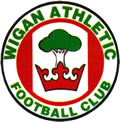 returned to
Wigan.
returned to
Wigan.
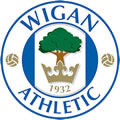
For their second season in the League, Wigan introduced a crest which became universally known as the "tree and crown". The fleur de lys crown represents the Plantagenet dynasty and appears on the town's coat of arms, while the tree represents a rowan, known in local dialect as a "Wiggin (i.e. Wigan) Tree."
 In 1982 the Latics were promoted to Division Three
but with an overdraft of more than £250,000. Despite their financial problems, the Latics remained in the third tier for the next ten seasons, finishing fourth in 1985-86.
In 1982 the Latics were promoted to Division Three
but with an overdraft of more than £250,000. Despite their financial problems, the Latics remained in the third tier for the next ten seasons, finishing fourth in 1985-86.
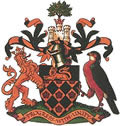
In 1989 the popular tree and crown crest was replaced by the coat of arms of the Wigan Metropolitan Borough Council.
In 1993 Wigan were relegated to Division Four and now faced bankruptcy. In February 1995 local business tycoon Dave Whelan bought the club. Whelan had made a fortune establishing the JJB Sports Wear retail chain and set about reinvigorating the club. The colours were changed to those of the JJB chain and a string of signings made. In 1997 Wigan were promoted as champions of Nationwide Division Three (the old Fourth Division). In the summer of 1999 the club moved into the brand new JJB Stadium, built at a cost of £32m and in 2003 they became Nationwide Division Two champions and began a serious challenge for a place in the Premier League. Their ambitions were realised at the end of the 2004-05 season when the Latics won promotion to the Premier League.
 A successful run in their first season in the top tier saw Wigan in second place in November and they eventually finished in tenth position. Against the odds, the team consolidated their position in the Premier League over the following seasons.
In 2008 a reworked version of the tree and crown badge replaced the municipal coat of arms.
Between 2005 and 2007, Dave Whelan stepped down as chairman of JJB Sports and disposed of his shares although he remained chairman of the football club. In 2009 Whelan acquired the JJB Fitness Clubs, re branding them as DW Sports-Fitness. As a result JJB's sponsorship of the team's shirts came to an end and the stadium was renamed as the DW Stadium. The distinctive blue used since 1995, which was derived from JJB's corporate colours, was also dropped in favour of conventional mid-blue.
The 2012-13 season proved a momentous one for the club. They reached the FA Cup Final where they unexpectedly beat Manchester City to win their first major trophy. For chairman Dave Whelan this was a particularly poignant occasion as his professional career was ended when he broke a leg playing for Blackburn in the 1960 final. Days later the team became the first FA Cup winner to be relegated. The following season Latics made their European debut in the Europa League but were eliminated in the Group Stage.
The team was relegated to League One in 2015 and in March Whelan handed the chairmanship to his grandson, David Sharpe, while remaining as owner. A year later they returned to the second tier as League One champions only to fall back again immediately. Believe it or not, they won the League One title again in 2017-18.
At the end of the 2017-18 season it was announced that the Whelan family had agreed to sell the club they had owned for 23 years to the Hong Kong based International Entertainment Corporation (IEC) for £22 million. On 4 June 2020 IEC sold a majority of their shares to another Hong Kong business, Next Leader Fund (NLF), a move aproved by the IEC board and the EFL. Less than a month later, fixtures having resumed after an enforced break due to the Covid-19 pandemic, NLF declared that they woukd not invest the funds promised before the takeover and placed the club in administration. An automatic 12-point penalty was applied when the season ended that condemned Wigan to relegation. These extraordinary machinations caused widespread outrage among supporters and neutrals, especially after it emerged that prior to the takeover the prospective new owner had discussed putting the club into administration with the company that was subsequently appointed as administrators.
Supporters rallied round the stricken club, raising over £650,000 to secure Wigan's immediate future while a buyer was sought. The Official Supporters' Club even bought the team's playing kit for the 2020-21 season, which carried their logo. The club remained in administration throughout the new season. After talks with a Spanish consortium broke down the EFL finally gave approval to a bid from a Bahraini consortium headed by Tala Mubarak al-Hammad in March 2021. The team finished in 20th place, one point from relegation to League Two.
Wigan's fortunes were transformed and on the last day of the 2021-22 season they secured the League One title and a return to the Championship.
Sources
- (a) Ultimate Wigan Athletic Website
- (b) Club Colours (Bob Bickerton)
- (c) empics
- (d) True Colours (John Devlin 2005)
- (e) Tom Darbyshire
- (f) Wigan Athletic Official Site
- (g) Ye Olde Tree & Crown has nice graphics of recent home and away Latics kits.
- (h) Pete's Picture Palace
- (i) David King
- (j) Ralph Pomeroy
- (k) Brief History of Wigan Athletic
- (l) Toffs
- (m) Alick Milne
- (n) True Colours (John Devlin 2005)
- (o) Keith Ellis
- (p) David Duckworth
- (q) Richard Lewis
- (r) George Chilvers
- (s) Mark Alton
Crests, courtesy of Ultimate Wigan Athletic Website, are the property of Wigan Athletic FC.