West Ham United
Formed 1900
Elected to Division Two 1919
Kit History
Thames Ironworks
1895
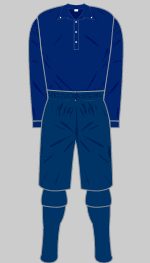
1895-1896 a j k
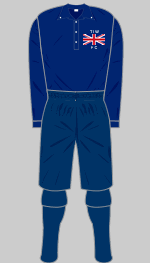
1896-Oct 1897 b
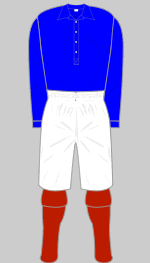
Nov 1897 -1900 j l s t
West Ham United
1900
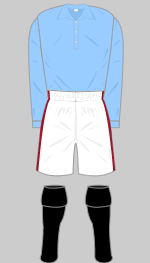
1900-1901 j l s t u
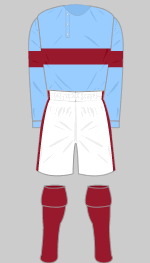
1901-1903 i j k s t u

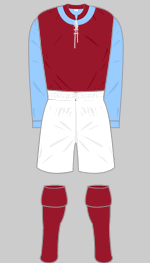
1903-1905 c s v
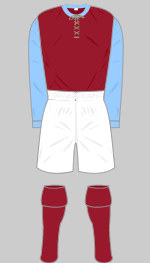
1905-1907 v
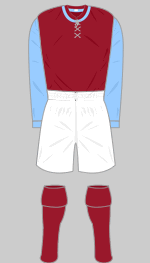
1907-1922 v
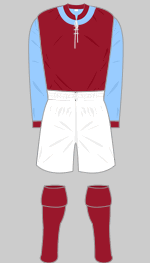
1922-1924 v
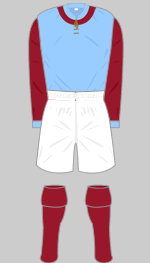
Aug-Nov1924 A B
Nov 1924-April 1925
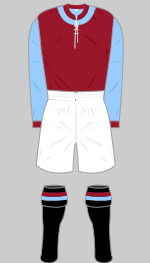
1926-1934 c v y
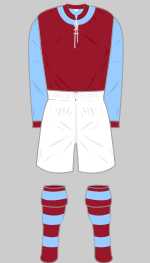
1934-1949 c
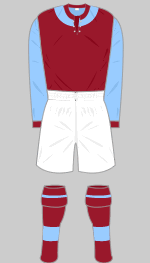
1949-1950 v
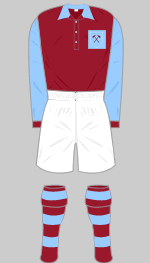
1950-1952 f v

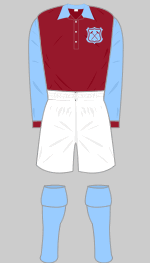
1952-1954 c v
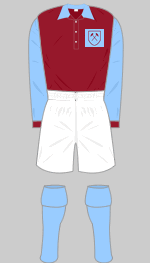
1954-1955 v
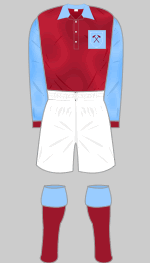
1954-1955 v
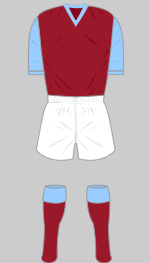
1955-1957 c
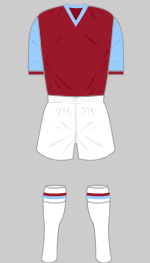
1957-1958 v
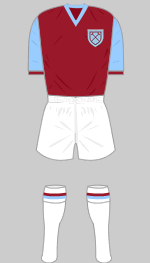
1958-1960 v

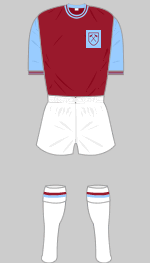
1960-1961 v
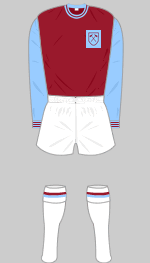
1961-1963 c q u v
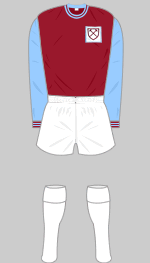
1963-1966 c u v
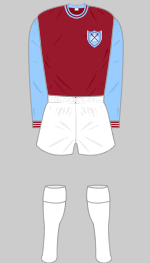
1965 ECWC Final v
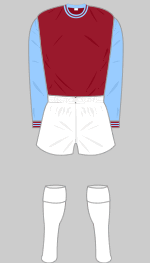
1966-1967 c u
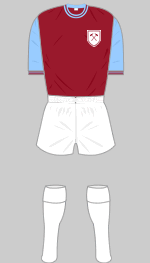
Aug-Sept 1967 x
Oct 1967-1973 c u
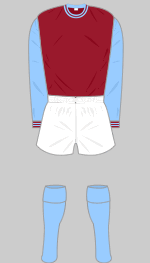
1973-1974
1974-1975 c u
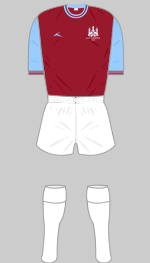
1975-1976 n o
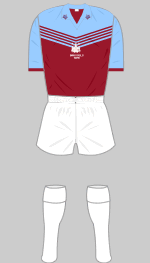
1976 ECWC Final w x
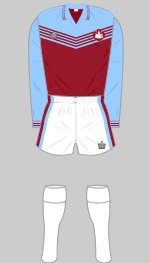
Aug-Dec 1976 g
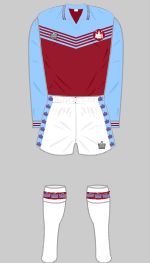
Dec 1976-1977 g
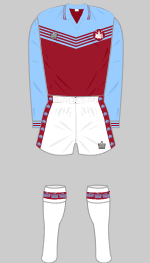
1977-1980 d g
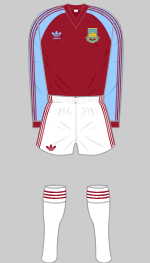
1980-1983 d
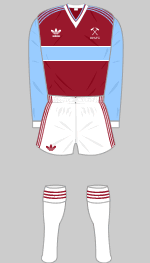
Aug-Nov 1983 z
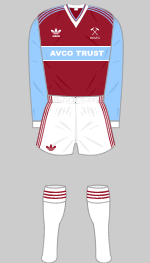
1983-1984 d h
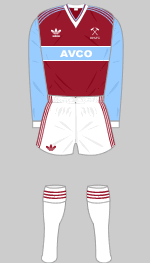
1984-1985 d h
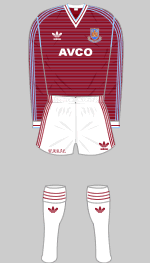
1985-1987 d h
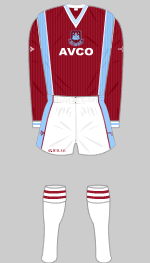
1987-1989 d g
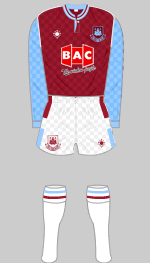
1989-1990 r
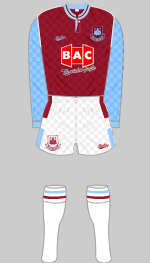
1990-1991 d p
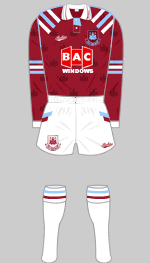
1991-1992 d m
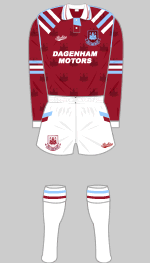
1992-1993 d m
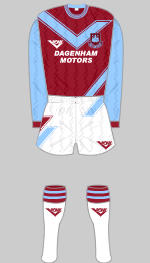
1993-1995 d
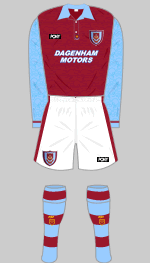
1995-1997 d
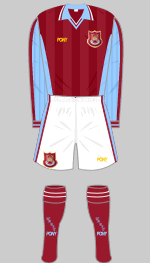
1997-1998 d h
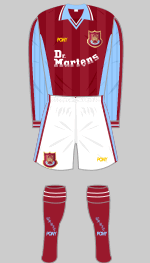
April 1998-1999 d h
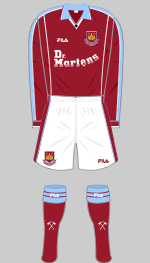
1999-2001 d
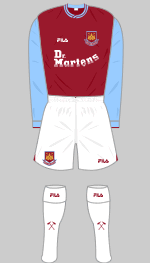
2001-2003 d
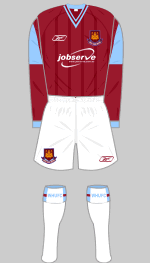
2003-2005 e
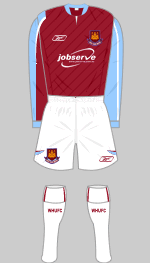
2005-2007 e
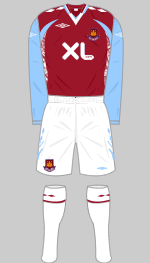
2007-2008 e
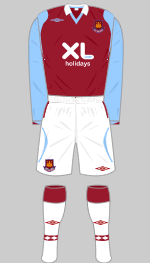
Aug-Sept 2008 e
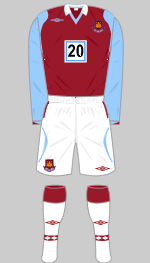
13 Sept 2008 e
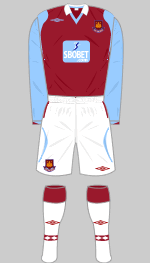
6 December 2008 e
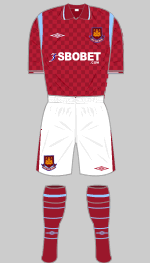
2009-2010 e
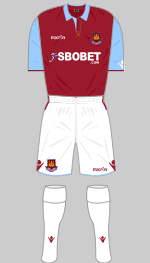
2010-2011 e
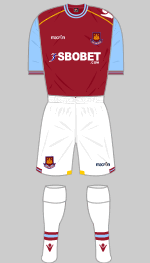
2011-2012 e
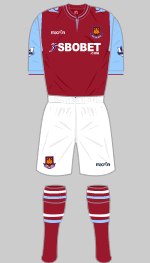
2012-2013 e
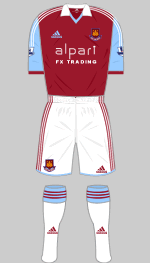
2013-2014 e
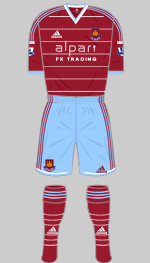
Aug 2014-Jan 15 e
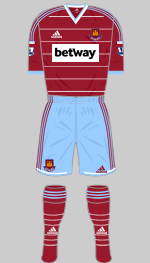
Feb-May 2015 e
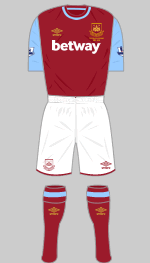
2015-2016 e
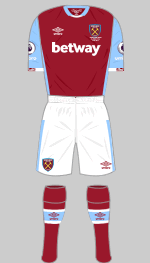
2016-2017 e
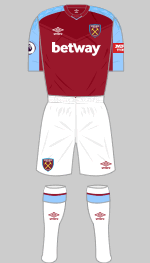
2017-2018 e
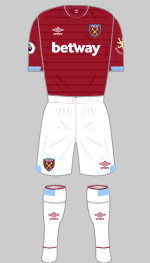
2018-2019 e
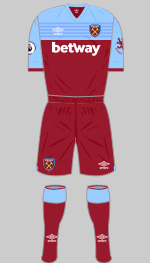
2019-2020 e
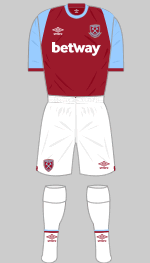
2020-2021 e
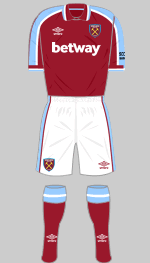
2021-2022 e
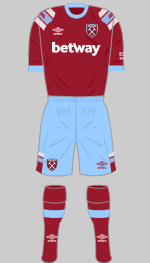
2022-2023 e

2023-2024 e *
Background
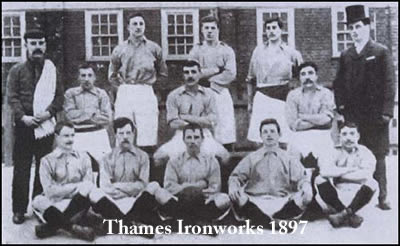 In the early 1890s, the Canning
Town and West Ham area of East London was awash with football clubs. In
1895, Arnold Hills, Chairman and Managing Director of the Thames Ironworks
& Shipbuilding Company decided to form a works team to be called Thames
Ironworks FC. Hills was himself a prominent player, having played for
Oxford University in the FA Cup final of 1877 and won an England cap two
years later. The club initially played in Harrovian blue, latterly with a union flag on the left breast. Research by Grant
Hole has brought evidence to light that in 1895, the club took over Castle
Swifts FC, the works side of the Castle Mail Packet Company. Thames Ironworks
acquired a set of blue and white kits from the Swifts and wore these for the first time in the second half of a rain-soaked game against Novocastrians in November 1897. "Castle blue" shirts, white knickers and vermillion socks became the team's
In the early 1890s, the Canning
Town and West Ham area of East London was awash with football clubs. In
1895, Arnold Hills, Chairman and Managing Director of the Thames Ironworks
& Shipbuilding Company decided to form a works team to be called Thames
Ironworks FC. Hills was himself a prominent player, having played for
Oxford University in the FA Cup final of 1877 and won an England cap two
years later. The club initially played in Harrovian blue, latterly with a union flag on the left breast. Research by Grant
Hole has brought evidence to light that in 1895, the club took over Castle
Swifts FC, the works side of the Castle Mail Packet Company. Thames Ironworks
acquired a set of blue and white kits from the Swifts and wore these for the first time in the second half of a rain-soaked game against Novocastrians in November 1897. "Castle blue" shirts, white knickers and vermillion socks became the team's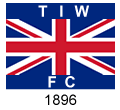 colours until 1900 (the colours of the Castle Mail Packet Shipping Co).
There is a story that in the summer of 1899 Bill Dove, a sprinter of national repute who was involved in coaching the Ironworks team, was challenged to a race with four Aston Villa players at a fair in Birmingham. Dove won but the Villa men could not pay the wager so one of them pinched a set of claret and blue shirts from his club (he was responsible for doing the laundry) to settle the bet. There is, however, no evidence that the team ever wore their new shirts.
In June 1900, the club was formally wound up. The Ironworks had become a company owned by shareholders who were not prepared to fund the team. For every share sold in the new company to the public, Arnold Hill bought one too. The club was allowed to continue playing at the Ironworks sports ground for a generous rent and Arnold Hills became the president of the new West
Ham United, who signed professional players. A set of light blue shirts were obrtained, claret stripes were added to the shorts, claret being the commercial colour of the Ironworks, and the old vermilion socks were replaced by black ones. The next season a claret hoop was added to the shirt, which became known as the "Union Jack" strip and in 1903 the now familiar claret shirts with light blue sleeves were adopted. The team continued to be known as the "red, white and blues" 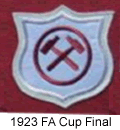 for some time. In 1904, the club moved to the Boleyn Ground in Upton Park, which would be their home for more than a century.
West Ham retain their connection to the older club
through their badge (a pair of crossed riveting hammers) and their nickname
(The Hammers). The new club took over Ironworks'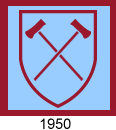 place in the Southern
League and steadily built a reputation. In 1919 West Ham were elected
to Division Two when the League was expanded after World War One. In 1923
the Hammers won promotion to the First Division and appeared in the first
Wembley FA Cup Final where they lost 0-2 to Bolton. This match is probably the first in which the famous crossed hammers appeared. Nine years later,
the club was relegated
place in the Southern
League and steadily built a reputation. In 1919 West Ham were elected
to Division Two when the League was expanded after World War One. In 1923
the Hammers won promotion to the First Division and appeared in the first
Wembley FA Cup Final where they lost 0-2 to Bolton. This match is probably the first in which the famous crossed hammers appeared. Nine years later,
the club was relegated 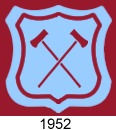 back to Division Two where they stayed for the
next 26 years.
back to Division Two where they stayed for the
next 26 years.
At the start of the 1924-25 season the Hammers started the season wearing jerseys with the colours reversed (normally their change strip) but the experiment was not a success and by late November they were back in their regular claret jerseys with blue sleeves.
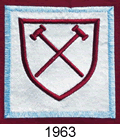
From 1950 the crossed hammer badge was worn regularly, usually embroidered in claret on a light blue patch but with several variations until it was retired in 1966. (A good example is the 1958 version, embroidered onto a shield-shaped patch 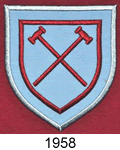 and in which the rivetting hammers have a different shape.)
In 1954-55 West Ham played a number of European sides in friendlies under floodlights, wearing shirts made from shiny, rayon material.
 In 1958 The Hammers won the Second Division championship
in the season that the young Bobby Moore made his debut. Three years later
Ron Greenwood became manager and West Ham's golden age began. In 1964
they won the FA Cup for the first time, beating Preston North End 3-2.
A year later they were back at Wembley in the European Cup
In 1958 The Hammers won the Second Division championship
in the season that the young Bobby Moore made his debut. Three years later
Ron Greenwood became manager and West Ham's golden age began. In 1964
they won the FA Cup for the first time, beating Preston North End 3-2.
A year later they were back at Wembley in the European Cup 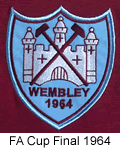 Winners' Cup
final, defeating TSV Munich 1860 2-0. The crests worn in these important matches added Boleyn Castle, a local landmark, to the crossed hammers.
Winners' Cup
final, defeating TSV Munich 1860 2-0. The crests worn in these important matches added Boleyn Castle, a local landmark, to the crossed hammers.
In 1966 the Hammers lost in the
League Cup final but the club will 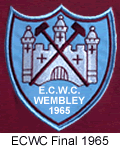 always be remembered for providing
three key members of England's victorious World Cup winning side, Martin
Peters, Geoff Hurst and Bobby Moore. During this period the team wore their classic claret and blue shirts with plain white shorts and socks although alternative socks (claret with light blue tops from 1967-68 and then, from 1970-71, plain light blue) were used when playing teams in white stockings. This was perhaps the earliest example of alternates being used regularly when socks clashed in the Football League.
always be remembered for providing
three key members of England's victorious World Cup winning side, Martin
Peters, Geoff Hurst and Bobby Moore. During this period the team wore their classic claret and blue shirts with plain white shorts and socks although alternative socks (claret with light blue tops from 1967-68 and then, from 1970-71, plain light blue) were used when playing teams in white stockings. This was perhaps the earliest example of alternates being used regularly when socks clashed in the Football League.
The simple crossed hammers badge was retired in 1967 and a new official crest was designed but was not immediately added to the team shirts.
 It would be eight years before West Ham won more
silverware, winning the FA Cup by beating Fulham (now captained by Bobby
Moore) in 1975. The redesigned badge appeared in the final and during the 1975-76 season that followed. A year later they reached the European Cup Winners' Cup
final for the second time but lost to Anderlecht. The club unveiled a prototype of their
new yoked strip, designed by Admiral, in this match.
It would be eight years before West Ham won more
silverware, winning the FA Cup by beating Fulham (now captained by Bobby
Moore) in 1975. The redesigned badge appeared in the final and during the 1975-76 season that followed. A year later they reached the European Cup Winners' Cup
final for the second time but lost to Anderlecht. The club unveiled a prototype of their
new yoked strip, designed by Admiral, in this match.
In 1978 West Ham were relegated and while in Division
Two they won the FA Cup for the third time, beating hot favourites Arsenal
in the final. A year later they were back in
third time, beating hot favourites Arsenal
in the final. A year later they were back in  Division One having won the Second Division title.
Adidas took over as West Ham's kit supplier for their first season back in the top division and their new strips featured the redesigned crest in full. This was dropped in 1983 in favour of a simple crossed hammer design but it was reinstated in 1985. In 1987 the colours were changed from gold on blue to light blue on claret.
In 1986 West Ham achieved their highest ever League
placing, third in the First Division behind Liverpool and Everton. Between
1989 and 1993 West Ham were relegated twice and promoted twice, finally
enjoying a settled period in the Premier
and promoted twice, finally
enjoying a settled period in the Premier  league that lasted until 2003
when once again they were relegated.
league that lasted until 2003
when once again they were relegated.
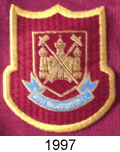
The club celebrated its centenary in 1995 and a commemorative crest was introduced which, in the fashion of the time, placed the entire device inside a second shield. Yet another version appeared in 1997 with a heavy gold outline.
Two years later, a digital version of the club crest was introduced and the letters F.C. were dropped from the supporting scroll.
 On 17 May 2010, West Ham and Newham Borough Council submitted a plan to take over the Olympic Stadium following the 2012 Olympic
  Games. A rival bid from Tottenham Hotspur was rejected but the future of West Ham's plan was thrown into doubt by an objection from Leyton Orient, whose ground is less than a mile from the new stadium.
In 2011, the Hammers were relegated to the Championship, throwing further doubt on the viability of the proposed move. A quick return to the top flight would be necessary if the club were to attract crowds sufficiently large for a ground with a planned capacity of 60,000.
In October 2011, negotiations over the Olympic Stadium collapsed after an anonymous 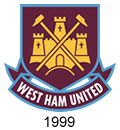 complaint to the European Commission was made, alleging that a £40m loan from Newham Council broke EU rules on state aid. Both Spurs and Leyton Orient had also given notice that they would appeal against a decision to dismiss their original objections giving rise to
  fears that legal action could rumble on through the courts for years to come. As a result the London Legacy Development Corporation published a new bidding process, based on a 99-year lease rather than outright sale and West Ham renewed their interest. They also returned to the Premier League at the first time of asking and in March 2013 the club signed the lease on the Olympic Stadium after the government agreed to contribute an extra £25m towards the cost of conversion.
To mark their last season at the Boleyn Ground (also known as Upton Park) in 2015-16, the club commissioned Umbro to supply a specially made strip based on the historical version worn when West Ham moved into the ground in 1904 complete with a 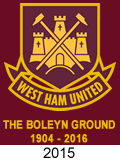 commemorative crest, which would be retired at the end of the season.
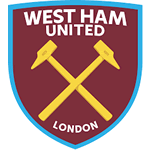
During the 2014-15 season the board had organised a consultation 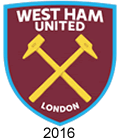 exercise with supporters to establish whether there was support for redesigning the club crest to mark the move to the Olympic Stadium in 2016. Almost 10,000 fans took part, making this the largest exercise of its kind undertaken by Premier League club. 70% voted in favour of change and in the second phase, 56% voted in favour of the new design shown on the left: this incorporated several traditional elements and for the first time included "London," reinforcing the club's identity with the capital. The loss of the Boleyn Castle emphasised that a fresh
  start was being made.
2020 marked 125 years since the old Thames Ironworks team was wound up and relaunched as West Ham United. Never one to miss an anniversary, the club introduced a special crest for the 2020-21 season. The team exceeded expectations and finished in sixth place to earn a place in the Europa League. The following season they finished seventh, good enough to book a place in the Play-Off round of the UEFA Europa Conference League, which they went on to win their first major trophy since 1980 and their first European trophy since 1965.
Sources
- a Wikipedia
- b Port Cities Website
- c The West Ham Utd Collection (2003)
- d Sporting Heroes
- e West Ham United Official Website
- f Bury FC - Images of Sport (Peter Cullen 1998)
- g Steve Browne
- h Bjørn-Terje Nilssen
- i Kevin Slade
- j Thames Ironworks FC
- k John Simkin
- l Grant Hole
- m David King
- n Alick Milne
- o Rod George
- p Ian D Turner
- q Wesley Moore
- r Paul Cordell
- s Article by Jack Helliar provided by David Smith & Kevin Slade
- t Tim Conlan
- u The Memorial Ground
- v Keith Ellis (HFK Research Associate)
- w Christopher Worrall
- x Tony Sealey
- y Simon Monks
- z Mick Clifford westhammatchwornshirts.com
- A Chelmsford Chronicle (28 August 1924) submitted by Richard Essen
- B theyflysohigh.co.uk
* Kit graphic by Daniel Stoker
Crests are the property of West Ham United FC.