West
Bromwich Albion
Formed 1878
Founder member of the Football League 1888
Kit History
West Bromwich Strollers
1878
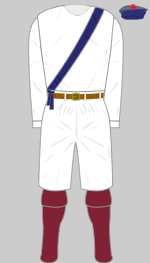
1878-1880 a
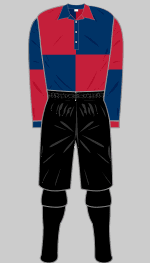
1880-1881 a
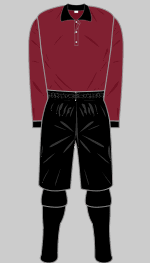
1880-1881 alt a
West Bromwich Albion
1881
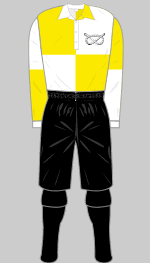
1881-1882 a u
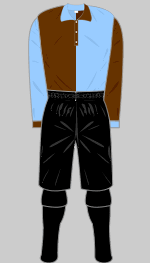
1881 alt-1883 a
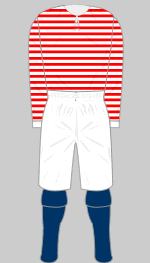
1882-1883 alt b
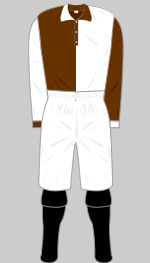
1883-1884 a
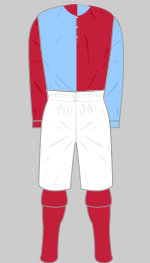
1884-Sept 1885 a
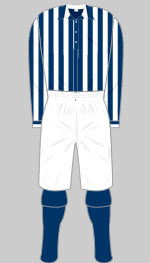
Oct 1885-1889 c
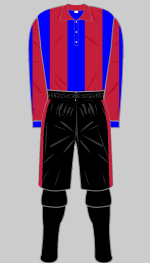
1889 a
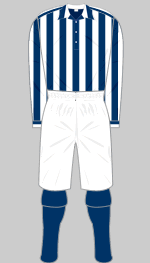
1889-1892 d h u
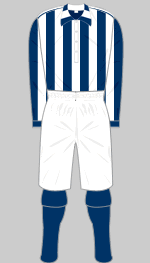
1894-1896 s
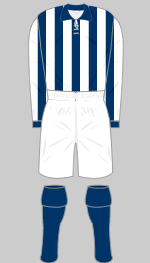
1899-1902 e o
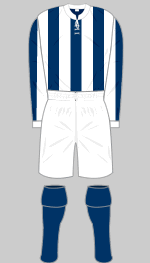
1902-1904 e w
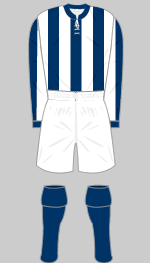
1905-1906 o
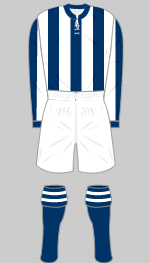
1906-1911 e i p
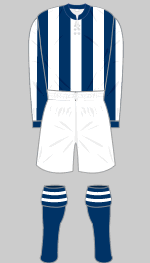
1911-1920 r s
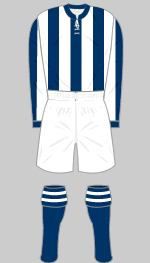
1920-1925 e o s
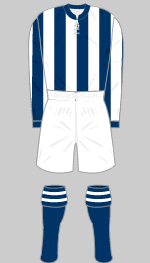
1925-1930 e o
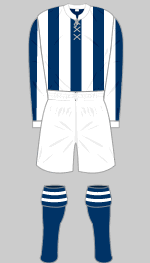
1930-1932 s
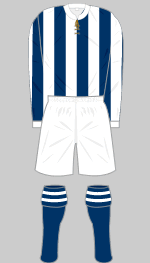
1932-1933 B
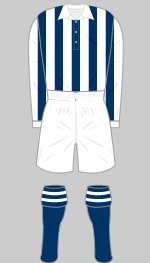
1933-1934 e
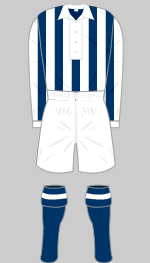
1934-1942 e s
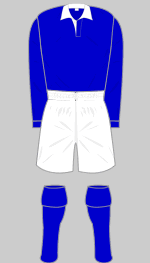
1942-1947 a i
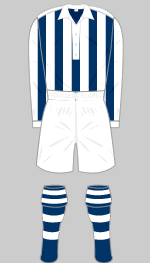
1947-1948 s
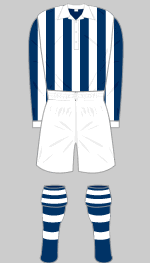
1948-1955 e o s
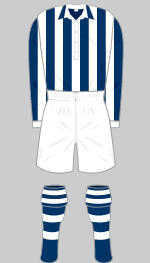
1955-1956 s
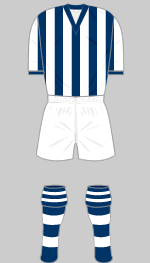
1956-1957 o
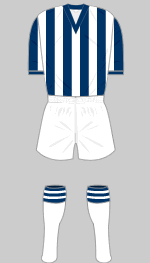
1957-1958 e
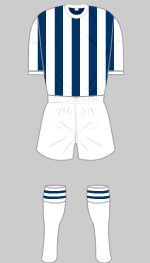
1958-1959 e
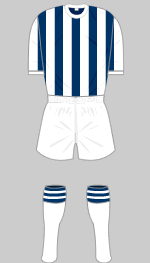
1959-1960 j
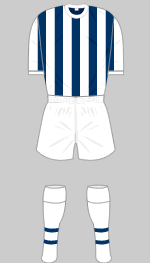
1960-1961 e o
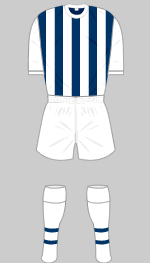
1961-1963 q p
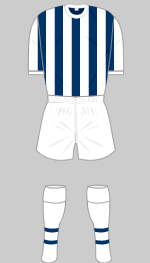
1963-1966 s z
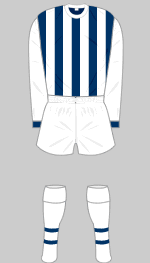
1964-1968 e z
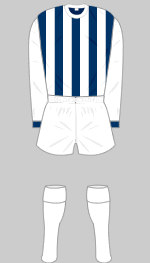
1968-1969 e s
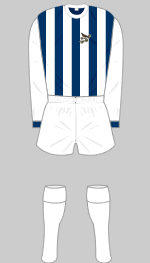
1969-1971 e s

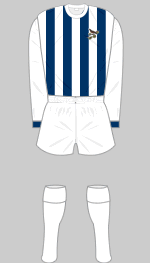
1969-1971 alt x
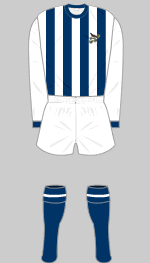
1971-1972 e
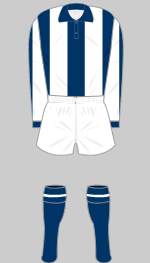
Aug-Oct 1972 q
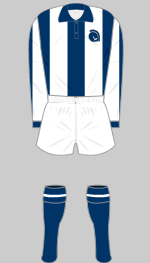
Sept 72-1973 e q
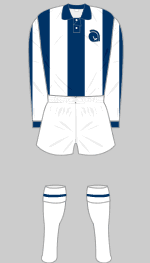
1973-1974 e l
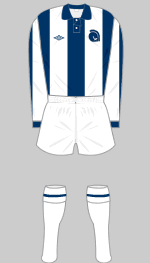
1974-Dec 1976 y
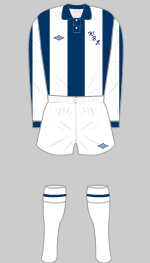
Jan 77-cDec 77 m y
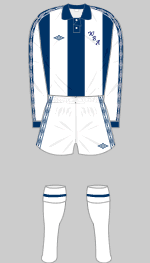
cDec 1977-1981 e y
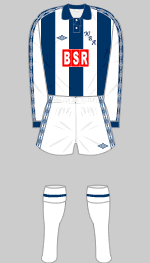
1981-1982 e
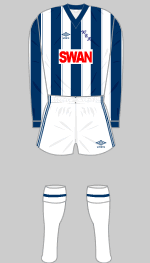
1982-1983 e
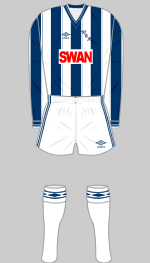
1983-1984 e
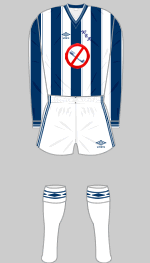
1984-1986 e
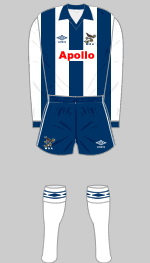
1986-1988 g
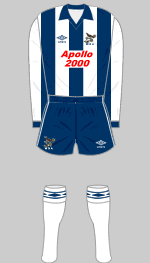
1988-1989 g
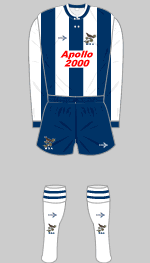
1989-1990 e
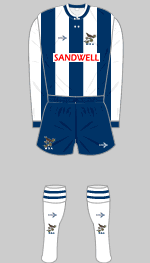
1990-1991 j
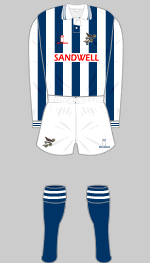
1991-1992 c
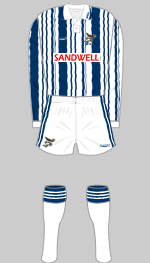
1992-1993 e

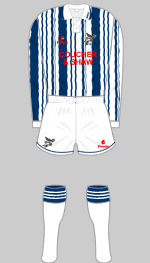
1993-1994 j
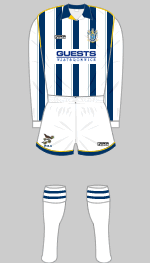
1994-1995 c j

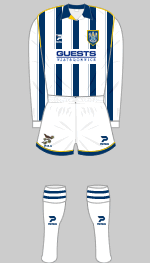
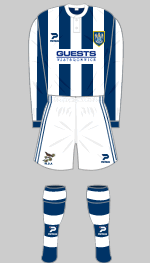
1996-1997 g
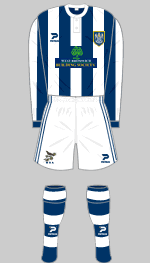
1997-1998 g
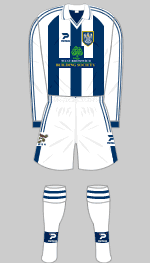
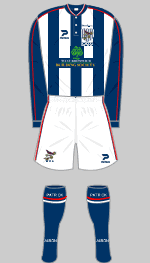
2000-2002 g
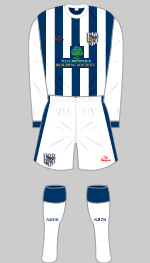
2002-2003 g
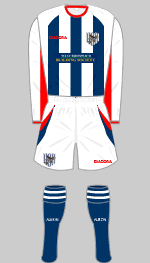
2003-2004 g
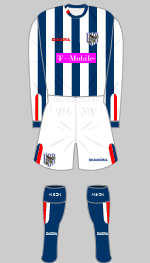
2004-2005 c n t
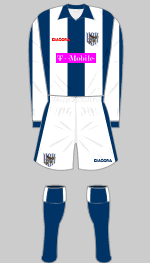
2005-2006 h
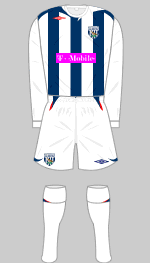
2006-2007 h v
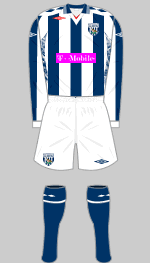
2007-2008 h k v
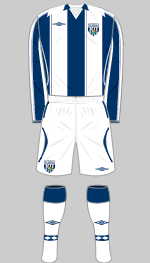
2008-2009 h
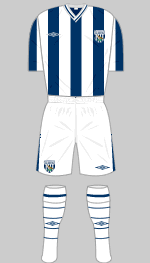
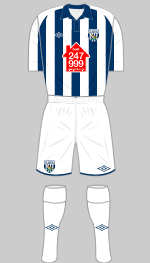
2010-2011 h
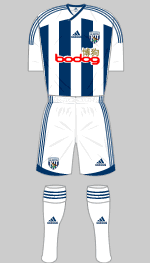
2011-2012 h
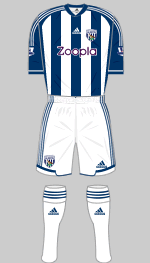
2012-2013 h
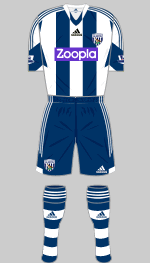
2013-Feb 2014 h
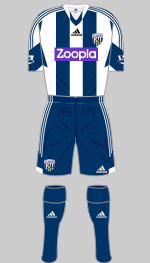
Feb-May 2014 h
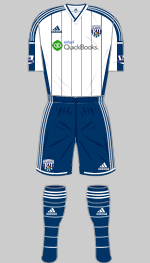
2014-2015 h
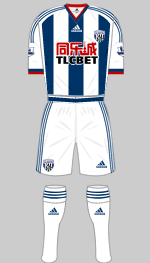
2015-2016 h
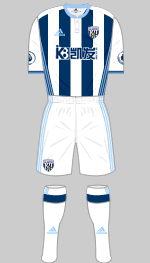
2016-2017 h
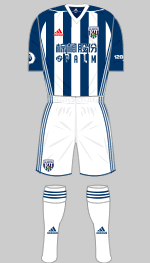
2017-2018 h
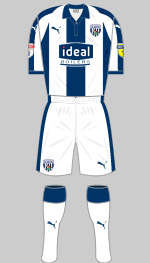
2018-2019 h
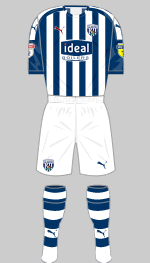
2019-2020 h
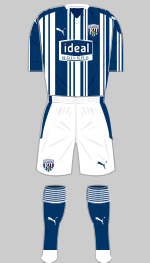
2020-2021 h
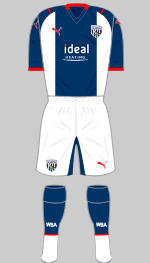
2021-2022 h
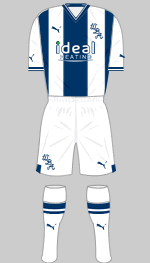
2022-2023 h
Background
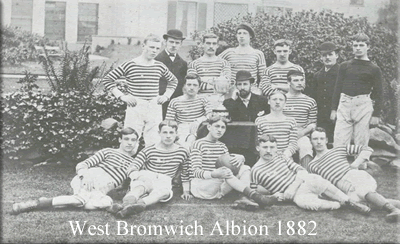 The club was formed by workers from the George Salter
Spring Works and played their first match in 20 November 1878, a goalless draw with another works team, Hudson's FC. The story is that they walked to nearby
Wednesbury to buy a ball and took the name West Bromwich Strollers as a
result. In 1881 they became West Bromwich Albion, wearing yellow and white shirts decorated with the Staffordshire knot.
The club was formed by workers from the George Salter
Spring Works and played their first match in 20 November 1878, a goalless draw with another works team, Hudson's FC. The story is that they walked to nearby
Wednesbury to buy a ball and took the name West Bromwich Strollers as a
result. In 1881 they became West Bromwich Albion, wearing yellow and white shirts decorated with the Staffordshire knot. 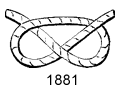
In 1883 Albion won the Staffordshire Cup, beating Aston Villa in the semi-final and Stoke in the replayed final 1-0 after a 3-3 draw. This was also the year in which West Brom entered the FA Cup for the first time.
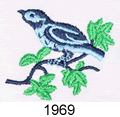
In the late 1880s the club secretary, Tom Smith, suggested that a throstle (West Midlands dialect for a thrush) sitting on a cross bar be adopted as their official crest. The crossbar was later replaced by a hawthorne branch. The connection between the team and the throstle stems from the days when the players changed in a public house where a caged songbird was kept.
In 1886 and 1887, Albion were beaten FA Cup finalists but in 1888 they won the competition, surprise winners against Preston North End. They then visited Hampden Park, Glasgow to meet the Scottish FA Cup winners Renton, for the title of "World Champions" but lost 1-4. With such a strong record, Albion were naturally invited to become one of the twelve founder members of the Football League.
In their early years, the club had turned out in a rich variety of colours and it was not until 1885 that the familiar navy blue and white stripes were adopted. In 1889 they switched to broad cardinal red and blue stripes with black knickers, onto which was sewn a red stripe. This outfit was not well received by supporters who dubbed the team "The Nigger Minstrels" (after a form of music hall entertainment in which white performers blacked up to sing popular songs) and was quickly dropped. In 1892 Albion beat local rivals Aston Villa in the FA Cup final (after losing in semi finals in 1889 and 1891). Three years later the clubs met again in Albion's fifth FA Cup Final. Villa scored after 39 seconds of the game and won 1-0.
Albion moved to the Hawthorns in 1900 but the season ended in disaster as they were relegated to the Second Division. Although they were promoted back the following season, in 1904 they went back down and it was seven seasons before they returned to Division One. In 1912 they reached their sixth FA Cup final, losing to Barnsley 1-0 after a 0-0 draw.
 When the League resumed after the First World War, Albion won the League Championship
for the first and so far the only time.
When the League resumed after the First World War, Albion won the League Championship
for the first and so far the only time.
In 1927 Albion were relegated but
in 1931 their fortunes were again on the rise. After winning promotion
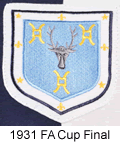
they beat neighbours Birmingham City 2-1 in the FA Cup final. The crest worn in this match was a simplified version of the West Bromwich coat 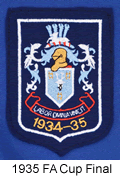 of arms.
Four years later Albion were back at Wembley, losing 4-2 to Sheffield Wednesday. A crest was once again worn, this time the full coat of arms, including the town's motto, Labor Omnia Vincit (Work Conquers All). This appeared once again in the 1954 FA Cup final.
In 1938 it was back to Division Two. During war time competition, the team wore plain blue shirts, presumably because they could not get hold of navy and white striped jerseys.
In 1949 Albion were promoted back to the First Division and in 1953-54
they came within a whisker of doing the League and Cup double. A 0-1 defeat
by Wolves at The Hawthorns took the title to 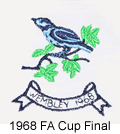 Wolverhampton but fans could
console themselves with another FA Cup triumph, a 3-2 victory over Preston
North End.
Wolverhampton but fans could
console themselves with another FA Cup triumph, a 3-2 victory over Preston
North End.
In 1964-65 Albion introduced what was to become one of their most iconic strips, with the traditional navy and white sleeves sey off by plain white long sleeves. The older version, with short striped sleeves, continued to appear from time to time until 1966.
In 1965-66 Albion entered the Football League Cup for the first time
and lifted the trophy, defeating West Ham over two legs in the final.
The following season they reached the final again but this time it was
 at Wembley. Albion were odds-on favourites but lost 2-3 to Third Division
Queens Park Rangers. In 1968 Albion reached their third cup final in a
row, beating Everton at Wembley to win the FA Cup for the fifth time.
The Throstle appeared on West Brom's shirts for the first time in that final and became a regular feature the following season.
at Wembley. Albion were odds-on favourites but lost 2-3 to Third Division
Queens Park Rangers. In 1968 Albion reached their third cup final in a
row, beating Everton at Wembley to win the FA Cup for the fifth time.
The Throstle appeared on West Brom's shirts for the first time in that final and became a regular feature the following season.
The Cup Winners Cup campaign in the following season was ended in the
third round by Dunfermline Athletic after victories against RFC Bruges
and Dinamo Bucharest. In 1970 they were 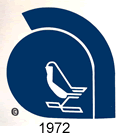 back at Wembley in the League Cup final.
The crest was changed in 1972 to represent a caged songbird and was rather cleverly designed to resemble a lower-case letter "a." This was rendered in navy blue on the  home shirts of the period but at least once (21 October 1972) it was embroidered in red. The crest was replaced in 1975 by a simple cypher.
After two seasons in Division
Two between 1974 and 1976, Albion were good enough to qualify for the
UEFA Cup three times between 1978 and 1981 but in 1986 they were relegated
to the  Second Division and this time there was no quick return to the
top.
Second Division and this time there was no quick return to the
top.
At the start of the 1986-87 season the throstle was reinstated. This was replaced in 1994 by the town coat of arms although it continued to appear on the shorts, a rare example of a team wearing two official badges on their  strip.
In 1991 the club dropped into the Third Division for the first time in their history. It took two seasons to return to the Second Division.
At the start of the new millennium a traditional crest was introduced that combined the throstle sitting on its hawthorne branch against a striped shield,  representing Albion's iconic shirts. Although this had not previously appeared on shirts, it had been the official club crest since at least the 1960s.
In 2002 Albion returned to the Premiership and although they were immediately relegated, they have bounced back and forth ever since.
The club crest was updated in 2006 to a rather crisper design. West Brom failed to  secure shirt sponsorship deals in 2008 and 2009 so in November 2009 the club announced that they would offer short-term deals instead. Seven commercial companies, two charities and the England 2018 campaign all featured during the season. (For details visit the 2009-10 Championship section.)
 In May 2014 rumours began to circulate that the striped shirts, worn since the 19th century, were to be dropped, leading to protests from outraged fans and former players alike. This was confirmed when the kit was launched in July but, perhaps to mollify supporters, the club simultaneously announced they would return to traditional stripes in 2015.
 In March 2015 the club announced that a special kit, a replica of the 1968 FA Cup final strip, would be worn to mark the launch of the Jeff Astle Foundation on 11 April. (See Premier League 2014-15 page). Astle, one of Albion's most iconic forwards, scored the winning goal in 1968 and was one of the finest headers of a football ever seen. He died in 2002 at the age of 59 as a result of chronic brain injury.
At the end of the 2017-18 season Albion dropped back into the Championship but two years later they were promoted back into the top tier as runners-up but were relegated again in 2021. The very broad navy stripe on the 2021-22 shirt met with a mixed reception but it did provide room for the  opening verse of the 23rd psalm to be printed into the fabric. According to the Express & Star, supporters had first sung this in 1976 when the opening line was changed to "Giles is my shepherd" to honour Johnny Giles who had turned the ailing club around when he was manager. After he left the original words were sung.
The 2022-23 strip was designed by a committee of supporters with support from Puma and Albion's retail team and was modeled on the iconic broad striped shirt worn in the late 1970s, complete with a revival of the WBA monogram..
Sources
- (a) A-Z of West Bromwich Albion (Tony Matthews 1996)
- (b) www.albiontillwedie.co.uk
- (c) empics
- (d) Association of Football Statisticians
- (e) West Bromwich Albion (Images of Sport ed. Tony Matthews)
- (f) www.kitclassics.co.uk
- (g) www.sporting-heroes.net
- (h) www.wba.co.uk
- (i) The Mighty Mighty Whites
- (j) True Colours (John Devlin 2005)
- (h) Association of Football Statisticians - provided by Pete Wyatt
- (i) Pete's Picture Palace
- (j) David King
- (k) Football Shirt Culture
- (l) Jamie Crompton
- (m) Alick Milne
- (n) Peter Downing
- (o) wba pics.com
- (p) Simon Monks
- (q) Tony Sealey
- (r) The Lord Price Collection
- (s) Keith Ellis (HFK Research Asociate)
- (t) Robbie Statto
- (u) Richard Essen
- (v) Luke Cox
- (w) John Small
- (x) Stephen Harrison
- (y) Mark Taylor
- (z) Grandad's Football Blog
- (A) Robert Clarke
- (B) Michael Gluck
- (C) Getting Shirty (Andy Wells 2022) submitted by Tony Sealey
Crests are the property of West Bromwich Albion FC. 1882 team photograph courtesy of Love Everton Forum.com.