Swindon
Town
Formed 1879
Founder member of Division Three 1920
Kit History
Swindon AFC
1879
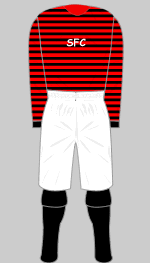
1879 a b
Spartans
1880
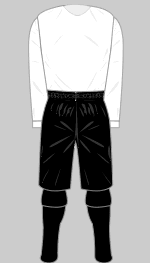
circa 1881 b
Swindon Town
1883
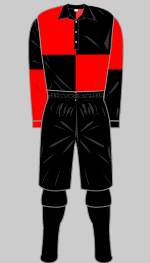
1894-1898 a b
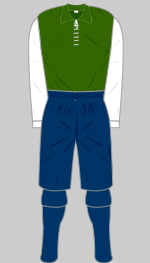
1897-1898 a n q
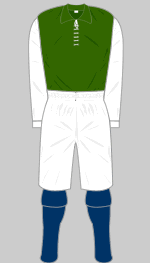
1898-1899 r
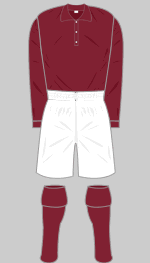
1901-1904 a b r
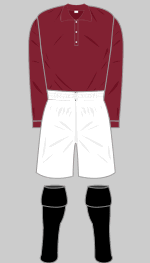
1904-1905 b r
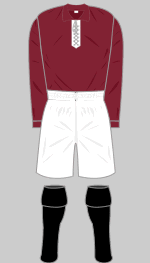
1905-1906 r*
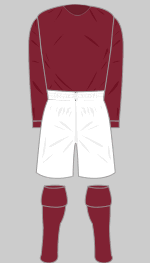
1906-1908 r
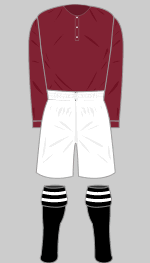
1908-1909 r
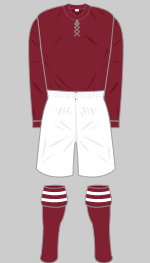
1909-1911 r
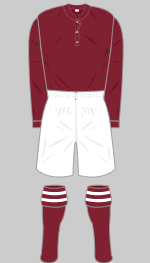
1911-1913 a b c
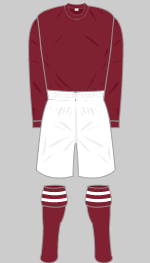
1913-1914 p
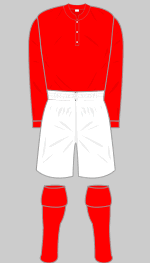
1918-1920 r
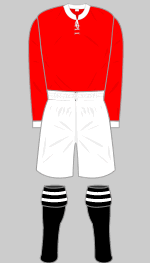
1920-1923 r
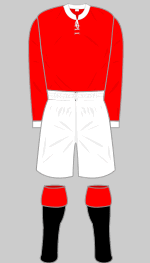
1923-1924 b r
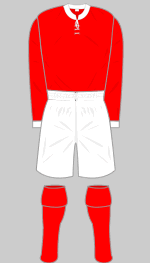
1925-1926 r

1926-1927 b

1928-1929 b
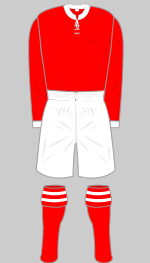
1934-1935 r
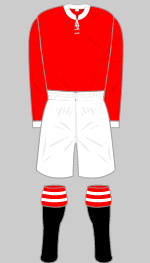
1936-1939 b o r
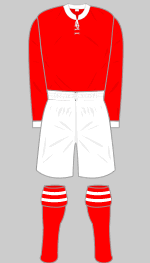
1939-1940 r

1946-1947 b
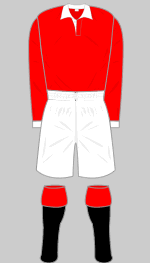
1947-1948 b

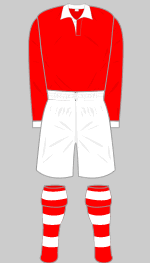
1948-1951 b
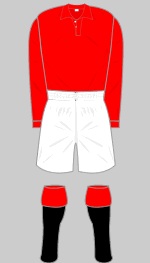
1951-1952 s
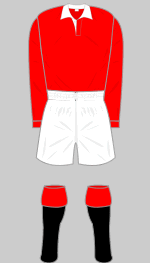
1956-1958 b i
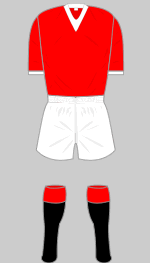
1958-1960 r t
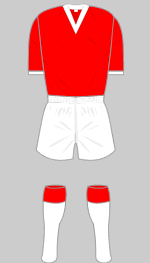
1960-1961 a
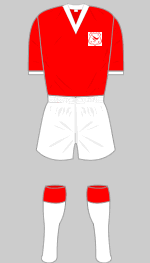
1961-1962 a i
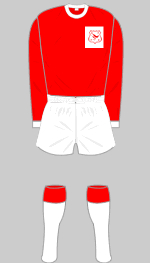
1962-1966 a b
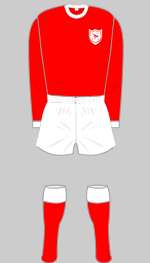
1966-1967 r

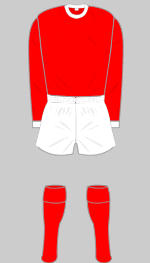
1967-1972 b c i r
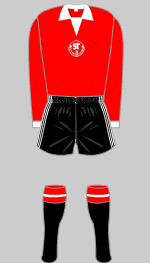
1972-1973 b i l
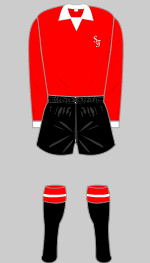
1973-1974 a
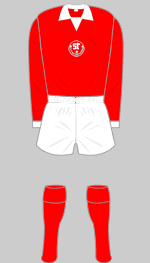
1974-1975 i l
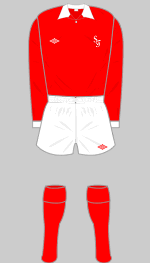
1975-1976 a l
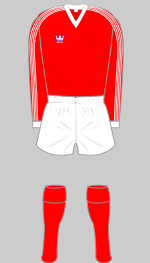
1976-1977 l
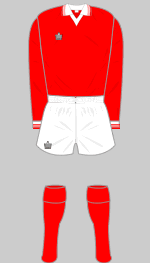
1977-1978 b l
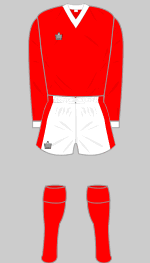
1978-Feb1980 a l
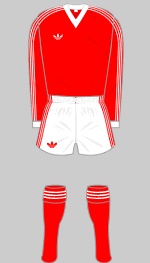
Feb-May1980 a f h
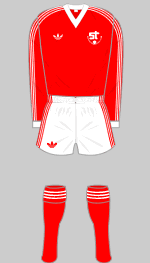
1980-1981 a b g
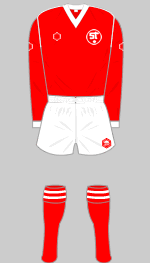
1981-1983 a b i l m
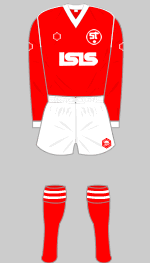
1983-1984 a b m
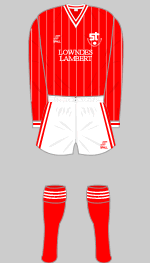
1984-1985 1 a d m
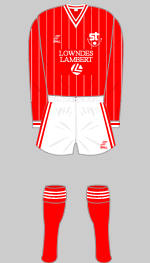
1984-1985 2 a d m
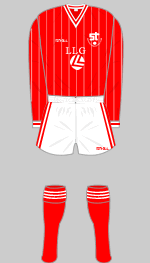
1985-1986 a c m
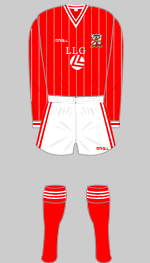
1986-1987 a
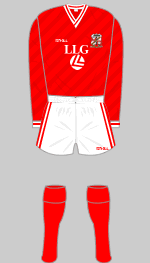
1987-1989 a i
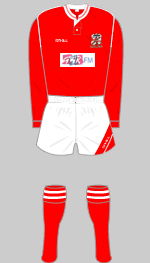
1989-1991 a f
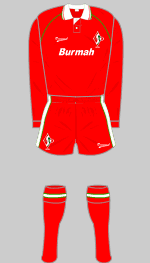
1991-1993 a f
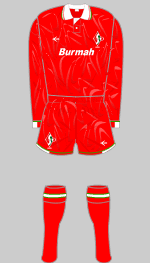
1993-1995 a f
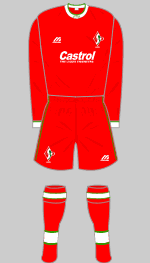
1995-1997 a f j
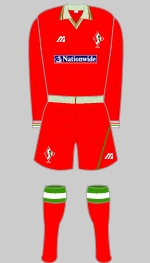
1997-1999 a f
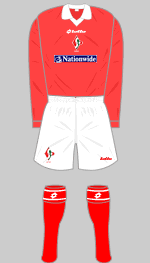
1999-2000 a b f
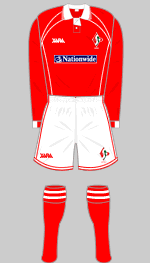
2000-2002 a f j
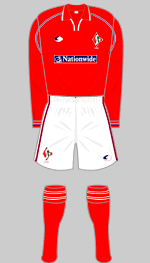
2002-2003 a f
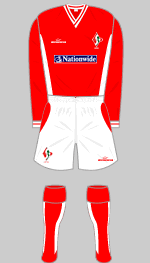
2003-2004 a j
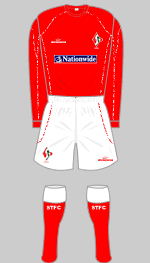
2004-2005 f
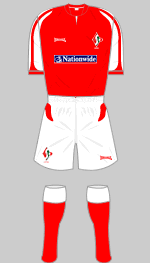
2005-2006 e

2006-2007 e
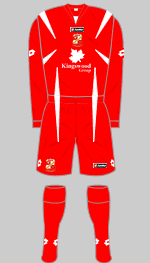
2007-2008 e k
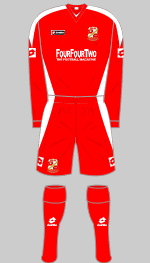
2008-2009 e

2009-2010 e
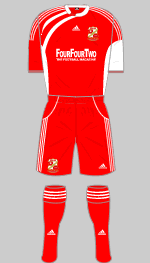
2010-2011 e

2011-2012 e

2012-2013 e
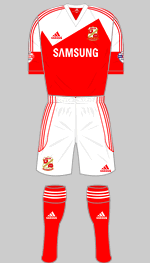
2013-2014 e
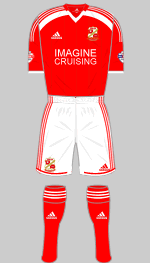
2014-2015 e
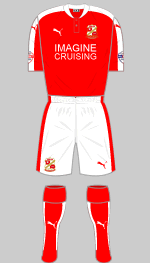
2015-2016 e
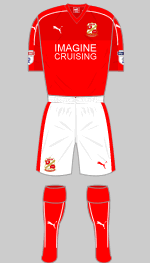
2016-2017 e
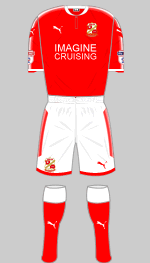
2017-2018 e
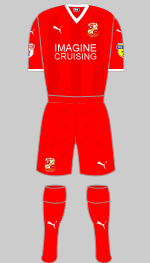
2018-2019 e
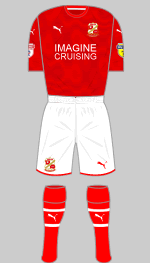
2019-2020 e
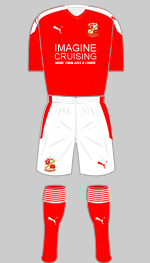
2020-2021 e
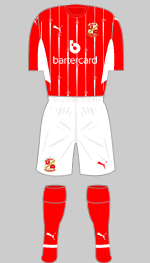
2021-2022 e
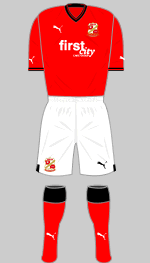
2022-2023 e
Background
 In the mid-nineteenth century
the Great Western Railway company established their locomotive works in
Swindon on the main line between London, Bristol and South Wales. The
resulting influx of labour brought a population explosion and it was only
a matter of time before a professional football club was formed to attract
the crowds on a Saturday afternoon.
In the mid-nineteenth century
the Great Western Railway company established their locomotive works in
Swindon on the main line between London, Bristol and South Wales. The
resulting influx of labour brought a population explosion and it was only
a matter of time before a professional football club was formed to attract
the crowds on a Saturday afternoon.
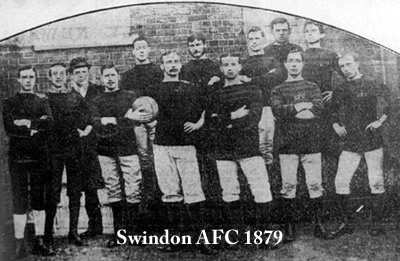
Officially Swindon Town were formed in 1881 but recent research suggests that in December 1879 the Revd William Pitt, generally accepted as the founder of the modern club, played for a Swindon Association Football Club in a game against Rovers FC. Further research by Paul Plowman has unearthed an after-dinner speech from 1911 when the Revd Pitt, in his latter years, described how he had "formed the present club back in 1879." It seems that the original Swindon AFC changed their name to Spartans after amalgamating with the cricket club of that name and then merged with St Mark's Young Men's Friendly Society in 1881. The club became Swindon Town in 1883. In 1884 they moved to a new ground known as The Croft and in 1894 they turned professional and joined the Southern League. Two years later Swindon took out a lease on the County Ground where they remain to this day. After playing in white shirts (augmented by a blue sash when colours clashed), Swindon adopted red and black before turning out in green and white shirts in September 1897.
In 1901 Swindon adopted maroon jerseys. The photographic evidence appears to show variations in the shade of the shirts but this is likely to be the result of fading and/or the limitations of film stock in use at the time. It is unclear when they dropped maroon but Football League handbooks from the mid-Twenties give Swindon's colours as red and I have assumed the change was made when competition resumed after the First World War.
In 1910 Town reached the semi-final of the FA
Cup where they were knocked out by Newcastle. The following season they
won the Southern League 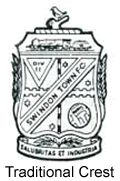 championship and went on to lose 4-8 to Manchester
United in the Charity Shield.
championship and went on to lose 4-8 to Manchester
United in the Charity Shield.
In 1921 Swindon, along with the rest of the Southern
League First Division, became founder members of the Third Division of
the Football League. It is unclear when the club adopted their traditional crest but this only appeared on official documents. The town's connection with the Great Western Railway was represented by a steam locomotive, a robin appears at the top while the Latin script means "Health and Industry," which is also 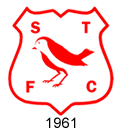 the town's motto.
In 1958, when the regional divisions were abolished, Swindon were placed in the new national Third Division. A crest was adopted in 1961 that featured a robin, a traditional nickname for the team.
Swindon promotion
to Division Two in 1963 but two years later they were back in the 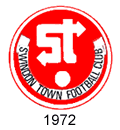 Third Division.
1968-69 was without question Town's finest season to date: against all
odds they reached the League Cup final and on a mud-bound pitch beat Arsenal
3-1 in extra time to take the trophy. Six weeks later they clinched promotion
to Division Two.
Third Division.
1968-69 was without question Town's finest season to date: against all
odds they reached the League Cup final and on a mud-bound pitch beat Arsenal
3-1 in extra time to take the trophy. Six weeks later they clinched promotion
to Division Two.
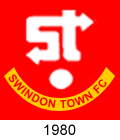 In 1972 a smart modernist crest was adopted that became known as the "ST Arrow" or "Traffic Sign" badge. It remained in use until 1986 although a simple "ST" monogramme appeared in some seasons and between 1976 and 1980, was absent. Simplified versions were worn between 1980 and 1986.
In 1974 Swindon dropped back into the Third Division and in 1982 they dropped into the Fourth Division for the first time.
 In 1986 the traditional crest was revived and that season Swindon won the Fourth Division title. A year later
they made their way through the play offs to return to Division Two and in
1990 they earned the right to play in Division One by
In 1986 the traditional crest was revived and that season Swindon won the Fourth Division title. A year later
they made their way through the play offs to return to Division Two and in
1990 they earned the right to play in Division One by 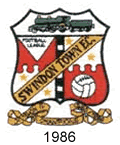 winning the play-offs
but, owing to irregularities over payments to players, they were punished
by having their promotion cancelled.
winning the play-offs
but, owing to irregularities over payments to players, they were punished
by having their promotion cancelled.
In 1991 the board appointed ex-England star Glen Hoddle as player-manager and the team underwent a makeover. A new crest was introduced in red, white and green and the team strip became all-red with white and green trim.
Two years later, having finishing
in fifth place, Swindon won promotion to the Premier  League via the
play-offs. Hoddle departed to manage Chelsea and it quickly became apparent
that the club was out of its depth. After conceding 100 goals they finished
last and were relegated to the Endsleigh League Division One. Relegated
again the following season, Swindon bounced back but in 1999, the club
was forced into administration and was relegated to Nationwide Division
League via the
play-offs. Hoddle departed to manage Chelsea and it quickly became apparent
that the club was out of its depth. After conceding 100 goals they finished
last and were relegated to the Endsleigh League Division One. Relegated
again the following season, Swindon bounced back but in 1999, the club
was forced into administration and was relegated to Nationwide Division 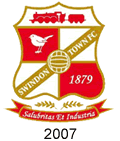 Two (the old Third Division).
In April 2007 the club consulted with supporters over the reintroduction of the traditional crest and offered three alternative designs. The winning version was worn from the beginning of the 2007-08 season.
Financial problems continued to plague the club who faced winding up orders brought by HMRC over unpaid tax in 2006-07 and were at one stage paying around 2% of their turnover to pay off their debts. In 2008 a consortium led by Andrew Fitton and Jeremy Wray took control with a commitment to pay off their debts.
Success arrived in 2012 when Swindon won the League Two title. White shorts (worn in the FA Cup in the 2011-12 season) were restored for the return to the third tier. These were kept for six seasons before all-red was briefly reinstated for 2018-19.
When the 2019-20 season was ended early Swindon were level at the top of League Two with Crewe Alexandra on points and had a slightly inferior goal difference. However, they were awarded the championship once final positions were settled on the basis of points-per-game but they were unable to maintain their position in the higher division and were relegated after one season.
At this time the big three kit providers, Adidas, Nike and Puma offered lesser clubs standard templates from their catalogues. Puma, however, offered their designs with bespoke fabrics and Swindon's 2021-22 shirt was a good example. Printed into the shirts were miniature versions of the 1991 crest that tapered into the pinstripes.
Sources
Photograph courtesy of Swindonfc1879.com
- (a) Swindon Town FC Unofficial Website - an outstanding website with a detailed history of the club and excellent graphics of modern kits run by Richard Banyard.
- (b) Swindon Town FC - Images of Sport (Richard Mattick 2000)
- (c) Football Focus
- (d) Southend United FC - Images of Sport (Peter Miles & David Goody 2000)
- (e) Swindon Town Official Website
- (f) empics
- (g) Ralph Pomeroy
- (h) Kuen-Wah Cheung
- (i) Pete's Picture Palace
- (j) David King
- (k) Football Shirt Culture
- (l) Alick Milne
- (m) Christopher Worrall
- (n) My photo library
- (o) Dick Parkhouse's kit - a rare example of an original pre-war strip recently found in the attic
- (p) The Lord Price Collection
- (q) Andy Porter
- (r) Keith Ellis: (r*) dates are provisional
- (s) Simon Monks
- (t) seniortigers.org.uk
Crests are the property of Swindon Town FC.