
Sheffield
United
Formed 1889
Founder member of Division Two 1892
Kit History
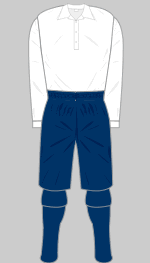
1889-1890 b
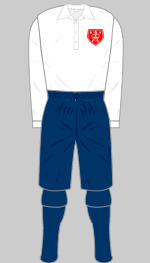
1890-1891 b s
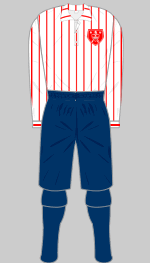
1891-1894 b s
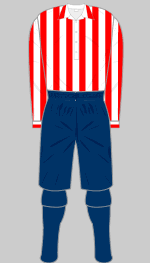
1894-1904 b g r s
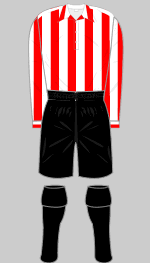
1904-1906 b g r
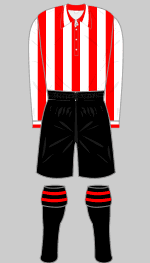
1906-1910 b r
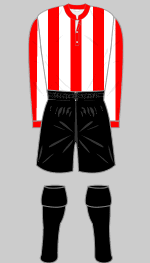
1910-1913 r
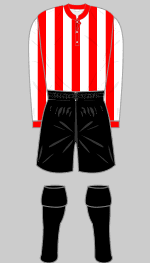
1913-1915 b r
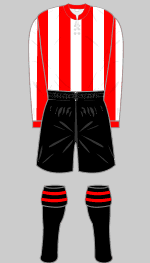
1919-1922 b
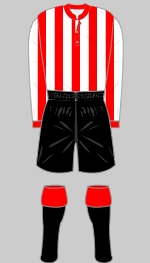
1922-1923 q r
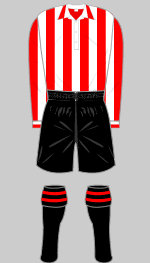
1924-1932 b

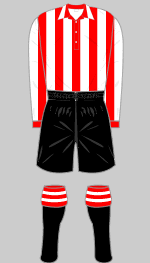
1932-1934 b
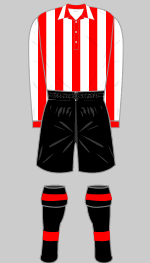
1934-1935 v
1935-1936 b
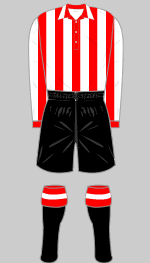
1937-1938 b
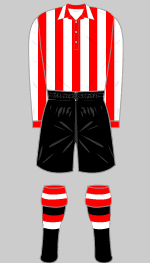
1938-1939 b
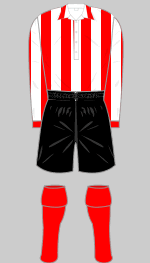
1946-1947 b v
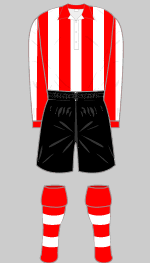
1947-1948 b
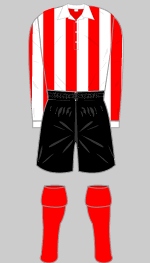
1948-1949 r
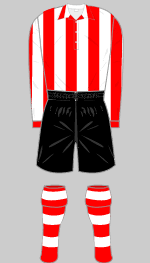
1949-1953 b r
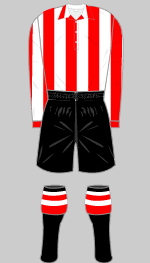
1953-1955 b r
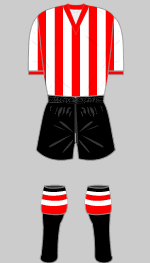
1955-1960 b g r
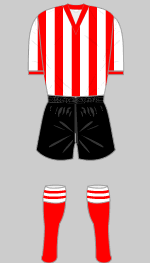
1960-1961 v
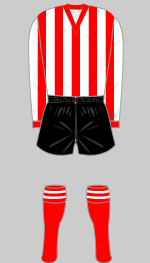
1961-1964 b h
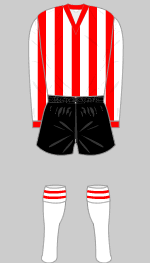
1964-1965 b
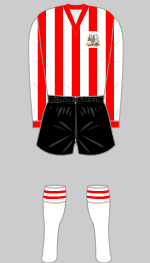
1965-1966 b o
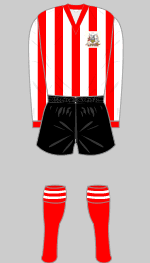
Aug-Sept 66 b h o w
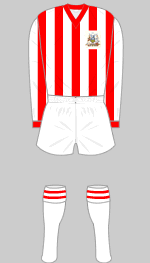
Sept-Dec 66 w
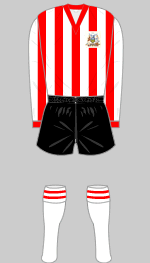
Dec 66-Jan 67 w
March-May 67 w
1967-1968 h m o r
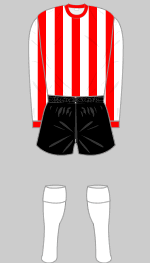
1968-1969 u
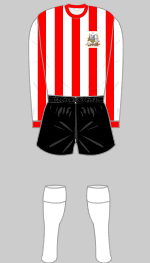
1969-cDec 72 b h k
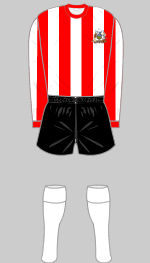
cDec 72-1973 t
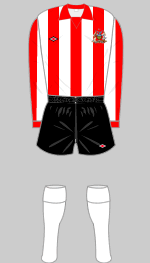
1973-1975 c h l
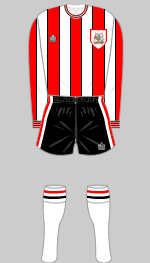
1975-1976 b h k
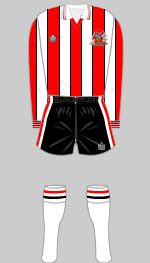
1976-1977 h k
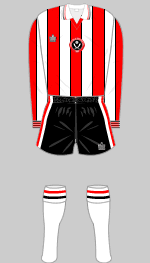
1977-1978 h k
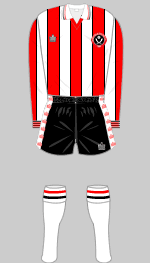
1978-1979 h k
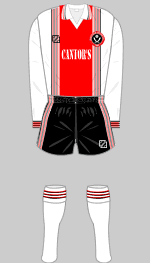
1979-1981 f j k
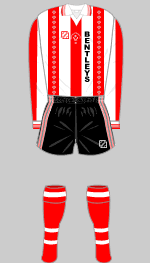
1981-1982 b j n
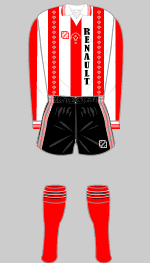
1982-1983 i j n
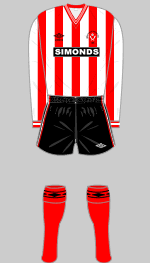
1983-1984 b i j n
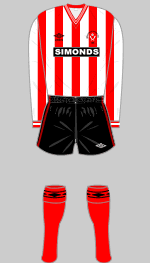
1984-1985 j n
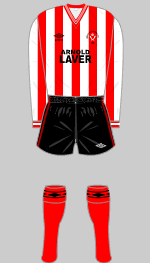
1985-1986 j n
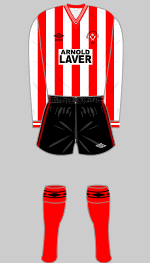
1986-1987 j n
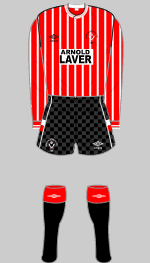
1987-mid1988 j n
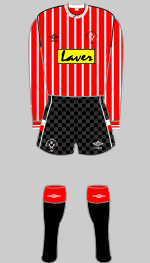
mid1988-1990 i j n
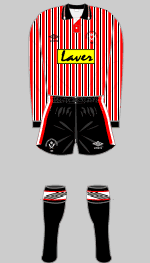
1990-1992 d n
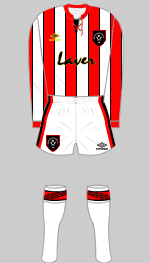
1992-1994 c j p
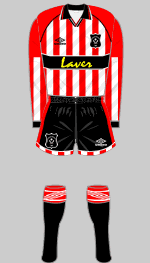
1994-1995 d
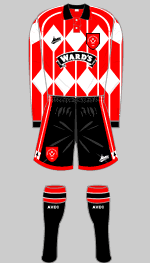
1995-1996 d j n
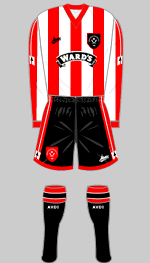
1996-1997 d j
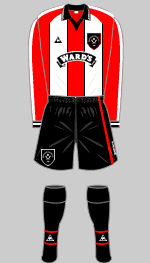
1997-1999 c j
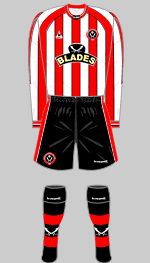
1999-2000 c
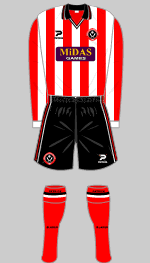
2000-2002 c
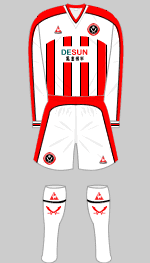
2002-2004 d
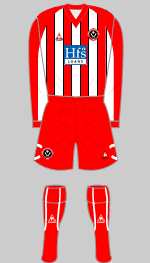
2004-2005 d
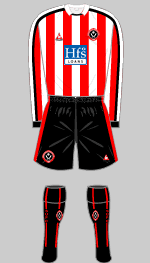
2005-2006 a
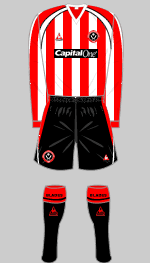
2006-2007 a
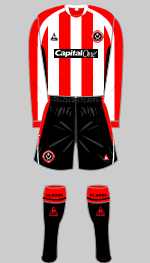
2007-2008 a

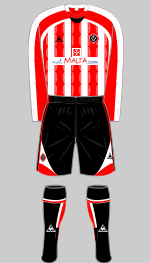
2008-2009 1 a
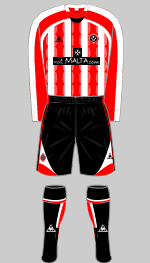
2008-2009 2 a
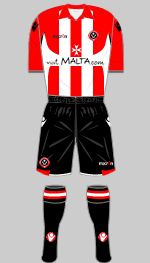
2009-2010 a
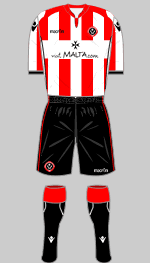
2010-2011 a
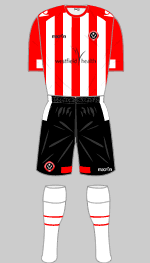
2011-2012 a
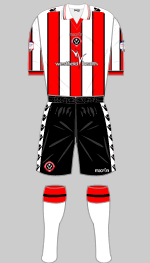
2012-2013 a
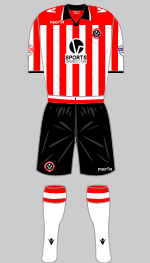
2013-2014 a
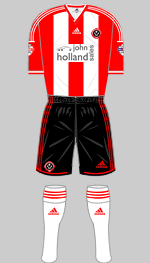
2014-2015 a
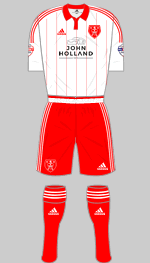
2015-2016 a
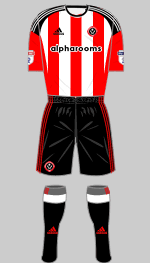
2016-2017 a
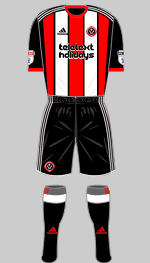
2017-2018 a
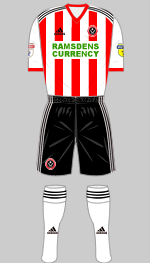
2018-2019 a
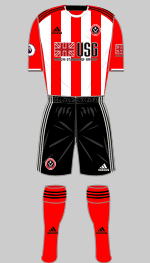
2019-2020 a
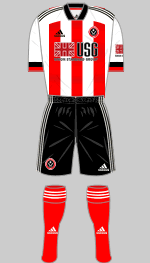
2020-2021 a
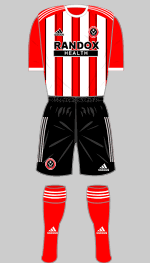
2021-2022 a
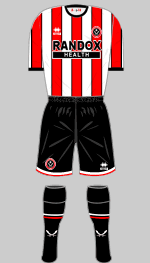
2022-2023 a

2023-2024 a *
Background
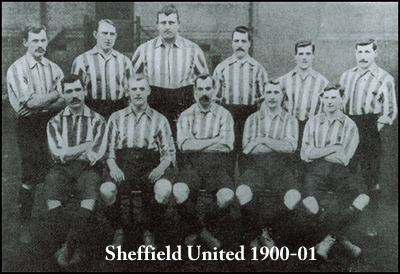 In 1855 Sheffield Cricket Club
leased 8½ acres of land on the southern edge of the city from the
Duke of Norfolk to provide open spaces free of the heavy pollution that
accompanied the rapid expansion of the city's steel industry. At the time
cricket was the recreation of choice but in 1862 the first recorded football
match took place on the Bramall Lane site between Sheffield FC and Hallam
FC. Five years later the Wednesday Cricket Club formed a football branch
who played as Wednesday FC (later Sheffield Wednesday) for several years
at Bramall Lane before they moved away to build their own ground.
In 1855 Sheffield Cricket Club
leased 8½ acres of land on the southern edge of the city from the
Duke of Norfolk to provide open spaces free of the heavy pollution that
accompanied the rapid expansion of the city's steel industry. At the time
cricket was the recreation of choice but in 1862 the first recorded football
match took place on the Bramall Lane site between Sheffield FC and Hallam
FC. Five years later the Wednesday Cricket Club formed a football branch
who played as Wednesday FC (later Sheffield Wednesday) for several years
at Bramall Lane before they moved away to build their own ground.
In March 1889 Bramall Lane hosted the English FA Cup semi-final between Preston North End and West Bromwich Albion. The match attracted so much interest that within a week a public meeting was organised when it was resolved to form a professional football club linked to the Sheffield United Cricket Club. Indeed, Sheffield United continued to share Bramall Lane with the county cricket club until 1973.
 Sheffield United played their first match in August 1889 and joined the
Northern League. In those days the team usually wore white shirts. A crest appeared in the 1891-92 season that consisted of the badge of Sheffield, featuring three sheaves of wheat, apparently a typical heraldic play on words, Shef-field being interpreted as "the open space by the River Sheaf." In 1891 they turned out in red and white "butcher's stripes" and it was not until 1894 that the familar 2" striped shirts appeared for the first time.
Sheffield United played their first match in August 1889 and joined the
Northern League. In those days the team usually wore white shirts. A crest appeared in the 1891-92 season that consisted of the badge of Sheffield, featuring three sheaves of wheat, apparently a typical heraldic play on words, Shef-field being interpreted as "the open space by the River Sheaf." In 1891 they turned out in red and white "butcher's stripes" and it was not until 1894 that the familar 2" striped shirts appeared for the first time.
In 1892 the Football League was extended with the addition of a Second Division. United’s application to join the Football League (which would become the First Division) was rejected but they were invited to join the Second Division instead. United won promotion at the first attempt via the test matches and would remain in the First Division until 1934.
In 1898 “The Cutlers” (Sheffield was famous for producing high quality steel cutlery) won the First Division championship for the first, and so far only time. The following year they won the FA Cup with the legendary William “Fatty” Foulke in goal. In 1901 they lost to Southern League Tottenham in the final but had their revenge in 1902 when they won the cup for the second time, beating Southampton. When their great rivals, The Wednesday, changed their nickname to "The Owls" in 1903, United adopted Wednesday's previous nickname, "The Blades," for themselves.
Their
third FA Cup 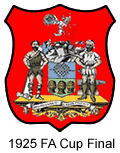 success came in 1915, this time Chelsea were beaten in the
final.
success came in 1915, this time Chelsea were beaten in the
final.
After the First World War United won the FA Cup for the fourth time in 1925. The crest worn in this match was, as was customary, the city's coat of arms. Interestingly United did not wear a crest in any of the other cup finals they appeared in.
In 1934 the Blades were relegated to the Second Division. In 1936, while still in Division Two they reached another FA Cup Final but lost to Arsenal. In 1939 they returned to the top flight only for war to interrupt their progress.
 For thirty years after the resumption of League football in 1946, Sheffield
United moved between the top two divisions no fewer than seven times,
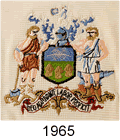
their longest spell at the top being between 1961 and 1968. The Sheffield coat of arms appeared in 1965 and remained until 1977.
For thirty years after the resumption of League football in 1946, Sheffield
United moved between the top two divisions no fewer than seven times,
their longest spell at the top being between 1961 and 1968. The Sheffield coat of arms appeared in 1965 and remained until 1977.
On 6 September 1966 United entertained Spurs for a mid-week game under floodlights. At the request of the referee, the home team wore white shirts to help distinguish between the sides. The Blades won and continued to wear white shorts at home until they were beaten by Birmingham City in the League Cup on 7 December, after which black shorts were reinstated. The white socks usually worn with this alternative strip were retained but the original red ones reappeared at the end of the season. White shorts and socks were worn again throughout 1967-68.
In 1973, after a long argument, the football club finally decided that playing both cricket and football on the same ground was no longer viable and a new 7400 capacity stand was built on the open fourth side of the ground, opening in 1975 after the club’s most successful season for years when they finished sixth in Division One.
 Football is, of course, a fickle business. No sooner was the new stand
open than United went into a steep decline that saw them relegated to
Division Two in 1976 and then,
Football is, of course, a fickle business. No sooner was the new stand
open than United went into a steep decline that saw them relegated to
Division Two in 1976 and then, 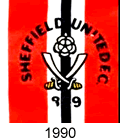 after a missed penalty in the last minute
of the last match of the 1980-81 season, the Blades found themselves in
Division Four. Cynics may point out that this dramatic fall from grace
coincided with the first of many ill-conceived redesigns of the club’s
cherished red and white striped shirts.
after a missed penalty in the last minute
of the last match of the 1980-81 season, the Blades found themselves in
Division Four. Cynics may point out that this dramatic fall from grace
coincided with the first of many ill-conceived redesigns of the club’s
cherished red and white striped shirts.
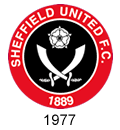
While opinion may be divided about the shirts worn in this period there is no question that the new crest introduced in 1977 was a design classic. The club's nickname, "The Blades" 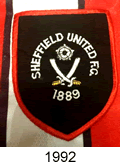 was represented by crossed scimitars was surmounted by a Yorkshire rose. Variations appeared: between 1981 and 1992 it was rendered in outline only while from 1992 until 1999 it was placed on shields of varying shape but the fundamental
 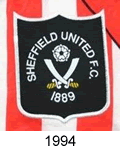 design remained unchanged.
The revival was not long in coming. In 1982 United
were Fourth Division champions at the first time of asking and two years
later they were back in Division Two. Relegation in 1988 was the prelude
to a remarkable change in fortune that brought successive promotions and
a place in Division One. In 1994, however, the club were relegated from
the Premiership. After regularly challenging for promotion, The Blades
were promoted back to the top flight in 2006 but relegated to the Championship in 2007  and then, in 2011, League One.
In the first deal of its kind in England, United and Wednesday shared the same sponsors in 2011-12. United wore the logo of Westfield Health Insurance Company on their home 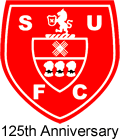 shirts and that of a Volkswagen dealership on their away shirts while Wednesday reversed the arrangement. This followed concern expressed by local businesses that by sponsoring one club and not the other some supporters would be alienated from their brand. Similar concerns had led to Celtic and Rangers sharing sponsorship since 1999.
To mark their 125th anniversary the team wore a strip based on the butchers' stripe shirts from 1891, complete with period crest.
The Blades returned to the second tier for the 2017-18 season having won the League One title and then went on to finish second in the Championship to make their return to the top tier in over a decade. They managed two seasons in the top flight before dropping back into the Championship in 2021. They were back in the top flight for 2023-24 but had a dreadful season and were relegated having conceded 104 goals, a record.
Sources
- (a) Official Sheffield United Website
- (b) Sheffield United FC (Images of Sport: Denis Clareborough)
- (c) Sporting Heroes
- (d) empics
- (e) Football Focus
- (f) Ralph Pomeroy
- (g) Association of Football Statisticians - provided by Pete Wyatt
- (h) Pete's Picture Palace
- (i) David King
- (j) True Colours 2 (John Devlin 2006)
- (k) Alick Milne
- (l) Football League Review
- (m) Peter Moor
- (n) Simon Gabbitas
- (o) Duncan Payne
- (p) Christopher Worrall
- (q) Simon Ståål (British Pathe clip)
- (r) Keith Ellis (HFK Research Associate)
- (s) Tim Atkin
- (t) John Taylor
- (u) The Senior Tigers Club
- (v) Simon Monks
- (w) Tony Sealey
* Kit graphic by Daniel Stoker
Crests are the property of Sheffield United FC.