Scunthorpe
United
Formed 1899
Elected to Division Three (North) 1950. Relegated to the National League 2022
Kit History
Scunthorpe United
Formed 1899
Merged with North Lindsey United in 1910

1899-1904
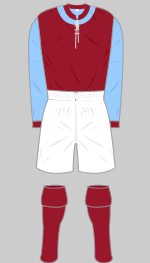
1904-1905 a r
North Lindsey United
Formed 1902
Merged with Scunthorpe United in 1910
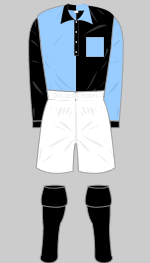
1904-1905 r
Scunthorpe & Lindsey United
1910
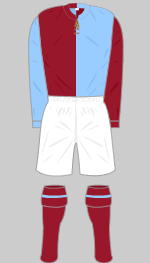
1911-1912 w
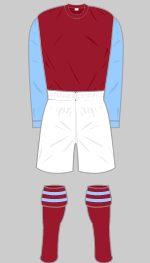
1912-1915 p r
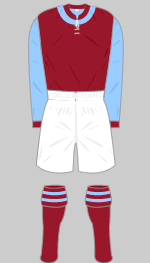
1922-1927 p r
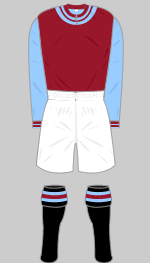
1927-1934 p r
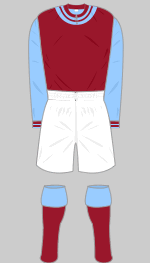
1938-1939 r
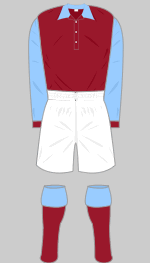
1945-1947 r
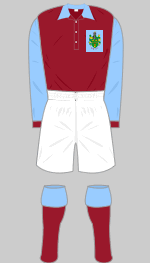
1947-1948 b p r

1948-1949 p
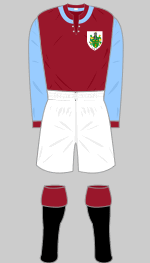
1949-1950 u
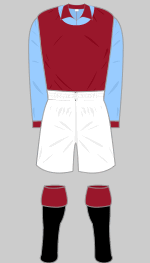
1950-1951 p
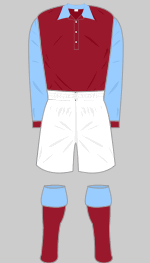
1951-1953 r
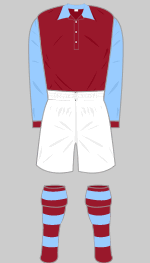
1953-1957 b p r
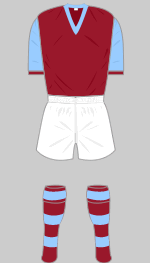
1957-1958 c p r

Scunthorpe United
1958
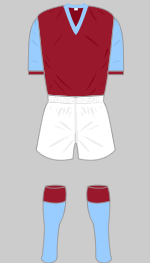
1958-1959 r
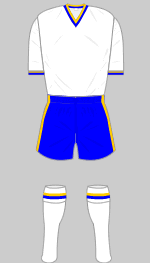
1960-1963 d e p r
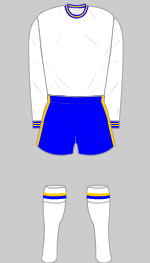
1963-1965 p r
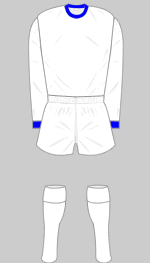
1965-1968 p r
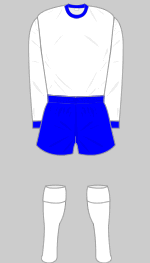
1968-1969 j p
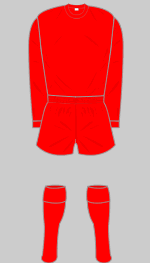
1969-1974 e f p r

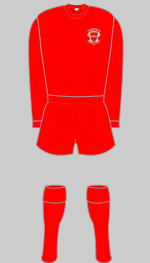
1974-1975 p q r
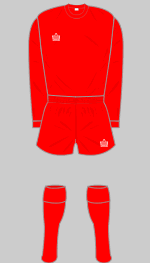
1975-1976 p q
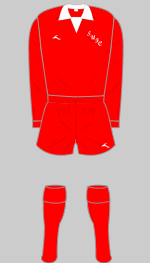
1976-1978 p q r
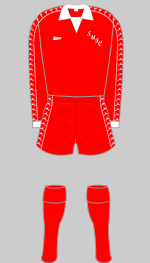
1978-1979 q u
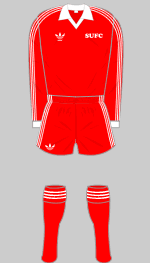
1979-1982 b n p r u
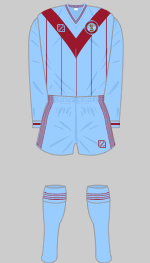
1982-1983 n r
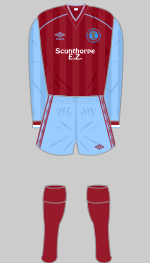
1983-1985 n r s u
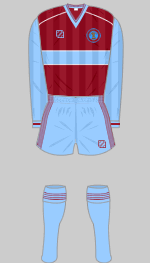
1985-1987 b n r
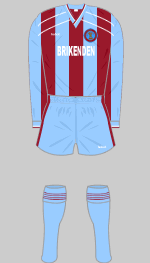
1987-1989 g r
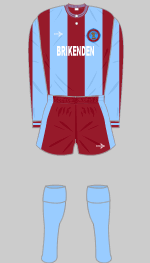
1989-1990 h r s
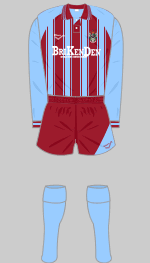
1990-1991 o r
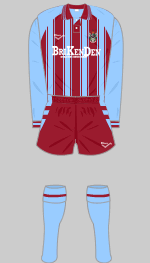
1991-1992 i o r
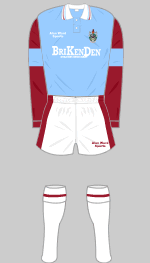
1992-1994 o p r
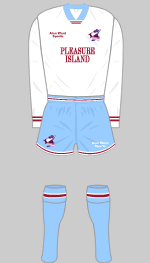
1994-1996 e r s
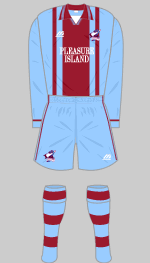
1996-1998 e r
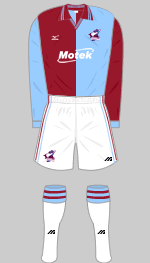
1998-2000 b e r
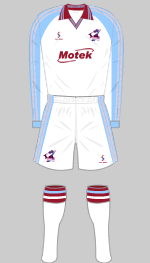
2000-2001 e r
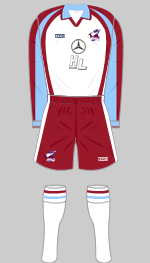
2001-2003 e r
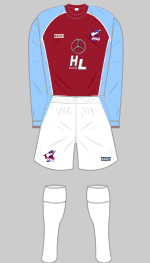
2003-2004 e r
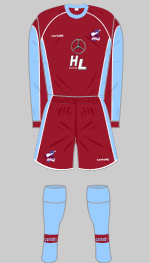
2004-2005 l r
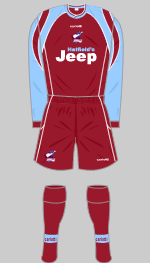
2005-2007 k r
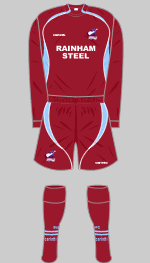
2007-2009 k
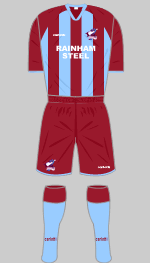
August 2009 k s
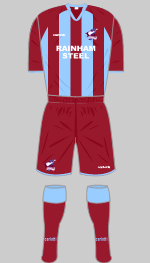
Sept 2009-2010 k s
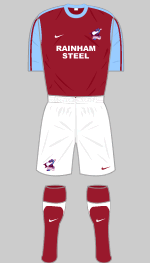
2010-2011 k
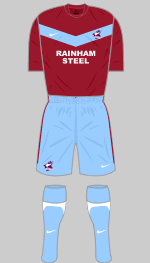
2011-2012 k
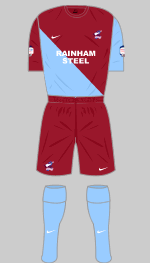
2012-2013 k
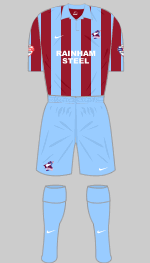
2013-2014 k
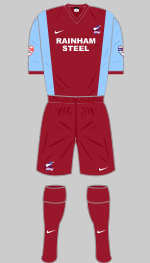
2014-2015 k
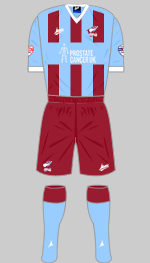
2015-2016 k
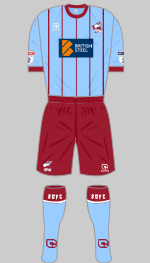
2016-2017 k
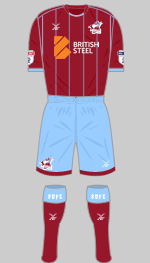
2017-2018 k
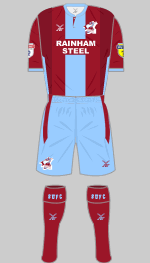
2018-2019 k
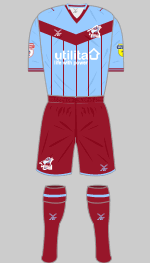
2019-2020 k
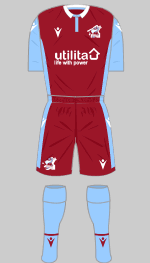
2020-2021 k
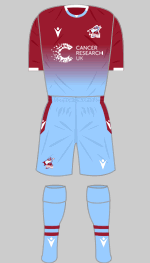
2021-2022 k
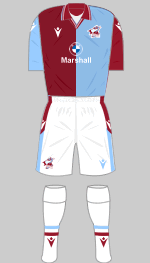
2022-2023 k
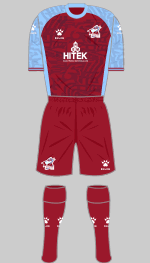
2023-2024 k
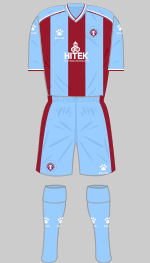
2024-2025 k
Background
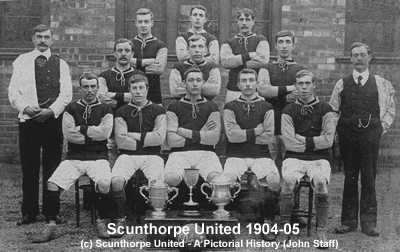 The club can trace its origins
back to 1899 when Brumby Hall FC merged with a second club, probably Frodingham United, and
adopted the name Scunthorpe United. This followed the demise of Scunthorpe Town FC, who were formed around 1880. In 1910 another merger, this time
with local rivals North Lindsey United, led to the creation of Scunthorpe &
Lindsey United. The club played in local competition until 1912, when
they were admitted to the Midland League and became a limited company. They became known as "The Nuts" or more usually, "The Knuts" after the Rev Cryspin T Rust described them as "tough nuts to crack" when presenting them with the Frodingham Charity Cup. Quite why a silent "K" was added is not recorded. This nickname was gradually replaced with the more familiar term, "The Iron," honouring the towns association with the iron and steel industry.
The club can trace its origins
back to 1899 when Brumby Hall FC merged with a second club, probably Frodingham United, and
adopted the name Scunthorpe United. This followed the demise of Scunthorpe Town FC, who were formed around 1880. In 1910 another merger, this time
with local rivals North Lindsey United, led to the creation of Scunthorpe &
Lindsey United. The club played in local competition until 1912, when
they were admitted to the Midland League and became a limited company. They became known as "The Nuts" or more usually, "The Knuts" after the Rev Cryspin T Rust described them as "tough nuts to crack" when presenting them with the Frodingham Charity Cup. Quite why a silent "K" was added is not recorded. This nickname was gradually replaced with the more familiar term, "The Iron," honouring the towns association with the iron and steel industry.
In 1921, United made the first of many unsuccessful applications to join the Football League. They won the Midland championship in 1927 and again in 1939 and by the time war broke out, they were established as one of the stronger non-League sides.
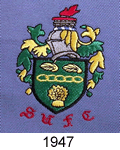 The first time that the club is recorded as wearing a crest was for the 1947-48 season, when the coat of arms of the Borough of Scunthorpe appeared. Worn on a light blue patch, the five chain links are a play on words on the abbreviation for Lincolnshire (Lincs - geddit?) and represent the five villages that were combined to form the borough in 1936. The wheat sheaf symbolises the agricultural origins of those villages and the two shells above the chain are Gryphaea, a fossil bivalve common in the local ironstone. The whole heraldic effort is surmounted by a blast furnace.
In 1949 the Football League expanded with the addition of two clubs in each of the regional Third Divisions. In a series of eliminating ballots, Scunthorpe emerged triumphant after three rounds of voting and duly took their place in Division Three (North) for the 1950-1951 season. Almost 12,000 people turned up at the Old Show Ground to watch their first home game.
In 1958 United became the last club to win the Division Three (North) title and
promotion to Division Two, the lower divisions being reorganised for the following season. During the close season the club dropped "and Lindsey” from
their name to become, once again, Scunthorpe United. While playing in the Second Division the board decided on a radical change of kit (claret and blue being thought decidedly old fashioned) and in 1959 they turned out in white shirts and blue shorts with smart gold trim. In 1962 they led the division at one stage but fell 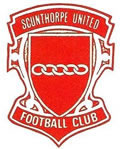 back to
finish in fourth place, their highest ever placing, defeat in their last two games costing them promotion to the First Division.
back to
finish in fourth place, their highest ever placing, defeat in their last two games costing them promotion to the First Division.
Decline followed with relegation in 1964 and 1968
taking the club back into the Fourth Division. In 1969 another radical change of kit came about to improve their sagging fortunes and for the next 13 seasons, the team played in all-red. Initially this strip was completely unadorned but in 1974 a new crest was introduced, which preserved the five chain links from the 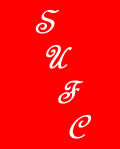 old town crest. It was at this time
that Ray Clemence and Kevin Keegan emerged as youngsters in the Scunthorpe
first team. They were, of course, sold on and enjoyed enormous success
with Liverpool and England.
old town crest. It was at this time
that Ray Clemence and Kevin Keegan emerged as youngsters in the Scunthorpe
first team. They were, of course, sold on and enjoyed enormous success
with Liverpool and England.
The crest disappeared after just one season and was replaced when Bukta became the club's kit provider in 1976 with a simple cypher, much favoured at the time. This in turn made way for a rather more pedestrian, horizontal version on the 1979 Adidas strip, which was retained until 1982. On some occasions the team appeared in shirts with no script.
 In
1982, United had to seek re-election, were promoted the following season
and relegated the season after that. It was in 1984 that the club returned
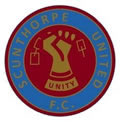
to the claret and blue colours worn until the early 1960s, but now in a variety of eye-catching combinations. To complement the team's new image, a smart new crest was commissioned. The links were now held firmly in a gold fist above the word "Unity." (The version worn on the team shirts reversed the blue and claret shown in the image on the left.)
In
1982, United had to seek re-election, were promoted the following season
and relegated the season after that. It was in 1984 that the club returned
to the claret and blue colours worn until the early 1960s, but now in a variety of eye-catching combinations. To complement the team's new image, a smart new crest was commissioned. The links were now held firmly in a gold fist above the word "Unity." (The version worn on the team shirts reversed the blue and claret shown in the image on the left.)
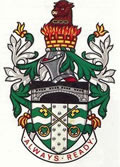 In 1988, the club quit their Old Showground home and moved out of Scunthorpe into the brand new purpose built Glanford Park stadium, built with financial support from Glanford Borough Council (whose crest appeared on the team's shirts between 1990 and 1994). Over the next five seasons the club reached the play-offs
four times out of five but were unsuccessful each time. In 1994, following local government reorganisation, Scunthorpe and Glanford were reincorporated into Lincolnshire and this crest was dropped.
In 1988, the club quit their Old Showground home and moved out of Scunthorpe into the brand new purpose built Glanford Park stadium, built with financial support from Glanford Borough Council (whose crest appeared on the team's shirts between 1990 and 1994). Over the next five seasons the club reached the play-offs
four times out of five but were unsuccessful each time. In 1994, following local government reorganisation, Scunthorpe and Glanford were reincorporated into Lincolnshire and this crest was dropped.
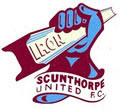 For the 1994-95 season a competition was held in local schools and colleges to design a new crest. The winner, designed in the finest traditions of Soviet Realism, depicted a fist clutching a girder, celebrating the town's long association with the iron and steel industry. This crest divides supporters, with traditionalists yearning for the reintroduction of the circular, 1982 version.
In 1999 The Iron finally won promotion to Nationwide Division Two (third tier) after beating Leyton Orient in the play-off final at Wembley. Disappointment followed and after only one season, they were relegated.
After narrowly avoiding relegation to the Conference in 2004, the Iron won automatic promotion in 2005 to Coca Cola League One (third tier) and rose to the Championship after winning the League One championship in 2007. Relegated at the end of the 2007-08 season, they bounced back in 2009 after beating Millwall in the play-off final only to be relegated again in 2011. In 2013-14, they were back in the fourth tier but bounced back straight away.
In 2014-15 Scunthorpe were involved in the longest penalty shootout in FA Cup history against Worcester City. No fewer than 32 penalties were taken before Scunny prevailed.
In 2016 Tata Steel announced it intended to withdraw from steel making operations in the UK, putting the future of Scunthorpe's steel works and 4,800 jobs at risk. In May investment firm Greybull capital bought the plant and other assets and relaunched them as British Steel, whose new logo appeared on Scunthorpe United's shirts in 2016-17. After their contract expired, Rainham Steel resumed their shirt sponsorship.
The 2022-23 campaign proved disastrous, with the Iron managing just four wins in all competitions. They were duly relegated in last place, 18 points from safety. Worse was to come and The Iron were relegated to National League North the following season.
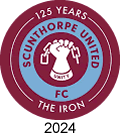 As 2024 marked the 125th anniversary of the club's formation (and in line with new FA regulations) supporters were asked to vote on the design of of the crest to be worn in 2024-25. Surprisingly the socialist realist crest worn for the past 30 years was rejected in favour of the 1982 unity badge. John Dewhurst, the Bradford City historian had whiled away the train journey returning from the Bantams' away game at Scunthorpe by sketching out this design on a sandwich wrapper in 1981. To John's surprise his offering won the competion and was adopted between 1982 and 1990.
Thanks to Richard Young for providing artwork for the crest graphics and the stories behind them.
Sources
- (a) Club Colours (Bob Bickerton 1998)
- (b) Football Focus (dead link)
- (c) Bristol Rovers FC - Images of Sport (Mike Jay)
- (d) Swindon Town FC - Images of Sport (Richard Mattick 2000)
- (e) empics
- (f) Football Cards
- (g) Tranmere Rovers FC - Images of Sport (Peter Bishop)
- (h) Scarborough FC - Images of Sport (Paul Eade 2002)
- (i) Club Programme
- (j) Classic Kits
- (k) Scunthorpe United Official Website
- (l) Study United
- (m) Greger Lindberg
- (n) Ralph Pomeroy
- (o) David King
- (p) Richard Young
- (q) Alick Milne
- (r) Scunthorpe United - A Pictorial History (John Staff 2007)
- (s) Pete Williams
- (t) Simon Monks
- (u) Keith Ellis
- (v) seniortigers.org.uk
- (w) English Fotball from the Beginning to the 1920s submitted by Harry Hyndman
Crests are the property of Scunthorpe United FC.