Third Lanark A.C.
Formed 1872. Wound up 1967.
Founder member of the Scottish Football League 1890. Resigned 1967.
Kit History
3rd Lanarkshire Rifle Volunteers
1872
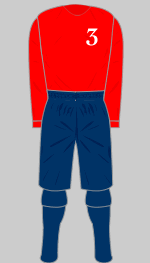
1872-1874 b d j
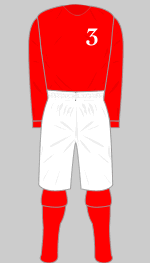
1875-1880 a j
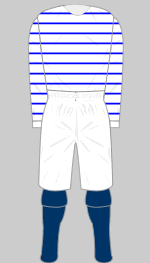
1880-1887 a b
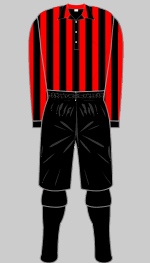
1887-1890 a b c
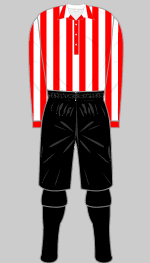
1890-1898 a
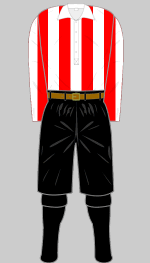
1898-1900 a n
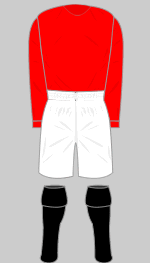
1900-1902 a b
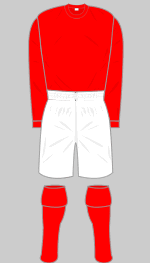
1902-1903
Third Lanark A.C.
1903
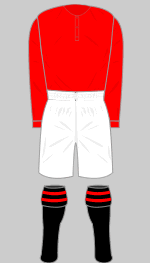
1903-1904 c
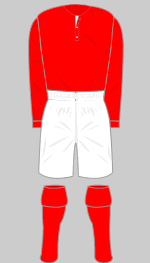
1904-1905 a i
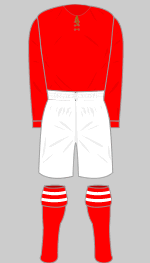
1903-1910? a c i
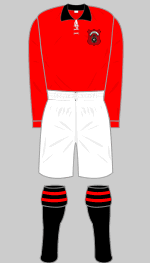
1910 i
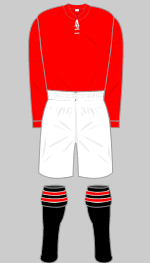
1912-1921 a
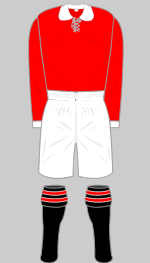
1921-1922 c
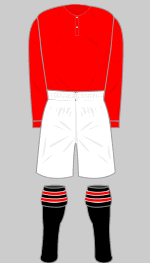
1922-1923 a i
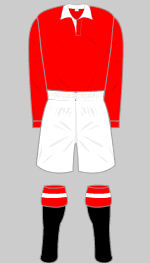
1923-1924 a
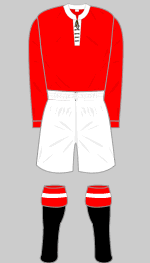
1924-1925 a c
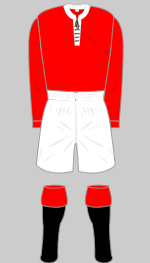
1925-1926 a
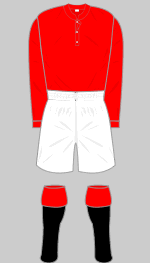
1927-1928 a
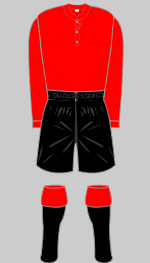
1927-1928 away a
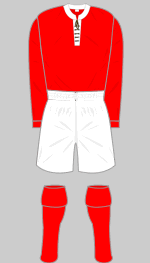
1928-1929 c
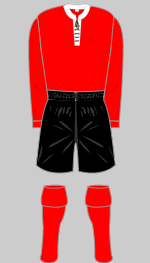
1928-1929 away a
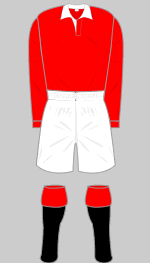
1929-1930 a

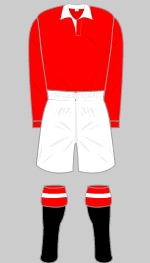
1930-1932 a
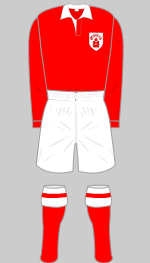
1932-1933 c
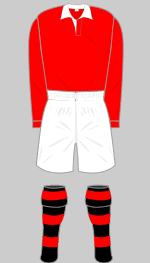
1933-1936 a c i n
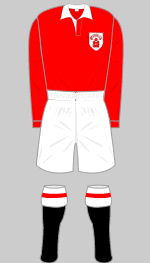
1936-1937 a e
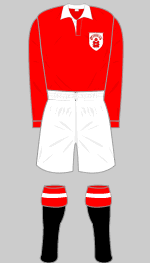
1937-1938 a
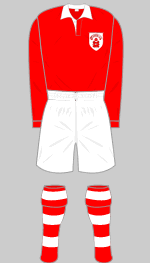
1939-1940 a
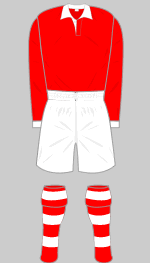
1946-1947 a c i
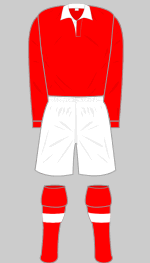
1948-1949 n
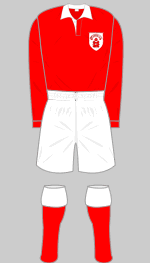
1950-1951 c
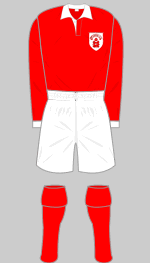
1951-1952 i
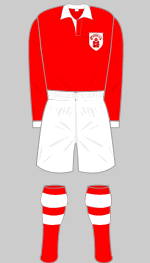
1951-1952 a i
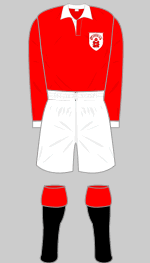
1952-1954 l
1953-1954 2 c g l
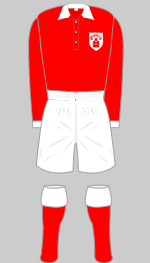
1954-1955 n
1955-1956 a i
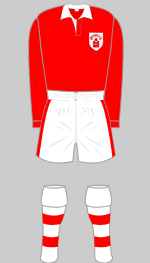
1956-1957 c
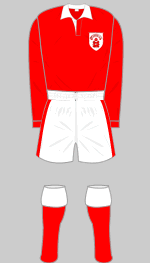
1957-1958 a i
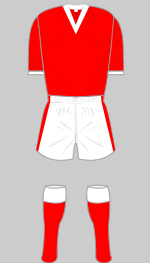
1957-1959 a l
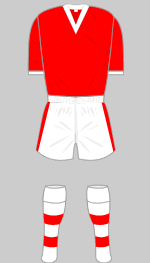
1959-1960 1 g i
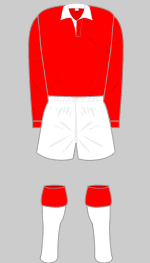
1959-1960 2 i
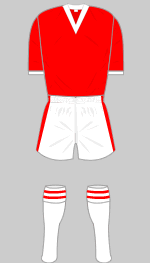
1960-1962 1 a c f
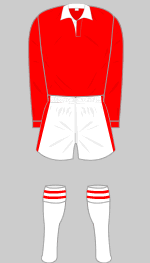
1960-1962 2 l
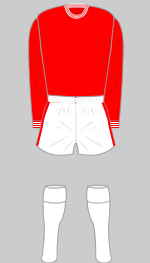
1962-1963 m
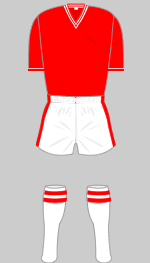
1963-1965 c g l m
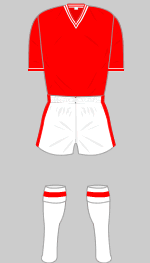
1965-1967 g
Background
 As association football grew
in popularity in the late nineteenth century, a number of clubs were
formed as offshoots of volunteer regiments, forerunners of the modern
Territorial Army – twenty-three are recorded on Brian
McColl’s site as being formed between 1870 and 1900.
Volunteer regiments were locally recruited reserve units who received
no pay, provided their own uniforms but were trained by regular army
officers and who could be called out for active military service in
support of the regular army.
As association football grew
in popularity in the late nineteenth century, a number of clubs were
formed as offshoots of volunteer regiments, forerunners of the modern
Territorial Army – twenty-three are recorded on Brian
McColl’s site as being formed between 1870 and 1900.
Volunteer regiments were locally recruited reserve units who received
no pay, provided their own uniforms but were trained by regular army
officers and who could be called out for active military service in
support of the regular army.
After the inaugural international between Scotland
and England, played in Glasgow, a meeting was held in December 1872
at which the members of the 3rd Lanarkshire Rifle Volunteers, with the
support of their commanding officer, Lt-Colonel HE Crum-Ewing, resolved
to form a football club carrying the name of the regiment. It was then
agreed to adopt “Guernseys” (coarse knitted woolen tops
with crew necks) in regimental red, navy knickerbockers and  hose. The team played on the regimental drill ground at Victoria Road in Glasgow
before moving into the first Cathkin Park in Cathcart Road in 1875. According to SFA records, the team's original jerseys had the number "3" stitched on.
hose. The team played on the regimental drill ground at Victoria Road in Glasgow
before moving into the first Cathkin Park in Cathcart Road in 1875. According to SFA records, the team's original jerseys had the number "3" stitched on.
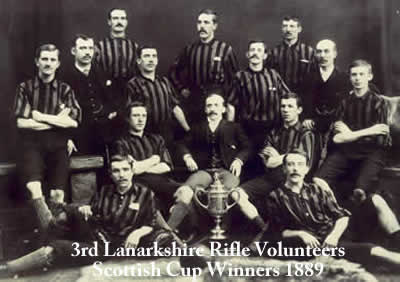
The team grew quickly to prominence and became one of the leading Scottish sides, reaching the final of the Scottish Cup in 1876 and 1878. In 1889 they met Celtic in their third final, a match they won but which had to be replayed after a protest by Celtic over the state of the pitch (which was ankle deep in snow). The “Warriors” won 2-1 to secure their first senior trophy. The following year, the club helped form the Scottish League and by the end of the century, they had won the Glasgow Cup three times.
After turning professional in 1893, links with
the regiment became more tenuous and in 1903 they were severed altogether,
the club re-registering with the Scottish FA as Third Lanark Athletic
Club (possibly becoming the only football club in the UK that did not have the suffix AFC or FC after their formal name). The following season, they won the Scottish First Division, an
achievement made all the more remarkable because they were without a
ground at the time and played all their home games at “New”
Hampden or at their opponents’ ground. In 1905 they
moved into New Cathkin Park purchased from Queen’s Park and formerly
known as (Old) Hampden Park. The panoramic views may have given rise
to the club’s unusual nickname of “The Hi Hi.” They won the Scottish Cup for the second time in 1905 and in
1906 they reached the final again but were beaten by Hearts. Victory
in the Glasgow Cup of 1908 was the high water mark for the club –
there 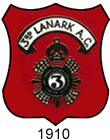 would be no more honours although they remained a modest mid-table
side until 1925 when they finished last and were relegated to the Second
Division.
would be no more honours although they remained a modest mid-table
side until 1925 when they finished last and were relegated to the Second
Division.
A photograph taken around 1910 shows a black crest was worn and althouth the details cannot be confirmed, it seems likely it was based on the regimental crest shown here.
Aside from a brief return to the top level (1928-29), Third Lanark were stuck in the Second Division until 1931 when they won the divisional championship. They were relegated again in 1934 but bounced back immediately, once again as champions of Scottish Division Two. An FA Cup final appearance in 1936 rekindled hopes of a return to former glory but they were beaten by Rangers.
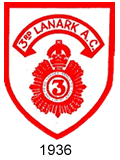 Following this cup final appearance, the team wore the club crest, on a regular basis although sometimes the team turned out in plain tops. Modern "continental style" shirts were adopted in 1958 but the old, long sleeved shirts were often worn in cold weather.
After the Second World War, “The Thirds” played in Division “A” (top level) until they were relegated in 1954. They won promotion in 1958, reaching the League Cup final the following year. In 1961 they finished in third place in the First Division. The club then went into a decline that would bring about the club's destruction.
In 1965 the club won only three league games, collecting a meagre seven points and were duly relegated. There followed two seasons of mediocrity and disappointment in the Second Division, culminating on 28th April 1967 with a humiliating defeat 1-5 at the hands of Dumbarton. Behind the scenes the club was riven by internal squabbles and power struggles and, over the summer, Third Lanark was declared bankrupt and its assets liquidated.
Rumours of boardroom corruption have persisted to the present day. It is widely held that the chairman of the Third Lanark board, Bill Hiddleston, deliberately engineered the club's collapse so that he could profit from the sale of Cathkin Park for housing. Whether or not this allegation is true, no money was made: Cathkin Park lay derelict for years until it was taken over by Glasgow City Council. The partial remains of the old terraces are still visible today.
In 2008, 40 years after the club's remaining assets were sold off a small group of die-hard fans established a successor club, acquiring the name Third Lanark Athletic Club Ltd from former Glasgow MP, Sir Teddy Taylor who had bought the rights to the title from the liquidators in 1967. The club now runs three teams and are members of the Scottish Amateur FA. Their goal is to join the Scottish Junior FA as a professional team with a long term aim of returning to the SPFL.
Sources
- (a) Alick Milne (HFK Research Associate)
- (b) The Scottish Football League Former Members V- Former members (Norman Nichol 1994)
- (c) The History of Third Lanark
- (d) 3rd Lanarkshire Rifle Volunteers
- (e) London Hearts
- (f) Football Focus
- (g) Ralph Pomeroy
- (h) Euan MacDermid
- (i) Keith Ellis (HFK Research Associate)
- (j) Charles Alcock's Football Annuals 1868-1891 researched by Robin Horton
- (l) Ian McConnel
- (m) Seamus Ferry
- (n) Third Lanark - Images of Sport (Bob Laird 1999) submitted by Seamus Ferry