


Queen
of the South
Formed 1919
Founder member of Scottish Division Three 1923
Kit History
Dumfries
1897
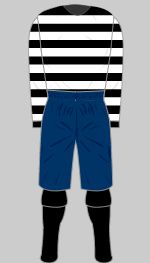
1897-1900 a b
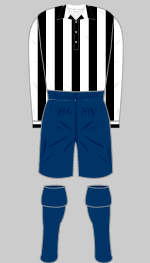
1900-1904 a b
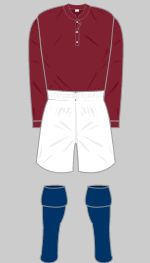
1904-1912 a b
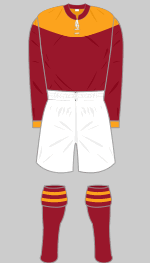
1912-1915 a
5th King's Own Scottish Borderers
1908
(Formed as Maxwelltown Volunteers in 1896)
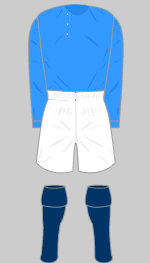
1908-1919 a b
Queen of the South
1919
Formed by the merger of Dumfries, 5th KOSB & Arrol-Johnston
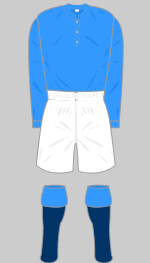
1919-1920 l
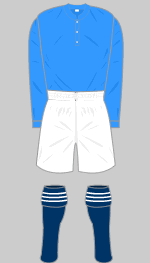
1920-1921 a
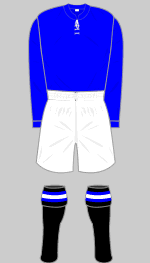
2 May 1922-1923 a l m
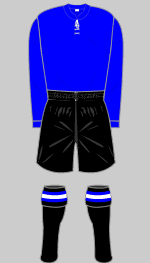
1927-1929 Away
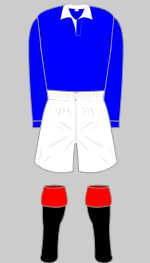
1931-1933 a l

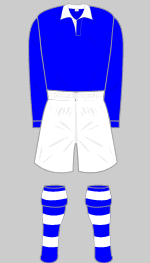
1933-1935 a
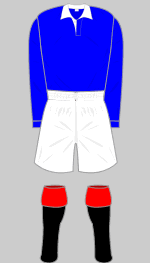
1935-1937 c i
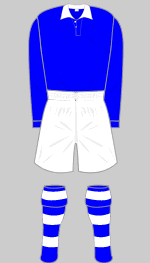
1937-1946 a p
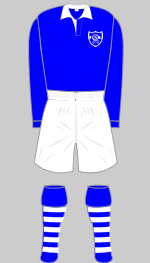
1947-1952 a p

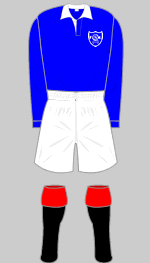
1952-1958 a p
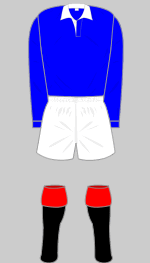
1958-1959 1 p
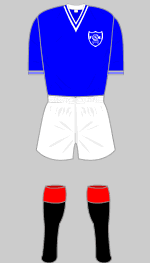
1958-1960 a
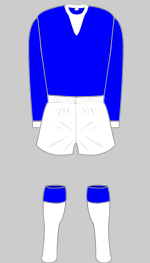
1960-1961 k
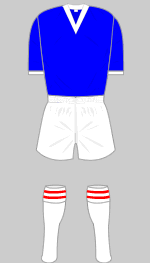
1961-1964 a
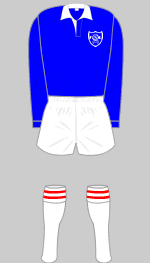
1961-1962 p
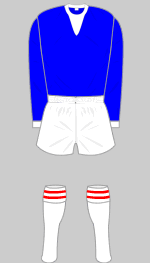
1963-1964 q
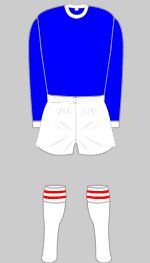
1964-1965 a
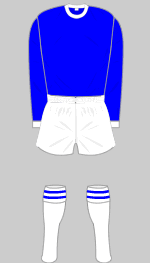
1967-1968 a
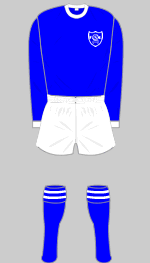
1969-1973 a
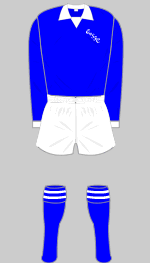
1973-1976 a
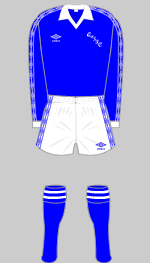
1976-1977 f
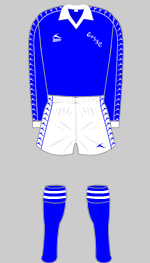
1977-1980 a f
1980-1981 e g h l
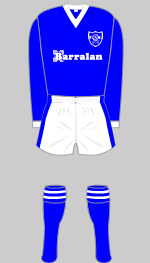
1981-1982 f g h p
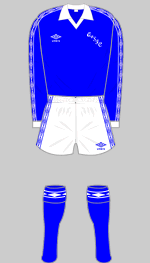
1982-1983 p

1983-1984 d f g h
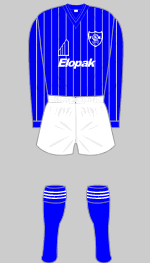
1984-1985 f h
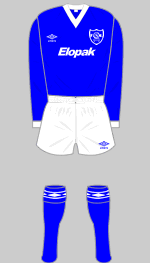
1984-1985 (2) f
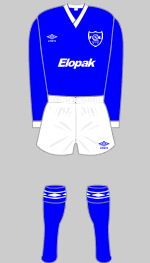
1985-1986 f h
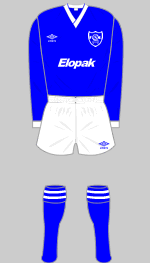
1986-1987 f h
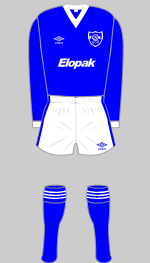
1987-1989 f g h j
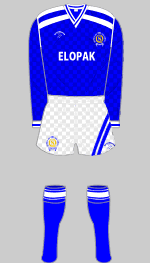
1989-1990 e f h
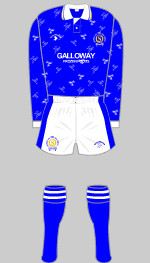
1990-1994 e f h
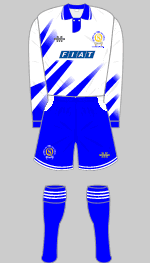
1994-1995 f h
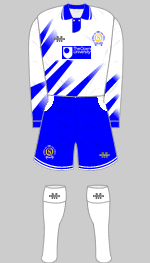
1995-1996 o
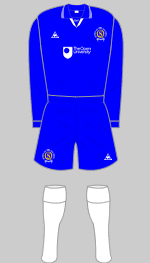
1996-1997 f h o
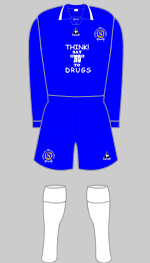
1997-1998 f h j o
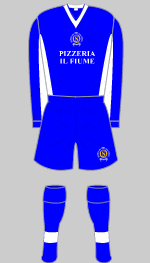
1998-1999 f j
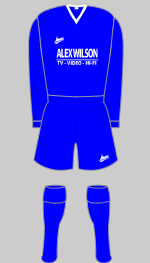
1999-2000 e f
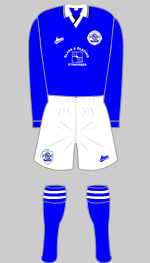
2000-2001 e f
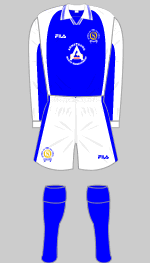
2001-2002 e f
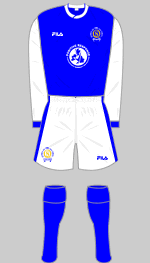
2002-2003 e f
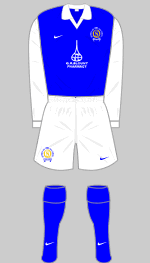
2003-2004 e f
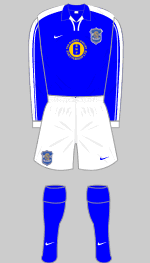
2004-2005 e f
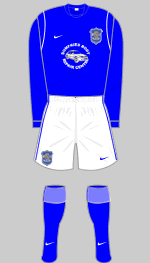
2005-2006 e f
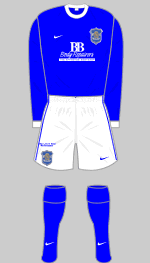
2006-2007 e f
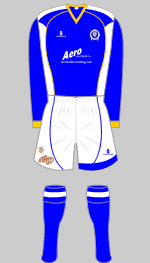
2007-2008 f h
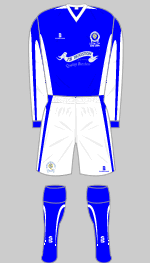
2008-2009 f
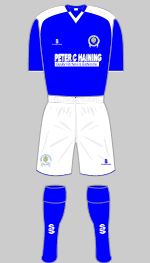
2009-2010 f p
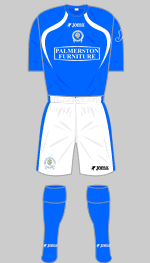
2010-2011 f
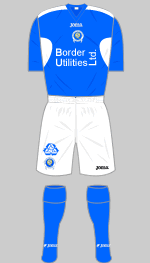
2011-2012 f
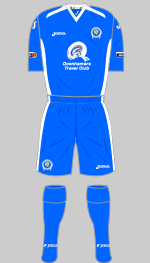
2012-2013 f
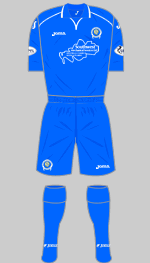
2013-2014 f
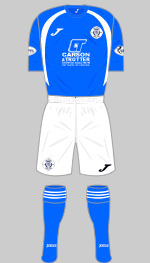
2014-2015 f n
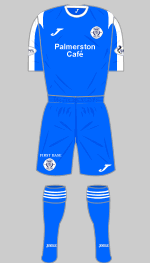
2015-2016 f
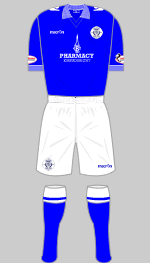
2016-2017 f
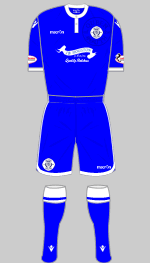
2017-2018 f
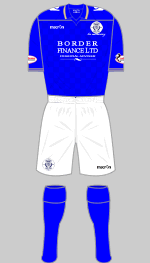
2018-2019 f
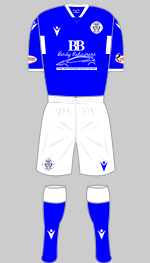
2019-2020 f
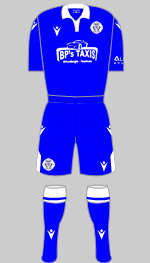
2020-2021 f
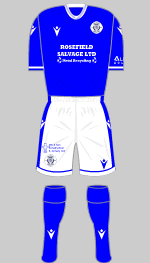
2021-2022 f
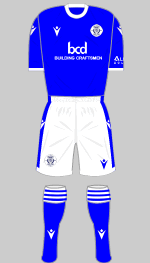
2022-2023 f
Background
 There were several fundamental difficulties
facing football clubs in the south-west of Scotland in the late nineteenth
and early twentieth century. Small, widely dispersed communities and
poor communications meant that running even a semi-professional side
was a doubtful economic proposition. Various attempts were made to start
regional leagues but these did not prosper.
There were several fundamental difficulties
facing football clubs in the south-west of Scotland in the late nineteenth
and early twentieth century. Small, widely dispersed communities and
poor communications meant that running even a semi-professional side
was a doubtful economic proposition. Various attempts were made to start
regional leagues but these did not prosper.
In the Dumfries area several teams existed in the years leading up to the First World War. These included Dumfries FC (formed 1897), a works side, Arrol-Johnston FC and 5th King’s Own Scottish Borderers (formed 1908 – formerly Maxwelltown Volunteers). These clubs closed down in 1915 for the duration of the Great War.
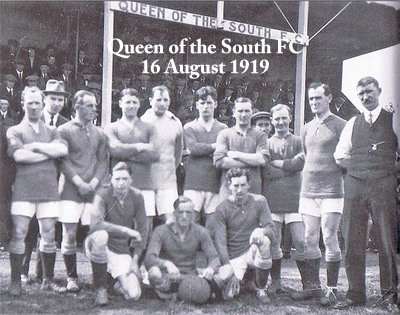
In 1919 a public meeting was held in Dumfries Town Hall to consider how senior football could be revived. Rather than reinstate the old clubs, it was proposed that a new, professional club be formed the following season to draw together support from Dumfries and Maxwelltown areas. The proposal was accepted unanimously and “Queen of the South United FC” was born.
Ian McCartney's The Queens 1919-2004 records that the team wore royal blue shirts for the first time on 2 May 1922, which implies that up until then they had played in the lighter blue shirts inherited from the 5th KOSB side.
In 1923 the brand new club was admitted to the Western League, one of the regional competitions set up by members of the Scottish Second Division in 1915. Angered by the refusal of the Scottish Football League to reinstate this competition, a number of these former members had formed the rebel Central league in 1920 and then been admitted to the Scottish League in 1921. This had left the Western League severely depleted until a trio of south-west clubs, Queen of the South, Nithsdale Wanderers and Solway Star joined (as did Leith Athletic, who came from Edinburgh). In 1923 the Scottish League decided to create a Third Division based on the Western League and so, the “Doonhamers” found themselves elevated to the national stage only three years after their formation.
The Third Division proved an over-ambitious project
for the little clubs involved and in 1926, the competition collapsed
in chaos. Queen of the South avoided the debacle, having been promoted
in 1925. The club became established in the Scottish Second Division
and in 1933 they were promoted as runners-up. The 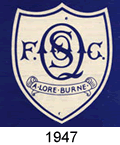 newcomers took the
First Division by storm, finishing in fourth place, their highest placing
to date.
newcomers took the
First Division by storm, finishing in fourth place, their highest placing
to date.
Shortly after the end of the Second World War, a new crest was introduced. The club's initials were intertwined against a white shield and the town motto, A Lore Burne (a historical rallying cry heard when the town of Dumfries came under attack) was placed underneath on a scroll. This was dropped in 1960 but reappeared briefly at the end of the decade.
The club held their own and kept their place
in the top division in the restructuring of 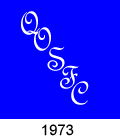 1946. Relegation in 1950
was a temporary setback, the Queens storming back as Division “B”
champions the following season. They went down again in 1959, returned
in 1962 and were relegated back to Division Two in 1964. They have not
returned to the top level since.
1946. Relegation in 1950
was a temporary setback, the Queens storming back as Division “B”
champions the following season. They went down again in 1959, returned
in 1962 and were relegated back to Division Two in 1964. They have not
returned to the top level since.
In 1973 the traditional crest was replaced by a more modern script design embroidered  directly onto the shirts, very much the fashion at the time.
In 1975 The Doonhamers finished in second place
but as the league was restructured, this was only enough to secure them
a place in the new First Division (second level) for the following season.
They bounced between the second and third tier during the 1980s. The old crest was revived  in 1982 and appeared with several modifications to the colouring.
In 1989 the badge was updated, retaining the traditional monogram. Like its predecessor, there were several variants in the colours.
 The team
spent the whole of the 1990s in the Second Division (third tier) until,
in 2002, they won the divisional championship and returned to the First
Division (level two).
The team
spent the whole of the 1990s in the Second Division (third tier) until,
in 2002, they won the divisional championship and returned to the First
Division (level two).
In 2004 the old style of crest was revived, now placed on a blue shield. This did not prove popular with supporters and after three seasons, the 1989 version was reinstated.
 In April 2008, Queen of the South beat Aberdeen in an epic match at Hampden to reach their first ever Scottish Cup final against Rangers. In a dramatic game, Rangers were 2-0 up at half-time but the Doonhamers drew level with two goals in eight minutes after the break. The decisive goal came in the 73rd minute to end Queen of the South's fairytale cup campaign. (The commemorative kits
  worn in the cup are posted in the 2007-08 season gallery.)
Disappointment followed and in 2012, the Queens were relegated to the Second Division but they bounced back immediately, finishing as champions the following season.
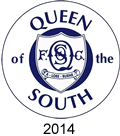
A new version of the club crest was introduced in 2014 which revived the original version within a white disc on which the club's name was printed.
Sources
- a Alick Milne
- b Brian McColl
- c London Hearts
- d relichtie plus
- e SNS Pix
- f Queen of the South Official Site
- g Ralph Pomeroy
- h Ewan Lithgow
- i My photo library
- j Donald Gellatly
- k Bruce Wright
- l History of Queen of the South (Official Club website)
- m The Queens 1919-2004 (Ian McCartney 2004) provided by Bruce Wright
- n Bruce Wright
- o Russel J Campbell
- p Ian McConnel
- q The Queens 1919-1995 (Bill Jardine 1995) submitted by Ralph Pomeroy
Crests are the property of Queen of the South FC. Photograph courtesy of the official club website.