
Kit History
Alpha
1885-1886
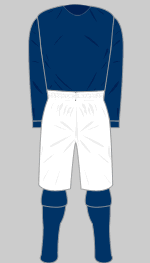
1885-1886 a
Motherwell
1886
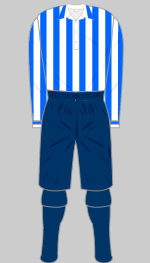
1886-1888 a s
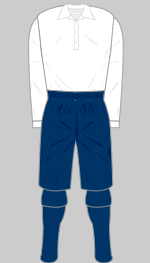
1888-1890 a b
1890-1891 a
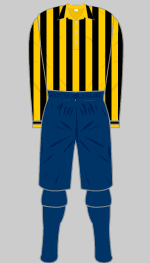
1891-1893 a c
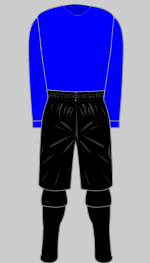
1893-1895 a
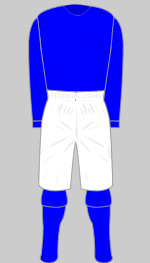
1895-1900 a c
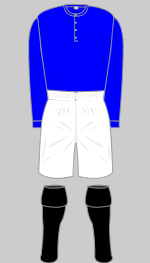
1900-1908 a l
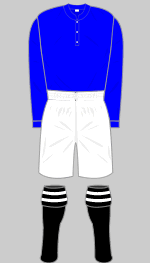
1909-1913 a
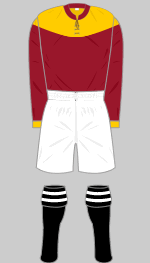
1913-1924 a k n
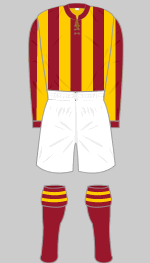
1924-1927 a m p
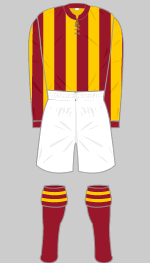
1927-1928 d m p
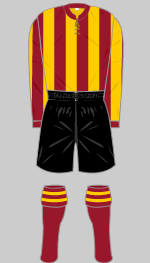
1927-1928 away a
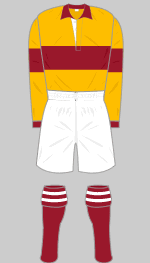
Sept-Oct 1928 a
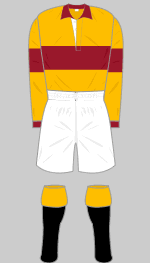
Nov 1928-1932 a
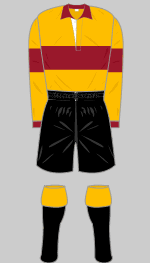
1928-1929 away a
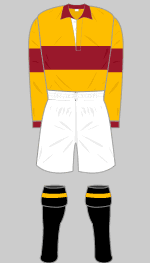
1932-1934 a e k
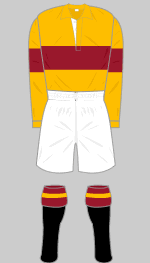
1934-1935 k
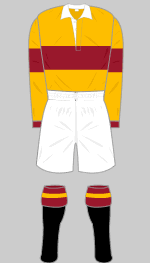
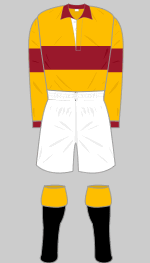
1937-1938 n
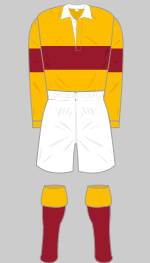
1938-1939 n
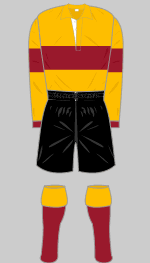
1947-1948 k
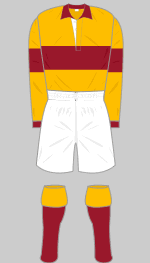
1948-1949 n
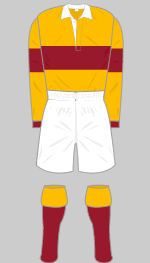
1949-1951 a d
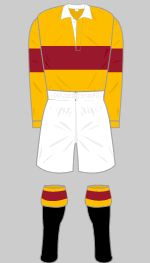
1951-1954 k o
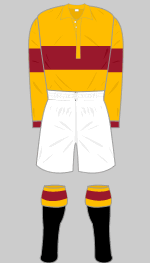
1954-Feb 58 e1 k n o
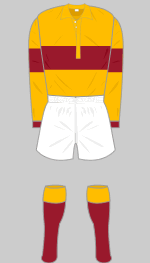
March 58 -1959 1 n o
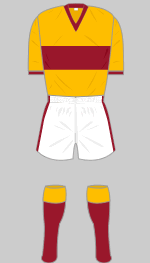
1958-1959 2 o
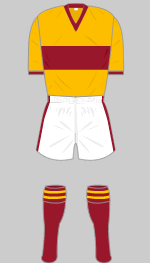
March 59-1960 k o
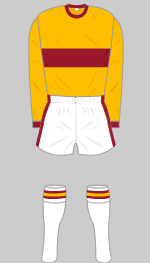
1960-1962 1 e k o

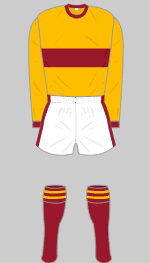
1960-1962 2 n
1962-1963 o
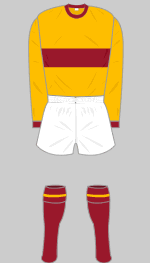
1963-1965 e3 i
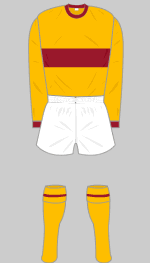
1965-1968 i n o
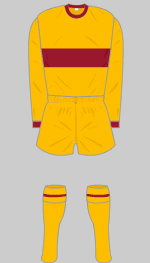
1968-1970 i o
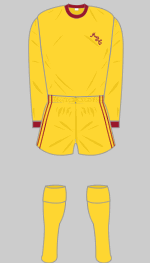
1970-1972 f i
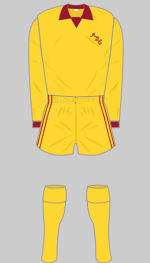
1972-1973 j

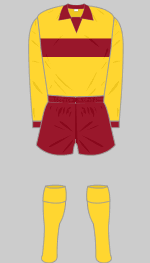
1973-1974 f i
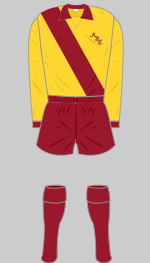
1973-1974 alt a k
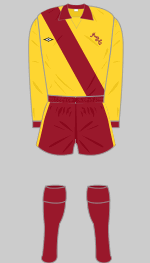
1974-1976 e4 i k m o
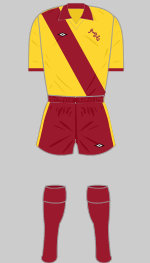
1974-1976 alt m p
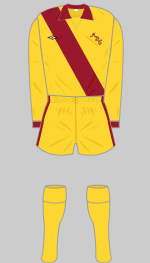
1974-1975 alt k
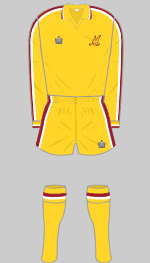
1976-1978 1a e5 i j
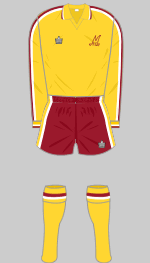
1976-1978 2 m p
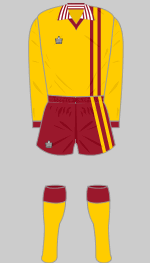
Aug-Sept 1978 p
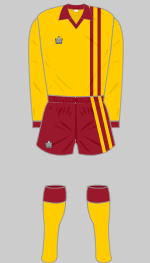
Sept 78-Jan 79 f i
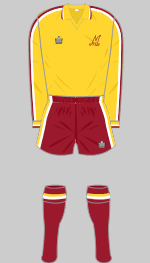
Feb-May 1979 k
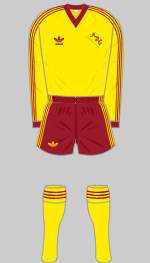
1979-1982 f g i k
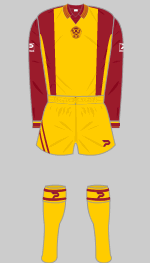
1982-1983 1 o
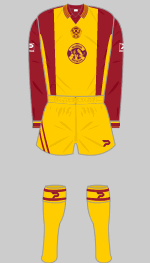
1982-1983 2 r
1983-1984 1p
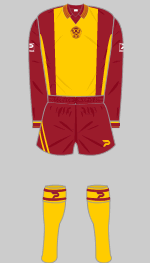
1983-1984 2 m
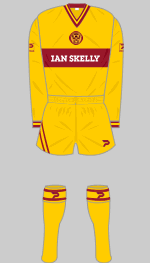
1984-1985 early k
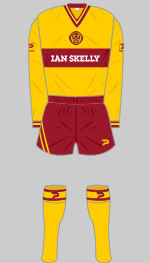
1984-1985 f i j k
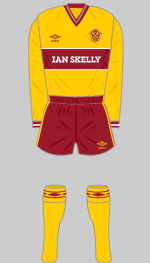
1985-1987 f g i j k
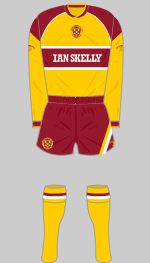
1987-1989 f g i k o
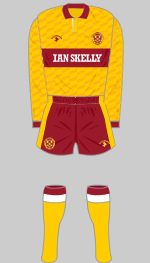
1989-1990 f g i k o
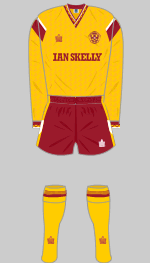
1990-1991 f g i k o
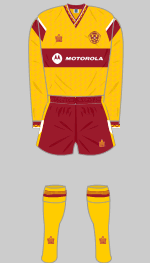
1991-1992 f i k o
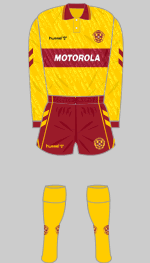
1992-1994 f i o
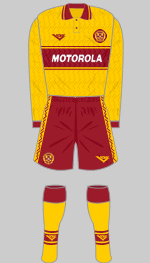
1994-1996 f i k
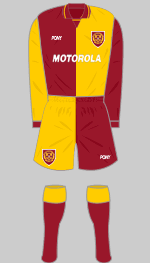
1996-1997 f i o

1997-1998 o
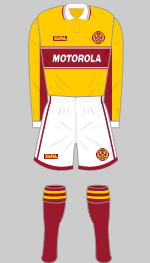
1998-2000 f g i
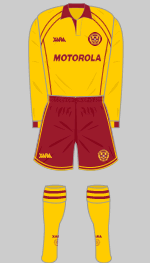
2000-2002 f g o
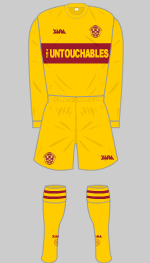
2002-2004 f g h k
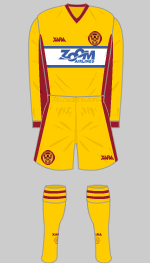
2004-2006 f g h
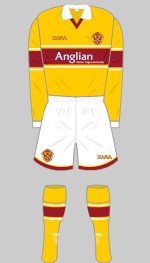
2006-2007 f g h o
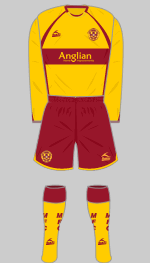
2007-Jan 2008 b o
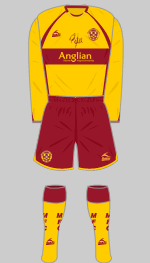
Jan-May 2008 b k
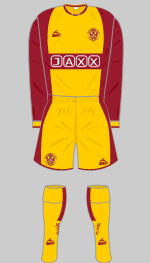
2008-2009 b o
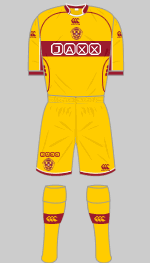
2009-2010 b
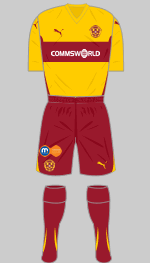
2010-2011 b
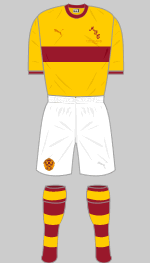
16 July 2011 b
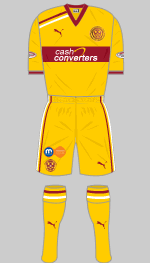
2011-2013 b
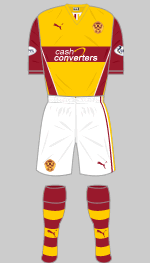
2013-2014 b
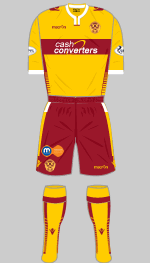
2014-2015 b o
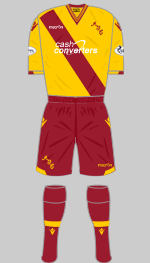
2015-2016 b
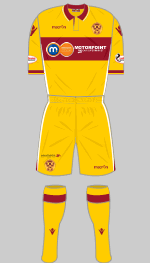
2016-2017 b
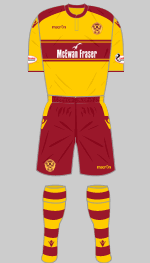
2017-2018 b
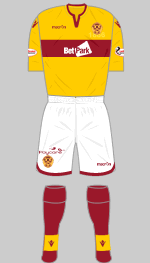
2018-2019 b
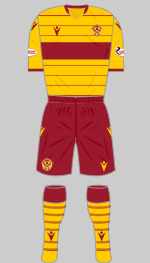
2019-2020 b
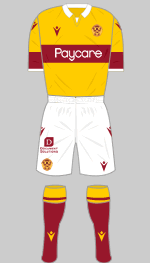
2020-2021 b
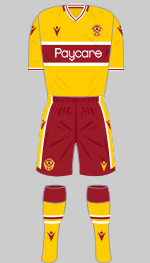
2021-2022 b
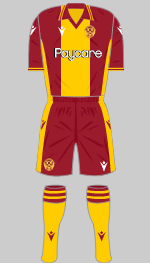
2022-2023 b
Background
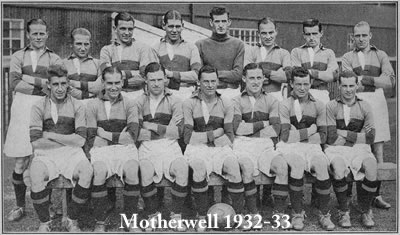 Although it has been widely believed that Motherwell were formed by the merger of Glencairn and Alpha this has now been debunked by Motherwell's official historian and the revised history follows.
In 1885 Wee Alpha and Glencairn amalgamated to form Alpha FC (the works team from the Alpha Steam Crane & Engine Works). On the 17 May 1886 a Special General Meeting was held at Baillie's Tavern on Merry Street where it was proposed to form a new club as it had been previously agreed to wind up Alpha FC. The new club would be known as Motherwell FC with a new constitution and membership. The new team would play in blue and white.
Very soon Motherwell were the town's most powerful team and in 1891 they joined the Scottish Federation, one of the new leagues that sprang up in imitation of the Scottish Football League, formed the year before. In 1893 Motherwell turned professional, changing to maroon shirts and "satin knickerbockers," almost certainly a fanciful description invented to add a certain distinction to the occasion. The maroon was replaced fairly quickly with "light blue".
Motherwell became founder members of the Scottish Second Division, which kicked off for the 1893-94 season. the club were now known as "The Steelmen," reflecting the town's association with heavy industry.
The club had a mixed career until 1903 when they finished as runners-up and were elected to the First Division. Out of their depth, Motherwell had to apply for re-election in 1904 and 1905 (this was before promotion and relegation became automatic) but survived and until the outbreak of the First World War, they generally finished in the lower half of the table. In 1913, 'Well adopted their famous claret and amber colours, unique in Scottish League history. In fact their yoked shirts were identical to those worn by Bradford City at this time and it is likely that they were adopted to emulate the success of the English club and reduce the need to change when colours clashed with opponents. It was not until 1928 that they adopted the amber shirts with bold claret band that became their signature kit. Photographic evidence suggests the original amber was a very dark shade and the new style tops were described in club records as "bright amber with a claret hoop".
Between 1926 and 1934, Motherwell regularly finished in the top three and in 1932, they won the First Division championship with five points to spare over Rangers. They also reached the Scottish Cup final in 1931, 1933 and 1939 but were beaten on each occasion. Their first cup success came in 1950 when they beat Hibernian in the League Cup final and two years later they beat Dundee 4-0 to win the Scottish Cup.
 The club dropped briefly into Division "B"
(the second tier) in 1953 but returned the following season as champions.
History repeated itself in 1968 and 1969 and when the Premier Division
was formed in 1975, they just scraped in by virtue of finishing tenth
in the old First Division.
The club dropped briefly into Division "B"
(the second tier) in 1953 but returned the following season as champions.
History repeated itself in 1968 and 1969 and when the Premier Division
was formed in 1975, they just scraped in by virtue of finishing tenth
in the old First Division.
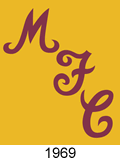
From 1969 a number of different styles were introduced to a mixed reception from supporters. The first of these had the 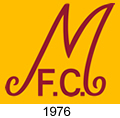 letters "MFC" embroidered on to the shirts in simple script. Admiral's all amber outfit with claret and white trim, introduced in 1976 proved quite popular, however. This particular shirt featured a more individual cypher. Admiral replaced this strip at the beginning of the 1978-79 season, but the old shirts were reintroduced for the final months of the season. The previous calligraphic script was then used on the unpopular yellow shirts that were introduced by Adidas in 1979.
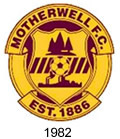 Between 1979 and 1985 Motherwell endured two more
spells in the First Division (second level). A new crest was introduced in 1982, which has remained in place ever since.
Between 1979 and 1985 Motherwell endured two more
spells in the First Division (second level). A new crest was introduced in 1982, which has remained in place ever since.
In 1991 Motherwell won the Scottish FA Cup for the second time. In an effort to win further honours, highly paid stars were recruited but runners-up position in the Premier Division in 1995 was the best that could be achieved. Attendances continued to disappoint and in 2002 the club was placed in administration. The following season, Motherwell finished bottom and should have been relegated but they were reprieved because the stadium of First Division champions Falkirk did not meet Premier Division standards.
 Now run on more stringent financial principles,
Motherwell have relied on home grown talent in recent years to hold
on to their place in Scotland's top division.
Now run on more stringent financial principles,
Motherwell have relied on home grown talent in recent years to hold
on to their place in Scotland's top division.
On 29 December 2007, Motherwell's captain, "Uncle Phil" O'Donnell suffered a heart attack and died on the pitch in the game against Dundee United. As a tribute, the first team played out the rest of the season in shirts embroidered with his signature.
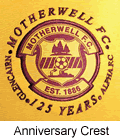
To celebrate the club's 125th anniversary a commemorative crest was introduced for the 2011-12 season. The following season, with Rangers consigned to the Third Division,  Motherwell finished as runners up in the Scottish Premier League.
2014-15 was less successful and 'Well had to contest a relegation play-off against Rangers after finishing next to last, an innovation that came with the restructuring following the formation of the Scottish Professional Football League. They prevailed over two legs with a convincing 6-1 aggregate win to preserve their place in the top flight. The following season a fine retro kit, recreating the ground breaking strip from 1973 was introduced adorned with a revival of the calligraphic "MFC" crest.
Sources
- (a) Alick Milne
- (b) Motherwell Official Site
- (c) Brian McColl
- (d) Ayr United Official Site
- (e1) London Hearts
- (e2) London Hearts
- (e3) London Hearts
- (e4) London Hearts
- (e5) London Hearts
- (f) Wikipedia
- (g) Classic Kits
- (h) Colours of Football
- (i) SNS Pix
- (j) Motherwell - A History of the Steelmen provided by Ralph Pomeroy
- (k) Willie Kay (HFK Research Associate)
- (l) Neil Morris
- (m) Matt Johnstone
- (n) Keith Ellis (HFK Research Associate)
- (o) Ian McConnel
- (p) Willie Kay
- (q) Steve Sutcliffe
- (r) Motherwell FC Match Programme March 5 1983
- (s) Scottish Football Association Annuals
Crests are the property of Motherwell FC.