


Kilmarnock
Formed 1874
Elected to Scottish Division Two 1895
Kit History
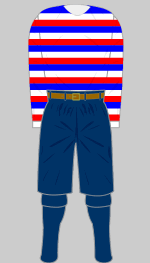
1874-1875 x
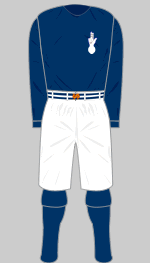
1875-1881 a g s x y


1881-1882 y
1882-1887 y

1887-1891 g y
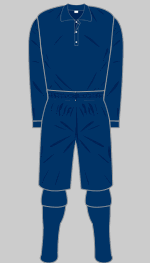
1891-1895 g s
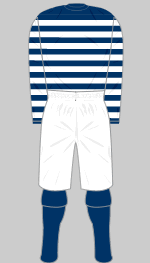
1895-1896 a
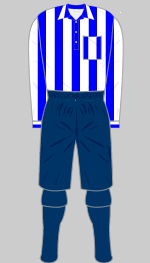
1896-1897 a g

1897-1898 s
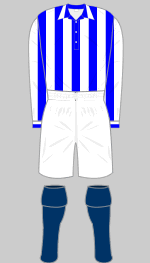
1899-1904 a g s
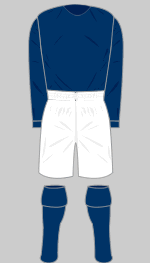
1904-1906 g
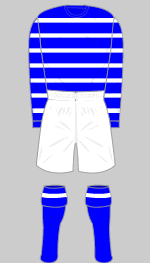
1906-1907 a n s

1907-1912 a g s
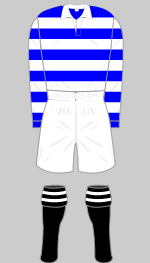
1912-1937 a b1 g s
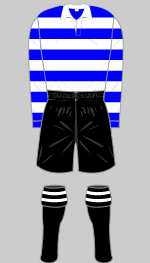
1927-1929 away g s

1937-1938 a g q s
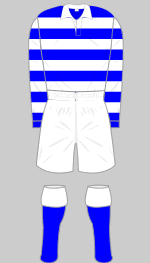
1938-1939 c g s
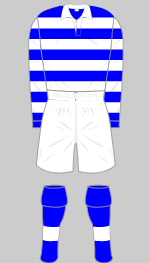
1945-1948 s
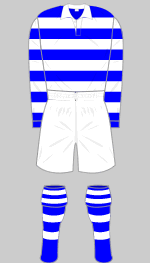
1949-1952 a g s
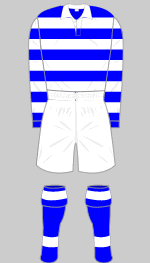
1952-1955 s
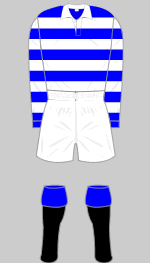
1955-1956 t
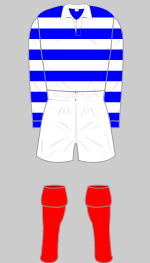
1956-57 a b d g s u

1957-1958 t
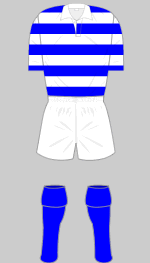
1959-1961 v
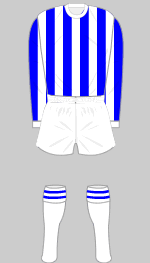
1962-1964 q s u

1964-1969 a b2 g e s
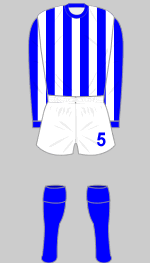
1969-1970 s t

1970-1971 g
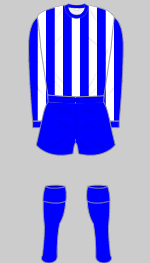
1971-1972 a d g
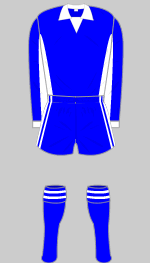
1972-1973 a g
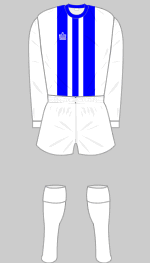
1973-1976 a d g t

1976-1977 t

1977-1981 a t
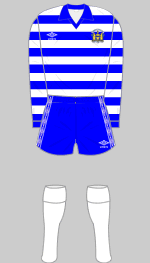
1981-1982 t
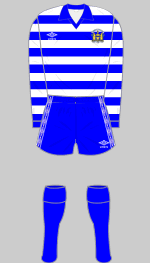
1982-1983 t

1983-1985 a p

1985-1986 f
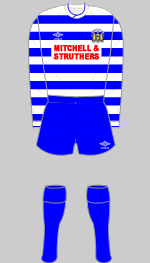
1986-1987 a t
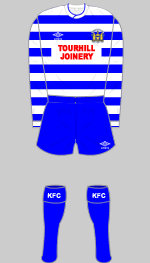
1987-1988 t
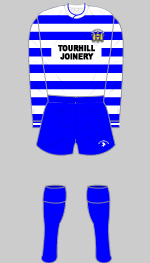
1988-1989 a j k t
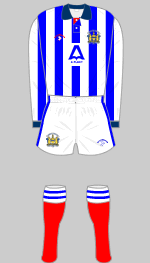
1989-1990 a f

1990-1991 f t
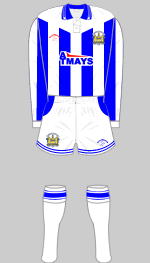
1991-1993 a f
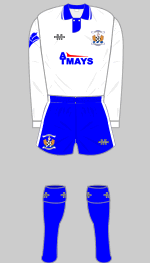
1993-1994 a t
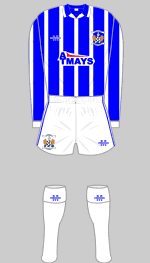
1994-1995 a p r

1995-1996 o p r

1995-1997 a t
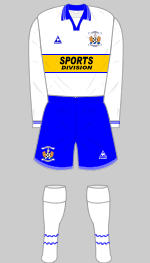
1997-1998 a t
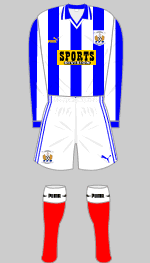
1998-1999 a m t
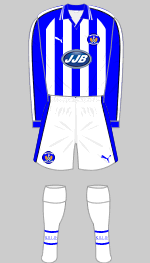
1999-2000 a t

2000-2001 a
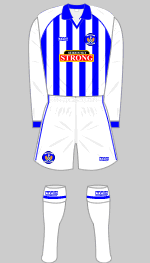
2001-2002 a

2002-2003 a
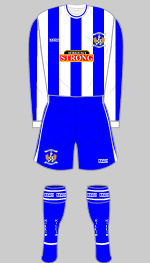
2003-2004 a
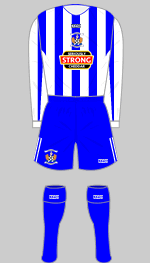
2004-2005 a k t
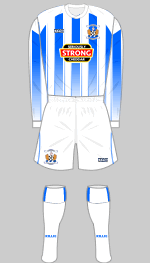
2005-2006 i t
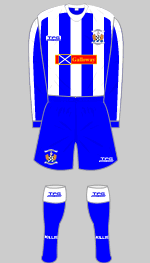
2006-2007 h t
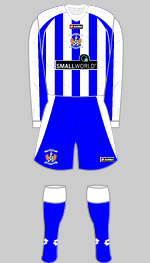
2007-2008 h
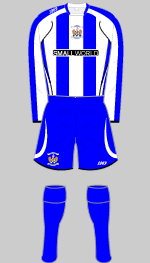
2008-2009 h t
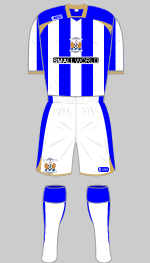
2009-2010 h t
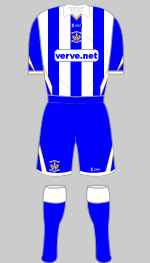
2010-2011 h t
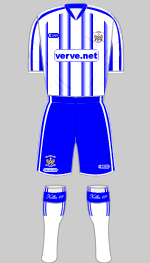
2011-2012 h
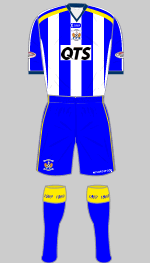
2012-Aug 2013 h
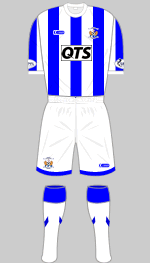
24 Aug-Sept 2013 h
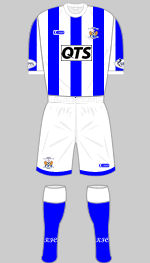
Sept 2013-2014 r
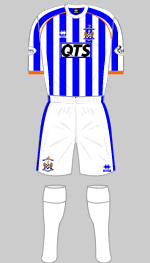
2014-2015 h
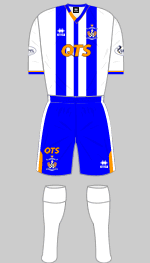
2015-2016 h
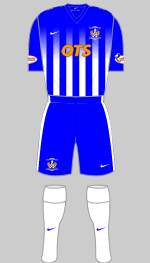
2016-2017 h
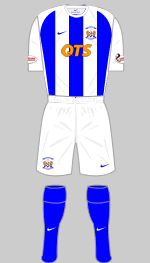
2017-2018 h
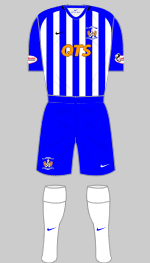
2018-2019 h
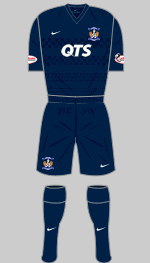
2019-2020 h
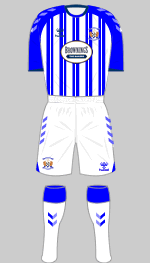
2020-2021 h
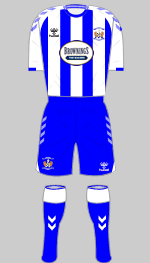
2021-2022 h
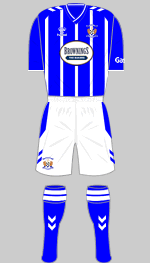
2022-2023 h
Background
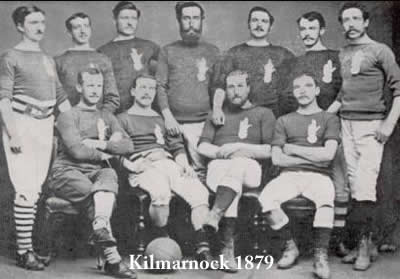 Kilmarnock is a large burgh in East Ayrshire,
roughly half way between Glasgow and Ayr. The town's name is from the
Gaelic Cill Mhearnaig meaning "Church of Saint Marnoch,"
thought to have been founded in the 4th century. The town's football
club dates back to 1869, which makes Kilmarnock the second oldest surviving
club in Scotland (Queen's Park were formed only two years earlier).
Founded by young cricketers to provide a winter activity, they initially
played according to the rugby code but switched to association football in 1874 when they played in the colours of the rugby team.
These origins are recalled when they moved into what is still their
present home in 1899 and named it Rugby Park.
Kilmarnock is a large burgh in East Ayrshire,
roughly half way between Glasgow and Ayr. The town's name is from the
Gaelic Cill Mhearnaig meaning "Church of Saint Marnoch,"
thought to have been founded in the 4th century. The town's football
club dates back to 1869, which makes Kilmarnock the second oldest surviving
club in Scotland (Queen's Park were formed only two years earlier).
Founded by young cricketers to provide a winter activity, they initially
played according to the rugby code but switched to association football in 1874 when they played in the colours of the rugby team.
These origins are recalled when they moved into what is still their
present home in 1899 and named it Rugby Park.
 In 1873 the club adopted Oxford blue and white
as their colours, the same year that they played in the inaugural Scottish
FA Cup competition, losing to Renton in the first round. The team wore a large badge that consisted of the symbol of Clan Boyd resting on a bar above a ball marked with the letters KFC.
In 1873 the club adopted Oxford blue and white
as their colours, the same year that they played in the inaugural Scottish
FA Cup competition, losing to Renton in the first round. The team wore a large badge that consisted of the symbol of Clan Boyd resting on a bar above a ball marked with the letters KFC.
After playing in the Scottish Alliance for two seasons (they were founder members in 1891), Kilmarnock helped form the Ayrshire Combination, a rival competition to the Ayrshire Football League. Rivalry between the two leagues was intense but when Killie (and later Ayr FC) left the Combination closed down. In 1895 Kilmarnock were elected into the Scottish Second Division along with Linthouse, replacing Dundee Wanderers and Cowlairs. Success followed immediately: in 1896 they won the Qualifying Cup and in 1898 they reached the Scottish FA Cup final and were Second Division champions. There was no automatic promotion and relegation at the time and it was not until they won the championship for the second time that the First Division clubs voted for them to be promoted.
The club became established as one of the stronger
provincial sides in Scotland and in April 1920 they defeated Albion
Rovers by 3-2 at Hampden to win the Scottish FA Cup for the first time.
No fewer than 95,000 fans watched the game. Nine years later they won
the cup for the second time, beating Rangers 2-0 in front of 114,708
spectators. They would reach the final again in 1932, 1938 and 1957
but would not get 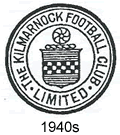 their hands on the cup again for another 68 years.
The club's official crest from the pre-war period is shown here but this did not feature on the team's shirts. The original Clan Boyd crest did reappear briefly around 1950 when it was sewn onto the change shirts of the period (blue with white sleeves).
After the Second World War Killie started badly and were relegated to Division B (the new name for the second tier) in 1947 where they floundered in mid-table although they did reach the final of the Scottish League Cup in 1953. The following season they won promotion back to the top level (Division A) and installed floodlights for the first time. Disappointment followed with defeat in a replay against Falkirk their sixth Scottish Cup final appearance in 1957. The following year former Scottish international Willie Waddell was appointed manager and he steered Kilmarnock to their finest period of achievement. In 1960 the club finished as runners up in both the First Division and Scottish Cup. In an effort to change their fortunes they switched from their traditional hooped shirts to vertical stripes and adopted a new crest but there was more disappointment round the corner. Twice they were beaten finalists in the Scottish League Cup (1962-63) and First Division runners up in 1961, 1963 and 1964. In April 1965, Kilmarnock were two points behind league leaders Hearts with an inferior goal average and the two sides were due to meet at Tynecastle in the last league game of the season. In a remarkable match, the Ayrshire side achieved the 2-0 win that put the sides level on points and tipped the goal averages in their favour. The following season the Scottish League championship flag was unfurled at Rugby Park for the first time. (The flag was stolen in 1969 after a match with Celtic but turned up days later in a locker at Glasgow's Queen Street Station.)
During the 1960s, Killie regularly qualified
for Europe and in 1966-67 they reached the semi-finals of the Inter-City
Fairs Cup (forerunner of the UEFA Cup). The following decade brought
decline and a switch to an all-blue kit, in which they were relegated
in 1973. It took only one season for the club to earn promotion but
after finishing in 12th place in 1975 they found themselves back in
the second tier (the new Scottish First  Division) with restructuring
and the introduction of the Premier Division. Promotion took them up
after one season but they had a disastrous time and went straight down
again.
Division) with restructuring
and the introduction of the Premier Division. Promotion took them up
after one season but they had a disastrous time and went straight down
again.
In 1977 the club readopted their traditional hooped shirts, introduced a crest based on the town coat of arms and won promotion back into the Premier Division. Between 1981 and 1983 the club was relegated, promoted and relegated yet again and in 1989 they found themselves in the Second Division (now the third level). In the last match of the 1989-90 season Killie beat Cowdenbeath 2-1 with late penalty to clinch promotion back to Division One (second tier). In 1993, after an unlikely string of results, Kilmarnock were promoted to the Scottish Premier Division - on the last day of the season, naturally.
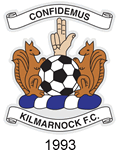 A new crest was designed in 1993 after the Lord Lyon King of Arms ruled that the 1977 breached Scottish heraldic rules.
With three clubs to be relegated at the end of
the season to reduce the Premier Division to ten members few expected
Killie to survive, especially when they broke with tradition and adopted
plain white shirts but survive they did - on the last day of the season!
In May 1994 work began on the redevelopment of Rugby Park, which involved
building brand new stands on three sides of the ground. This ambitious
project was completed in August 1995 when Blackburn Rovers, then English
Premier Division champions, visited to play a 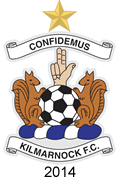 friendly match that marked
the official opening of the "new" Rugby Park.
friendly match that marked
the official opening of the "new" Rugby Park.
In 1997 Kilmarnock met Falkirk for the third time in a cup final, winning 1-0 to capture their third Scottish Cup and qualify for Europe for the first time in 27 years. Further success came in 2012 when they beat Celtic 1-0 in the Scottish League Cup final.
 The 2014-15 season was the 50th anniversary of Kilmarnock's last Scottish League title and to mark the occasion a star was added above the club crest.
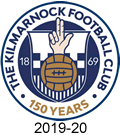
The club celebrated its 150th anniversary in 2019-20 and adopted a strip in Oxford Blue as a tribute to their first ever outfit. A special crest was created that incorporated two key motifs from the past, the hand held up in benediction and the chequerboard pattern. This motif was also sublimated into the front of the shirts. To avoid further problems with the Court of Lord Lyon the badge was placed on the back of the neck of the anniversary shirts.
There was little to celebrate in 2020-21. They finished in 11th place and lost 4-2 on aggregate to Dundee in the play-off final. They bounced back the following season, winning the Championship title.
Sources
- (a) killiefc.com - an outstanding site with a comprehensive collection of team photographs
- (b1) London Hearts
- (b2) London Hearts
- (c) Relichtieplus
- (d) Riccardo Bertani
- (e) Aberdeen FC - Images of Sport 1903-1973 (Paul Lunney 2000)
- (f) Ayr United FC - Images of Sport (Duncan Carmichael 2002)
- (g) Alick Milne
- (h) Kilmarnock Official Site
- (i) SNSPix
- (j) Ralph Pomeroy
- (k) Alan Auld
- (l) James (Killie Diehard)
- (m) Joerg Egerter
- (n) Neil Morris
- (o) Willie Kay
- (p) Donald Gellatly (HFK Research Associate)
- (q) Keith Ellis (HFK Research Associate)
- (r) Martin Le Roy
- (s) Kilmarnock FC (Images of Sport G Allison 2002)
- (t) Ian McConnel
- (u) Neil Wilson
- (v) eBay
- (x) Charles Alcock's Football Annuals 1869-1891 researched by Robin Horton
- (y) Scottish Football Association Annuals
Photograph courtesy of killiefc.com (c) Fraser Ballantyne. Crests are the property of Kilmarnock FC.