

Heart
of Midlothian
Formed 1874
Founder member of the Scottish Football League 1890
Kit History
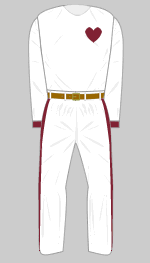
1873-1876 a b k
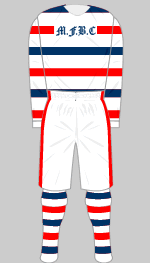
1876-1877 b k o
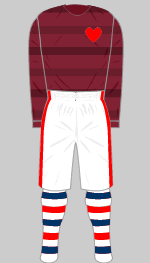
1877-1878 a b k o
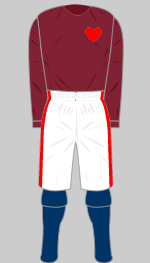
1878-1880 k y A

1880-1885 A
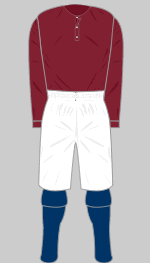
1885-1887 k A
1887-1889 A
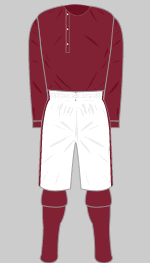
1889-1891 k o
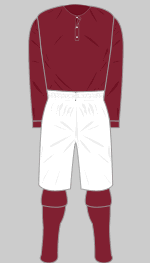
1895-1900 a
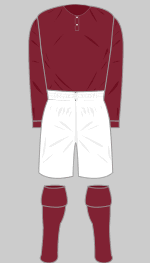
1900-1910 a k w
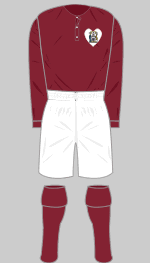
1910-1911 a k
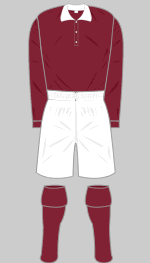
1911-1912 a k
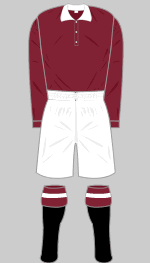
1912-1919 a k
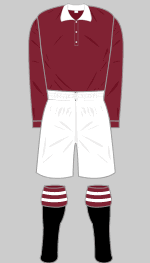
1919-aug1920 a k
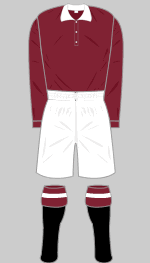
sept1920-1923 a k
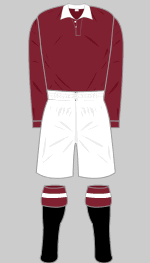
1923-1935 a k w
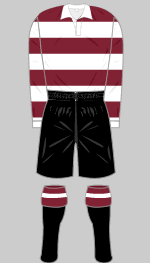
1927-1929 away k
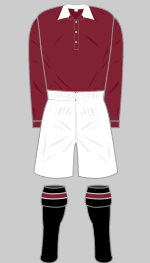
1935-1937 a k
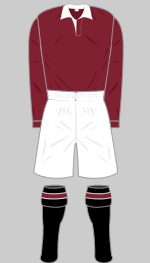
1937-1940 a w
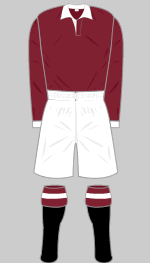
1945-1947 k x
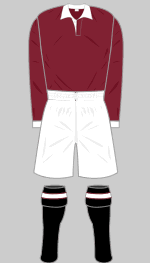
1947-1948 k w
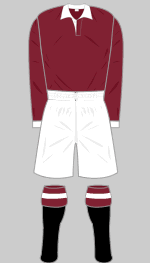
1948-Feb 49 a w
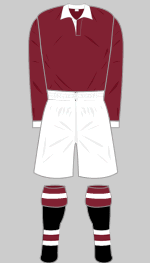
March 49-1950 x
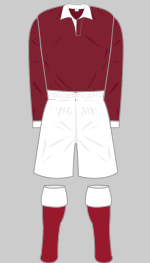
1950-1951 x
Aug-Dec 1951 x
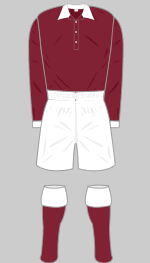
Dec 51-1953 a k x
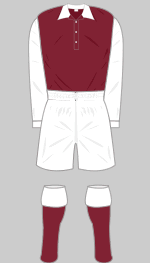
1952-1953 alt x
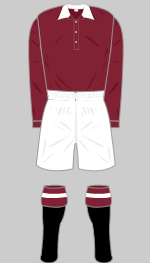
1953-1954 x
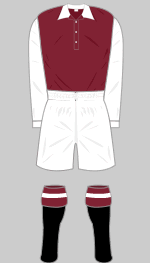
1953-1954 alt x
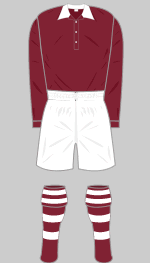
April 1954 x
1954-1956 alt x
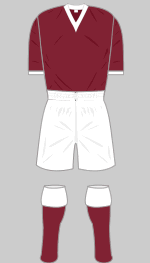
1954-1957 2 w
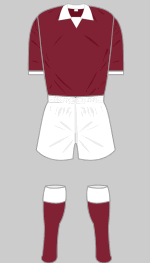
1957-1959 a k x
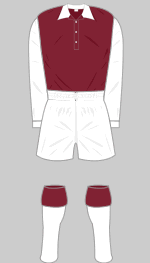
1957-1959 alt k w
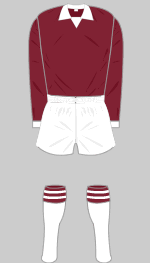
1959-1965 a k
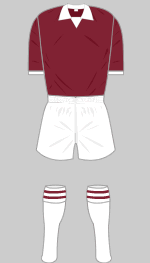
1961-1962 w
1962-1965 a k
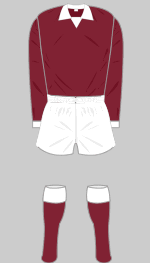
1965-1966 a k
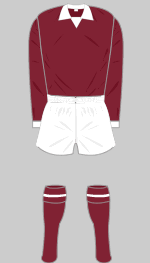
1966-1967 a k
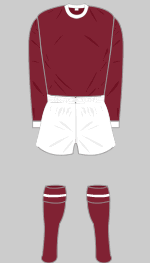
1967-1968 a k
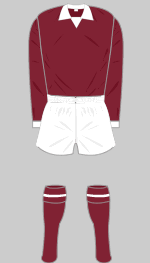
1968-Feb 69 a k
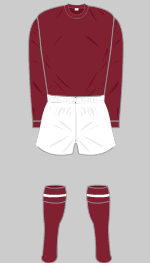
March-May 69 x
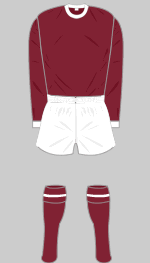
1969-1970 1 a k x
1969-1970 2 a k x
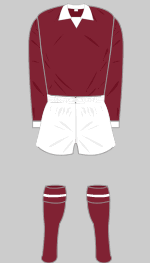
1969-1970 3 x
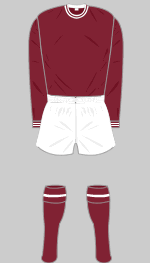
Aug-Nov 70 a k x
Dec 70-1971 a k x
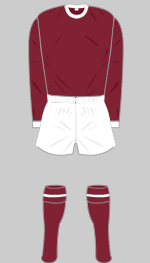
1971-1972 x
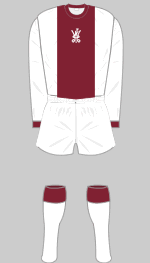
1972-1973 a
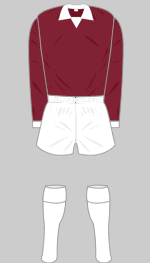
1973-Sept 74 a z
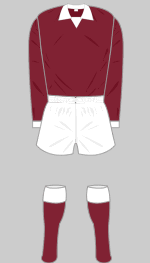
Oct 74-1975 a z
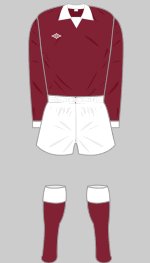
1975-1977 u
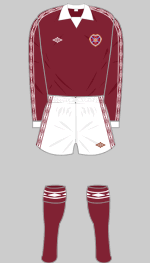
1977-1979 a u
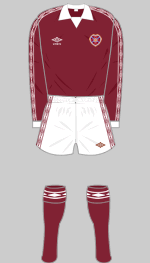
1979-1982 u
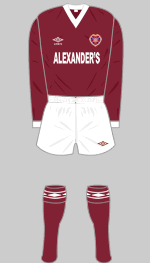
July-Aug 82 x
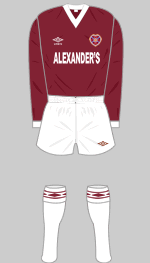
Sept 82-1983 a u
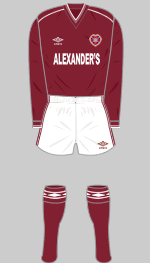
1983-1984 u x
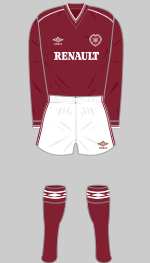
1984-1985 a u x
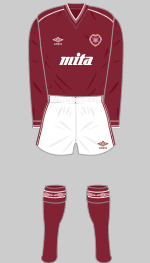
1985-1986 a u x
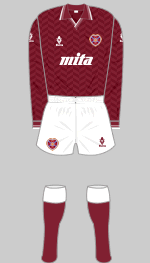
1986-1987 a q x
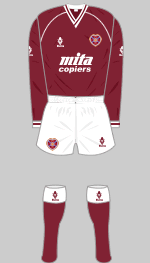
1987-1988 a q x
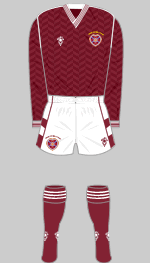
Aug-Nov 1988 x
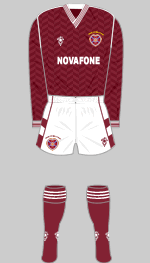
Dec 88-1989 a i q x
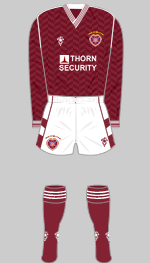
1989-1990 a j q x
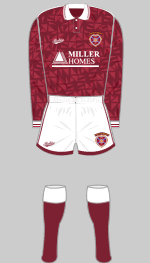
1990-1991 a q t x
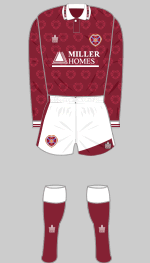
1991-1992 a q t x
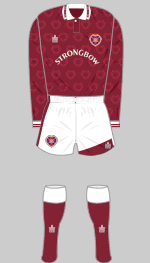
1992-1993 a q t x
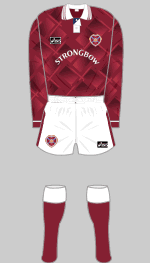
1993-1995 a q r t v x
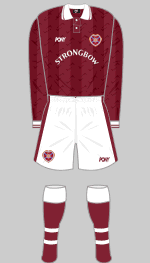
1995-1997 a q x
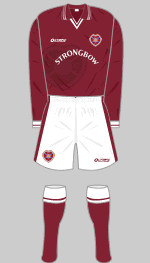
1997-1998 a x
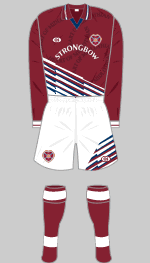
1998-1999 l q x
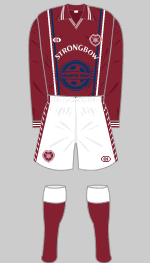
1999-2000 h q s x
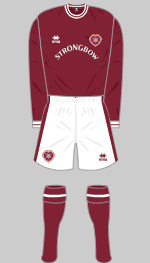
2000-2001 d q
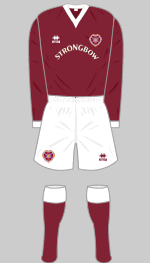
2001-2002 h q x
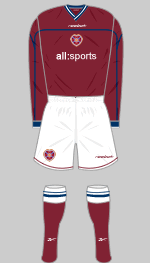
2002-2004 d g q t x
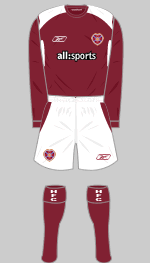
2004-2005 d f n t
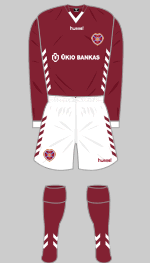
2005-2006 d e n t x

2006-2007 c t x
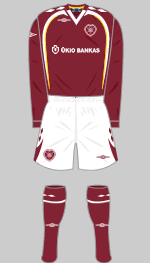
2007-2008 c p x
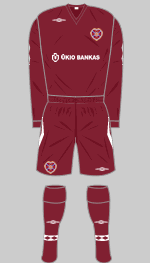
2008-2009 c p
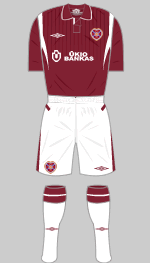
2009-2010 c x
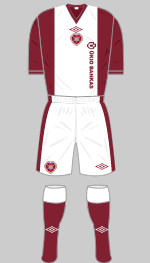
2010-2011 c
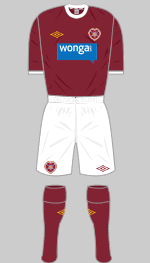
2011-2012 c
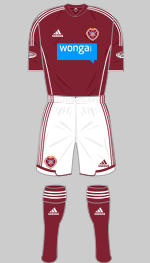
2012-2013 c
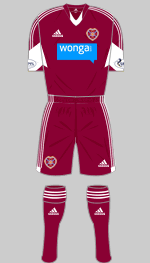
2013-2014 c
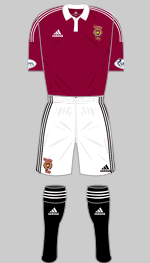
2014-2015 c
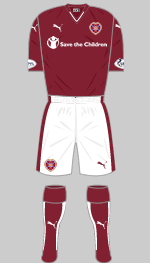
2015-2016 c
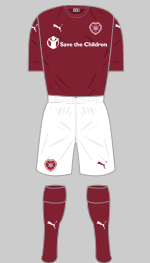
2016-2017 c
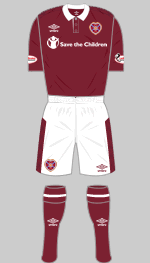
2017-2018 c
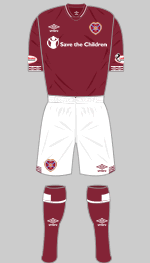
2018-2019 c
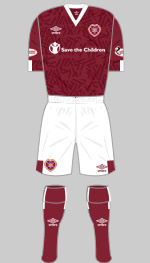
2019-2020 c

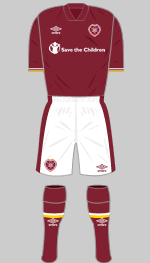
2020-2021 c
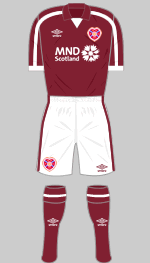
2021-2022 c
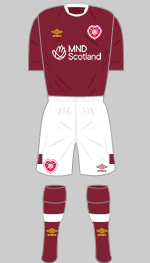
2022-2023 c

Background
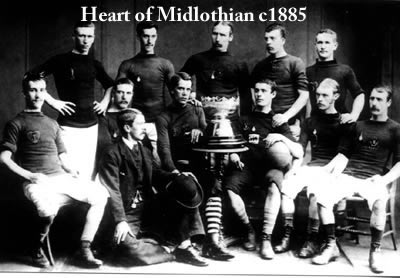
The original "Heart of Midlothian" was the old Tolbooth Prison in Edinburgh, made famous in the eponymous novel by Sir Walter Scott. Tempting as it is to imagine that the founders of Edinburgh's oldest senior club were inspired by Scotland's great romantic novelist, the truth is that the founders took the name from a dance hall they used to frequent. The club's famous badge is based on a mosaic to be found on Edinburgh's Royal Mile. There is a legend that the founders played football in the street, using the mosaic as a centre spot.
Players originally turned out in all white shirts and trousers with maroon trimmings and a heart sewn into the shirt. In 1876 they adopted red, white and navy hoops with the letters MFBC (Midlothian Foot Ball Club), the colours of the St Andrews club which they had absorbed, These were unpopular with the players, presumably because they were more expensive than the plain jerseys available from local gentlemen's outfitters, so in 1877, all the players' shirts were dyed dark red (although the old hoops showed through) and the team became known as "The Maroons." A report in The Scotsman states that a scarlet stripe was worn down the sides of the players' knickers.
(The club are now often known as the "Jambos" from the rhyming slang, "Jam Tarts" = "Hearts.")
After a nomadic early existence, the club settled into the Gorgie area of the city in 1881, moving to their present Tynecastle site in 1886. Hearts’ traditional rivals are Hibernian. Hibs were initially ostracised by the presbyterian dominated Edinburgh FA, but Hearts played a fixture against the Catholic team, breaking the official boycott. After this supportive gesture, relationships between the two clubs descended into bitter rivalry.
Hearts became the only east coast club to join
the Scottish Football League on its formation in 1890, by which time
they were the strongest side in the city. They were champions in 1895
and 1897 and won the Scottish FA Cup four times between 1891 and 1906,
including a 3-1 victory over Hibernian in 1896, played at Logie Green in  Edinburgh,
the only time this match has been hosted away from Glasgow.
Edinburgh,
the only time this match has been hosted away from Glasgow.
In 1910-11 a heart-shaped crest was worn by the team: it seems likely this was the official club crest that had been in use since at least 1880 but which otherwise only ever appeared on official documents.
During the Great War, the entire playing staff joined up en masse. Seven of their number were killed and a Remembrance Service is held every year at Haymarket, where their memorial stands.
Between 1906 and 1954, Hearts failed to win a
single trophy and the balance of power shifted firmly to Glasgow. The
mid-1950s however brought a change of fortune, with victories in the
Scottish League Cup (1955, 1959, 1960 and 1963), Scottish FA Cup wins
in 1956 and League championships in 1958 and 1960.  Inevitably their
best players were tempted away to play in England and the club went
into decline.
Inevitably their
best players were tempted away to play in England and the club went
into decline.
In 1972 the club broke with tradition to adopt an all-white kit with a broad maroon panel, a style obviously borrowed from Ajax. The central panel was decorated with a monogram, the first time any sort of badge had been worn in over 60 years. Hearts returned to a more traditional outfit for their centenary season.
 When the Premier Division was formed in 1975,
Hearts struggled to retain their position and were relegated to the
First Division three times.
When the Premier Division was formed in 1975,
Hearts struggled to retain their position and were relegated to the
First Division three times.
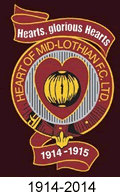
In the mid 1970s clubs were increasingly concerned with establishing corporate identities and crests came back into fashion. Hearts naturally adopted a version of the famous mosaic on the Royal Mile. This enduring image was originally designed as a blazer badge for the 1958 tour of Canada.
In 1986 Hearts narrowly missed out on the championship, losing out
on goal difference on the final day of the season and were Scottish
Cup finalists - a heartbreaking experience. Hearts became established
at the top of the Premier League, regularly finishing in third place
and competing in the UEFA Cup (without, it must be said making much
impression). In 1998 they beat Rangers to win the  Scottish Cup for the
sixth time.
Scottish Cup for the
sixth time.
The following season the crest was given a facelift to make digital reproduction easier.
A new era arrived when Lithuanian banker Vladimir Romanov became the club’s major shareholder and appointed his son, Roman as CEO and Chairman. The Romanov's wealth enabled the club to mount a serious challenge to the Old Firm. In came new stars, including several east European internationals and for a while it seemed as if Hearts might win the Premier League. In the end they could not quite manage it but they did win the Scottish Cup once again in 2006. The Romanov’s regime was punctuated by repeated allegations of interference with team selection, and high-profile departures.
In May 2013 Hearts' parent company, UBIG applied to a Lithuanian court to be declared insolvent and a month later the club entered administration. With their chairman, Vladimir Romanov apparently on the run from Lithuanian police and the club facing a winding up order over an unpaid tax bill, their survival was in considerable doubt but supporters responded to the crisis by buying over 10,000 season tickets, providing sufficient cash for the administrators to keep the club going.
 A 15 point penalty and a transfer embargo virtually guaranteed relegation and on 5 April 2014, Hearts went down. However, the creditors of Ukio Bankas agreed to transfer their stake to the administrators and a CVA became possible. The club could now be sold to IT entrepeneur, Ann Budge, who agreed to put up £2.5m to fund the CVA, with a binding agreement with the supporters' organisation Foundation of Hearts (FoH) that a membership scheme would be set up to repay Budge's initial investment with interest and fund the clubs running costs over five years, after which ownership would pass to FoH.
With the club's survival finally secured, Hearts entered the 2014-15 season in the second tier wearing a commemorative strip to honour the 1914 team who joined up to a man, seven of whom were killed in action. The team ran away with the Scottish Championship by a remarkable 21 point margin. Consolidation followed in at the end of the 2016-17 season, they finished third to book a place in Europe.
When the 2019-20 season was suspended because of the Covid-19 pandemic Hearts were in last place in the Premiership, four points behind Hamilton and six points away from safety with eight games left. Despite having won just four matches, management believed they could recover but they were denied the opportunity to do so when the SPFL membership controversially voted to end the season early, a process tainted when Dundee appeared to reverse their ballot after the Chairman of the SPFL revealed that the decision rested on it. A proposal from Hearts chairperson, Ann Budge, to expand the Premiership (which would have reprieved the club from relegation) failed to attract sufficient support and a legal challenge also failed when the SFA Arbitration Panel ruled that the SPFL had acted within its powers.
Given the sense of grievance that these events prompted, it was fitting that the following season Hearts stormed their way to the Championship title, finishing 12 points clear of Dundee United, the runners-up. In 2022-23 they finished third in the Premiership and qualified for the Europa League.
Sources
- (a) London Hearts - an excellent site run by exiled Hearts fans with a comprehensive photograph archive.
- (b) Brian McColl
- (c) Hearts Official Site
- (d) Colours of Football
- (e) FC Update
- (f) Stravaiging.com
- (g) The Scotsman
- (h) Classic Kits
- (i) Ayr United FC - Images of Sport (Duncan Carmichael 2002)
- (j) Bob Jamieson
- (k) Alick Milne
- (l) Craig McGregor
- (m) Raith Rovers FC 1991/92 - 1995/96 Images of Sport (Tony Finister 2002)
- (n) Malcolm Lunn
- (o) John Small
- (p) Football Shirt Culture
- (q) SNS Pix
- (r) Classic Football Shirts
- (s) Alister Aitken
- (t) Old Football Shirts
- (u) Ragnar Lochen
- (v) Donald Gellatly
- (w) Keith Ellis
- (x) Ian McConnel
- (y) The Scotsman 15 September 1878 submitted by John Small
- (z) Tony Sealey
- (A) Scottish Football Association Annuals
Crests are the property of Heart of Midlothian FC.