Forfar
Athletic
Formed 1885
Founder member of the re-formed Scottish Second Division 1921. Elected to Scottish Division Two 1926 after the collapse of the Scottish Third Division.
Kit History
Angus Athletic
1882
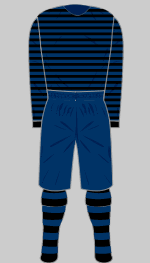
1882 j
Forfar Athletic
1885
Formerly Angus Athletic Second XI
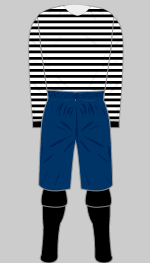
1885-1889 a j
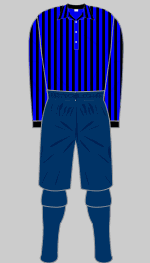
1889-1895 a j
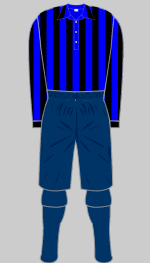
1895-1896 j
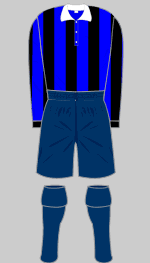
1905-1909 j
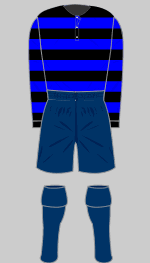
1909-1914 j
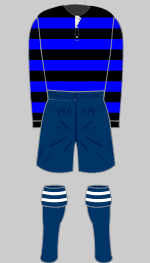
1922-1936 b j
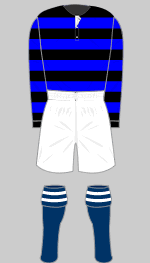
1927-1929 Home j
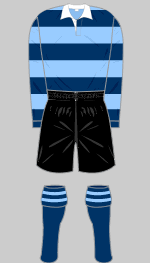
1935-1936 l
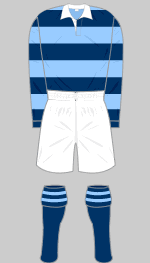
1936-1948 c j
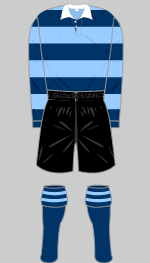
1948-1949 i
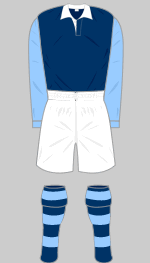
1949-1950 j
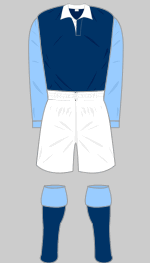
1950-1955 j
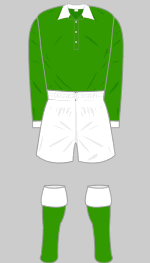
1955-1957 j
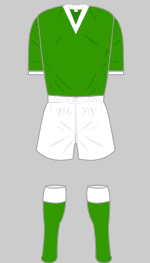
1957-1960 j
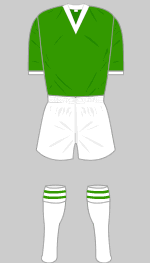
1960-1963 j
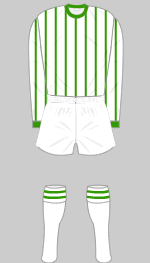
1963-1965 j
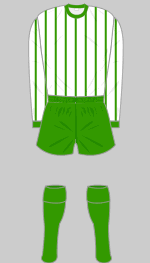
Aug-Dec 1967 j
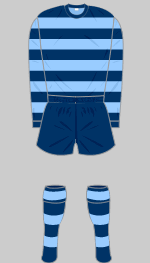
Jan-May 1968 j
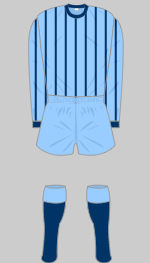
1968-1969 j
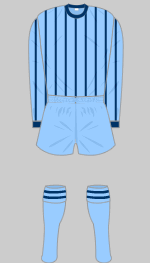
1969-Dec 1972 j
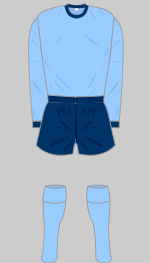
Jan 1973-1974 j
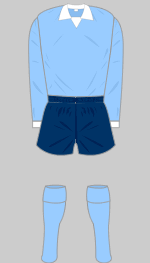
1974-1977 e j
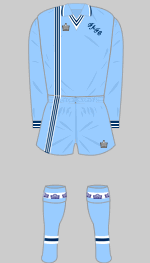
1977-1980 g r
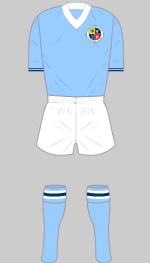
1980-1981 n
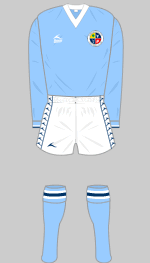
1981-1982 g j
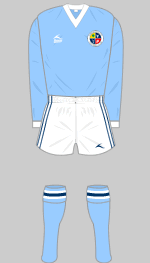
1982-1983 i j r
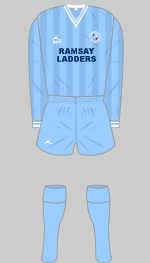
1983-1984 d j
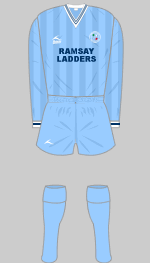
1984-1986 i j
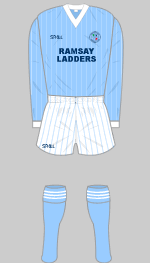
1986-1987 i
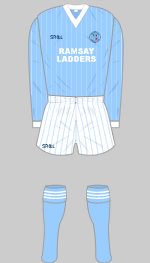
1987-1988 h
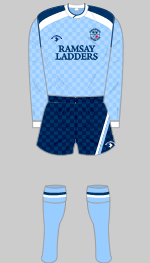
1988-1989 g j r
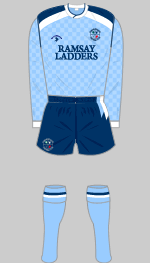
1990-1991 g k
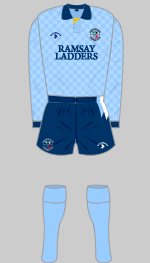
1991-1992 g k
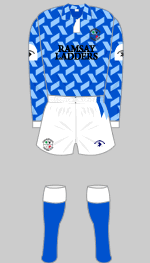
1992-1994 g o
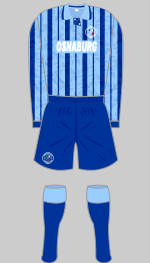
1994-1995 l m
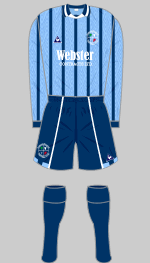
1995-1996 m

1996-1998 r
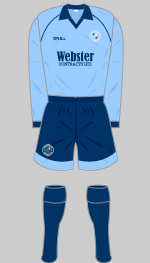
1998-1999 m r
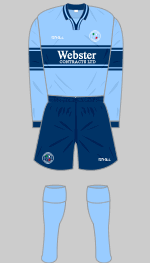
1999-2001 h p r
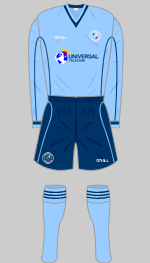
2001-2002 f
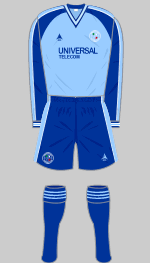
2002-2004 d
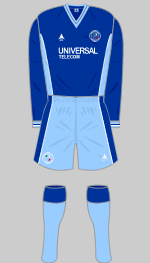
2004-2005 d
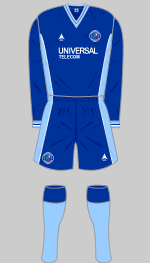
2005-2006 g
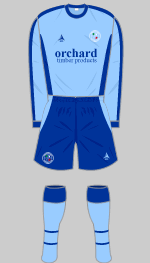
2006-2007 d
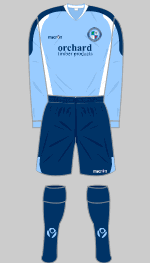
2007-2009 d
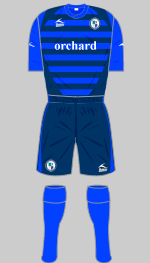
Aug-Oct 2009 d
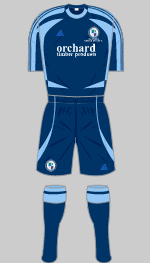
Oct 2009-2011 d q
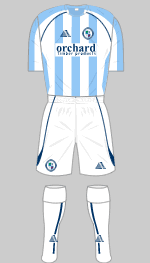
2011-2012 d
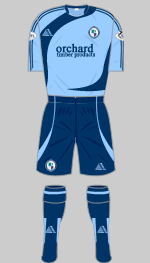
2012-2014 d r
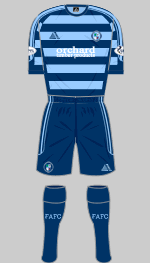
2014-2016 d
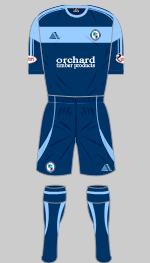
2016-2018 d
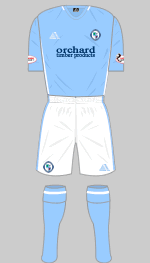
2018-2020 d
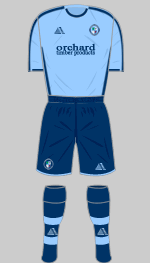
2020-2022 d
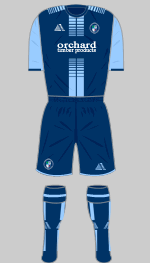
2022-2024 d
Background
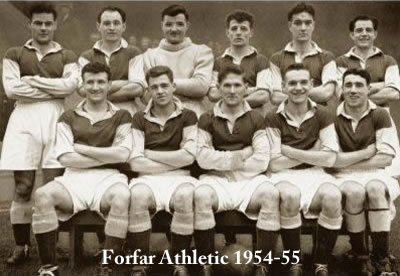 The club had started out as Angus Athletic's second XI and were known as "The Loons," a local dialect word for "lads" or "young men," since they were generally younger than the players in the first team. In 1885 the players broke away to form their own team and on 16 May 1885, Forfar Athletic
beat Our Boys Rangers of Dundee 1-0 at Station Park in their first ever
fixture. The driving force behind the club was
James Black who devoted his life to the Loons as player, manager and
administrator for 65 years. Remarkably, Forfar still play at Station
Road.
The club had started out as Angus Athletic's second XI and were known as "The Loons," a local dialect word for "lads" or "young men," since they were generally younger than the players in the first team. In 1885 the players broke away to form their own team and on 16 May 1885, Forfar Athletic
beat Our Boys Rangers of Dundee 1-0 at Station Park in their first ever
fixture. The driving force behind the club was
James Black who devoted his life to the Loons as player, manager and
administrator for 65 years. Remarkably, Forfar still play at Station
Road.
In 1891, Forfar became founder members of the Northern League along with Arbroath, Montrose, St Johnstone, Aberdeen and three clubs from Dundee. After an initial struggle, the club won the competition in 1896. The rivalry with Arbroath was particularly intense and while the fishing port had outgrown the town of Forfar, the latter remained the county town of Angus (still known as "Forfarshire" at the time). It was not uncommon for there to be crowd trouble when the two sides met leading to denunciations from the pulpit and in the letter pages of the local press. Until well into the twentieth century, the club drew on local talent, mainly young men who worked in the area's jute mills.
The Loons won the Forfarshire Cup for the first time in 1906, beating Arbroath after a replay. They regularly competed in the Scottish FA Cup, from time to time being drawn against one of the big clubs from the Scottish League. In February 1911, they played Falkirk (who had finished as runners up in the Scottish First Division the previous season) at Station Park and won 2-0. In 1913 Forfar entered teams in both the Central and Northern Leagues but when the Great War broke out, the club closed down for the duration.
In 1921 the Central League, which had been strengthened by disenfranchised former members of the Scottish Second Division, was incorporated into the Scottish Football League. Forfar did not do very well at all and were relegated in 1925 to the newly formed Third Division. The following season this ill-fated competition was abandoned as it became clear that the members could not afford to continue on the meagre receipts they received and Forfar were in limbo. At the end of the season, however, Forfar applied for election to the Second Division and were successful, replacing bottom-placed Broxburn United.
During the 1930s the club generally finished in mid-table until competition was suspended on the outbreak of World War Two. In 1946 the Scottish League was reinstated but controversially restructured into three divisions. Forfar were placed in the new C Division made up largely of reserve sides. In 1949, the club won their divisional championship and were promoted to Division B. The death of James Black at the age of 85 cast a shadow over the club in 1951. With his passing the club came under the control of the Callendar family but they made little progress, remaining firmly rooted in the lower reaches of the Second Division. Green shirts replaced the light blue and navy, worn since 1936 but that was about all that changed. In the early 1960s, the team's form was abysmal (giving rise to the joke that they had changed their name to "Forfar Nil") and in 1966 they finished in last place. After being thumped 1-8 by Berwick on Christmas Day, the directors were shaken out of their complacency and finally decided to appoint a manager. Results gradually improved and in 1969 they finished in sixth place, which was regarded as something of a triumph.
Things went downhill again in the 1970s: crowds
dipped below 500 and in 1974-75 they managed only a single win all season.
The following season they were placed in the new Second Division, now
the third level of Scottish football following the formation of the
 Premier Division. In the summer of 1976 Sam Smith took over as chairman
injecting a more business-like approach.
Premier Division. In the summer of 1976 Sam Smith took over as chairman
injecting a more business-like approach.
The Admiral strip adopted in 1977 was unusual in having the vertical stripes stitched into the right side of the shirts and shorts rather than the left. The club's initials were 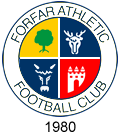 embroidered onto the left hand side of the shirt, the first time that any sort of emblem had appeared.
In 1979 the team won the Forfarshire
Cup for the first time in almost 50 years. The following season a proper crest was worn for the first time: this incorporated four emblems from the arms of the royal burgh: a Scots pine, a bull's head, a stag's head and a triple towered castle. The earliest version was rendered 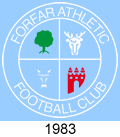 in five colours but this was later simplified.
In 1982 Forfar hit the headlines
when they beat Hearts at Tynecastle in the Scottish FA Cup and then
held Rangers to a 0-0 draw in the semi-finals. In 1984 the club won
the Second Division championship by 16 clear points and in 1986 they
narrowly missed out on promotion to the Premier Division. The 1980s
were, without doubt, the club's high point and in 1992 they were relegated
to Division Two (third tier). For the rest of the decade they were relegated
and promoted with bewildering regularity between the second and 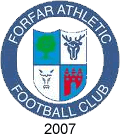 third
levels. Between 2000 and 2006 they led a relatively settled existence
in Scottish Division Two (third level) before being relegated back down
to the lowest division.
third
levels. Between 2000 and 2006 they led a relatively settled existence
in Scottish Division Two (third level) before being relegated back down
to the lowest division.
Around 2007 the crest was given a face lift with the four emblems now appearing out of a shield while the lettering was printed against a navy blue circle.
Due to problems with their kit supplier, Forfar switched from Bukta to Pendle in October 2009 along with several other Scottish clubs after the SFL agreed to a change in their registered strip. For the 2011-12 season the club took the unusual decision to recycle the previous season's striped change kit as their new first choice.
Sources
- (a) Brian McColl
- (b) Ralph Pomeroy
- (c) London Hearts
- (d) Forfar Athletic Official Site
- (e) Classic Kits
- (f) Colours of Football
- (g) SNS Pix
- (h) oldfootballshirts.com
- (i) Ralph Pomeroy
- (j) Alick Milne
- (k) Terry Chan
- (l) Willie Kay
- (m) Donald Gellatly
- (n) Christopher Worrall
- (o) Steve Leatherbarro
- (p) Keith Ellis
- (q) Grant Davidson
- (r) Ian McConnel
Crests are the property of Forfar Athletic FC.