East Stirlingshire
Formed 1880
Elected to Scottish Division Two 1900. Transferred to the Eastern League 1915.
Founder members of the re-formed Scottish Division Two 1921.
Relegated to the Lowland League 2016
Kit History
Bainsford Britannia
1880-1881
Became East Stirlingshire 1881
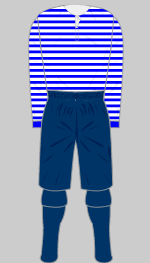
1880-1884 b h v
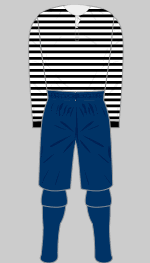
1884-1899 b h
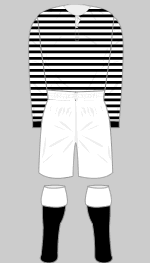
1901-1902 a
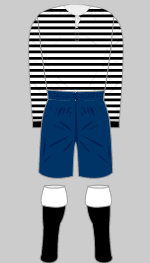
1907-1908 h
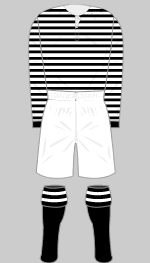
1910-1912 c h
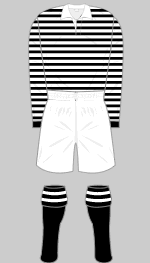
1922-1929 a h
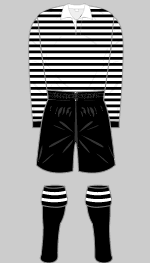
1927-1929 away h
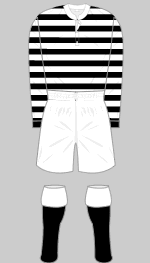
1931-1933 a h
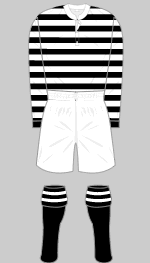
1933-1937 h
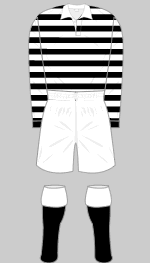
1945-1946 h
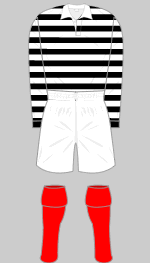
1946-1948 a
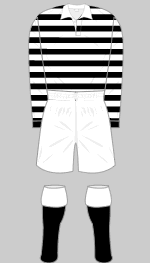
1948-1959 h
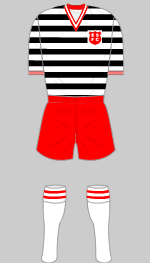
1959-1961 a h
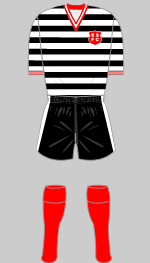
1961-1962 h
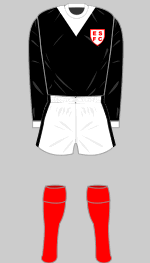
1962-1963 h u

1963-1964 a e h t
E.S. Clydebank
1964
Formed by the merger of East Stirlingshire and Clydebank Juniors
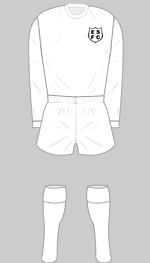
1964-1965 f h o t
East Stirlingshire
1965
Re-formed following the de-merger of East Stirlingshire and Clydebank Juniors
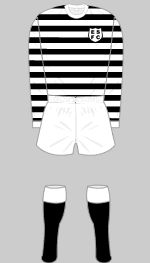
1965-1966 h s
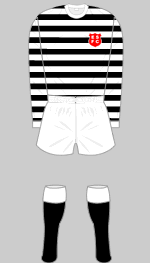
1966-1967 h
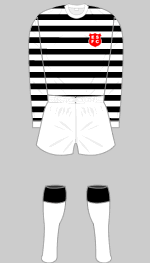
1967-1968 h
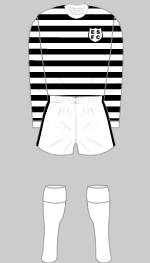
1974-1975 s
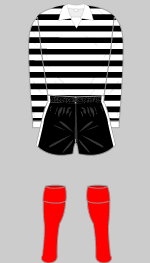
1975-1979 a e h
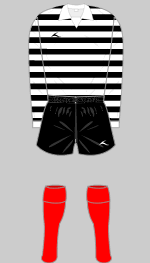
1979-1980 a e m
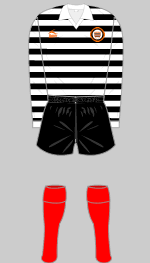
Aug-Nov 1980 h
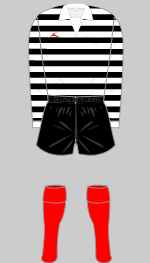
Dec 80-May 81 h
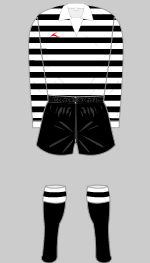
Aug-Dec 1981 r
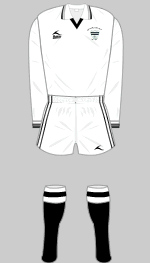
Jan 1982 p
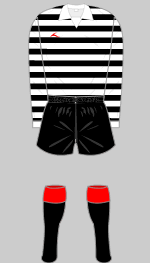
1981-1982 h
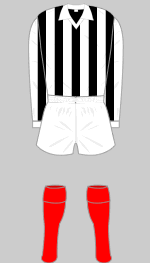
August 1982 h
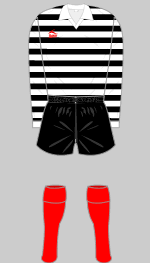
Sept 1982-1983 h
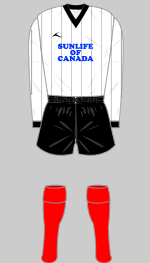
August 1983 h
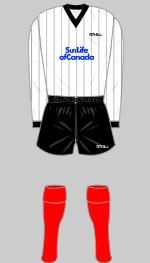
Sept-Oct 1983 e g m n
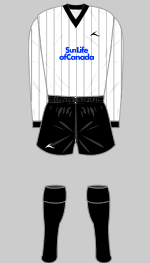
Nov 83-May 84 h
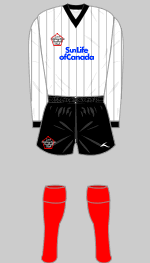
1984-1985 h m
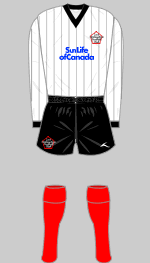
1985-1987 h m n
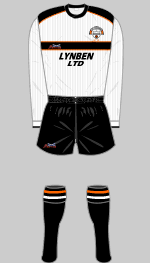
1987-1988 g m n
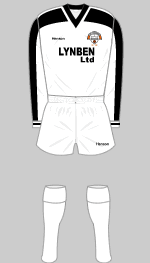
1988-1990 g m
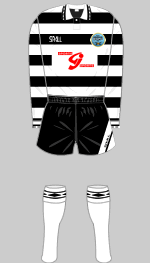
1990-1991 e n r
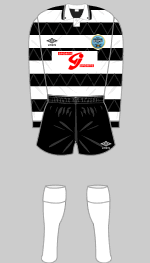
1991-1992 n
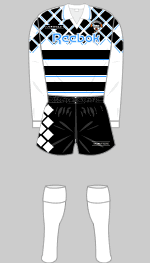
1992-1993 d e k m
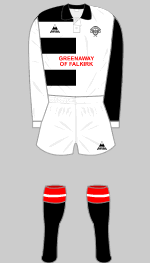
1993-1994 m n
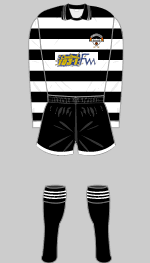
1994-1995 m n
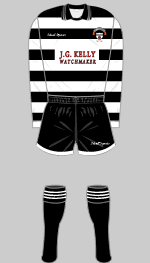
1995-1996 m n
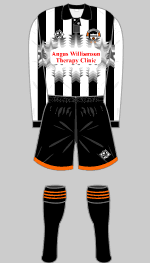
1996-1997 m n
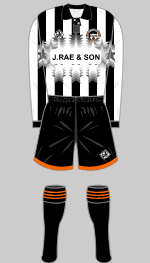
1997-1998 m n
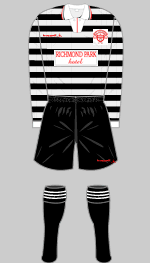
August 1998 m n q
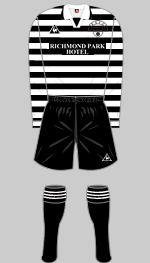
Aug 1998-1999 q
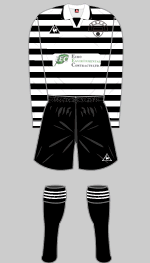
1999-2000 e i m n q
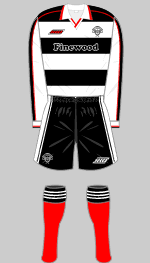
2000-2004 e m
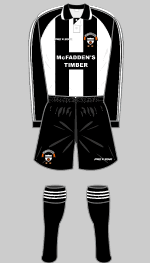
2004-2005 n
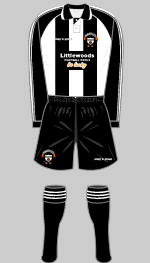
2005-2006 a e
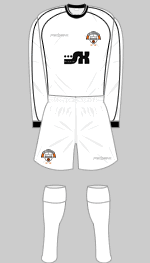
2006-2007 e
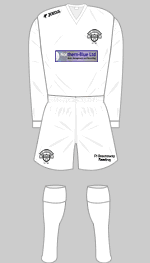
2007-2008 j n
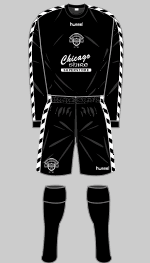
2008-2009 l
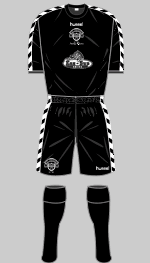
2009-2010 j
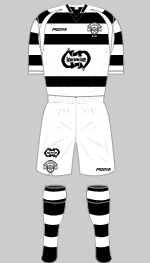
2010-2011 j
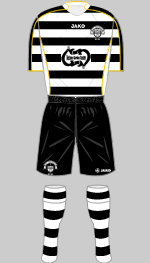
2011-2012 j
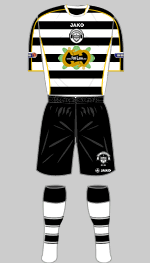
2012-2013 j r
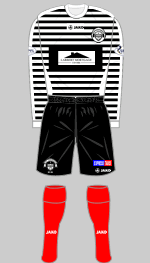
2013-2014 j
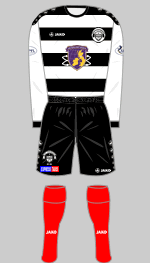
2014-2015 j
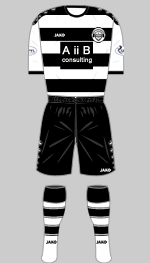
2015-2016 j
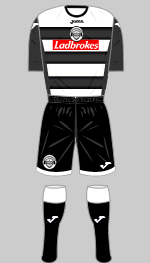
2016-2017 j
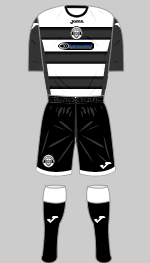
2017-2018 j
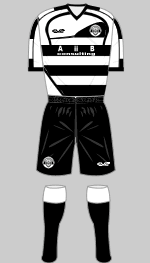
2018-2019 j
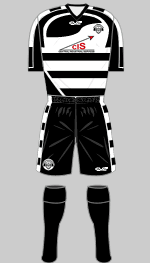
2019-2020 j
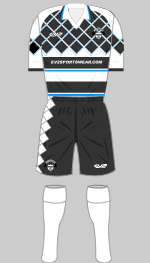
2020-2022 j
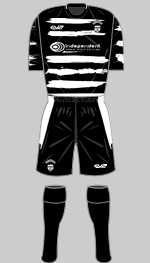
2022-2023 j
Background
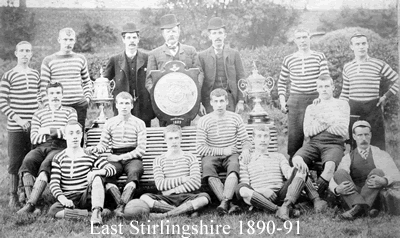 The club is thought to have been formed by members of the Bainsford Bluebonnets
Cricket Club, who created an association football section (known as Bainsford
Britannia) in 1880. A year later they broke away from their parent club
and established themselves as East Stirlingshire FC.
The club is thought to have been formed by members of the Bainsford Bluebonnets
Cricket Club, who created an association football section (known as Bainsford
Britannia) in 1880. A year later they broke away from their parent club
and established themselves as East Stirlingshire FC.
Research by Drummond Calder has cast some doubt on this accepted version. Drummond has established that a Britannia football club did exist and played for the first time in December 1880 but he has not discovered any records to establish a link with the Bluebonnets cricket club, nor even if such a club existed.
East Stirlingshire FC is sometimes, incorrectly, referred to as “East Stirling,” which is misleading. They in fact originate in Falkirk and locals generally refer to them as “the Shire.” The city of Stirling is 14 miles away.
After replacing Linthouse in the Scottish Second Division in 1900, they made little impression, finishing in last place in 1905 and next to last the following season. After this their fortunes improved somewhat: in 1913 they finished third and in 1915, they were fourth.
The Shire played in regional competition when the Second Division was suspended in 1915 and they lost their membership of the Scottish League, along with the rest of the Second Division clubs. In 1919 East Stirlingshire joined the Central League, which, now incorporated most of the former Second Division teams and operated in direct competition with the Scottish League. In 1921 the Central League was incorporated into the Scottish League as the new Second Division. In 1923 East Stirlingshire were relegated to the new Third Division but they won promotion the following season – had they not done so they would almost certainly have lost their place when this level was abandoned in 1925.
There was little to celebrate until 1932 when East Stirlingshire won the Second Division title and promotion to the First Division. Predictably they went straight back down again.
After the Second World War, they started out in the new Division C
(third tier) and won the championship with some ease only to be relegated
in 1949. Here they languished until this level was scrapped in 1955
and along with the other members who were not reserve teams, they returned
to Division B (which became the 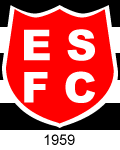 Second Division the following season). This badge was eventually retired in 1968.
The first time that a badge graced Shire's shirts was in 1959 when a straightforward shield with the club's initials appeared. The colours were reversed on the plain black shirts worn in 1963-64 and a black and white version appeared briefly after the ill-fated merger with Clydebank juniors.
In 1963 the Shire won promotion but once again, their stay in the top
flight was brief and 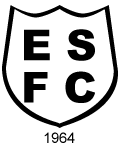 they were relegated in last place after one season.
There then followed one of the more bizarre episodes in Scottish League
history when the club’s owners, the Steedman brothers, moved them
lock, stock and barrel to Clydebank where they merged with the local
junior side and played for the 1964-65 season as ES Clydebank. Outraged
shareholders took their case to the High Court where it was ruled that
the Steedman’s had acted unconstitutionally and the club should
return to Falkirk. The Steedman’s, wisely perhaps, parted company
with the club and formed the 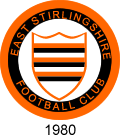 new Clydebank FC while the Shire were welcomed
home by a parade through the town led by a piper.
new Clydebank FC while the Shire were welcomed
home by a parade through the town led by a piper.
 There would be no fairy tale ending and for the next decade the club
struggled near the foot of the table before being relegated in 1975
from the old Second Division to the new one (now the third tier), one
of those quirks caused by the introduction of the Premier Division.
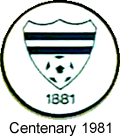
In 1980 they were promoted back to the second level and the following season a new badge was adopted. This featured orange as an accent colour for the first time but it was dropped after a few months. Another short-lived crest appeared on the all-white centenary strip that was worn at the end of the season.
There would be no fairy tale ending and for the next decade the club
struggled near the foot of the table before being relegated in 1975
from the old Second Division to the new one (now the third tier), one
of those quirks caused by the introduction of the Premier Division.
In 1980 they were promoted back to the second level and the following season a new badge was adopted. This featured orange as an accent colour for the first time but it was dropped after a few months. Another short-lived crest appeared on the all-white centenary strip that was worn at the end of the season.
In the 1980s, possibly as a cost-saving measure, the team wore plain white tops and 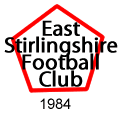 black shorts. In 1984 these were adorned with another badge in a simple but quite
  unusual design. In the 1984-85 season this was worn on the right (ie "wrong") side of the shirt. In 1987 what would become the classic Shire crest appeared for the first time on the new Matsudo kit. This again included orange, a feature reflected in the overall design.
In 1990 the team were once again kitted out in hooped tops, albeit in a more conventional width than their traditional outfit. A very nondescript crest appeared in colours that had nothing to do with the club's history. This  was soon dropped and the 1987 design reinstated. This would appear
  with several colour variations.
In 1994 East Stirlingshire were placed in the newly created Third Division (fourth level) following the reorganisation of the SFL.
In 1998 the Shire signed a contract with Le Coq Sportif but the French company did not deliver the new kits in time for their first game of the season. They did, however, have a set of Queen's Park tops so sent these instead with the East Stirlingshire crest and sponsor's logotype ironed over the top of those of  Queen's Park. (Ref: Ian Fleming). When the team's tops arrived they had a crudely drawn version of the Shire crest printed onto the fabric.
  Mercifully this disappeared when the club changed their supplier in 2000 and the familiar badge was reinstated.
Between 2003 and 2006 the Shire finished rock bottom every season, amassing a mere eight points in the 2003-04 campaign, prompting many to question whether they could continue as a senior club. The chairman and majority shareholder, Alan Mackin, made clear his intention to sell the club’s ramshackle Firs Park home for retail development and move either to Grangemouth or share Falkirk FC’s ground. His critics claimed that the proceeds of such a sale would not be reinvested in the club but go to its shareholders – that is to say Mr Mackin and his family.
Meanwhile the club’s players received a mere £10 a week and were expected to buy their own boots (the Supporters’ Trust organised a successful campaign to raise funds to provide players’ kit). Mackin insisted that the club was living within its meagre means but critics argued that he deliberately starved the club of cash so that it would fold and he could sell off their ground without the inconvenience and expense of relocating.
East Stirlingshire’s performances were so dire that
the Scottish League decided to reintroduce re-election of  a
sort. Any club that finished in last place twice in succession would
lose their vote and be allowed to play for two more seasons after which
members would vote on whether their membership should be terminated.
a
sort. Any club that finished in last place twice in succession would
lose their vote and be allowed to play for two more seasons after which
members would vote on whether their membership should be terminated.
In May 2008, East Stirlingshire finished next to last, thus avoiding being reduced to associate member status. They finally quit Firs Park severing links with Alan Mackin, who was now able to seek a buyer for the vacant real estate. A new regime under Spencer  Fearn was established to run the club with an arrangement to share Stenhousemuir's Ochilview Park for up to five years. Fearn's investments allowed the club to qualify for the play-offs in 2008 and 2009 but in May 2010, he unexpectedly resigned from the board. Following this, provision was made for his controlling shares to be passed to the Shire Trust in 2011.
After the takeover a subtle but not insignificant change was made to the familar club crest.
In 2015-16 the team finished seven points adrift at the foot of League Two and under the pyramid structure, introduced when the SPFL was formed, they met Lowland League champions Edinburgh City in a two legged play-off. After securing a 1-1 draw in the away leg, the return was heading for extra-time when Shire conceded a penalty in the 86th minute. The visitors scored to consign the Shire to the Lowland League, the first time that an existing Scottish League member had lost its place under the new structure.
Sources
- (a) The Shire - the club's quirky old official website now sadly shut down
- (b) Brian McColl
- (c) Ayr United FC - Images of Sport (Duncan Carmichael 2002)
- (d) Relichtieplus
- (e) SNSpix
- (f) The Scottish Football League - Past Members Part III (N Nicol 1994)
- (g) Ralph Pomeroy
- (h) Alick Milne
- (i) Evie Marshall
- (j) East Stirlingshire.co.uk
- (k) jumpers4goalposts
- (l) Dumbarton FC Official Site
- (m) Donald Gellatly (HFK Research Associate)
- (n) My Shire Tops - Ian Fleming's collection of recent East Stirlingshire shirts
- (o) Keith Ellis
- (p) Eddie Hutchinson (YouTube)
- (q) Martin Gooday
- (r) Ian McConnel
- (s) Shire History on Film submitted by Ralph Pomeroy
- (t) Beyond the Last Man
- (u) William Kay
- (v) Scottish Football Association Annuals
Photograph courtesy of East Stirlingshire Supporterklubb Norge. Crests are the property of East Stirlingshire FC.