Dunfermline
Athletic
Formed 1885
Elected to Scottish Division Two 1912. Transferred to the Eastern League 1915.
Founder member of the reconstituted Scottish Division Two 1921.
Kit History
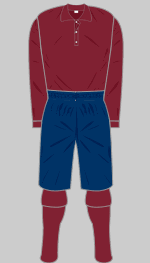
1885-1887 a b m
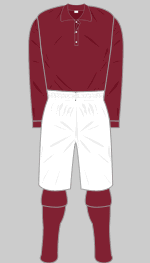
1887-1888 b m
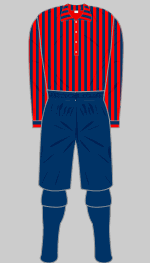
1888-1895 a m
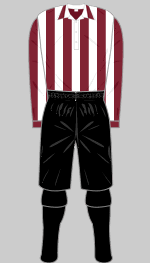
1896-1901 m v
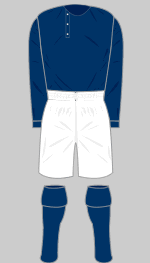
1901-1903 m
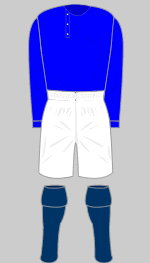
1903-1906 m
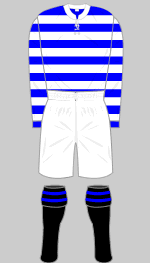
1906-1909 m
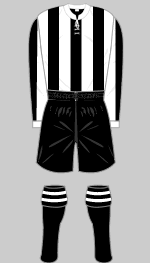
1909-1911 a m
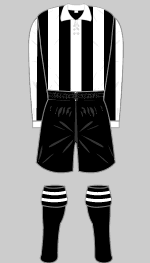
1911-1913 m
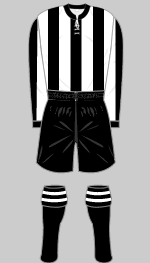
1913-1914 m
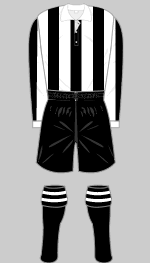
1917-1918 m
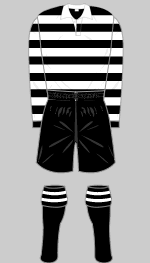
1919-1920 m
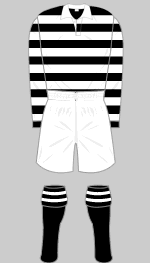
1920-1921 m p
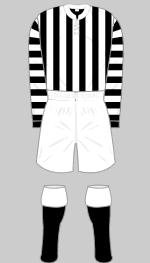
1921-1922 m v
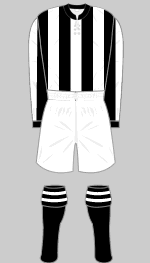
1922-1928 m v w
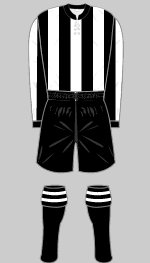
1927-1928 away m
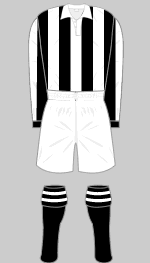
1928-1932 m
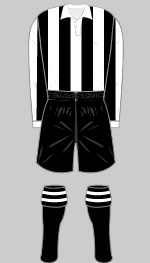
1928-1929 away m
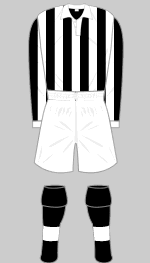
1932-1934 v
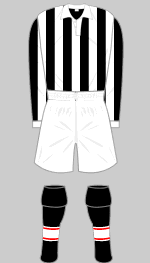
1934-1937 c m v
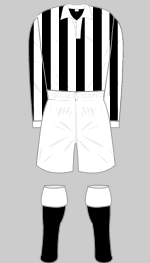
1937-1938 w
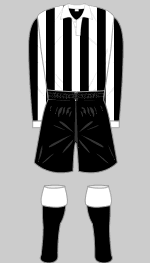
1938-1948 m v
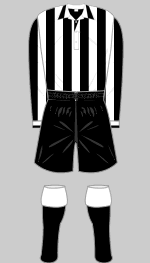
1948-1952 m v y
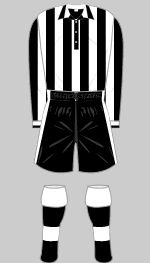
1953-1954 h m
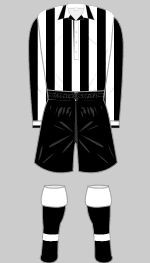
1954-1955 y
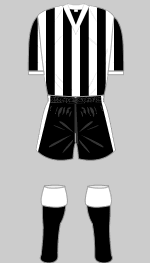
1955-1958 1 m
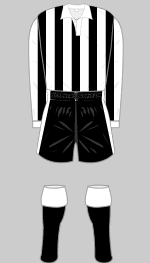
1955-1958 2 m w y
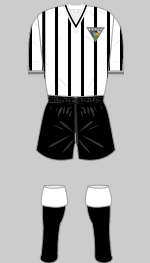
1958-1959 m v x
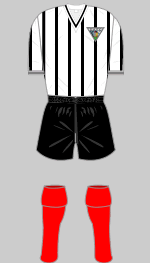
1959-1961 f r v x y
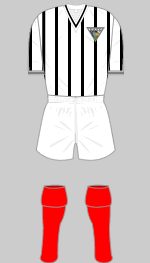
1960-1961 y
Aug-Dec 1961 y
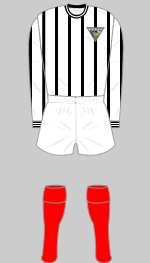
Jan-March-62 m v x y
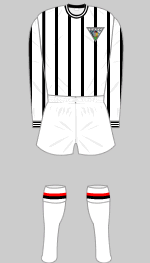
April 62-1964 v x y
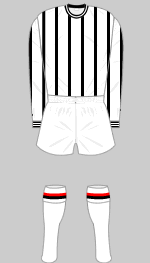
1964-Jan 68 c e m v y
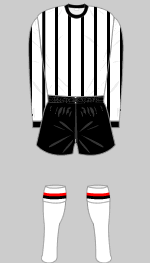
Jan 68-1971 d h m y
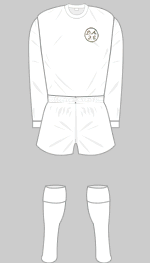
1971-1972 m z
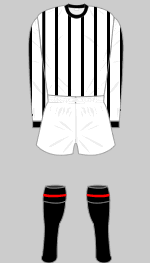
1972-1973 l
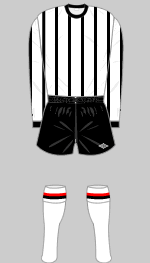
1973-1974 m v
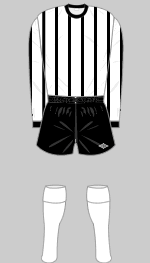
1974-1976 v
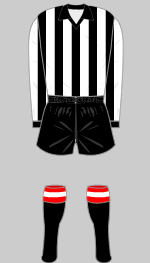
1976-1977 m
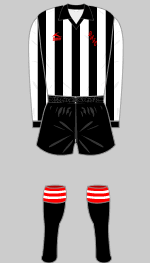
1977-1978 m y
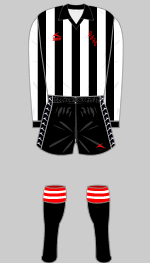
1978-1979 h y
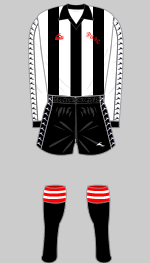
1979-1980 y
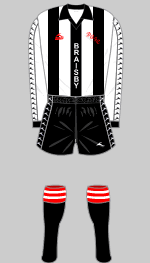
1980-1981 h n u v
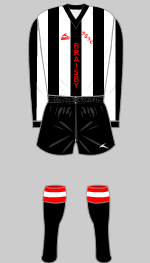
1981-1982 k u v y
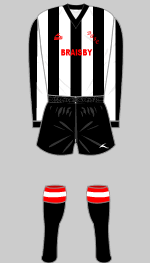
1982-1983 y
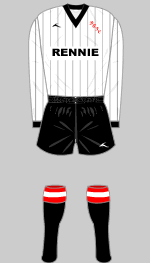
1983-1984 u
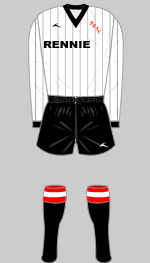
1984-1985 v
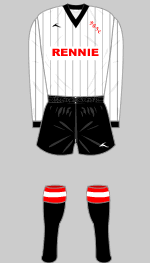
1985-1986 h u v
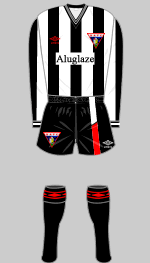
1986-1988 k v y
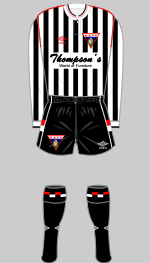
1988-1989 h l t v
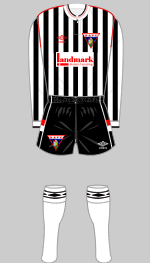
1989-1990 h l v y
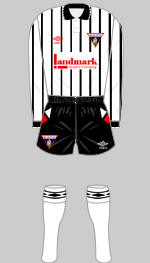
1990-1992 h l s v y
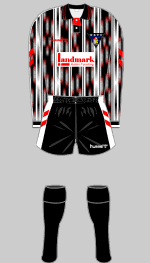
1992-1994 h l
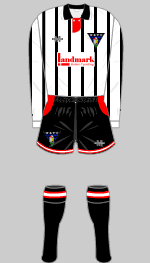
1994-1996 h v y
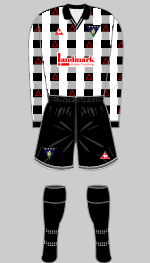
1996-1997 h o v
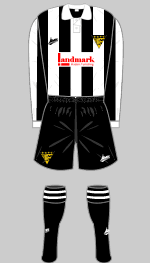
1997-1999 h j l v y
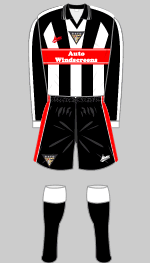
1999-2000 g h y
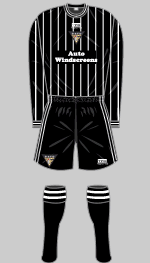
2000-2001 h
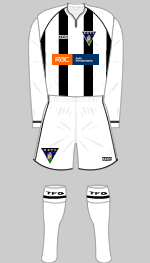
2001-2002 h y
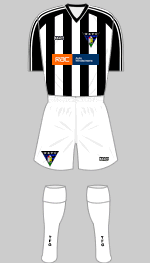
2002-2003 h y
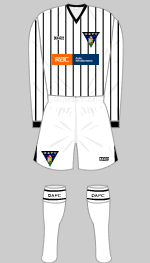
2003-2004 h
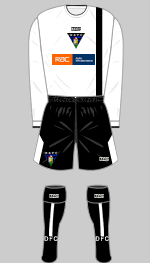
2004-2005 i
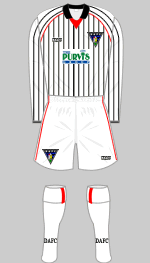
2005-2006 i v y
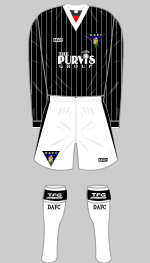
2006-2007 a y
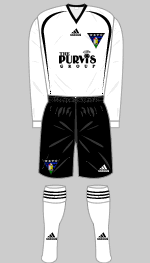
2007-2008 a v
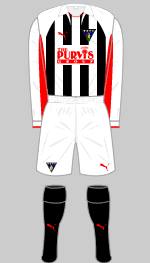
2008-2009 q
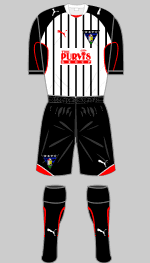
2009-2010 q
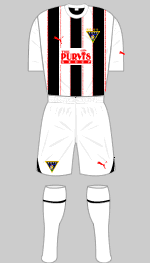
2010-2011 q
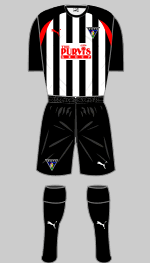
2011-2012 q
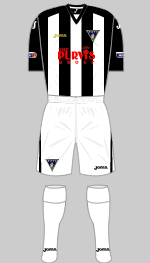
2012-2013 q
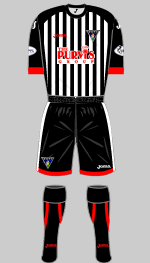
2013-2014 q y
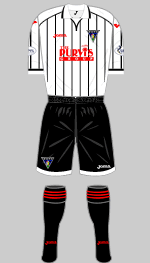
2014-2015 q
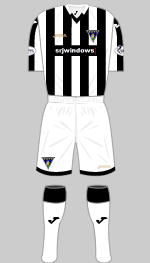
2015-2016 q
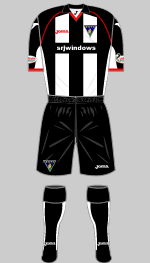
2016-2017 q
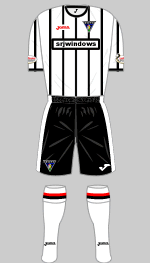
2017-2018 q
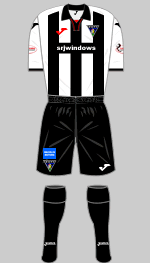
2018-2019 q
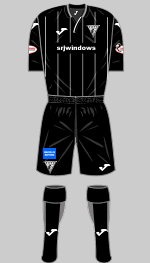
2019-2020 q
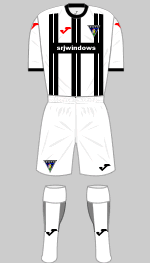
2020-2021 q
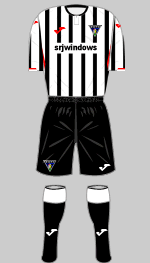
2021-2022 q
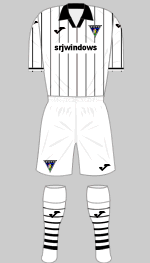
2022-2023 q
Background
 In 1874 the members of the Dunfermline Cricket Club formed an association
football section to keep members involved during the winter. The Dunfermline
Club played at Ladysmill (now McKane Park) in blue and white hooped jerseys and soon became the leading
side in the area. In 1885 a group of players broke away when it was decided that only members of the cricket club could play for the football section and formed Dunfermline
Athletic FC who took up residence at East End Park, adjacent to the
site of the club's modern home. In 1887 they won the Fife Cup but they
were then suspended from senior competition due to a dispute with the
Dunfermline Club and in August 1892 Dunfermline Athletic joined the
Scottish Junior FA. In 1900 it was decided at a general meeting to reinstate
the club as a senior professional team.
In 1874 the members of the Dunfermline Cricket Club formed an association
football section to keep members involved during the winter. The Dunfermline
Club played at Ladysmill (now McKane Park) in blue and white hooped jerseys and soon became the leading
side in the area. In 1885 a group of players broke away when it was decided that only members of the cricket club could play for the football section and formed Dunfermline
Athletic FC who took up residence at East End Park, adjacent to the
site of the club's modern home. In 1887 they won the Fife Cup but they
were then suspended from senior competition due to a dispute with the
Dunfermline Club and in August 1892 Dunfermline Athletic joined the
Scottish Junior FA. In 1900 it was decided at a general meeting to reinstate
the club as a senior professional team.
There are several theories about the origin of the club's unusual nickname, "The Pars." According to Jim Paterson and Douglas Scott ("Black and White Magic" - 1984) in the early days when the Football Club was closely connected with the Cricket Club, the footballers were renowned for their performances at the bar and so were called the "Paralytics". However in the early 1900s it is known that Athletic's nickname was the "Dumps" - shortened from Dunfermline - and this is said to have been coined by English sailors visiting East End Park when their ship docked at Rosyth. After the 1914-18 War they were known as the Pars and some believe the parallel black and white stripes to be the reason. Another school of thought involves English workers who came to work at the armaments depot at Crombie and at Rosyth Dockyard; they kept their association with their local team by forming the Plymouth Argyle (Rosyth) Supporters Club and it is said that the Dunfermline nickname comes from the banners in evidence around the ground. Although almost certainly coincidental, there is also a curious resemblance to Dùn Phàrlain, which is the Gaelic name for Dunfermline.
In 1909 the side from the "Auld Grey Toun" adopted their now traditional black and white colours and joined the Central League. The following season they won the championship as well as the Fife Cup. In 1912 they won the Qualifying Cup and were elected to the Scottish League Second Division. In 1915 the Second Division was suspended and Dunfermline played in the Eastern League until 1918 when that competition was suspended. The following season, along with the surviving former Second Division clubs, they formed the rebel Central League, which was incorporated as the reformed Second Division in 1921.
In 1926 Dunfermline won the Second Division championship and spent two seasons in the First Division before they were relegated. They returned to the top level in 1934 and spent three seasons there before returning to the lower division.
 In 1950, while playing in Division B (second tier), Dunfermline reached
the final of the Scottish League Cup but were beaten 0-3 by East Fife.
In the late 1950s the club endured a yo-yo existence. On the final day
of the 1958-59 season Dunfermline beat Partick Thistle 10-1 to stave
off relegation on goal average. This was the season that the Pars adopted
the candy-striped shirts that became their signature kit, revived
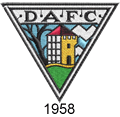
on several occasions, featuring a unique triangular badge. This was designed by Colin Dymock, a local art teacher, and features the Malcom Canmore Tower, a landmark that appears on the town's coat of arms.
In 1950, while playing in Division B (second tier), Dunfermline reached
the final of the Scottish League Cup but were beaten 0-3 by East Fife.
In the late 1950s the club endured a yo-yo existence. On the final day
of the 1958-59 season Dunfermline beat Partick Thistle 10-1 to stave
off relegation on goal average. This was the season that the Pars adopted
the candy-striped shirts that became their signature kit, revived
on several occasions, featuring a unique triangular badge. This was designed by Colin Dymock, a local art teacher, and features the Malcom Canmore Tower, a landmark that appears on the town's coat of arms.
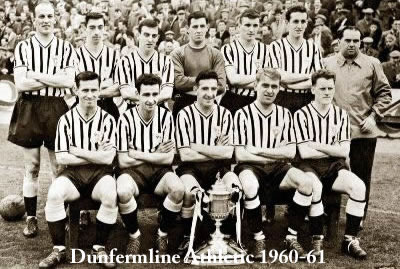
In March 1960 Jock Stein arrived as manager and
under his leadership the "Pars" won the Scottish FA Cup in
1961, their first major honour, sensationally beating Celtic after a
replay. Stein left to manage Hibernian in 1964 but his legacy at Dunfermline
was dramatic and the club played regularly in Europe during  the decade
and won the Scottish Cup again in 1968.
the decade
and won the Scottish Cup again in 1968.
Traditional crests fell out of favour during the 1960s and Dunfermline dropped theirs in 1962. In 1971-72, facing a severe financial crisis that almost led to their closure, the team wore a basic white strip adorned with a simple monogram badge. From 1977 the club's initials were embroidered onto the shirts as was  fashionable at the time.
In 1972 the Pars were relegated but bounced back immediately. They
struggled and in 1976 they found themselves in the Scottish Second Division,
which was now the third tier following the creation of the Premier Division.
In 1979 they were promoted to Scottish Division One (second tier) but
went down again in 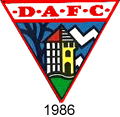 1983.
1983.
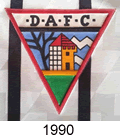
In 1986 the old crest was revived with some modifications to the colouring and script. This coincided with the latest restructuring of the Scottish League with the formation of the Premier League and Dunfermline were given
 a platform in the new First Division from which they achieved promotion
to the top level in 1987. Relegated after one season, they returned
as Division One champions in 1989 and this time they stayed in the
top flight until 1992.
a platform in the new First Division from which they achieved promotion
to the top level in 1987. Relegated after one season, they returned
as Division One champions in 1989 and this time they stayed in the
top flight until 1992.
The club's crest was given a slight makeover in 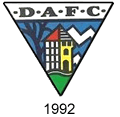 1992 and again in 1999. In 1996 Dunfermline won the First Division title once more and remained
in the Premiership for three seasons before relegation. In 2000 they
returned to the Premier League yet again but struggled
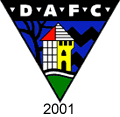
to retain their status. In 2001 the badge was optimised for digital reproduction.
1992 and again in 1999. In 1996 Dunfermline won the First Division title once more and remained
in the Premiership for three seasons before relegation. In 2000 they
returned to the Premier League yet again but struggled
to retain their status. In 2001 the badge was optimised for digital reproduction.
For the club's 125th anniversary, celebrated in 2010-11, the legend 1885-2010 was added in gold above the crest, which was itself 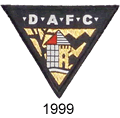 outlined in gold. Supporters had much cause to celebrate as the team was promoted at the end
  of the season back to the Premier League. Unfortunately, the SPL proved too much and they were relegated after just one season.
Unpaid taxes led to the club and the separate company that owned East End Park being served with a winding up order in March 2013. The club entered administration and suffered a 15 point penalty: this took them into the relegation play-offs and the Second Division. A supporters' group, Pars United, was formed to rescue the club and in July they were given preferred bidder status by the administrators. Remarkably, the club's 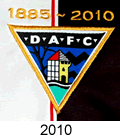 creditors agreed to write off the entire £10m debt allowing Pars United to
 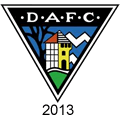 take charge, put in a bid to buy East End Park and start the new season in the SPFL without incurring a further points penalty. The new owners introduced a slightly modified version of the traditional club crest.
The team almost made it back into the second tier (now the Scottish Championship) at the end of the 2013-14 season but were beaten in the play-off final. Their 2016-17 campaign was more successful and they finished as League One champions. The following season marked the 50th aniversary of Dunfermline's Scottish Cup win and to celebrate the club commissioned a reproduction of the classic candy stripe strip worn at the time.
Sources
- (a) Dunfermline Athletic Official Site
- (b) Brian McColl
- (c) London Hearts
- (d) Cowdenbeath Free On Line
- (e) Riccardo Bertani
- (f) Football Focus
- (g) Pow!
- (h) Pars Database - an excellent unofficial site with extensive statistics
- (i) Colours of Football
- (j) Anthony Borrett
- (l) SNSpix
- (m) Alick Milne
- (n) Ralph Pomeroy
- (o) Stuart Holland
- (p) You Tube - a rare clip of Dunfermline playing Cowdenbeath in the Qualifying Cup in 1920-21
- (q) Football Shirt Culture
- (r) My photo collection
- (s) David Reynolds
- (t) Daniel Franklin
- (u) Donald Gellatly (HFK Research Associate)
- (v) Christopher Worrall & Begoña Hernandez
- (w) Keith Ellis (HFK Research Associate)
- (x) Colin Maker
- (y) Ian McConnel
- (z) Brian Wright
Crests are the property of Dunfermline Athletic FC.