Dumbarton
Formed 1872
Founder member of the Scottish Football League 1890. Resigned 1897
Elected to Scottish Division Two 1906
Kit History
Dumbarton
1872-1889
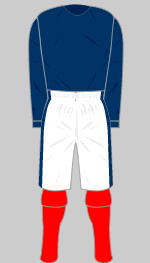
1876-1886 b n u
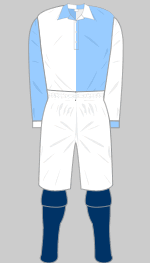
1886-1887 n
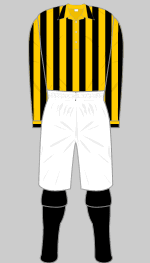
1887-1889 b n v
Dumbarton Athletic
1881-1889
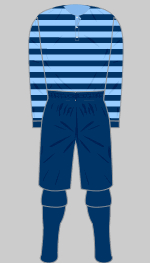
1881-1885 p
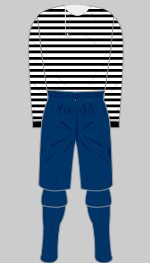
1885-1887 p y
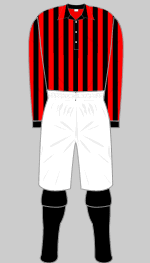
1887-1889 p
Dumbarton
1889
Formed by the merger of Dumbarton and Dumbarton Athletic.

1889-1897 b n
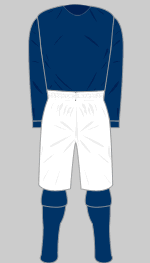
1897-1904 n
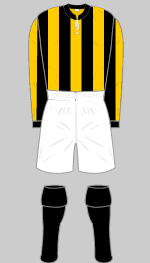
1907-1908 n
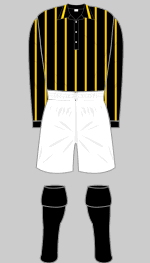
1909-1911 n
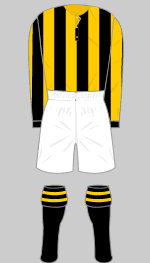
1912-1913 d
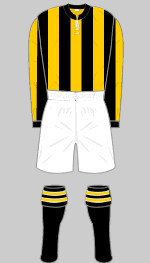
1913-1914 n
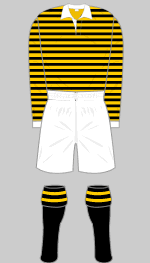
1914-1916 n
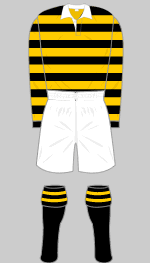
1916-early 1919 n
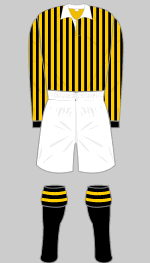
late 1919-1920 n
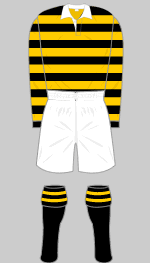
1920-1921 n
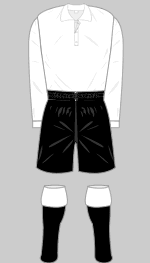
1921-1922 n
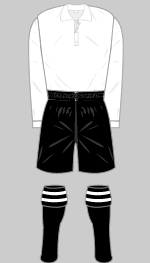
1922-1924 n
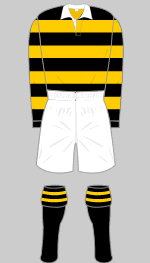
1924-1925 i n
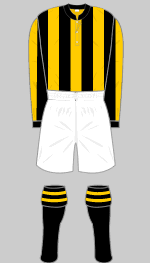
1928-1929 n
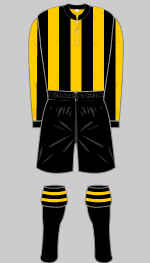
1927-29 away n
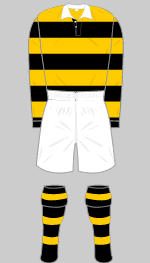
1931-1937 c1 n t
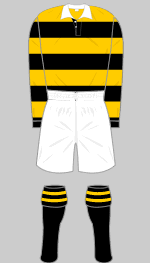
1937-1938 n
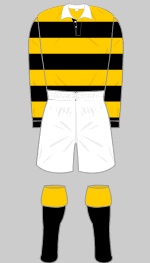
1942-1957 n
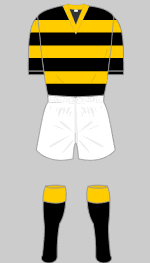
1957-1958 n
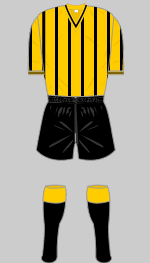
1960-1961 n
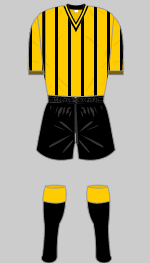
1961-1962 n
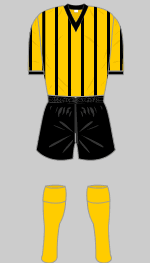
1962-1964 n
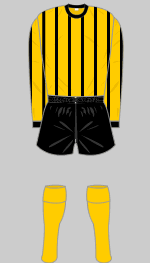
1965-1967 n
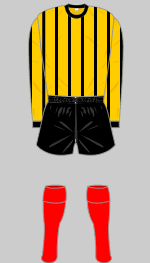
1967-1969 n
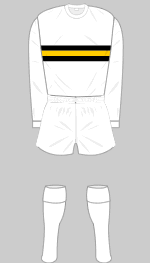
1969-1973 c4 n
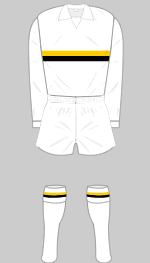
1973-1977 n z
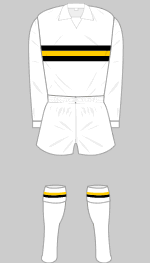
Oct 1973 z
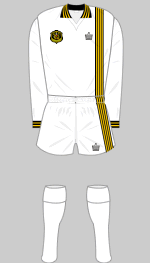
early 1977-1978 n z
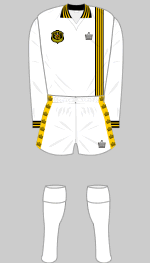
mid 77-March 78 c2 z
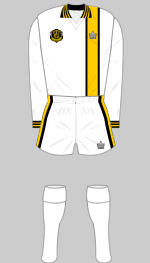
March 78-1979 s
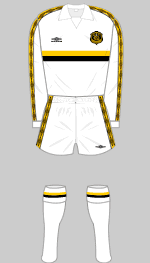
1979-1983 n o p s
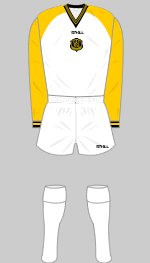
1983-1984 s
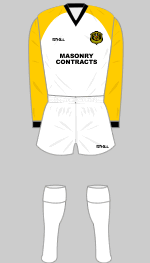
Aug-Dec 1984 i s z
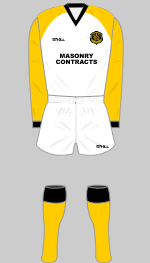
Dec 84-May 85 z
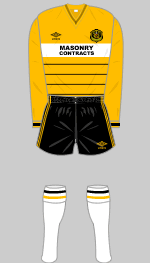
1985-1986 m n p w
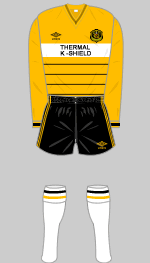
1986-1987 n p w
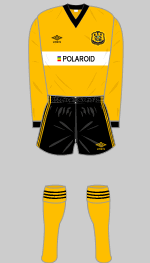
1987-1988 p s
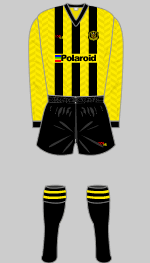
1988-1989 p w
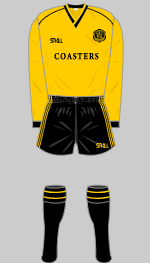
1989-1990 s
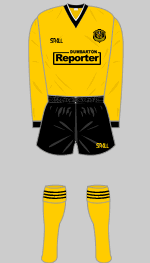
1990-1991 s
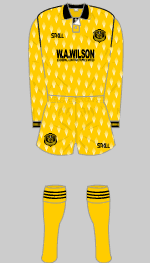
1991-1993 m x
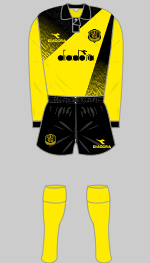
1993-1995 d m w z
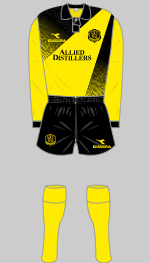
1995-1996 m w z
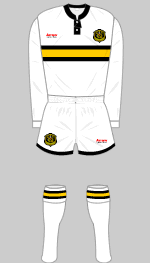
1996-1998 s w
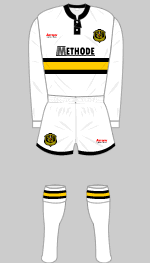
1998-1999 s w
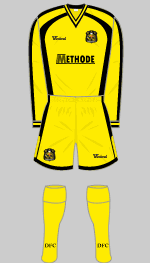
2000-2002 m r x
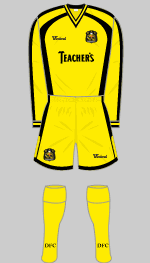
2002-2004 e f m r x
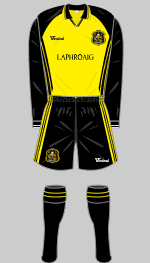
2004-2006 g m w
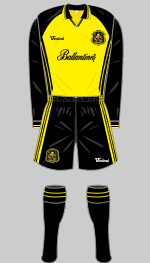
2006-2007 a w
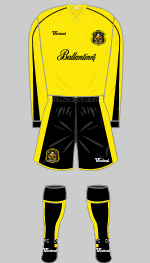
2007-2008 a w
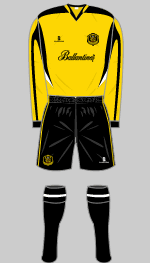
2008-2010 a w
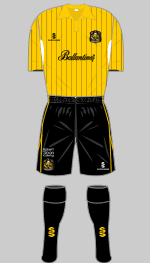
2010-2011 a w
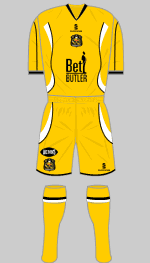
2011-2012 a
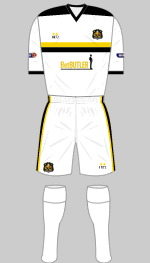
2012-2014 a w
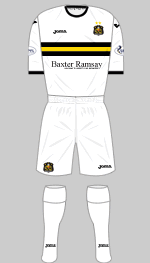
2014-2016 a
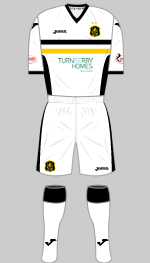
2016-2017 a
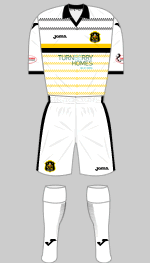
2017-2018 a
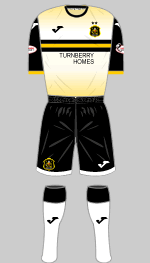
2018-2019 a
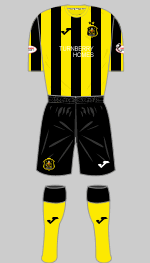
2019-2020 a
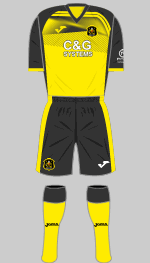
2020-2021 a
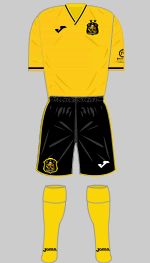
2021-2022 a
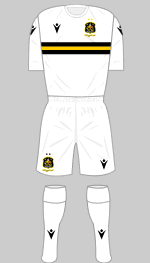
2022-2023 a
Background
 In 1872 a group of young men from Dumbarton resolved
to form a football club after watching a match between Queen's Park
and neighbouring Vale of Leven. A year later Dumbarton FC registered
with the Scottish FA and in 1879 they moved into the unattractively
named Boghead Park. For five years they remained unbeaten at home, establishing
themselves as one of the leading clubs in the West of Scotland. They
appeared in six Scottish FA Cup finals, winning the tournament in 1883.
They then went on to thrash English FA Cup holders Blackburn Rovers
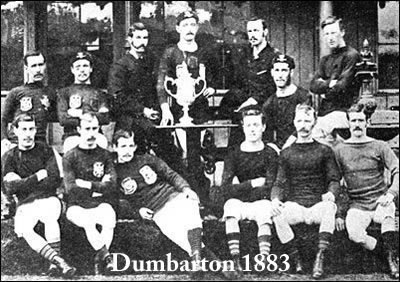
6-1 to be hailed as unofficial champions of Great Britain. The club's registered colours during this period were navy jerseys, white knickers with a navy stripe and red hose: there is, however, no evidence of a stripe on the knickers in this photograph of the cup winning team from 1883. (The crests worn by various players appear to have been taken from jerseys worn when the players concerned were selected for a Scottish Counties XI that played matches against the Lancashire, Glasgow and Birmingham FA's while two members of the team are sporting their international caps.)
In 1872 a group of young men from Dumbarton resolved
to form a football club after watching a match between Queen's Park
and neighbouring Vale of Leven. A year later Dumbarton FC registered
with the Scottish FA and in 1879 they moved into the unattractively
named Boghead Park. For five years they remained unbeaten at home, establishing
themselves as one of the leading clubs in the West of Scotland. They
appeared in six Scottish FA Cup finals, winning the tournament in 1883.
They then went on to thrash English FA Cup holders Blackburn Rovers
6-1 to be hailed as unofficial champions of Great Britain. The club's registered colours during this period were navy jerseys, white knickers with a navy stripe and red hose: there is, however, no evidence of a stripe on the knickers in this photograph of the cup winning team from 1883. (The crests worn by various players appear to have been taken from jerseys worn when the players concerned were selected for a Scottish Counties XI that played matches against the Lancashire, Glasgow and Birmingham FA's while two members of the team are sporting their international caps.)
In 1884 the Dunbartonshire FA Cup was inaugurated and over the next 50 years Dumbarton FC won the competition no fewer than 23 times.
According to Alick Milne, HFK's leading Research Associate for Scottish teams, the Sons played in halved tops resembling those of Blackburn Rovers sometime in the mid-1880s. A contemporary newspaper report on the Scottish Cup Final between Hibernian and Dumbarton unearthed by Jim Jenkinson specifically refers to Dumbarton being 'the blue and whites,' which may corroborate this top and place it in the 1886-87 season.
A contemporary press report of the match between Queen's Park and Dumbarton on 27 August 1887, also uncovered by Jim Jenkinson, states, "Jamieson kicked off for the Dumbarton men, who attracted some attention by their new black and gold striped jerseys." This appears to contradict Jim McAllister's "The Sons of the Rock, The Official History of Dumbarton Football Club", which states "...the club would play in black and gold jerseys that had been the club's registered colours since 1886....."
In 1889 the club absorbed neighbours Dumbarton Athletic; the new team continued to play as Dumbarton and to wear that team's black and gold colours.
In 1890 Dumbarton helped form the Scottish Football League and tied with Rangers on points for the title. Since no mechanism had been agreed to separate clubs that finished level on points, a play-off was arranged. After this match was drawn, the two clubs shared the championship. The following season Dumbarton won the competition outright, two points ahead of Celtic.
In 1893 the Scottish FA belatedly recognised professionalism but Dumbarton continued to hold fast to amateur principles. This proved a costly decision as most of their best players moved to clubs where they could earn a wage. In 1895 and 1896 they finished last and had to apply for re-election. They were unsuccessful in 1896 and were relegated to Scottish Division Two. After finishing in last place in 1897 the club resigned.
After several seasons in the non-league wilderness when they almost went out of existence, Dumbarton were elected back into the Scottish Second Division in 1906. In 1911 they won the Second Division championship but failed to be elected to the First Division. In 1913 it was decided to increase the First Division by two members to 20 clubs: despite having finished in sixth place, Dumbarton were elected to fill one of the vacancies along with champions Ayr United. They continued to compete in the First Division throughout the Great War but in 1922 they were relegated to the newly reinstated Scottish Second Division.
During the inter-war period the club generally finished in the top half of the Second Division apart from 1936 when they took the wooden spoon.
After the Second World War, Dumbarton resumed their career in Division B (second tier) and in 1954 they were relegated to Division C, made up largely of reserve teams. Once again the club was on the verge of closing before a new board was appointed to keep the team alive. In 1955 the C divisions were scrapped and Dumbarton returned to an enlarged Second Division.
The club continued to languish in the Second Division and survived
yet another financial crisis in the 1960s before going through something
of a resurgence. In 1970 they took Celtic to extra-time in a League
Cup semi-final before going down 3-4. In 1972 they won the Second Division
championship in a dramatic finale by beating Berwick Rangers in the
last game of the season. After narrowly surviving their first season
back at the highest level for 50 years, Dumbarton found themselves back
in the second tier when the Scottish League was restructured in 1975
with the formation of the Premier Division. Although they reached the
 Scottish Cup semi-final stage in 1976, it would be a long struggle to
improve their status.
Scottish Cup semi-final stage in 1976, it would be a long struggle to
improve their status.
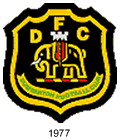
From 1977 the club crest was worn on the teams' shirts. This features an elephant (representing Dumbarton Rock, a volcanic plug thought to resemble that animal) with a castle on its back (which represents Dumbarton castle, which sits on the top of the famous landmark).
In 1984 Dumbarton were promoted to the Premier Division. After a promising start they were in a comfortable, mid-table position but they ran out of steam over the last three months of the season, taking just three points to finish in ninth place and were relegated to the First Division.
In 1993 the club adopted Diadora as their kit partner but their appears to have been a mix up and for several games the team played in gold and red shirts until the correct ones were delivered.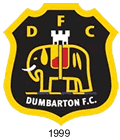
Instability on and off the field contributed to further relegations and in 1997-98, Dumbarton were playing in the Scottish Third Division (fourth tier).
In 1999 the club's crest was updated although the design remained fundamentally unchanged.
 The
club left their dilapidated Boghead Park in 2000 to move into the all-seat
Strathclyde Homes Stadium and won promotion to the third tier in 2002.
Their new ground nestles beneath Dumbarton rock, a spectacular volcanic
mass rising 240' (73 metres) above the River Clyde. They are known as
"The Sons" from "The Sons of the Rock."
The
club left their dilapidated Boghead Park in 2000 to move into the all-seat
Strathclyde Homes Stadium and won promotion to the third tier in 2002.
Their new ground nestles beneath Dumbarton rock, a spectacular volcanic
mass rising 240' (73 metres) above the River Clyde. They are known as
"The Sons" from "The Sons of the Rock."
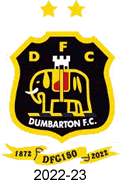
The team started their 150th anniversary season in 2022-23 in League Two after Kelty Hearts beat them in the League One play-offs.Their first choice kit for the season was a re-creation of the much-lover banded white strip first seen in 1969 while the alternative was in navy, white and red, their original colours. Sponsorship was dropped and a special crest introduced.
Sources
Photograph courtesy of Chris Whitefield.
- (a) Official Dumbarton Website
- (b) Brian McColl
- (c1) London Hearts
- (c2) London Hearts
- (c3) London Hearts
- (c4) London Hearts
- (d) Ayr United FC - Images of Sport (Duncan Carmichael 2002)
- (e) On the Rocks
- (f) Alistair's Heart Monitor
- (g) Red Card Scotland
- (h) House of Shirts
- (i) e-bay
- (j) Classic Kits
- (l) Old Football Shirts
- (m) SNSpix
- (n) Alick Milne
- (o) St Johnstone FC - Images of Sport (Alastair Blair 2003)
- (p) Ralph Pomeroy
- (q) Scottish Football History
- (r) Sean Bangs
- (s) Donald Gellatly
- (t) The Vision Book of Football Records by Clive Batty (Vision Sports Publishing 2009 ISBN 978 1905326 68 6)
- (u) Chris Whitefield
- (v) Jim Jenkinson
- (w) Gary Black
- (x) Keith Ellis
- (y) Jim Jenkinson
- (z) Ian McConnel
Crests are the property of Dumbarton FC.