Cowdenbeath
Formed 1882
Elected to Scottish Division Two 1905. Transferred to the Eastern League 1915.
Founder member of the re-formed Scottish Division Two 1921. Resigned 1940.
Reinstated to Division "B" 1945.
Relegated to the Lowland League 2022
Kit History
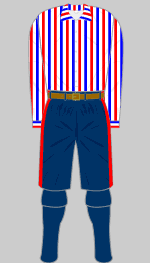
1882-1887 b k w
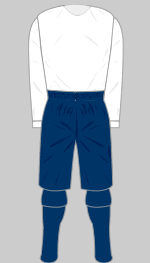
1887-1889 b k w
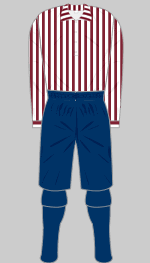
1889-1891 k w
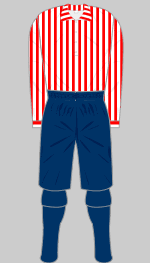
1891-1893 k
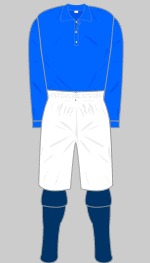
1893-1894 k t

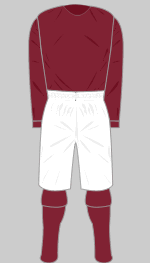
1894-1896 k
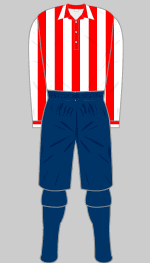
1896-1903 k
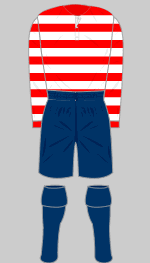
1903-1905 k
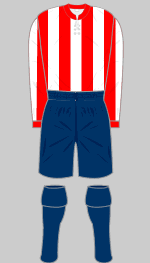
1905-1911 k
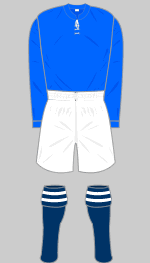
1911-1920 b k
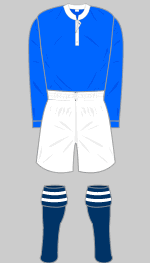
1920-1921 k n
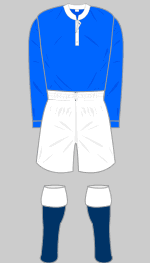
1922-1924 k
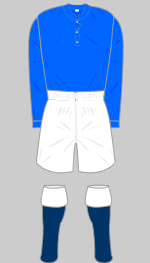
1924-1925 k
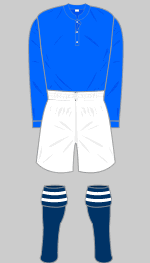
1925-1928 k
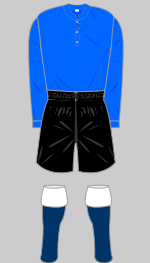
1927-1929 away k
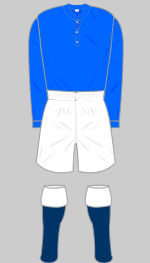
1928-1930 k
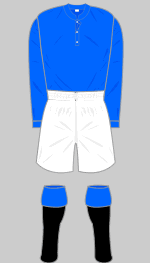
1930-1935 k
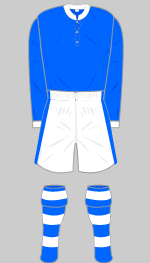
1935-1940 d k
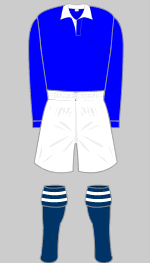
1946-1947 k
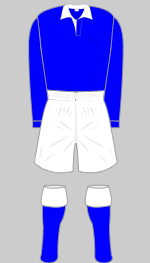
1948-1949 k
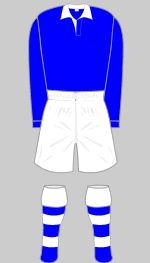
1949-1951 c k
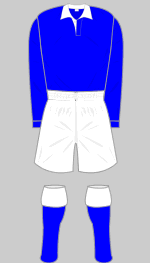
1954-1955 o
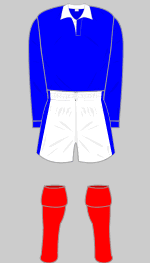
1955-1959 k
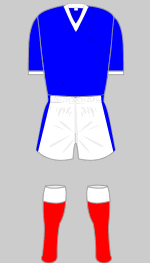
1959-1960 k v
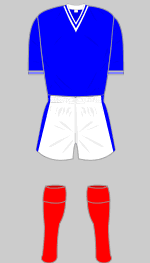
1961-1962 k
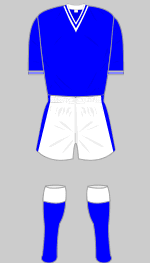
1962-1963 k
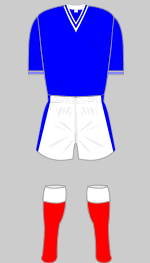
1963-1965 k
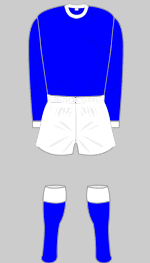
1965-1969 k
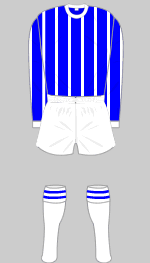
1969-1970 k
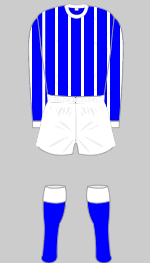
1970-1971 f j k
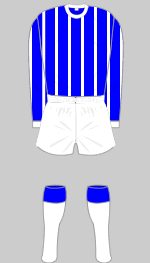
1971-1972 k
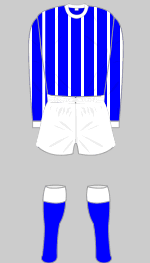
1972-1973 k
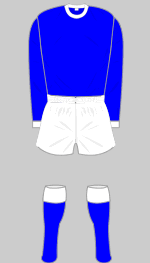
1973-1974 f j k
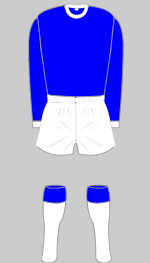
1974-1975 k
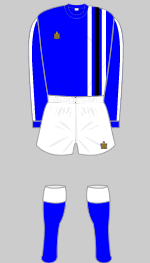
1975-1977 j
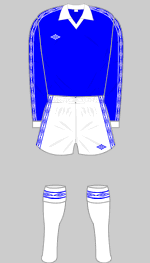
1977-1978 j
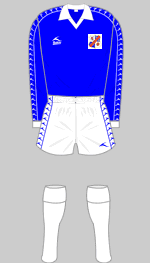
1978-1981 i j r
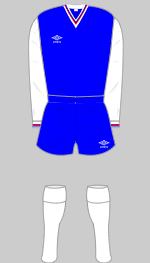
1981-1982 k r
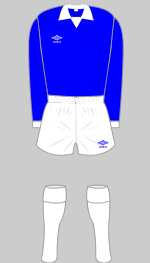
1982-1983 r
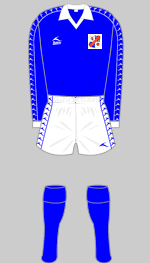
1983-1984 r v
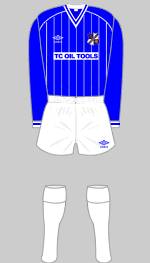
1984-1986 g l r
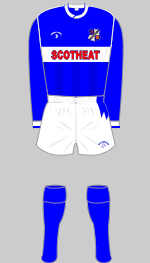
1986-1987 f
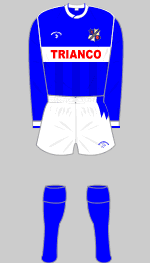
1987-1988 p r
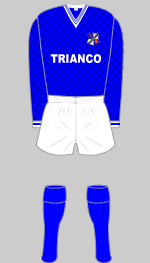
1988-1989 l
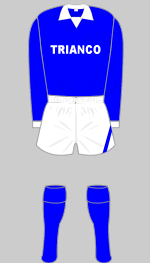
1989-1990 r
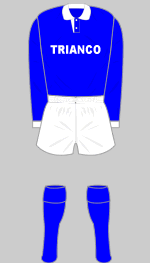
1990-1991 v
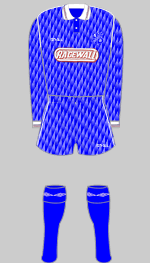
1991-1993 e i v
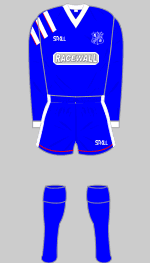
1993-1994 r
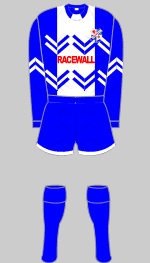
1994-1995 r
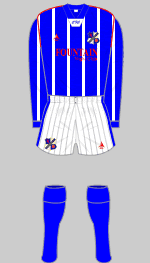
1995-1996 e r v
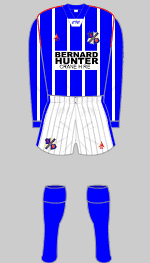
1996-1997 r v
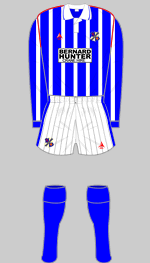
1997-1998 u v
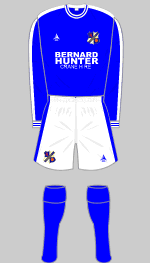
1998-2000 r
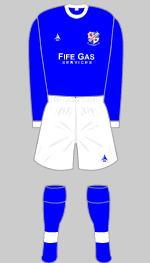
2000-2001 f i
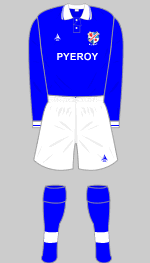
2001-2002 q r
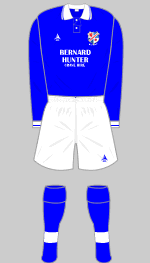
2001-2002 2 i r
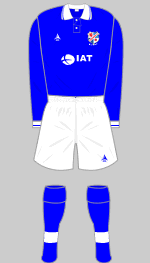
2002-2003 g h i r
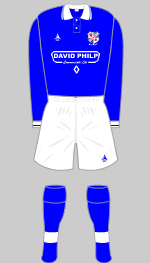
2003-2004 r s
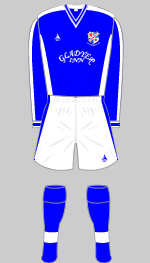
2004-2005 g i
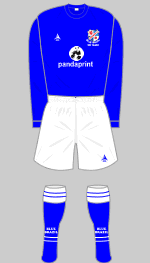
2005-2006 e i
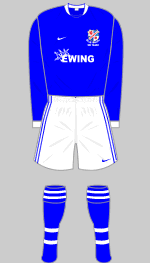
2006-2007 a e i
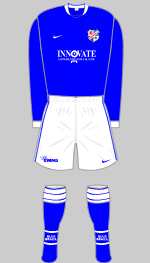
2007-2008 i m
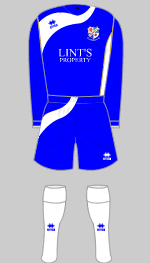
2008-2009 a
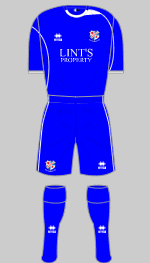
2009-2010 a
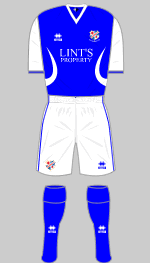
2010-2011 a
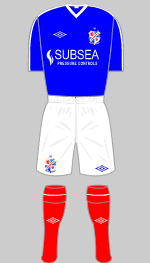
2011-2012 a
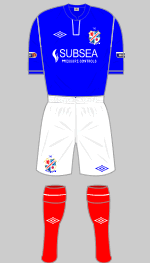
2012-2013 a
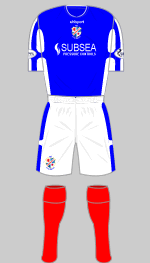
2013-2014 a
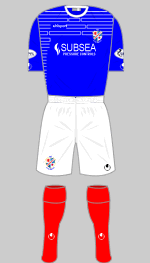
2014-2015 a
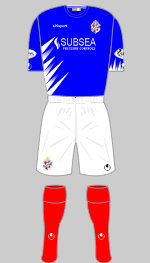
2015-2016 a
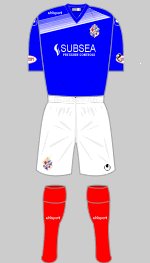
2016-2017 a
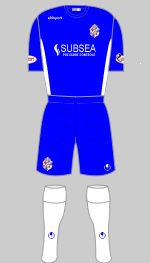
2017-2018 a
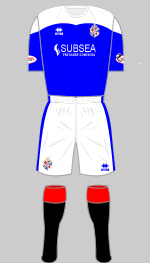
2018-2019 a
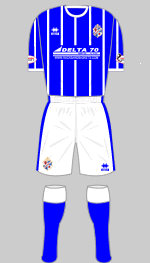
2019-2020 a
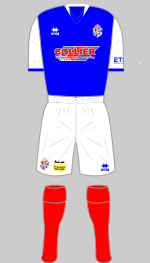
2020-2021 a
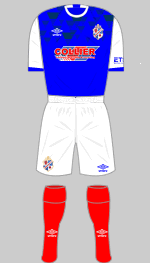
2021-2022 a
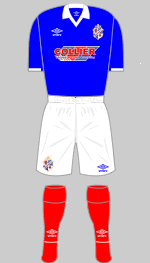
2022-2023 a
Background
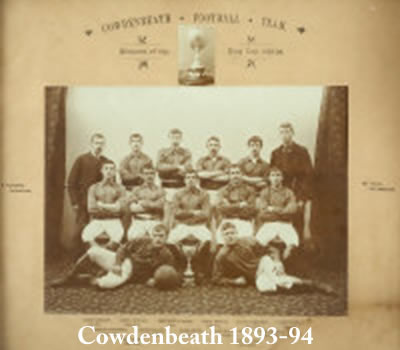 Cowdenbeath are the oldest surviving football
club in the Kingdom of Fife and came into being when Cowdenbeath Rangers,
formed by James and John Pollock in 1880, merged with Raith Rovers (formed
1881) in 1882. (There is no connection with the modern Raith Rovers
who play nearby in Kirkcaldy – the merged club was probably named
after the Raith colliery.) The new club retained the distinctive red, white and blue striped shirts worn by Rangers and was originally known as "The Miners."
Cowdenbeath are the oldest surviving football
club in the Kingdom of Fife and came into being when Cowdenbeath Rangers,
formed by James and John Pollock in 1880, merged with Raith Rovers (formed
1881) in 1882. (There is no connection with the modern Raith Rovers
who play nearby in Kirkcaldy – the merged club was probably named
after the Raith colliery.) The new club retained the distinctive red, white and blue striped shirts worn by Rangers and was originally known as "The Miners."
The club soon became the strongest team in Fife and in 1905 they were elected to the Scottish Second Division when two vacancies were created by the expansion of the First Division. They went on to win the championship in 1914 and 1915 but were denied a place in the First Division. (This was before automatic promotion and relegation – clubs had to apply for election to the top level.) The Second Division was then suspended for the duration of the Great War and Cowdenbeath joined the Eastern League.
Cowdenbeath joined the reformed Central League in 1920-21. This competition sat outside the existing league structure and members attracted many leading players by paying wages higher than those permitted in the Scottish League. Alarmed at this drain on their members' resources, the Scottish League reinstated the Second Division the following season by incorporating the Central League. The introduction of automatic promotion and relegation was part of the settlement, ending the system of elections that had previously robbed “Cowden” of their place in the First Division. In 1924 the club won promotion and enjoyed ten seasons in the top flight before being relegated in 1934. For a modest club from a small mining community (current population 9,000) this was quite an achievement. In 1939 they ran away with the Second Division championship by a margin of 12 points and made a triumphant return to the First Division. Their star forward, Rab Walls scored a record 54 goals in the championship season.
With half of the 1939-40 season played, Cowdenbeath failed to fulfil one of their fixtures (many of their players had joined the armed forces) and were fined £5,000. Unable to pay, the club was forced to resign but shortly afterwards all competition was suspended and their resignation was later waived.
In 1946, rather than simply resume the pre-war league programme, the Scottish League decided to restructure and Cowdenbeath were one of the unfortunate clubs who, having expected to play in the First Division, were placed in Division B (second tier). After finishing bottom they should have been relegated to the new Division C but it was decided to expand Division B from 14 to 16 clubs and Cowden were reprieved. For the next 30 years, little of note was achieved although they did beat Rangers 3-2 in 1949 in a League Cup tie at Ibrox, the first time the Glasgow club had been lost to a side from the lower division. (Rangers won the second leg and the tie on aggregate).
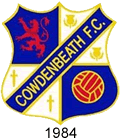 In 1970 Cowdenbeath returned briefly to the First
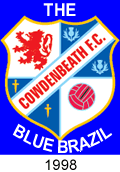
Division only to be relegated the following season. The club crest, designed by the club's announcer and programme editor, Dave Mason, appeared on the club programme for the first time during their brief stay in Division One but it was not until the early 1980s that it featured regularly on the players' shirts. The quarters sometimes appeared with the colours reversed.
In 1970 Cowdenbeath returned briefly to the First
Division only to be relegated the following season. The club crest, designed by the club's announcer and programme editor, Dave Mason, appeared on the club programme for the first time during their brief stay in Division One but it was not until the early 1980s that it featured regularly on the players' shirts. The quarters sometimes appeared with the colours reversed.
 When the league
was restructured in 1975 with the formation of the Premier Division,
Cowdenbeath remained in Division Two, now the third tier.
When the league
was restructured in 1975 with the formation of the Premier Division,
Cowdenbeath remained in Division Two, now the third tier.
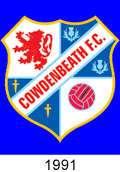
The crest was slightly modified in or around 1991 and, towards the end of the decade, the legend "The Blue Brazil" was added.
 In 1992 the
club won promotion but two disastrous seasons followed: 38 consecutive
home matches without a win took them down to the Third Division (fourth
tier). They have moved between the lowest two divisions ever since,
winning the Third Division title in 2006, their first championship since
1939.
In 1992 the
club won promotion but two disastrous seasons followed: 38 consecutive
home matches without a win took them down to the Third Division (fourth
tier). They have moved between the lowest two divisions ever since,
winning the Third Division title in 2006, their first championship since
1939.
 The club’s Central Park ground also hosts
stock car racing and a weekly open air market, generating enough revenue
to keep the club afloat. Despite the club’s modest status, Cowdenbeath’s
supporters have affectionately dubbed them the “Blue Brazil.”
Plans were put in hand to sell the decrepit "Fife Maracana"
for retail development and move the club to a new home in the southern
part of town.
The club’s Central Park ground also hosts
stock car racing and a weekly open air market, generating enough revenue
to keep the club afloat. Despite the club’s modest status, Cowdenbeath’s
supporters have affectionately dubbed them the “Blue Brazil.”
Plans were put in hand to sell the decrepit "Fife Maracana"
for retail development and move the club to a new home in the southern
part of town.
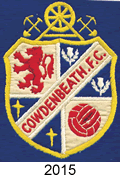
In 2015 the crest was revised. The original, devised in the late 1950s by Dave Mason, the programme editor, in consultation with the players, was only worn on club blazers. This featured a winding wheel, picks and shovels to symbolise the areas mining heritage - these were removed in 1970 with the closure of the last operating pit. The change has been made to celebrate the club's origins, the centenary of winning the Second Division title two years in succession and as a tribute to the players from that team who served in the Great War.
Cowdenbeath finished bottom of League Two in 2017 and met the Lowland League champions East Kilbride in the play-off final. With scores level over two legs, Cowdenbeath won the penalty shoot-out to retain their place in the SPFL. History repeated itself the following season and once again the Blue Brazil survived, beating Cove Rangers 3-2. Their luck ran out in 2021-22 when they finished eight points adrift at the bottom of League Two and then were beaten 4-0 on aggregate by Bonnyrigg Rose Athletic in the play-off final.
Sources
- (a) Cowdenbeath Official Web site
- (b) Brian McColl
- (c) Ayr United FC - Images of Sport (Duncan Carmichael 2002)
- (d) London Hearts
- (e) Cowdenbeath.net
- (f) Blue-Brazil.co.uk
- (g) Classic Kits
- (h) Colours of Football
- (i) SNSpix
- (j) Alex Horsburgh
- (k) Alick Milne
- (l) Ralph Pomeroy
- (m) Gretna Official Site
- (n) You Tube - rare archive film footage of Cowdenbeath playing Dunfermline.
- (o) My photo library
- (p) Willie Kay
- (q) Alister Aitken
- (r) Donald Gellatly
- (s) Stefan Cooper
- (t) Keith Ellis
- (u) Daniel Franklin
- (v) Ian McConnel
- (w) Scottish Football Association Annuals
Crests are the property of Cowdenbeath FC,