
Ayr
United
Formed 1910 by the merger of Ayr and Ayr Parkhouse.
Replaced Ayr and Ayr Parkhouse in Scottish Division Two 1910
Kit History
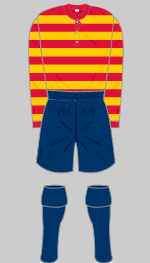
1910-1914 a k
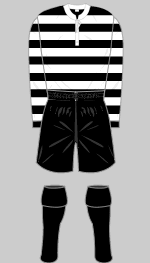
1914-1916 n
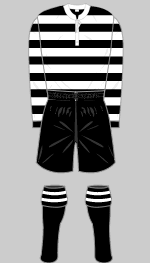
1916-1919 n
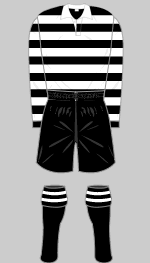
1919-1920 k n
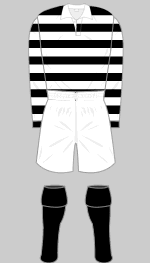
1920-1921 s
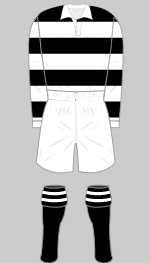
1921-1922 n
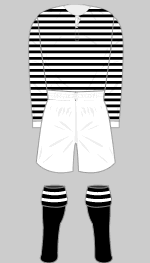
1922-1923 n q
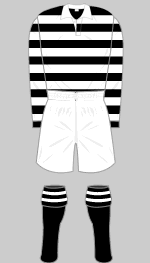
1923-1925 n
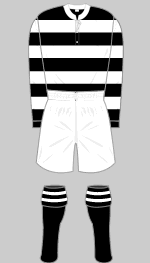
1926-1931 k n
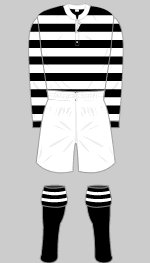
1926-1931 n
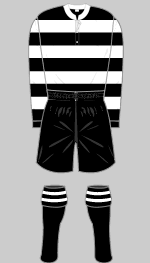
1927-1929 away n
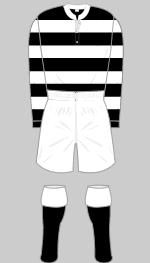
1931-1933 n
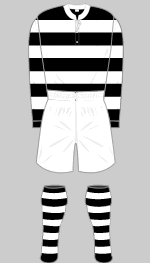
1933-1934 n
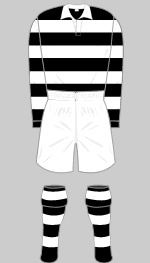
1934-1937 j k n
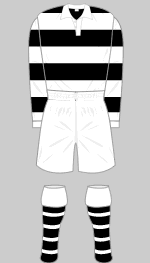
1937-1938 q
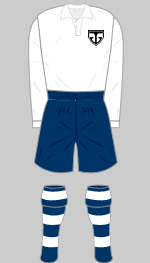
1938-1940 n
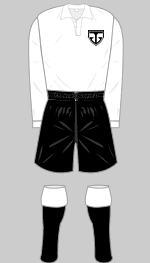
1945-1948 k
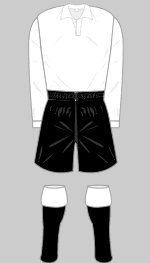
1948-1950 k
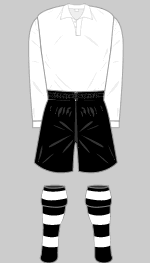
1950-1957 a k m n q r
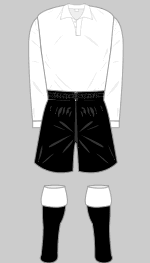
1957-1958 n
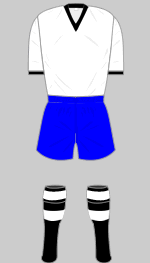
Aug-Oct 1958 r
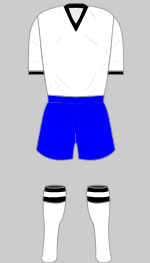
Nov 58-1962 n
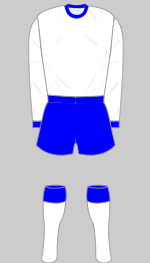
Aug-Nov 62 n
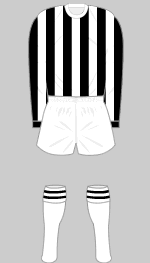
Dec 1962-1963 r
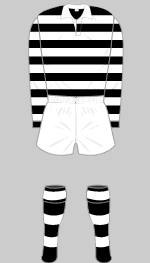
1963-1964 k n
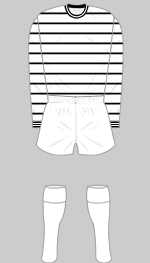
1964-1965 n
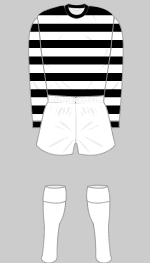
1965-1966 n
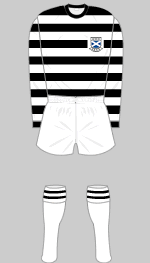
1966-1968 b n r

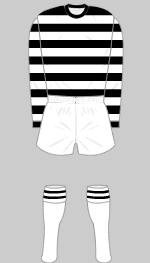
1968-1969 t
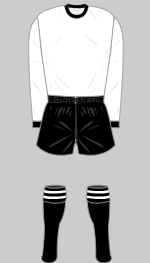
1969-1971 a g k n
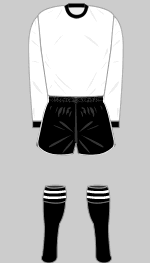
1971-1972 r
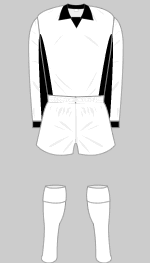
1973-1974 r
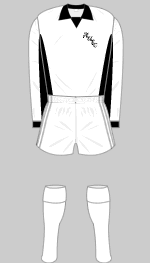
1974-1977 d k r
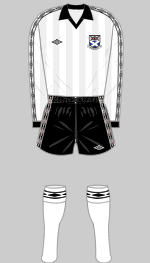
1977-1978 n
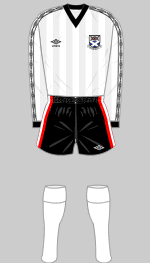
1979-1980 h k r
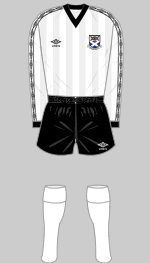
1980-1981 m
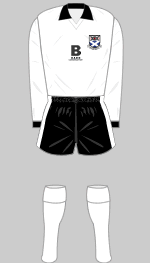
1981-1982 r
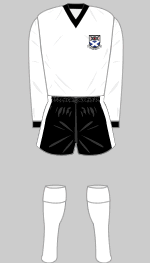
1982-1983 r
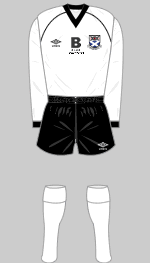
1983-1984 p
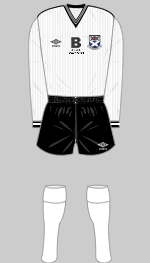
1984-1987 d k
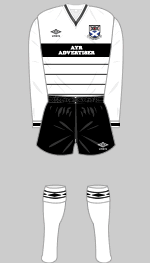
1987-1988 a k n
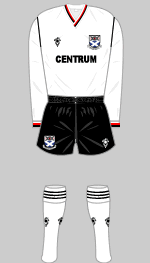
1988-1990 h k r
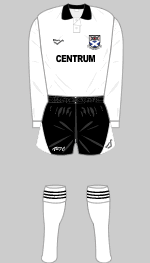
1990-1991 k
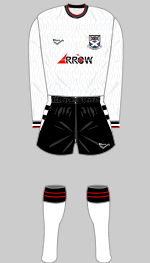
1991-1992 k
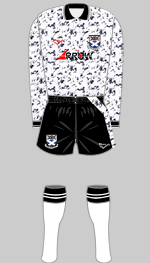
1992-1993 k r
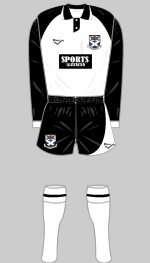
1993-1994 h k
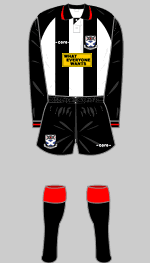
1994-1995 k l
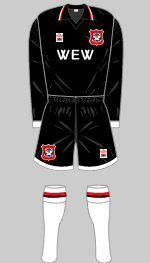
1995-1996 p
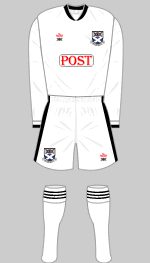
1996-1997 a l p r
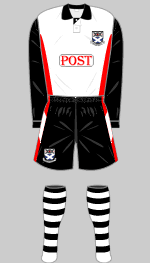
1997-1998 l p
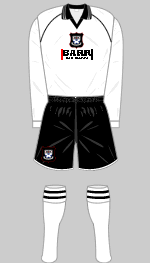
1998-1999 l p r
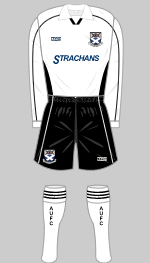
1999-2000 h q
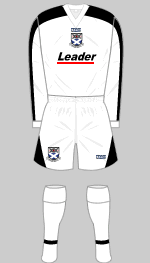
2000-2001 e
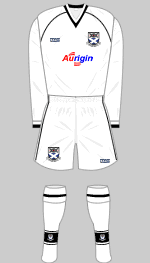
2001-2002 l
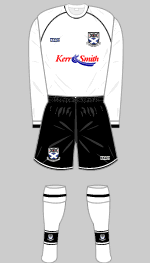
2002-2003 a h
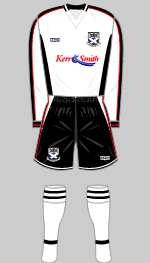
2003-2004 d
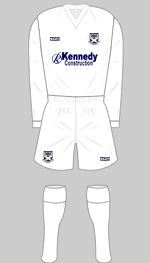
2004-2005 d l
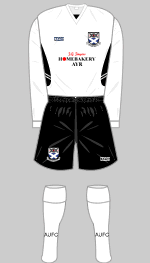
2005-2006 c
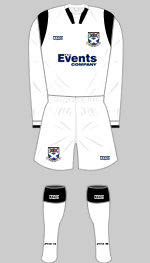
2006-2007 a l o
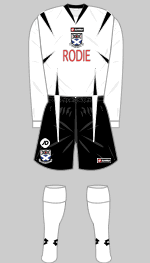
2007-2008 a
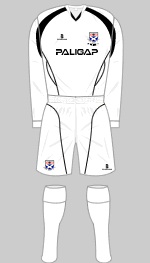
2008-2009 a
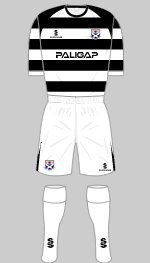
2009-2010 a
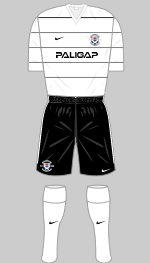
2010-2011 a r
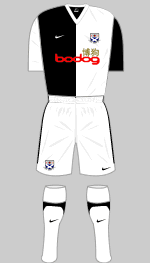
2011-2012 a
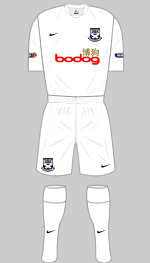
2012-2013 a
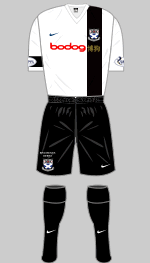
2013-2014 a
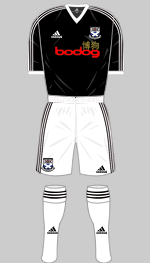
2014-2015 a
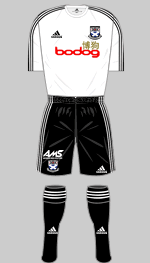
2015-2016 a
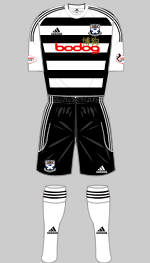
2016-2017 a
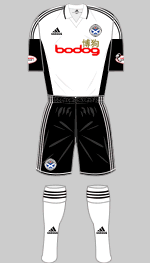
2017-2018 a
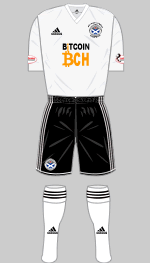
2018-2019 a
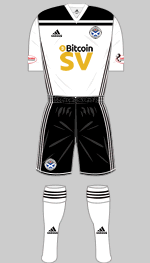
2019-2010 a
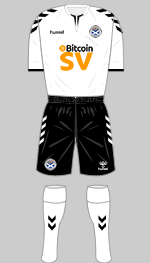
2020-2021 a
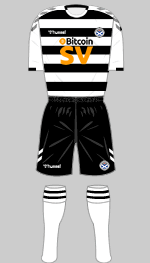
2021-2022 a
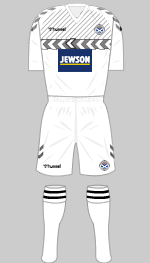
2022-2023 a
Background
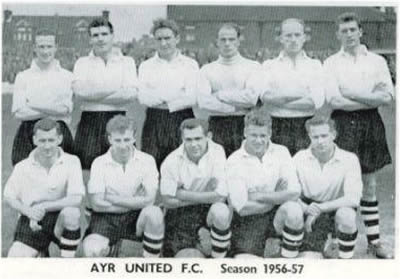 Ayr United was born when two bitter rivals, Ayr and Ayr Parkhouse put aside their differences in a town that was manifestly too small to support two senior teams. This is the only time that two current Scottish League clubs have combined. The new team played in
Ayr FC's crimson and gold jerseys and moved into their ground, Somerset Park. In 1914 the more familar black and white hoops appeared for the first time.
Ayr United was born when two bitter rivals, Ayr and Ayr Parkhouse put aside their differences in a town that was manifestly too small to support two senior teams. This is the only time that two current Scottish League clubs have combined. The new team played in
Ayr FC's crimson and gold jerseys and moved into their ground, Somerset Park. In 1914 the more familar black and white hoops appeared for the first time.
The club's nickname “The Honest Men” comes from the poem “Tam O’Shanter" by Robert Burns, Scotland’s national poet and a native of Ayrshire.
The wisdom of the merger soon became evident: United were elected to Scottish Division One in 1913 having finished as runners-up once (1911) and champions twice (1912 and 1913). (This was before automatic promotion and relegation).
They stayed in the top flight until 1925 achieving their highest ever
position of fourth in 1916. In 1928 they won the Second Division championship
thanks to their prodigious forward Jimmy Smith (66 league goals and
a total of 84 in 50 games - a record that stands to this day). Ayr
dropped into the Second Division again in 1936 but returned immediately,
again as divisional champions. When competition was suspended with the
outbreak of the Second World War, Ayr United were a well-established
First Division team. It therefore came 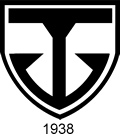 as a shock when they were placed
in Division B (second tier) when the league programme was reinstated
in 1946.
as a shock when they were placed
in Division B (second tier) when the league programme was reinstated
in 1946.
A crest was worn between 1938 and 1948 consisting of a stylised ship's anchor.
It was not until 1956 that United returned to Division One only to
be relegated after one season. They won 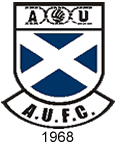 the Second Division title again
in 1959 only to drop back down immediately once more and by 1964 they
were in danger of going out of business altogether.
the Second Division title again
in 1959 only to drop back down immediately once more and by 1964 they
were in danger of going out of business altogether.
In 1967 a crest appeared on the hooped tops of the time. The simple design featured a saltire cross while the ropes entwined around the letters "AU" and a football at the top represent Ayr's maritime history. It appears this was worn for just one season.
 The appointment of Ally McLeod, first as player and then as player-manager
marked a turning point in the club’s fortunes. Promoted in 1969,
United more than held their own and in 1975 they were placed in the
new ten-team Scottish Premier League by virtue of their league position
despite a playing staff of part-timers. They remained in the top flight
until 1978. During this period the club's initials were embroidered onto their shirts for a couple of seasons.
The appointment of Ally McLeod, first as player and then as player-manager
marked a turning point in the club’s fortunes. Promoted in 1969,
United more than held their own and in 1975 they were placed in the
new ten-team Scottish Premier League by virtue of their league position
despite a playing staff of part-timers. They remained in the top flight
until 1978. During this period the club's initials were embroidered onto their shirts for a couple of seasons.
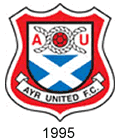
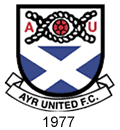 The familiar modern version of the club crest appeared in 1977 and was simply an updated version of the earlier one. This was sometimes placed on a shield as in the 1995-96 season.
 Times since then have been hard and in 1985 Ayr were in the Second
Division (third tier). With Ally McLeod again in charge, they won promotion
as champions in 1988 and two years later the club turned fully professional.
During the 1990s the club struggled to make ends meet and spend four
seasons back in the third tier but since 1998 they managed to consolidate
in the First Division and harbour ambitions of returning to the Premier
League. Plans to build a new stadium and retail development were
scuppered by the Scottish Executive in 2002 after four years of planning
appeals. In 2006 the club provisionally acquired a site on the north side of town and plans have been made for a
Times since then have been hard and in 1985 Ayr were in the Second
Division (third tier). With Ally McLeod again in charge, they won promotion
as champions in 1988 and two years later the club turned fully professional.
During the 1990s the club struggled to make ends meet and spend four
seasons back in the third tier but since 1998 they managed to consolidate
in the First Division and harbour ambitions of returning to the Premier
League. Plans to build a new stadium and retail development were
scuppered by the Scottish Executive in 2002 after four years of planning
appeals. In 2006 the club provisionally acquired a site on the north side of town and plans have been made for a 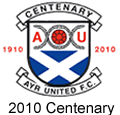 7650 all-seat stadium.
The club developed a formidable reputation as Cup team with a strong youth policy but was been unable to hold on to its league position and dropped into Division Two (third tier) before returning to the First Division via the play-offs in 2009.
 For the club's centenary in 2010-11, a special crest was worn.
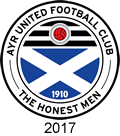
In November 2015 an anonymous complaint was made to the Court of Lord Lyon who ruled that the club's crest contravened heraldic law, a criminal offence in Scotland. In 2017 they were told to remove the offending badge or face prosecution. Supporters were engaged to design a replacement which was introduced for the 2017-18 season. This did the trick as the Honest Men finished the season as League One champions.
See also Ayr, Ayr Parkhouse.
Sources
- (a) Ayr United Official Site
- (b) Relichtie
- (c) The Honest Page
- (d) Classic Kits
- (e) Tempus Publishing
- (f) Colours of Football
- (g) Pete's Picture Palace
- (h) e-bay
- (i) Ayr United Mad
- (j) London Hearts
- (k) Ayr United FC - Images of Sport (Duncan Carmichael 2002)
- (l) SNSpix
- (m) Ralph Pomeroy
- (n) Alick Milne
- (o) Dennis McLellan
- (p) Donald Gellatly (HFK Research Associate)
- (q) Keith Ellis (HFK Research Associate)
- (r) Ian McConnel
- (s) Football & the First World War
- (t) Michael Gluck
Crests are the property of Ayr United FC. Thanks to Jim Mechan for help with the crest history.