
Kit History
Excelsior
1878
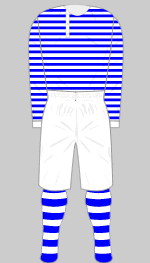
1878-1881 a g
Airdrieonians
1881
1881-1885 a g
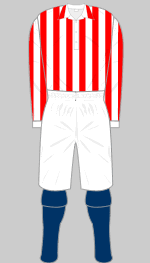
1885-1889 g
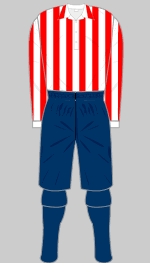
1892-1895 g
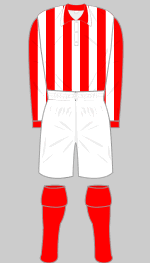
1903-1904 a
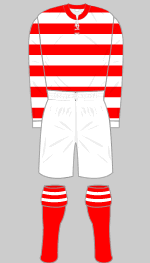
1904-1905 a
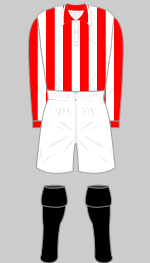
1907-1908 a g
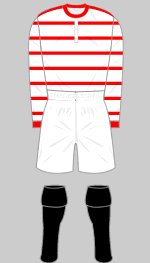
1909-1912 a b g m
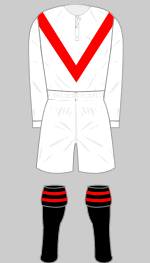
1912-1917 a c g

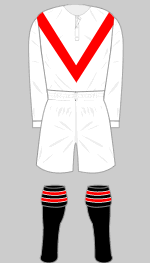
1917-1920 a g
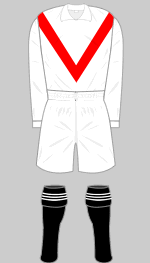
1920-1921 o
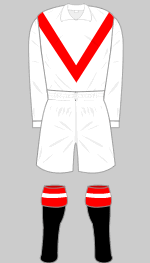
1923-1929 a g m
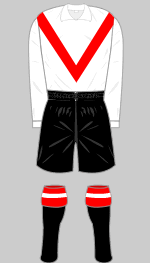
1927-1929 away g
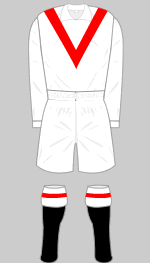
1934-1935 b
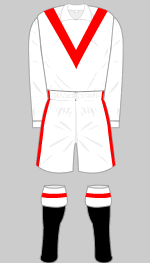
1936-1937 a p
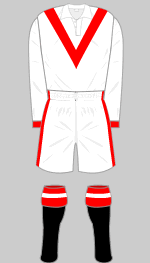
1938 m
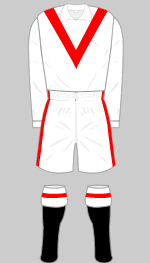
1939-1940 a b
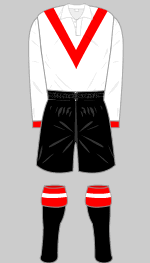
1945-1946 a
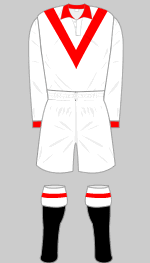
1946-1950 g
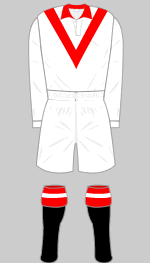
1950-1951 a g
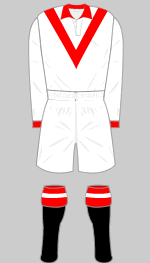
1951-1952 g
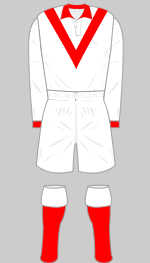
1952-1953 g
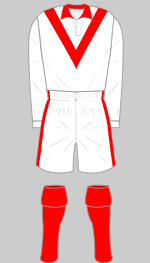
Sept 1953 b n
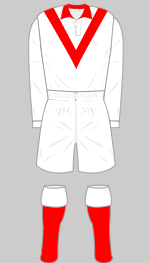
Jan-May 1954 n
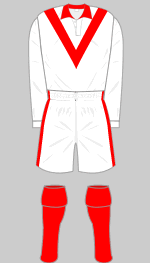
1954-1955 n
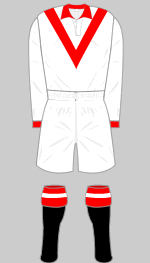
1954-1956 a n
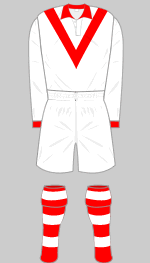
1956-Feb 57 n
Feb-May 1957 n
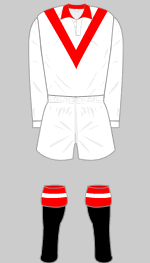
1957-1958 1 n
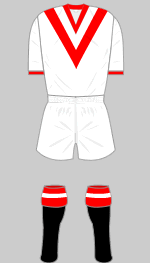
1957-1958 2 a d
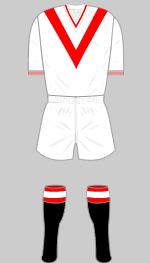
Jan-Dec 1958 b n
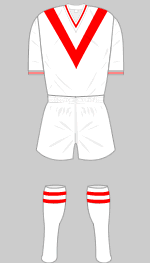
Jan-May 1959 a n
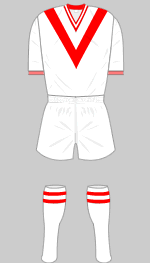
1959-1961 n

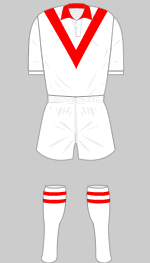
Jan 1961 n
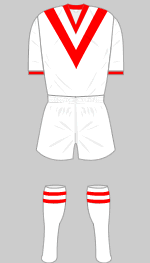
Sept-Dec 1961 a m n
Jan 1962 n
Feb-May 1962 n
1962-1963 a
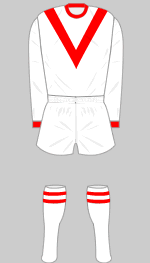
1962-Feb 64 d n
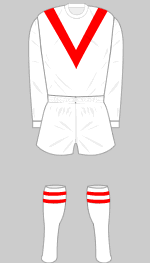
Feb-May 64 n
1964-1965 n
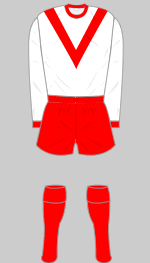
1965-1967 m n
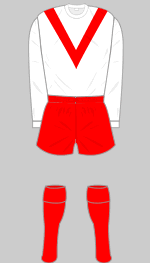
1967-1971 a b n
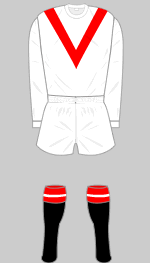
1971-Sept 1974 a b g
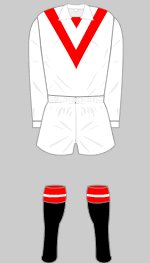
Oct 1974-1977 a g n
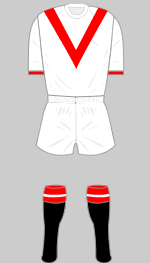
1973-1976 c d g
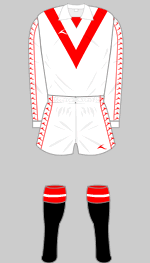
1977-1980 a c g
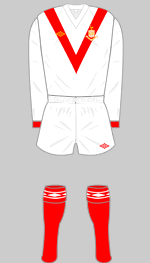
1980-1983 a c k
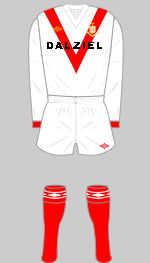
1983-1988 a h k
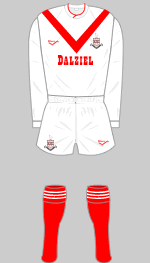
1988-1989 a
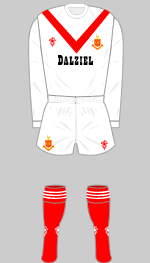
1989-1990 a f n
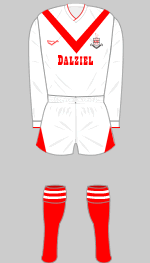
1990-1991 n
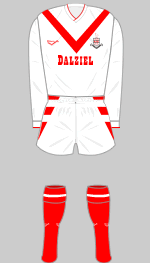
1991-1992 n
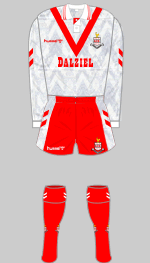
1992-1993 a n
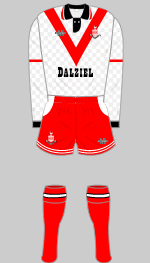
1993-Aug 94 a f
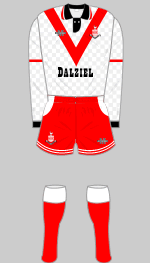
Aug 94-1995 n
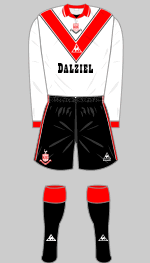
1995-1996 a f l
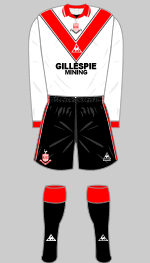
1996-1997 l
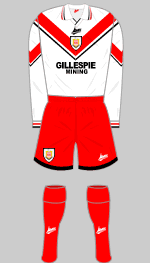
1997-1999 k
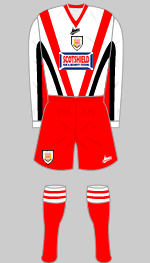
1999-2000 a
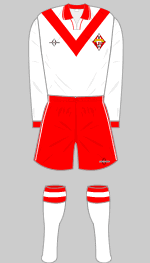
2000-2001 a e i k
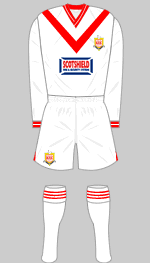
2001-2002 e k
Background
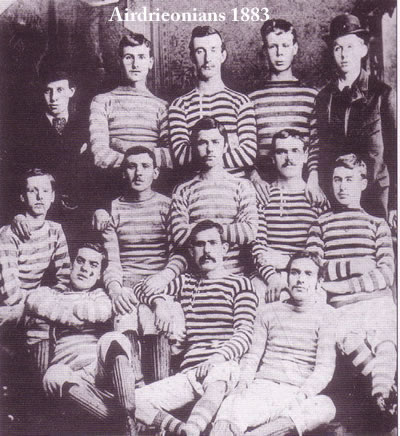 The club was originally
formed as Excelsior FC in the North Lanarkshire mining town of Airdrie,
adopting the title Airdrieonians in 1881. After being admitted to the
Scottish Second Division in 1894, they were elected to the top flight
in 1903. Records from the late nineteenth century are rather ambiguous
but it is thought they switched from their original blue/white jerseys to vertical red and white stripes in 1885.
The club was originally
formed as Excelsior FC in the North Lanarkshire mining town of Airdrie,
adopting the title Airdrieonians in 1881. After being admitted to the
Scottish Second Division in 1894, they were elected to the top flight
in 1903. Records from the late nineteenth century are rather ambiguous
but it is thought they switched from their original blue/white jerseys to vertical red and white stripes in 1885.
The club enjoyed its greatest period of success during the 1920s, finishing as runners-up in the Scottish First Division on four consecutive occasions (1923-1926) and appearing in four Scottish FA Cup finals, winning the competition in 1924.
The club's nickname of "The Diamonds" derives from the distinctive design of the club's shirts adopted in 1912. Manchester United had worn similar jerseys in the 1909 English FA Cup Final but there is no evidence to suggest that Airdrie were trying to emulate the English club. (The design extends onto the back of the shirt and is always described as a diamond, never a "V".)
In 1936 the club was relegated to the Second Division and it was not until 1947 that they returned to the top flight, albeit for a single season. Between 1950 and 1954 they were again in Division One before they were relegated once more. After winning the Second Division championship the following season (1955) the club enjoyed a long spell in the top flight, broken only by two short periods in Division Two (1965-66 and 1973-74). In 1975, with the formation of the Scottish Premier League, Airdrie found themselves in the new Division One (now the second tier) and in 1981 they were promoted to the top level where they spent two seasons.
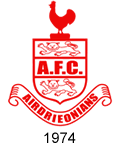 The club crest first appeared on the team's shirts in the 1974-75 Scottish Cup final but it did not feature in league games. In 1980 it reappeared, this time embroidered
 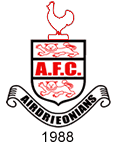 in gold and placed on the red diamond. From 1988 it was moved below the diamond and was embroidered in red and black.
In 1992 the Diamonds won promotion back to the Premiership and were losing finalists in the Scottish FA Cup, which qualified them to compete in the European Cup Winners' Cup the following season. Unfortunately they were knocked out by Sparta Prague in the first round, the sum total of their European adventures.
In May 1994 the club sold their Broomfield Park ground, now a valuable town centre site, to Safeway for retail development. The intention was to use the proceeds to finance a new stadium that would meet Scottish Premier League standards, which included all-seat capacity of 10,000. With no site or planning permission, Airdrie shared Clyde's Broadwood stadium in Cumbernauld for the next four years.
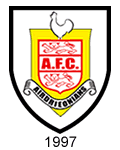 Despite having no permanent home, Airdrie remained one of the stronger team in the First Division even as their support dwindled. They fell short of the championship, the only route back to the top tier. The crest was modified in 1997: the basic design was not altered but now appeared against yellow and white shields.
Meanwhile a site for the club's new stadium in Airdrie had been identified and work was completed in 1998. Named the Shyberry Excelsior Stadium (Shyberry sponsored the stadium when it opened), the financial burden would prove to be too 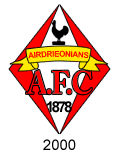 much for the club to carry.
In 2000 the club's kit was marketed under the their own brand and a new crest was adopted. Only the cockerel motif (which comes from the Airdrie coat of arms) was retained while two chevrons referred to the distinctive design of the team shirts. This 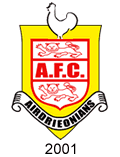 bold design was replaced the following season by the 1997 design without the background shield.
On 1 May 2002, Airdrieonians declared bankruptcy and resigned from the League owing £3 million. Ironically, the club had been doing well on the pitch having finished in second place in Division One and winning the Bell's Scottish Cup in 2000 and 2001. Their final match had to be abandoned when furious fans invaded the pitch and broke a crossbar.
Immediately a new club was formed but Airdrie United's application to fill the vacancy in Division Three was denied in favour of Gretna. In an extraordinary turn of events, the head of the Airdrie consortium, Jim Ballantyne bought out Clydebank FC, then homeless and in administration, and moved them to Airdrie. With the approval of the Scottish Football League, the reformed club took over Clydebank's place in Division Two.
Sources
- (a) Airdrieonians FC - Images of Sport (Brian Bollen 2002)
- (b) London Hearts
- (c) Ayr United FC - Images of Sport (Duncan Carmichael 2002)
- (d) Riccardo Bertani
- (e) BBC Sport
- (f) SNSpix
- (g) Alick Milne (HFK Research Associate)
- (h) Ralph Pomeroy
- (i) Robert Reilly
- (j) Allez Racing
- (k) Donald Gellatly (HFK Research Associate)
- (l) Martin Gooday (HFK Research Associate)
- (m) Keith Ellis
- (n) Ian McConnel
- (o) Football & the First World War
- (p) eBay