



Aberdeen
Formed 1903
Elected to Scottish Division Two 1904.
Withdrew from Scottish Division One 1917. Reinstated 1919
Kit History
Aberdeen
(Original club)
1881-1903
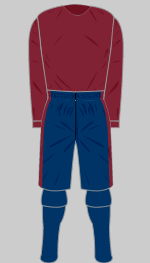
1881-1886 a m n u A
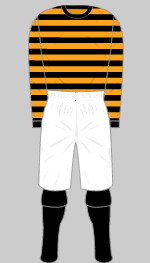
1886-1888 n v A
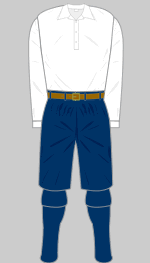
1888-1903 a k m n
Orion
1885-1903
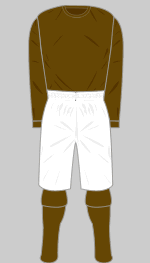
1887-1889 l w A
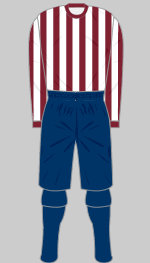
1889-1898 n v
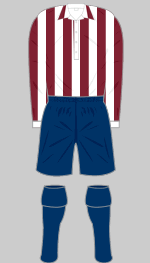
1901-1902 l m
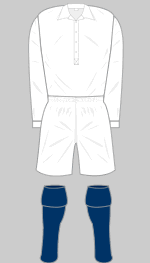
1902-1903 m
Victoria United
1889-1903
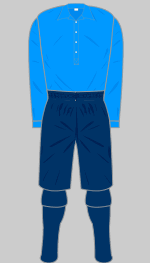
1889-1896 m n v
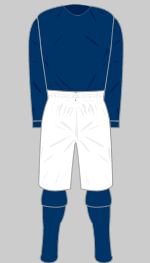
1896-1897 n
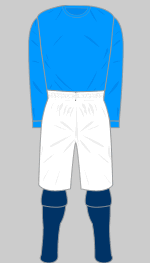
1897-1903 k m n
Aberdeen
1903
Formed by the merger of the original Aberdeen, Orion and Victoria United
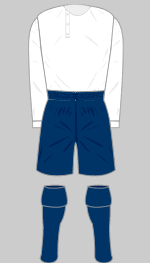
1903-1904 n
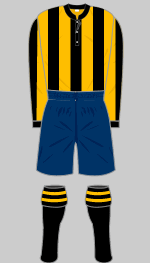
1904-1907 a m
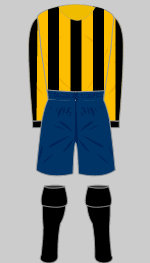
1907-1908 q
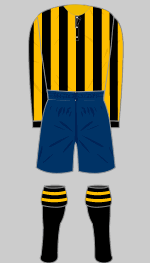
1908-1909 m
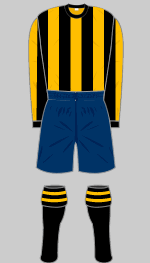
1909-1910 m
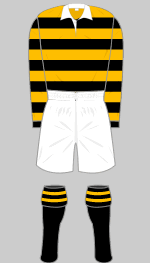
Sept-Oct 1910
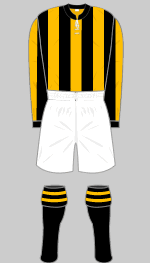
March 11-1912 q x
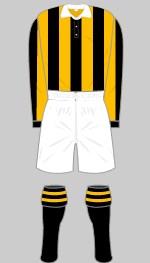
1912-1915 a m n q
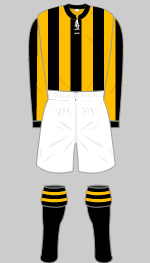
1915-1917 n
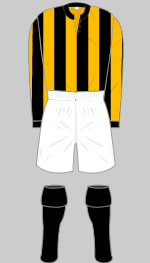
1920-1921 z
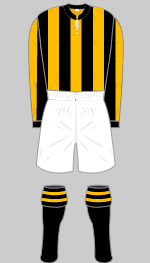
1921-1932 a m n
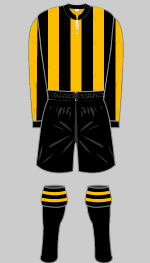
1927-1929 away n
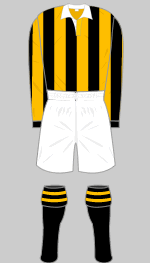
1932-1934 m n q
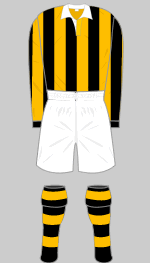
1934-1935 n
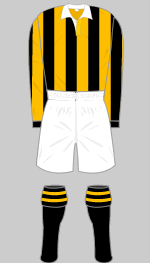
1935-1936 n
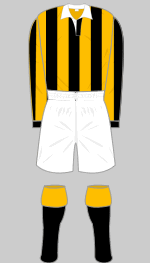
1936-1937 m
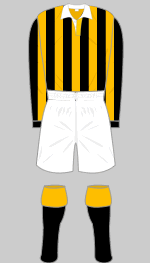
1937-1938 m
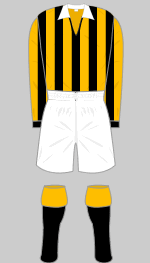
1938-March 39 s
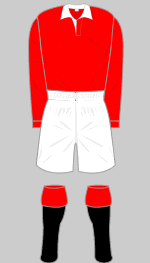
March 1939-1940 n

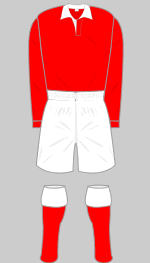
1945-1948 a m n q

1948-1949 r
1949-1954 a m n q
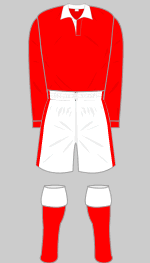
1954-1955 r
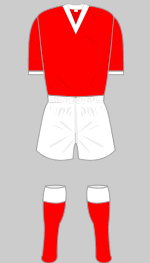
1958-1960 m n
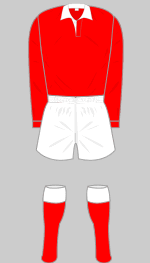
1958-1959 2 r
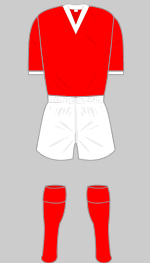
1960-1961 1 m q
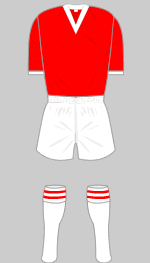
1960-1961 2 m r
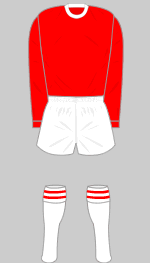
1961-Oct 62 1 r
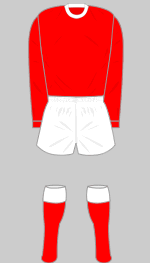
1961-1963 2 r
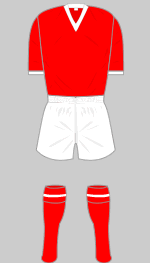
1963- Feb 1964 h p r
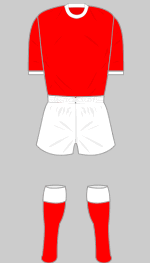
March-May 1964 t
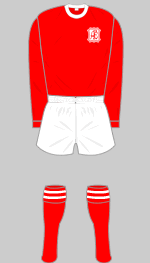
1964-1965 b h r

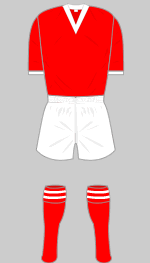
Aug-Sept 1965 r
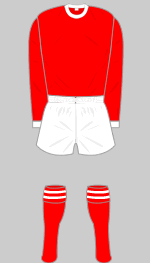
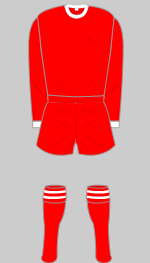
April-May 1966 r
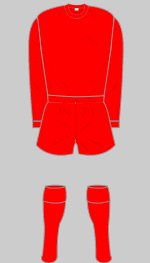
1966-1968 b f h m r
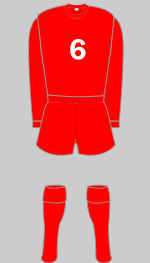
1967-1968 alt k
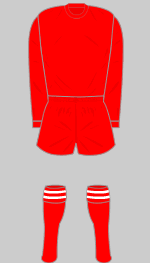
1968-1969 r
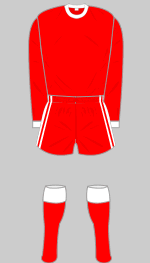
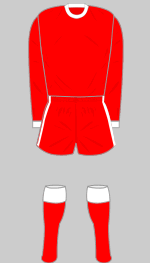
Apr 71-1972 r
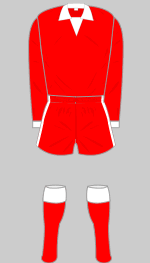
1972-1975 a b
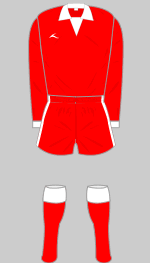
1975-1976 p r
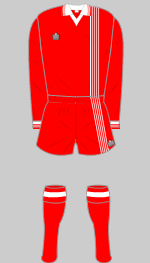
1976-1977 a b n k
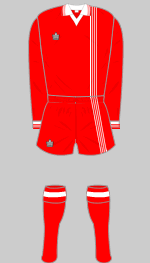
1977-1979 k
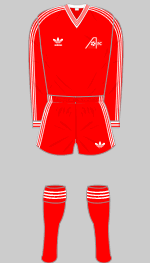
1979-1982 b f k
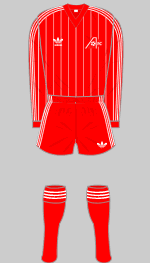
1982-1983 a f k
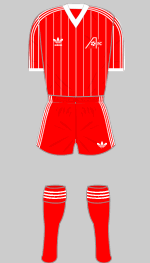
29 Sept 1982 k
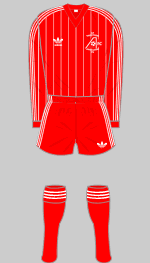
1983-1984 k k
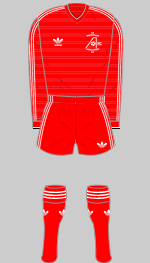
1984-1985 a f k r

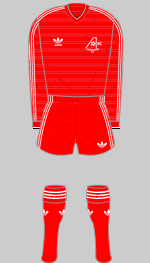
1985-1986 a f k r
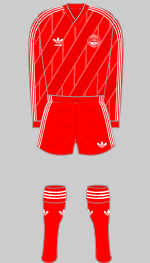
1986-1987 b k r
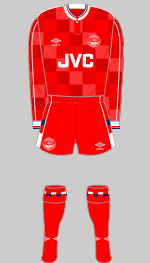
1987-1990 a f k r
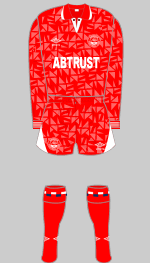
1990-1992 b k r
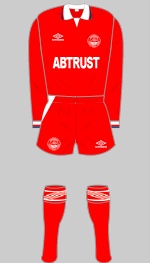
1992-1993 b f k r
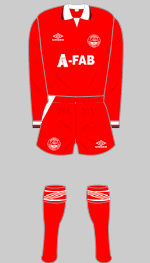
1993-1994 k q
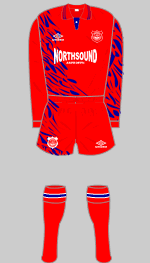
1994-1996 b f k r
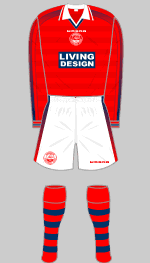
1996-1997 b j k r
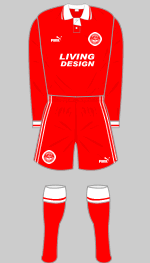
1997-1998 b j k r
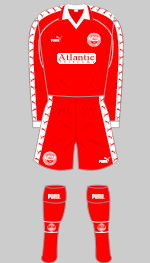
1998-2000 b k r
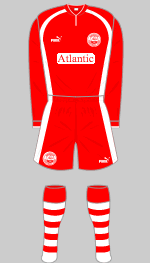
2000-2001 b k
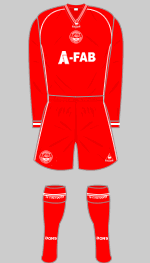
2001-2002 e k r
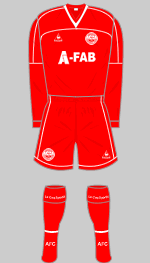
2002-2004 e k r
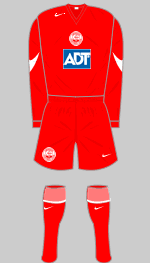
2004-2005 e k
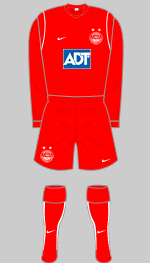
2005-2006 c k r
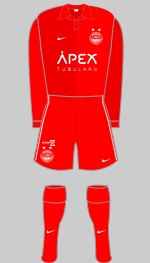
2006-2007 a k r
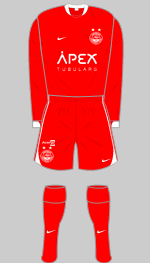
2007-2008 a o
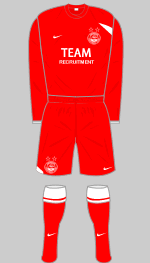
2008-2009 a o
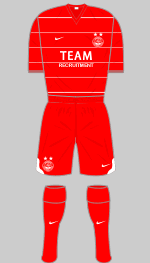
2009-2010 a r
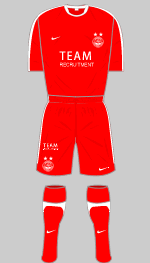
2010-2011 a
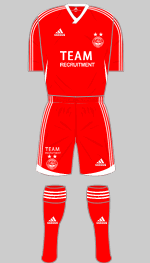
2011-2012 a r
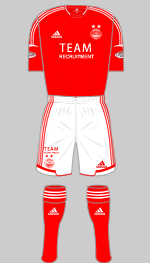
2012-2013 a
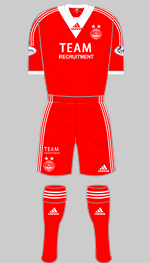
2013-2014 a
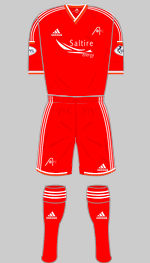
2014-2015 a
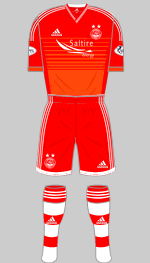
2015-2016 a
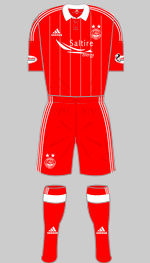
2016-2017 a
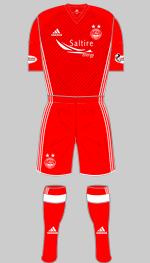
2017-2018 a
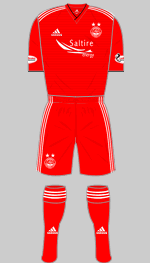
2018-2019 a
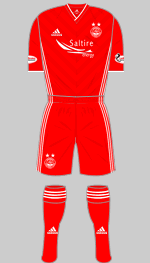

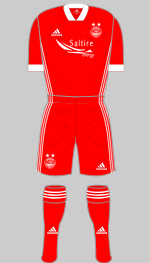
2020-2021 a
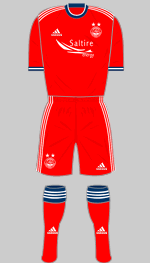
2021-2022 a
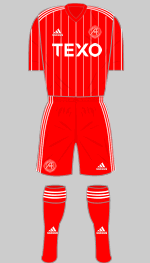
2022-2023 a
Background
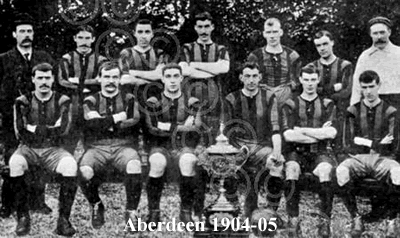 The original Aberdeen FC
was formed in October 1881, the initiative of three teachers from Woodside
School. Following a public meeting the secretary was instructed to buy
a ball, an inflator and eleven maroon jerseys. Their first match was
played the following March against Coupar Angus, Aberdeen losing both
the opening and return games. In 1888, the club won the inaugural Aberdeenshire
Cup and in 1891, they joined the Northern League. In 1899, the club
moved to Pittodrie, previously used as a site for the disposal of dung
from police horses.
The original Aberdeen FC
was formed in October 1881, the initiative of three teachers from Woodside
School. Following a public meeting the secretary was instructed to buy
a ball, an inflator and eleven maroon jerseys. Their first match was
played the following March against Coupar Angus, Aberdeen losing both
the opening and return games. In 1888, the club won the inaugural Aberdeenshire
Cup and in 1891, they joined the Northern League. In 1899, the club
moved to Pittodrie, previously used as a site for the disposal of dung
from police horses.
In February 1900, Pittodrie hosted an international between Scotland and Wales and a year later, Everton became the first English side to visit the city for a friendly match, which they won 3-1. After rejecting overtures from Hibernian, who wanted to take over and move to Pittodrie, serious efforts were made to bring together the three top sides in the city. An attempt to join the Scottish Football League was rebuffed adding momentum to the idea of a merger. On 14 April, 1903, Aberdeen FC, Orion FC (who originally played in "Bismarck" jerseys, a dark brown) and Victoria United (whose colours were blue) were wound up and the modern Aberdeen FC was constituted. The new club's colours were registered with the SFA as white, the same as the original Aberdeen FC.
Two further attempts to win election to the Scottish First Division were unsuccessful but in May 1904, the club replaced Ayr Parkhouse in Scottish Division Two. Playing in a new black and gold kit, the club was soon dubbed "The Wasps." After winning the Qualifying Cup in 1904, Aberdeen were finally elected to the top level following the decision to expand the First Division from 14 to 16 clubs in May 1905. (Second Division champions, Clyde were not elected - Aberdeen's elevation was largely due to the support of Celtic who perhaps feared the rivalry of another Glasgow side.)
The Scottish First Division continued throughout the Great War (although Division Two was abandoned) but with wages cut, travel restricted and players being called to arms, Aberdeen struggled to make ends meet. In 1917 the club resigned along with Raith Rovers and Dundee but they were welcomed back as soon as hostilities ended.
In 1937 Aberdeen reached the Scottish FA Cup Final for the first time. More than 146,000 fans packed Hampden to see Celtic win by 2-1. In March 1939, the club dropped their black and gold colours in favour of red and white, their colours to this day.
After the Second World War, Aberdeen enjoyed
a spell of success. They won their first major trophy in 1947, beating
Hibernian 2-1 to take the Scottish FA Cup. Beaten finalists in 1953
and 1954, they won the Scottish League Championship in 1955 followed
by the Scottish League Cup and in 1959 they were again beaten in the
 Scottish FA Cup final. During the early 1960s the club endured something
of a decline.
Scottish FA Cup final. During the early 1960s the club endured something
of a decline.
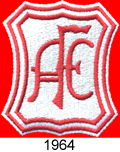
Generally the Dons wore plain red shirts throughout this era but in the mid 1960s a monogram crest was worn briefly.
After adopting an all-red kit in 1966, the Dons reached another
Scottish FA Cup final in 1967 and qualified for Europe. After playing as Washington Whips in the United States Soccer Association (the predecessor of the NASL) during the close season, the shirts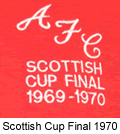 worn in the United States appeared sometimes during the 1967-68 Scottish season, complete with numbers on front and back of the shirts. In 1970 The Dons won the Scottish FA Cup for the second time and a simple cypher crest was worn in the final.
Since 1972 the club's official crest, devised by local graphic designer Donald Addison, had been a letter "A" made up of the profile of a goal with a football (representing the crossbar of the letter): the ball was cross-hatched to represent the goal net. This was 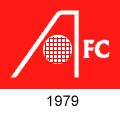 worn on the team shirts for the first time in 1979.
Aberdeen made a shaky start after the introduction
of the Scottish Premier Division in 1975, narrowly avoiding the humiliation
of relegation by beating Hibernian on the last day of the season to
survive on goal average. With new manager Ally McLeod in charge, however,
they won the Scottish League Cup for the first time in 21 years in 1976.
In 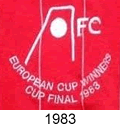 June 1978, McLeod having been tempted away to manage Scotland's humiliation
in the World Cup Finals and his successor Billy McNeill gone to manage
Celtic after less than 12 months in charge, Aberdeen appointed Alex
Ferguson as manager.
June 1978, McLeod having been tempted away to manage Scotland's humiliation
in the World Cup Finals and his successor Billy McNeill gone to manage
Celtic after less than 12 months in charge, Aberdeen appointed Alex
Ferguson as manager.
 In 1980 Ferguson guided the club to their second League
championship. Two years later Aberdeen crushed Rangers 4-1 to win the
Scottish FA Cup and in 1983 they won the European Cup Winners' Cup in
Gothenburg, beating Real Madrid in the final. Ten days later they again
defeated Rangers to take the Scottish FA Cup. After winning the European
Super Cup
In 1980 Ferguson guided the club to their second League
championship. Two years later Aberdeen crushed Rangers 4-1 to win the
Scottish FA Cup and in 1983 they won the European Cup Winners' Cup in
Gothenburg, beating Real Madrid in the final. Ten days later they again
defeated Rangers to take the Scottish FA Cup. After winning the European
Super Cup 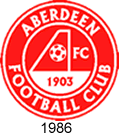 they were named European Team of the Year. More success followed:
in May 1984 they won the Premiership title and retained the Cup for
the third successive season. Another League Cup win (1985) was followed
by the Scottish FA Cup for the sixth time in 1986 before Ferguson left
for Manchester United in October 1986.
they were named European Team of the Year. More success followed:
in May 1984 they won the Premiership title and retained the Cup for
the third successive season. Another League Cup win (1985) was followed
by the Scottish FA Cup for the sixth time in 1986 before Ferguson left
for Manchester United in October 1986.
Although Aberdeen were now well-known throughout Europe, the management realised  that their crest was not recognised outside of Scotland, so commissioned a new version, which was adopted in 1986.
In 1990 The Dons won the Scottish FA Cup on  penalties
and the following season were pipped by Rangers for the Premiership
title. The rest of the decade was comparatively lean and the club came
close to relegation several times, although they did win another League
Cup in 1995. No further honours came to Pittodrie for the next 19 years (they won the Scottish League Cup in 2013-14) and
while they can still count themselves
penalties
and the following season were pipped by Rangers for the Premiership
title. The rest of the decade was comparatively lean and the club came
close to relegation several times, although they did win another League
Cup in 1995. No further honours came to Pittodrie for the next 19 years (they won the Scottish League Cup in 2013-14) and
while they can still count themselves  among the main rivals to the Old
Firm, the golden days of Aberdeen FC seem a long way behind them.
among the main rivals to the Old
Firm, the golden days of Aberdeen FC seem a long way behind them.
Since 2005 the club crest has featured two stars that represent the Don's European triumphs from the Eighties. For the 2014-15 season only the 1979 badge  was reinstated. The 2005 crest returned the following season.
To mark the fortieth anniversary of the Dons winning the European Cup Winners' Cup, a commemorative crest was commissioned and worn during the 2022-23 season on a strip closely modelled on the pinstriped shirts worn in the final in Gothenburg in 1983.
Sources
- (a) Aberdeen FC Official Site
- (b) Classic Kits
- (c) Red Card Scotland
- (d) Hibernian Official Site
- (e) Colours of Football
- (f) Pete's Picture Palace
- (g) London Hearts
- (h) footystrips
- (i) Ayr United FC - Images of Sport (Duncan Carmichael 2002)
- (j) SNSpix
- (k) Steve Turner (HFK Research Associate)
- (l) Alan McCabe
- (m) Aberdeen FC - Images of Sport 1903-1973 (Paul Lunney 2000)
- (n) Alick Milne (HFK Research Associate)
- (o) Football Shirt Culture
- (p) Martin Cooper
- (q) Keith Ellis (HFK Research Associate)
- (r) Ian MacConnel
- (s) Aberdeen Press & Journal (03 10 38) submitted by Alick Milne.
- (t) Football Memories Scotland
- (u) Aberdeen Express (10 10 1881) submitted by Alick Milne
- (v) Aberdeen FC Official Website
- (w) Aberdeen Express (2 1 1888) submitted by Alick Milne
- (x) Scottish Referee (13 3 11) submitted by Alick Milne
- (y) Scottish Referee (19 9 10 & 2 10 10) submitted by Alick Milne
- (z) Football and the First World War
- (A) Scottish Football Association Annuals
Modern crests are the property of Aberdeen FC.