


Northampton
Town
Formed 1897
Founder member of Division Three 1920
Kit History
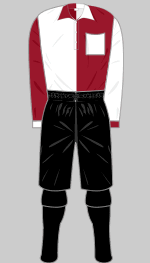
1897-1899 u
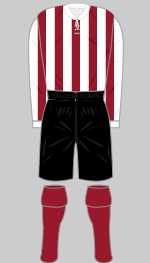
1901-1902 v
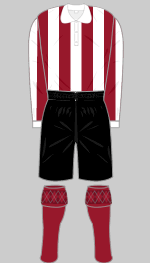
1902-1904 a m
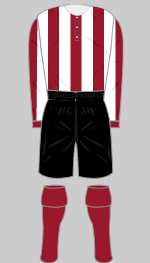
1904-1905 a
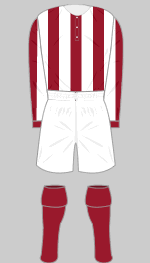
1905-1906 l
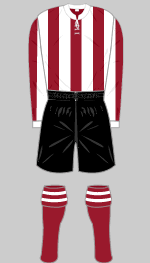
1907-1908 k
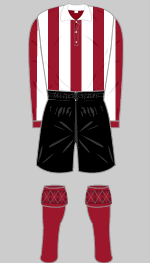
1908-1909 a
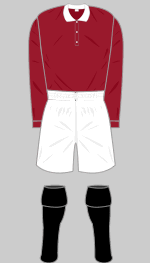
1909-1910 s
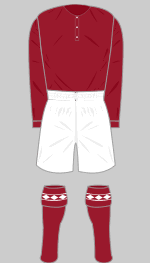
1910-1912 a l m
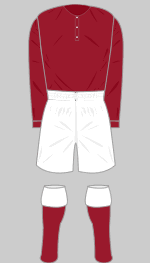
1912-1913 a
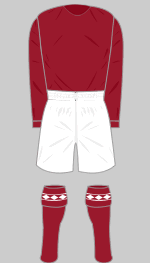
1913-1915 a l
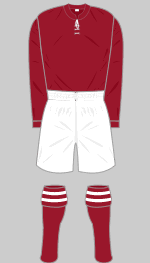
1920-1923 a
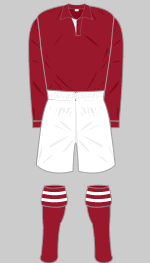
1923-1929 a l
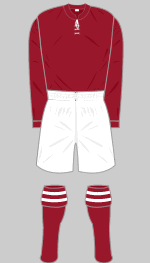
1929-1931 a
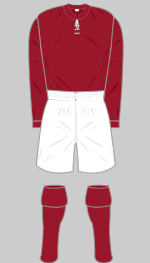
1931-1933 a
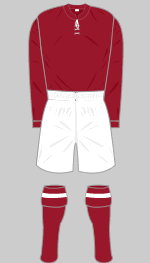
1933-1935 a l
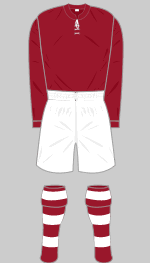
1935-1936 l
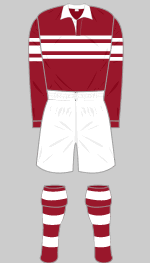
1936-1947 a
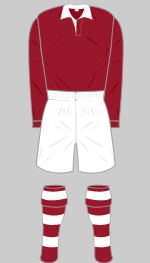
1947-Jan1948 l
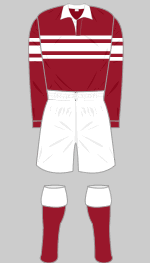
Jan 1948-1949 a
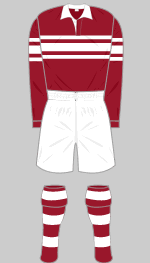
August 1949 a
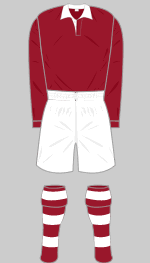
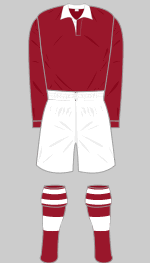
1950-1951 l
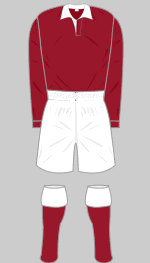
1951-1955 a
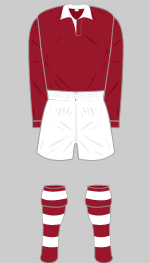
1955-1956 a
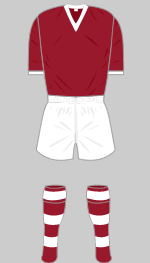
1956-1958 a l
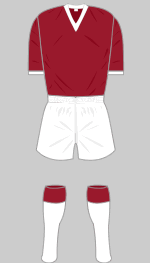
1958-1960 r
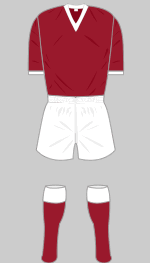
1960-1961 l
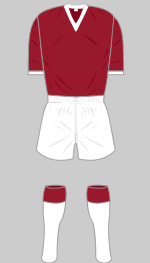
1961-Oct 1962 a l
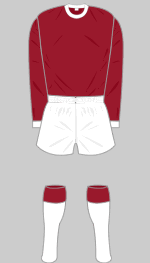
Oct 1962-1963 a
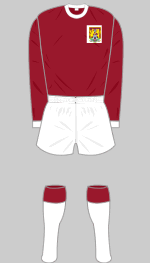
1963-1964 a
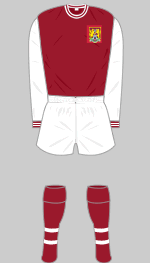
1964-1965 a f r

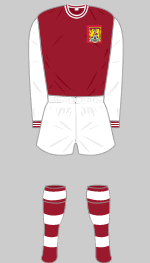
1965-April 1966 f r
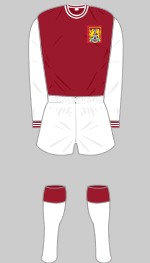
April 1966-1967 f r t
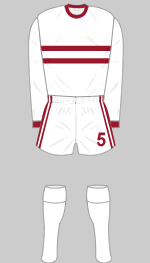
1967-1971 d l
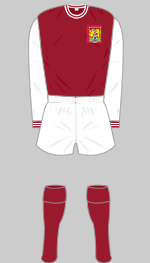
19 April 1969 r
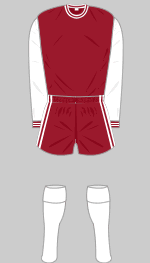
1971-1973 a
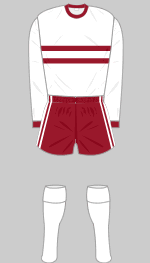
7 Aprii 1973 l r
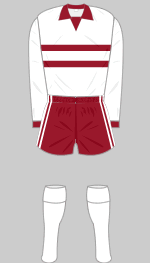
Aug-Oct 1973 i r
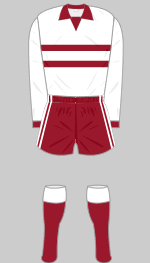
Nov 1973-1974 r
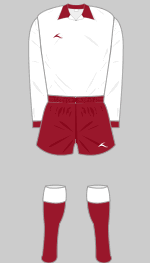
1974-1976 i r
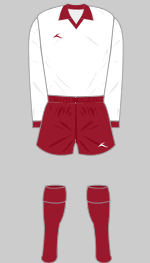
1976-1977 j
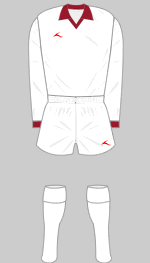
1977-1978 a
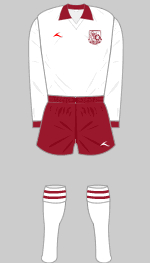
1978-1982 a i l
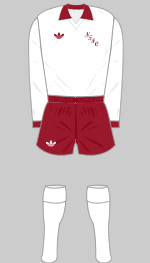
1982-1983 j
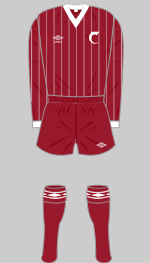
1983-cAug 1984 a f i
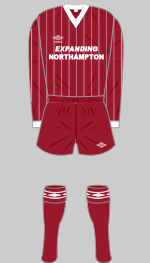
cSept 84-1985 r
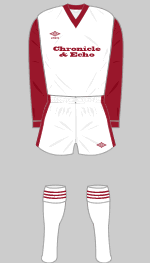
1985-1986 a
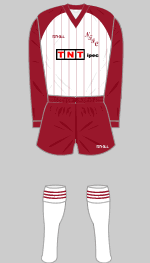
1986-1987 a p
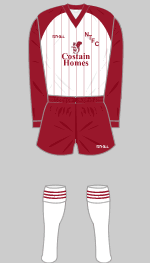
1987-1988 n o
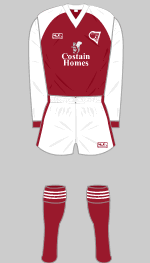
1988-1989 a
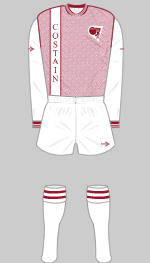
1989-1990 a
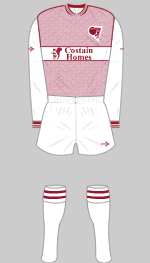
1990-1991 a h
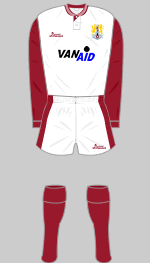
1991-1992 a e h q
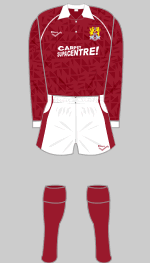
1992-Aug 1993 a h
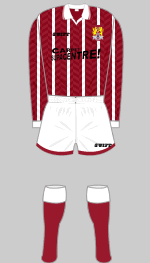
Sept 1993-1994 a p
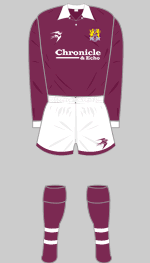
1994-1995 a p
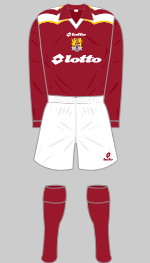
1995-1996 a p
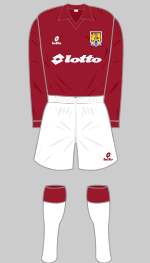
1996-1997 a p
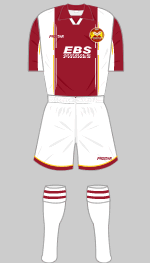
1997-1998 a h p q
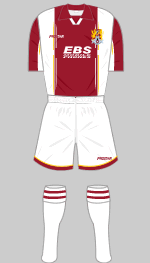
1997-1998 q
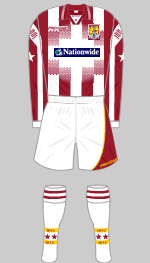
1998-1999 a p
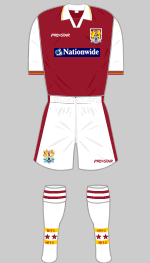
1999-2000 e h p
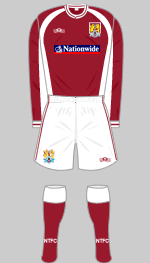
2000-2001 b h
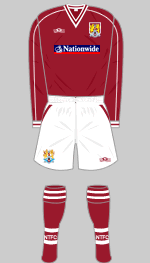
2001-2003 b h
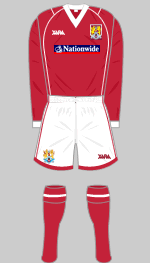
2003-2005 b
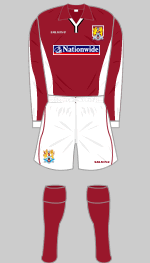
2005-2006 c
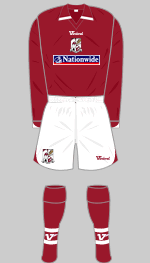
2006-2007 g
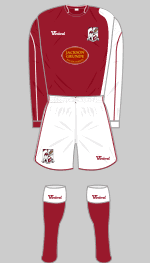
2007-2008 g
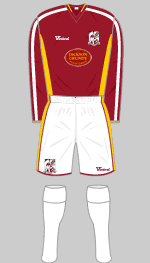
2008-2009 g
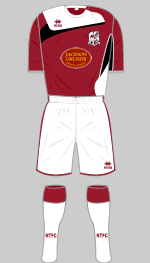
2009-2010 g
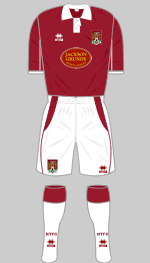
2010-2011 g
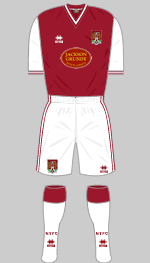
2011-2012 g
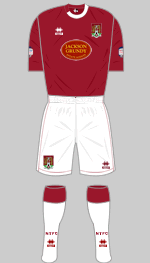
2012-2013 g
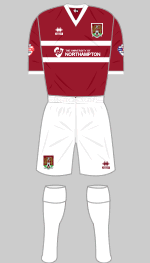
2013-2014 g
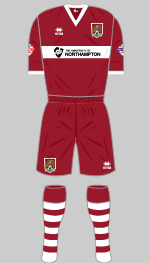
2014-2015 g
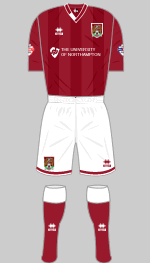
2015-2016 g
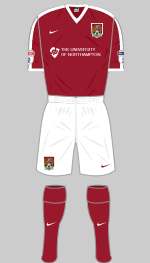
2016-2017 g
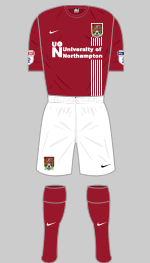
2017-2018 g
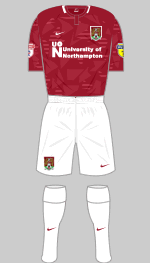
2018-2019 g
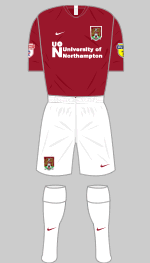
2019-2020 g
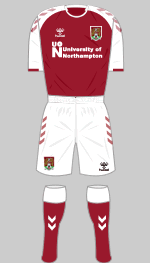
2020-2021 g
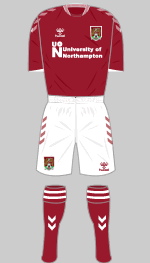
2021-2022 g
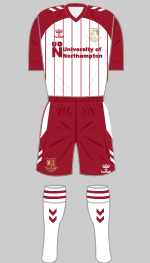
2022-2023 g
Background
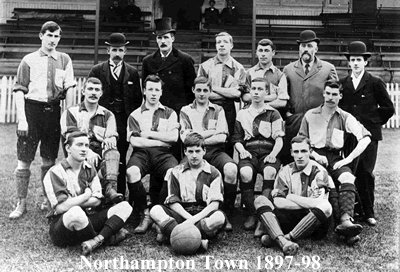 On the 6th March 1897 a group
of school teachers and a prominent local solicitor resolved to form a
professional association football club to be called Northampton FC. Following
objections from Northampton Rugby Club, it was decided to adopt the name
Northampton Town instead. The new team adopted the municipal colours of claret
and white and after two seasons in the Northamptonshire League,
they moved up to the Midlands League. In 1901, the Cobblers
(so named because the town was the centre of the boot and shoe manufacturing
industry) joined the Southern League.
On the 6th March 1897 a group
of school teachers and a prominent local solicitor resolved to form a
professional association football club to be called Northampton FC. Following
objections from Northampton Rugby Club, it was decided to adopt the name
Northampton Town instead. The new team adopted the municipal colours of claret
and white and after two seasons in the Northamptonshire League,
they moved up to the Midlands League. In 1901, the Cobblers
(so named because the town was the centre of the boot and shoe manufacturing
industry) joined the Southern League.
In 1920 the Cobblers became founder members of Division Three when the Southern League First Division was incorporated into the League. There was not a great deal to celebrate, however, as the club settled into mid-table obscurity for the next 18 years, although they did finish as runners-up in 1928. (In those days, only the champions of the two regional third divisions were promoted.) In the mid 1930s the club adopted a distinctive hooped jersey, the first of many innovative designs.
After the Second World War, Northampton fared little better (although they were again runners up in 1950). Photographic evidence indicates that the team switched between plain claret shirts and the old hooped versions with bewildering frequency in the seasons immediately after the war. Club historian, Frank Grande writes, "I do remember reading during my research that the club were asking for any spare clothing coupons and one of the players of the era stating that whenever they went down injured the manager was more worried about the shirt than the player!"
 When the regional
divisions were scrapped in 1957, the club was placed in Division Four.
The 1960s proved to be a remarkable decade for the club. After floodlights were installed at the County Ground in October 1960, photographs were widely published showing the team in an all white "floodlights strip" decorated with a claret band on the shirt. Peter Stevenson has established that this outfit was not worn at home except in friendlies and testimonials and we must conclude it was their change strip.
When the regional
divisions were scrapped in 1957, the club was placed in Division Four.
The 1960s proved to be a remarkable decade for the club. After floodlights were installed at the County Ground in October 1960, photographs were widely published showing the team in an all white "floodlights strip" decorated with a claret band on the shirt. Peter Stevenson has established that this outfit was not worn at home except in friendlies and testimonials and we must conclude it was their change strip.
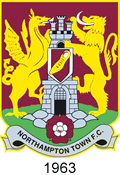
Promoted in 1961, Northampton were Division Three champions in 1963 and in 1965 they won promotion to the First Division. After their success of 1963, a new crest was added to the team shirts and was worn until 1967. Based loosely on the Northampton coat of arms there were sufficient differences to make it distinctive, including a slipper, celebrating the area's long association with shoe-making.
 Having risen from the Fourth to the First
Divisions, their decline was equally spectacular. Relegated after one
season at the top, by 1972 they were applying for re-election to the Fourth
Division.
Having risen from the Fourth to the First
Divisions, their decline was equally spectacular. Relegated after one
season at the top, by 1972 they were applying for re-election to the Fourth
Division.
Promotion in 1976 was followed by immediate relegation
and the side finished twice more in the re-election zone in 1982 and 1985. During this period a new  crest appeared between 1978 and 1982 when it was replaced by a simple monogram. When the team switched from predominantly white shirts to an all-claret kit in 1983 (notoriously hard to see under the County Ground's rather poor floodlighting), a stylised letter "C" appeared in place of a crest. This may well have been to acknowledge financial help from Carlsberg, who have their main UK brewery in the town.
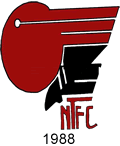 In 1987, with ex-player Graham Carr in charge the Cobblers were Fourth
Division champions and narrowly missed out on the play-offs the following
season. Another new crest appeared in 1988, a semi-abstract affair based on a ball being struck by a football boot.
In 1987, with ex-player Graham Carr in charge the Cobblers were Fourth
Division champions and narrowly missed out on the play-offs the following
season. Another new crest appeared in 1988, a semi-abstract affair based on a ball being struck by a football boot.
Financial pressures forced the club to sell off their best players
and they were relegated once again in 1990. In April 1992, with debts
of around £1.6m, the club went into administration and ten first
team players were sacked to save money, their places being taken by youth
players. In 1994, Northampton finished bottom of the League and should
have been relegated to the Conference. They were reprieved when Kidderminster
Harriers, the Conference champions, were denied promotion because their
ground did not meet League 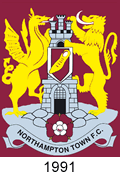 standards. There was considerable irony in
this as Northampton were generally acknowledged as having the worst ground
in the League and would certainly have been refused promotion had the
positions been reversed.
standards. There was considerable irony in
this as Northampton were generally acknowledged as having the worst ground
in the League and would certainly have been refused promotion had the
positions been reversed.
In 1991 the original crest was reintroduced, embroidered directly onto the white shirt. Later versions had a claret surround.
Since their formation, Northampton
Town had been tenants of Northamptonshire Cricket Club with whom they
shared the County Ground. The south side of the ground remained open to
accommodate the cricket club's outfield and could not be developed while
the wooden  stand on the north side had to be demolished after the Bradford
City fire in 1985. This was replaced with a temporary structure while the
east and west terraces crumbled behind the goals.
stand on the north side had to be demolished after the Bradford
City fire in 1985. This was replaced with a temporary structure while the
east and west terraces crumbled behind the goals.
After interminable wrangling, Northampton Borough Council
finally approved a plan to build a brand new stadium on an old rubbish
tip at the edge of town. Reclamation involved installing vents to prevent
methane gas building up under the site. In October 1994, the club moved
into their compact new Sixfields Stadium. Three years later, in their
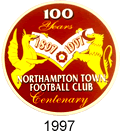 centenary year, the Cobblers were promoted. A special crest was adopted during this season but the traditional version was reinstated during the play-offs.
The following season they reached the play-off finals again but this time lost to Grimsby and a year later, the Cobblers were relegated. In 2000, they were again promoted to Nationwide Division Two but, true to form, they were relegated three years later then promoted again three years after that. This pattern continued in the first decade of the new millennium as the team were promoted and relegated between the lower divisions with bewildering regularity.
Northampton's choice of playing strips is as unpredictable
as their recent career. Since the 1960s, the 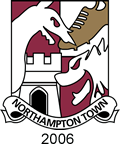 predominant colour of the
Cobblers' kits alternated between white and claret, including some
extravagant designs but in the new millennium they have worn more traditonal claret shirts. On at least two occasions, however, the club deviated from
predominant colour of the
Cobblers' kits alternated between white and claret, including some
extravagant designs but in the new millennium they have worn more traditonal claret shirts. On at least two occasions, however, the club deviated from
 claret colour, to the disgust of their hardcore supporters.
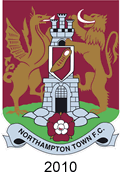
In 2006 the board decided on yet another change of image and a new crest was designed. This featured elements from the traditional badge but rendered in a dramatic, modernist style. This proved unpopular with supporters who mounted a campaign for the traditional crest to be reintroduced. Their pressure was successful and for the 2010-11 season, a smart new version of the older badge was introduced.
In November 2015 police launched a criminal investigation into alleged financial irregularities over a £10.25m loan made to the club by Northampton District Council to finance the building of a new stand. This followed a formal complaint to the police by the council who also applied to put the club into administration. At the same time, Northampton Town faced a winding up petition served by HMRC over unpaid taxes and the staff had not been paid since October. The threat of imminent extinction was removed when former Oxford United chairman, Kelvin Thomas, took control of the club: he paid off the tax bill and the missing staff wages. The debt owed the council was written off in exchange for the club handing over land for development. To cap it all, the team ran away with the League Two title.
Over the rest of the decade the Cobblers bounced between the lower two tiers with bewildering frequency. Meanwhile the police investigation into the missing £10.25 million council loan rumbled on and in 2021 six individuals appeared in court charged with misapropriating funds. Separate proceeding taken by the 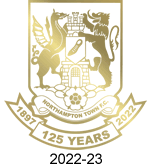 council to recover the money resulted in former chairman, Anthony Cardoza, being ordered to repay £2.1 million: he was declared bankrupt shortly afterwards but in 2021 a property belonging to his wife was seized and sold off by East Northants Council. Several other individuals were found guilty of illegally transferring some of the missing funds to the local Conservative Party.
To mark the club's 125th anniversary in 2022-23, Hummel provided a reproduction of the classic kit from the mid-1980s, always a firm favourite among fans. Naturally a commemorative crest, picked out in gold, was also introduced.
Sources
- (a) Northampton Town FC (Images of Sport: D Walden & J Watson)
- (b) empics
- (c) Classic Kits
- (d) Football Focus
- (e) Craig Rostance
- (f) Bill Craven
- (g) Northampton Town Official Site
- (h) David King
- (i) Alick Milne
- (j) Peter Moor
- (k) Simon Monks
- (l) The Official Centenary History of Northampton Town 1897-1997 (Frank Grande 1997) provided by Colin Russell
- (m) Keith Ellis (HFK Research Associate)
- (n) Frank Grande (Club Historian)
- (o) Stefan Cooper
- (p) oldfootballshirts.com
- (q) Mark White
- (r) Peter Stevenson
- (s) Football Cartophilic Exchange
- (t) The Senior Tigers Club
- (u) Norhampton Daily Reporter (6 Sept 1897, 1 April 1899, 13 April 1899) submitted by Tim Hickling
- (v) Michael Gluck
Crests are the property of Northampton Town FC.