
Leyton
Orient
Formed 1881
Elected to Division Two 1905. Relegated to the National League 2017.
Promoted to League Two 2019.
Kit History
Orient FC
1888
Previously
Glyn CC 1881
Eagle CC 1886
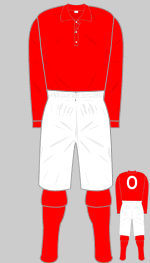
1893 a
Clapton Orient
1898
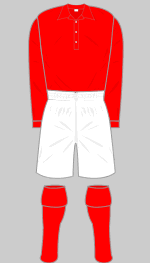
1902-1903 a
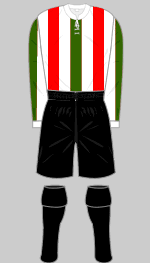
1904-1905 a h k
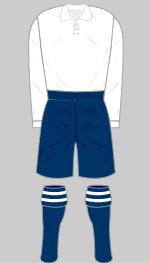
1905-1908 a k
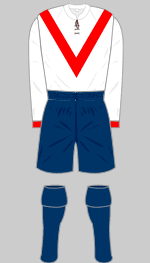
1910-1915 a s
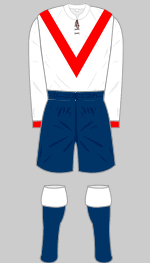
1920-1921 a
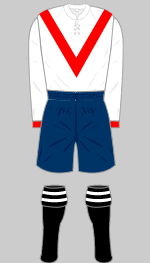
April 1921-1922 a i
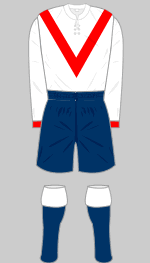
1922-1924 a s
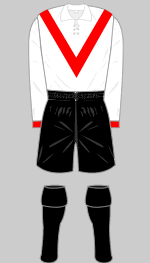
1925-1927 a i
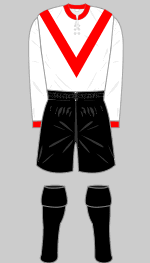
1927-1929 a i q
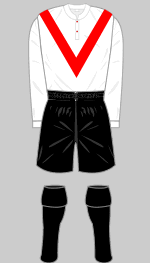
1929-1931 a i q s
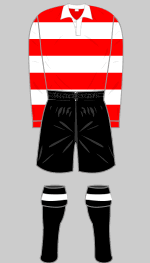
1931-1932 q
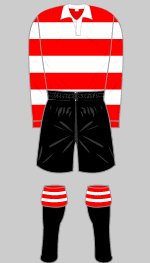
1932-1933 q
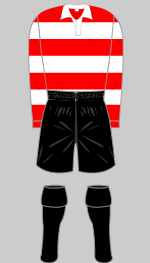
1933-1934 q s
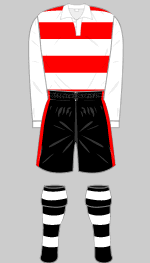
1934-1936 a g s
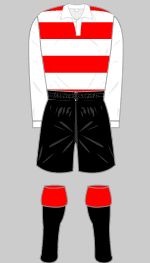
1936-1939 a q
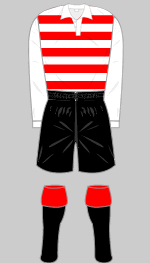
1939-1945 a u
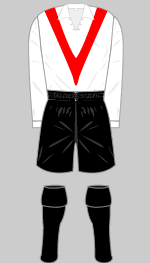
1945-1946 u
Leyton Orient
1946
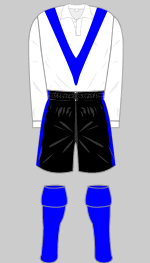
1946-1947 x
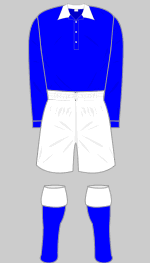
1947-1948 q
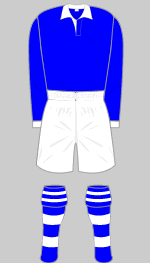
1949-1951 c s

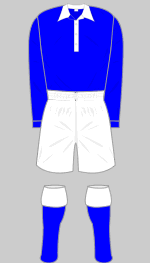
1951-1952 a
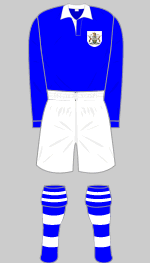
1952-1953 c
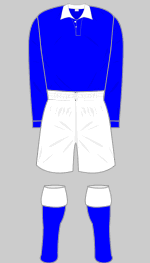
1953-1954 c s
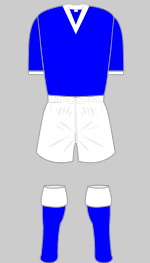
1954-1957 a j
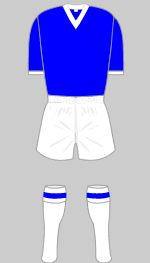
1957-1960 a
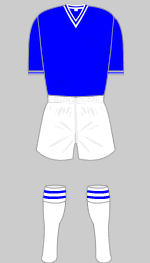
1960-1961 d j q
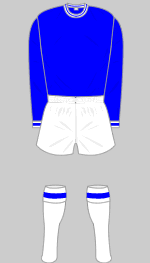
1961-Jan 65 a j r v w

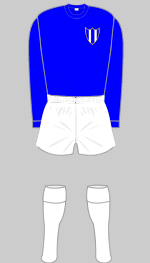
6 Feb-May 1965 2 a j w
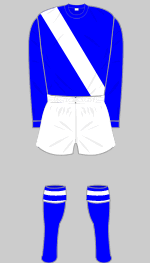
Aug-Dec 1965 a i
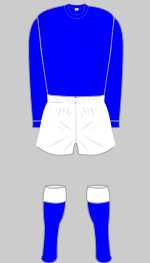
Dec 1965-1966 a i
Orient
1966
1966-1967 a
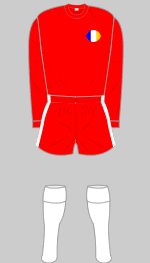
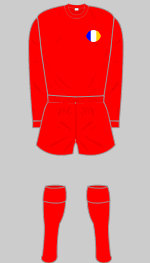
1968-1970 a j o s
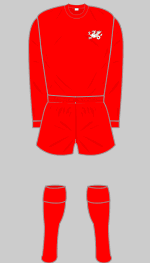
1970-1973 a j
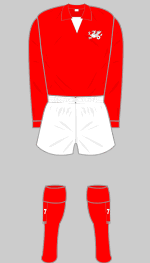
1973-1974 a j n
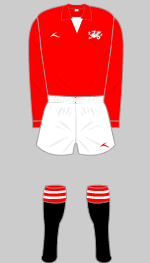
1974-1977 a j n
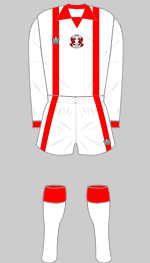
1977-1980 a j n
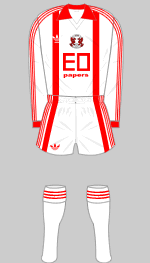
1980-1982 a
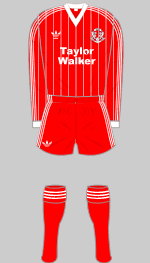
1982-1983 j
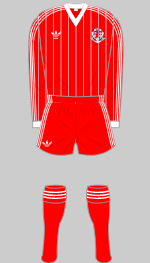
1983-1984 y
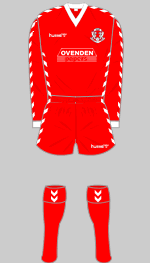
1984-1986 a
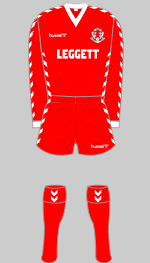
1986-1987 a
Leyton Orient
1987
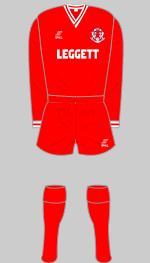
1987-1988 e r
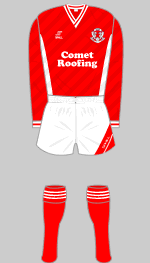
1988-1989 a
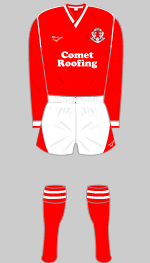
1989-1991 c l t
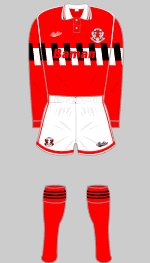
1991-1992 a l
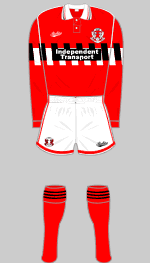
1992-1993 a l
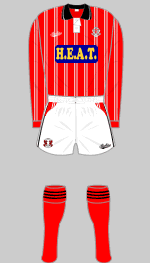
1993-1995 a l
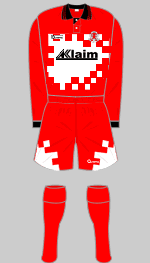
1995-1996 c
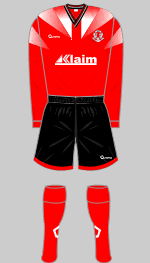
1996-1997 a
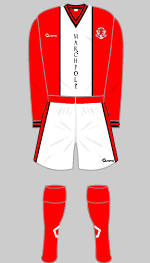
1997-1998 c
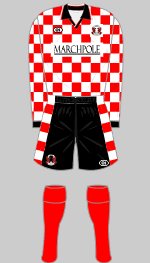
1998-1999 a p
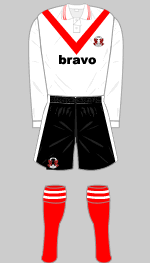
1999-2000 a
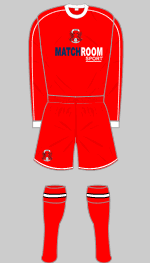
2000-2001 c
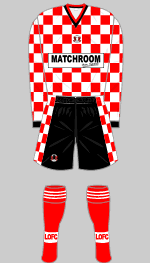
2001-2002 c l
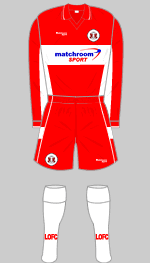
2002-2003 c
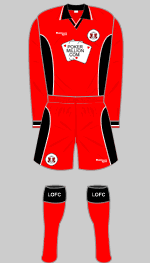
2003-2004 f
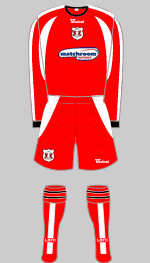
2004-2006 f
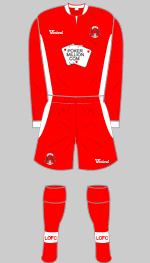
2006-2007 f
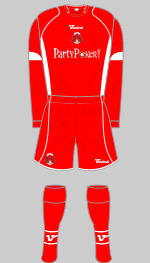
2007-2008 f m
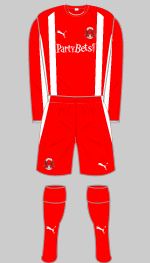
2008-2009 f
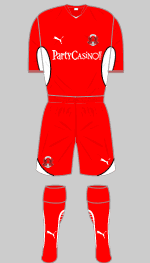
2009-2010 f
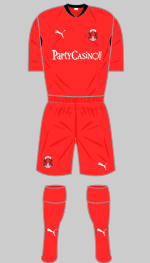
2010-2011 f
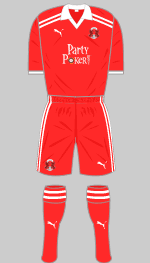
2011-2012 f
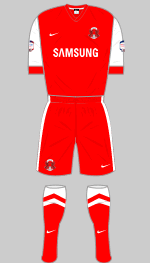
2012-2013 f
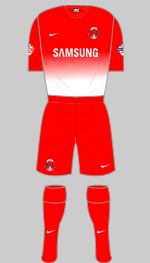
2013-2014 f
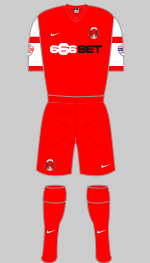
2014-March 2015 f
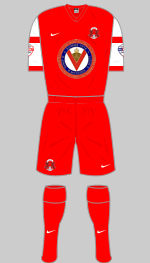
April 2015 f
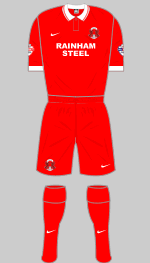
2015-2016 f
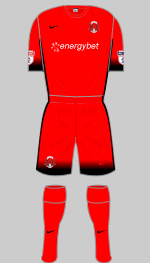
2016-2017 f
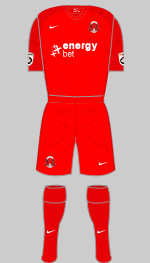
2017-2018 f
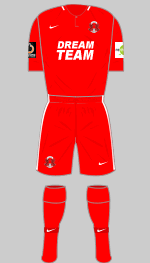
2018-2019 f
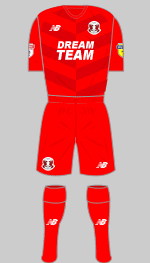
2019-2020 f
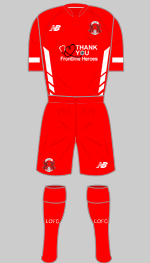
2020-2021 f
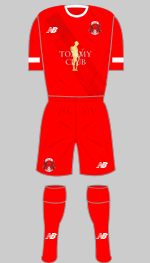
2021-2022 f
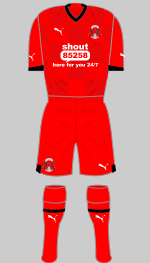
2022-2023 f
Background
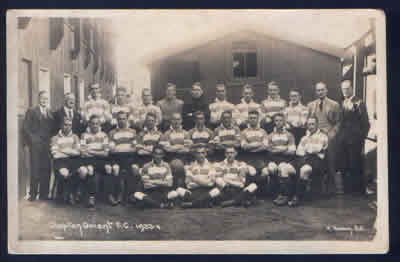 The club's original incarnation
was as an offshoot of Glyn Cricket Club, formed to provide members with
a winter activity in the East End of London. The club became Eagle CC in 1886. In 1888, at the suggestion
of Jack R Dearing, who worked for the Orient shipping line (later P&O), the
club became Orient FC and football became their main activity. Ten years later, in 1898, the club changed its
name to Clapton Orient FC in a bid to attract wider support. During this period the club wore plain red shirts with a
large capital O on the back: they are known to this day as
"The O's."
The club's original incarnation
was as an offshoot of Glyn Cricket Club, formed to provide members with
a winter activity in the East End of London. The club became Eagle CC in 1886. In 1888, at the suggestion
of Jack R Dearing, who worked for the Orient shipping line (later P&O), the
club became Orient FC and football became their main activity. Ten years later, in 1898, the club changed its
name to Clapton Orient FC in a bid to attract wider support. During this period the club wore plain red shirts with a
large capital O on the back: they are known to this day as
"The O's."
In 1905, Clapton Orient, playing in the Second Division of the Southern League, applied for election to the Football League Second Division. On the first ballot, Orient's application was roundly rejected but a subsequent motion to extend the League was then passed and the "O"s were elected at the second attempt. At the time they wore a unique shirt of white, green and red stripes, the first of many unconventional designs. Orient made little impact after surviving re-election in their first season but by the time League football was suspended in 1915, they were finishing consistently in the top half of Division Two. From 1910 the team's shirts were adorned with a bold red V, which became their signature kit until the 1930s.
No fewer than 41 players and staff volunteered for service in the Great War with the 17th Middlesex ("The Footballers Battalion"), the O's being the first English Football League side to enlist en masse. Three players lost their lives during the Battle of the Somme in 1916 while many more were wounded (i).
During the inter-war period, Orient struggled and in 1929, the club was relegated to Division Three (South). In 1932 a new design of broad red and white hoops was adopted, worn with distinctive all-white sleeves from 1935. In 1937, it was decided to move the club to Leyton, still north of the River Thames but closer to the East End.
In April 1945 The Nottingham Evening Post reported that the Fooball League had given permission for the team to revert to the white jerseys with a red chevron they wore in the Second Division.
 They continued to play as
Clapton Orient until 1946 when, having narrowly avoided bankruptcy, their name was changed to Leyton Orient. The old red and white colours
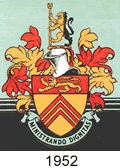
were replaced with blue and white and the coat of arms of the Borough of Leyton was adopted as the club crest. This was worn on on the players' shirts in the 1952-53 season.
They continued to play as
Clapton Orient until 1946 when, having narrowly avoided bankruptcy, their name was changed to Leyton Orient. The old red and white colours
were replaced with blue and white and the coat of arms of the Borough of Leyton was adopted as the club crest. This was worn on on the players' shirts in the 1952-53 season.
 In 1956 Orient won the Division Three (South)
championship and in 1962 this unfashionable club was promoted to the First
Division, their highest achievement to date. Well out of their depth,
the "O"s were relegated after only one season and four years
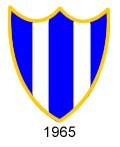
later, the club was back in Division Three. Although the club wore plain shirts throughout this period, a curious striped shield appeared in the latter part of the 1964-65 season.
In 1956 Orient won the Division Three (South)
championship and in 1962 this unfashionable club was promoted to the First
Division, their highest achievement to date. Well out of their depth,
the "O"s were relegated after only one season and four years
later, the club was back in Division Three. Although the club wore plain shirts throughout this period, a curious striped shield appeared in the latter part of the 1964-65 season.
In November 1966,
the name Orient FC was adopted: most commentators believed this was a
modern Sixties gimmick, not realising that the club had played under the
same title in Victorian times. 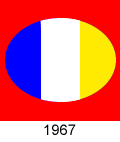 A simple all-red strip was adopted the
following season, embellished with a yellow, white and blue badge, the
colours of the modern P&O Shipping Line.
A simple all-red strip was adopted the
following season, embellished with a yellow, white and blue badge, the
colours of the modern P&O Shipping Line.
 The club continued to lurch
from one financial crisis to another but survived on the generosity of
its loyal fans. Orient won the Division Three championship in 1970 and
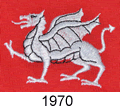
returned to the Second Division where they remained for twelve years. Perhaps prompted by this success, the club replaced the tricolour badge with a rather more impressive griffin.
The club continued to lurch
from one financial crisis to another but survived on the generosity of
its loyal fans. Orient won the Division Three championship in 1970 and
returned to the Second Division where they remained for twelve years. Perhaps prompted by this success, the club replaced the tricolour badge with a rather more impressive griffin.
A more elaborate crest was designed in 1976 and worn for the first time in 1977 on the smart all-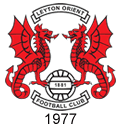 white kit with bold vertical red "braces." This featured a pair a wyverns, a mythical creature associated with the River Thames, harking back to the club's connection with the old Port of London. The Os reached the FA Cup semi-finals in 1978, where they were eliminated by Arsenal, ensuring the popularity of the new white look and crest.
By 1985 the club had descended to the Fourth Division and two years later, it was decided to revive the old name of Leyton Orient (although the club did not change colours this time and continued to play in red and white). Four years later, the club was promoted back to Division Three via the play-offs but in 1995, on the verge of bankruptcy once again, Orient were relegated back to the lowest Division (now Division Three). They survived as they always have done and in 2006 they won promotion back to the third tier (League One).
During the 1990s the "O"s wore some spectacular kits including a revived version of the white shirts with a red "V" that was the club's signature kit in the 1920s and a chequered shirt (revived in 2001). In the new millennium the club favoured all-red kits with a variety of entertaining trimmings but in the next decade their kits became more conservative.
In the mid 1990's the club announced ambitious plans to redevelop their stadium but financial problems forced a rethink after Barry Hearn took control of the club and some surrounding land was sold off (to Hearn's company on a 999 year lease) to finance rebuilding the West Stand.
In 2011 Hearn submitted a request to move the club into the new Olympic Stadium and subsequently scuppered West Ham United's plan to take over the stadium. The bidding process had to be reopened and although West Ham were chosen as lease-holders, Hearn promised to fight on, concerned that the proximity of the stadium to Brisbane Road would deprive Orient of support and drive the club out of business but his campaign proved to be fruitless.
At the end of March 2015 the club announced that the symbol of the Somme Memorial Fund would replace their shirt sponsorship for the remainder of the season to honour the team that enlisted to a man in December 1914. The names of the three players who perished in the Battle of the Somme in 1916, William Jonas, Richard McFadden and George Scott, were included in the design.
In May 2014 Italian businessman, Francesco Becchetti took over as chairman. Under his leadership ten managers came and went as the team slipped to last place in League Two and were relegated to the National League in 2017. Fan protests against Facchetti led to a game on 29 April being called off following a pitch invasion. In late June Orient FC was sold to Nigel Travis, chairman of the US holding company Dunkin' Brands, which owns the Dunkin' Donuts and Baskin-Robbins chains.
In 2019 the O's returned to the English Football League as National League champions.
The team shirts for the 2020-21 season were dedicated to the NHS, social care staff and other front line workers who played such a vital role during the Covid-19 pandemic. This initiative was funded by England and Spurs captain, Harry Kane, who made his professional debut when on loan at Orient in 2011. Kane also funded the front of shirt sponsor in 2021-22, a charity providing support to veterans of the armed forces.
Sources
- (a) Leyton Orient FC (Images of Sport - Neilson N Kaufman)
- (c) empics
- (d) Rotherham United FC (Images of Sport - Gerry Somerton & Chas Robinson)
- (e) The Men Who Made Leyton Orient
- (f) Leyton Orient Official Website
- (g) The Football Encyclopaedia (Associated Sporting Press 1934) Information provided by Arthur Fergus
- (h) Leyton Orient - A Complete Record 1881 -1990 (Neil Kaufman and Alan Ravenhill) - information provided by Steve Dixon
- (i) Steve Jenkins
- (j) Pete's Picture Palace
- (k) Association of Football Statisticians - provided by Pete Wyatt
- (l) David King
- (m) Football Shirt Culture
- (n) Alick Milne
- (o) Football League Review
- (p) Chris Worrall
- (q) Simon Monks
- (r) Colin Huggins
- (s) Keith Ellis
- (t) Sytse Korts
- (u) Nottingham Evening Post (10/04/1945 & 01/12/1945) submitted by Alick Milne
- (v) The Senior Tigers Club
- (w) Peter Stevenson
- (x) Official match programme (31 August 1946) submitted by Chris Luxford
- (y) Official match programme (21 April 1984)
Crests are the property of Leyton Orient FC.