


Hull
City
Formed 1904
Elected to Division Two 1905
Kit History
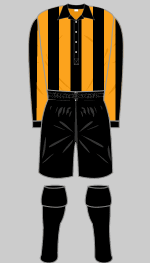
1904-1907 s w y

1907-1909 s y
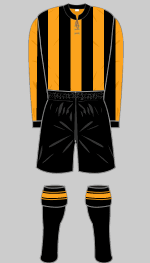
1909-1912 y
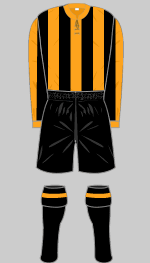
1912-1913 y
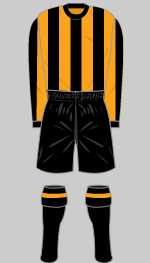
1913-1914 y
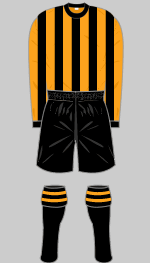
1914-1915 s
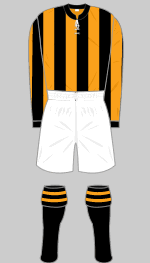
1918-1919 c
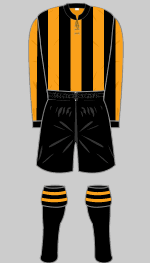
1919-1921 a y
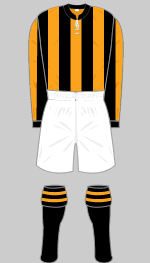
1921-1932 a c l y

1932-1933 s y

1934-1935 a y
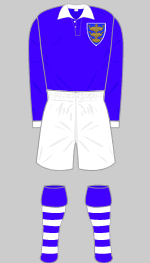
1935-1936 b c s w y

1936-1940 a c s y
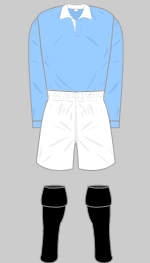
1946-1947 c o w
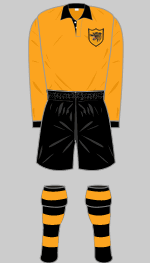
May 1947-1948 a o
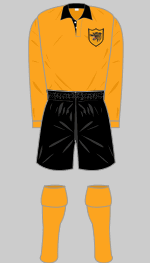
1948-1949 a m y
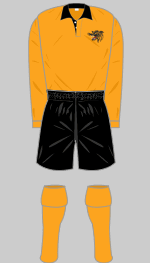
1953-1955 y

1955-1957 y
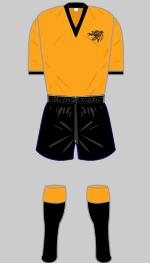
1957-1960 a y

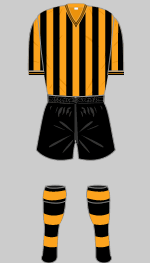
1960-1963 a c
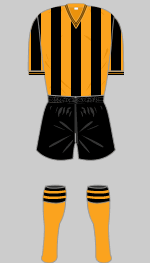
Aug-Dec 1963 y

Jan-May 1964 s y
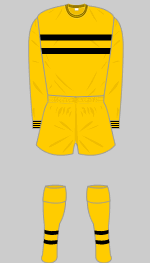
1964-1965 a c y
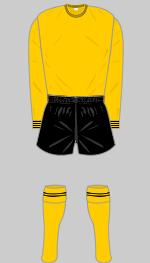
1965-1968 a c
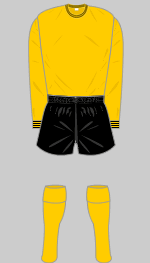
1968-1969 a c

1969-1971 a c
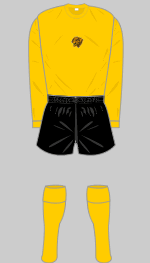
1971-1972 g
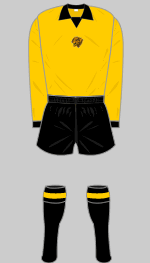
1972-1975 a c
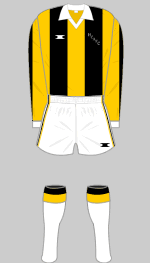
1975-1976 j q
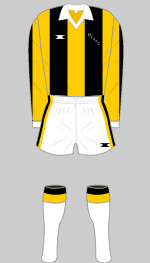
1976-1978 a g j q
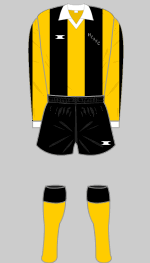
1978-1979 a j q
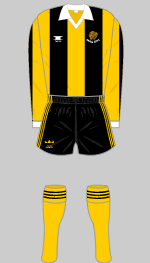
1979-1980 j q
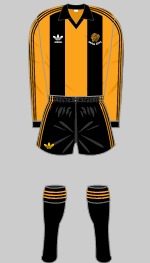
1980-1982 a p y
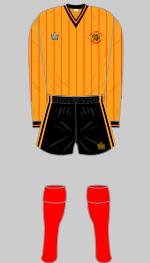
1982-1983 a k y
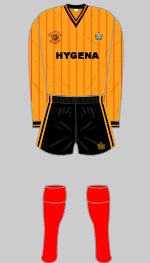
1983-1984 f k y

1984-1986 a
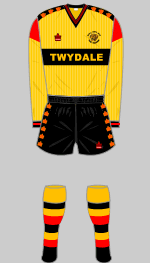
1986-1987 a e
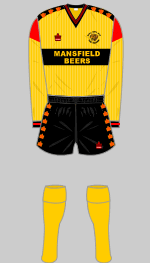
1987-1988 a e

1988-1989 a r
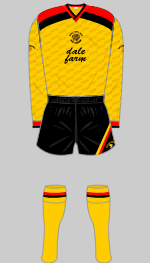
1989-1990 e r
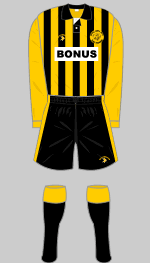
1990-1992 a e i
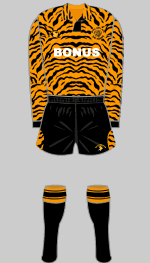
1992-1993 a c x
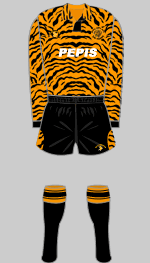
Aug- Dec 1993 a c x
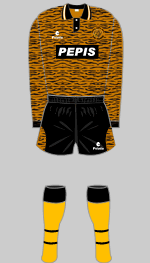
Jan-May 1994 a c i
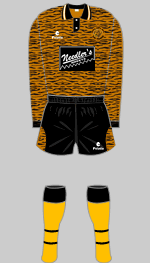
1994-1995 a c
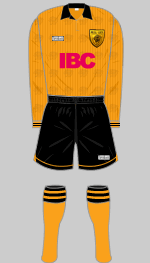
1995-1997 a k y
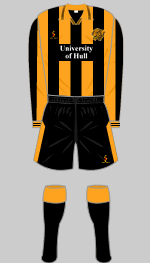
1997-1998 c
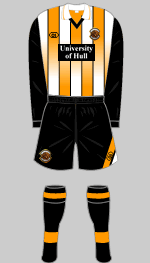
1998-1999 c k i r
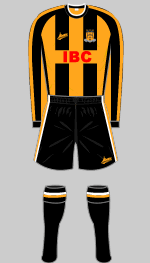
1999-2000 c i
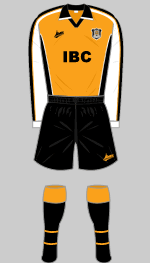
2000-2001 c i t
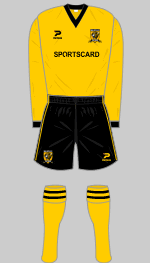
2001-2002 c
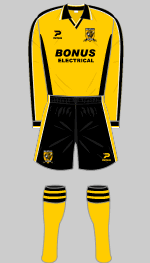
2002-2004 d
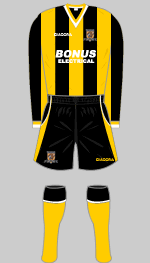
2004-2005 d
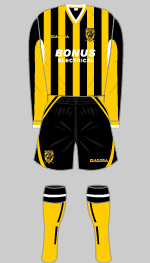

2006-2007 b e u
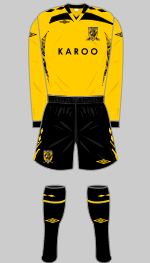
2007-2008 b
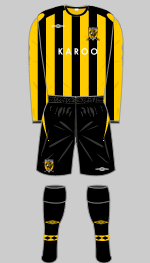
2008-2009 b
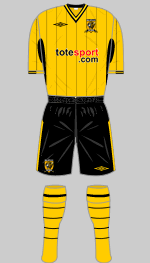
2009-2010 b
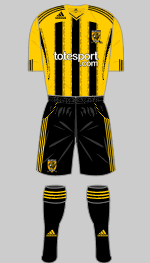
2010-2011 b

2011-2012 b
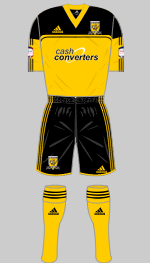
2012-2013 b
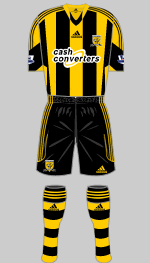
2013-2014 b
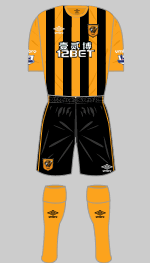
2014-2015 b
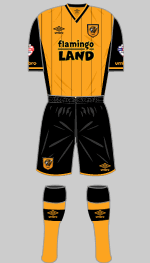
2015-2016 b
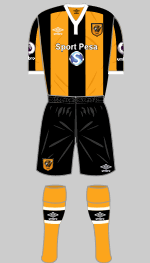
2016-2017 b
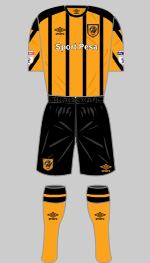
2017-2018 b
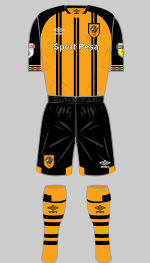
2018-2019 b
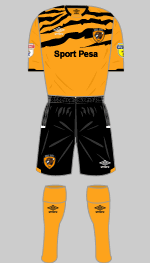
2019-2020 b
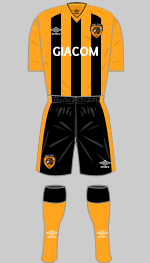
2020-2021 b
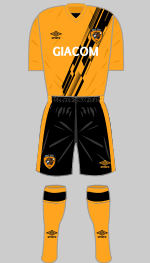
2021-2022 b
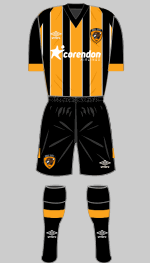
2022-2023 b
Background
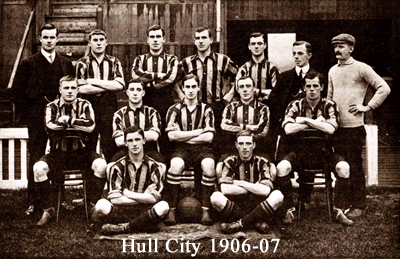 The Tigers were formed in July 1904, too late to apply to join a league
so the club played friendly matches during their first season, submitting
an application to join the Football League the following year. At the
time, the League's policy was to encourage the development of
professional association football in Yorkshire, a stronghold of Rugby
League. Hull's application was initially rejected but then it was decided
to expand the two divisions by two clubs each, which resulted in four
vacancies in the Second Division. On a second ballot, Hull were accepted.
The Tigers were formed in July 1904, too late to apply to join a league
so the club played friendly matches during their first season, submitting
an application to join the Football League the following year. At the
time, the League's policy was to encourage the development of
professional association football in Yorkshire, a stronghold of Rugby
League. Hull's application was initially rejected but then it was decided
to expand the two divisions by two clubs each, which resulted in four
vacancies in the Second Division. On a second ballot, Hull were accepted.
It has long been thought that the team started out wearing white shirts in the 1904-05 season but research by Nicholas Turner published on the Hull City Kits website has conclusively shown that this was their change strip and they wore amber and black stripes from the beginning. According to a clipping from the Derby Daily Telegraph, Hull were granted permission to wear "black and white" in 1921-22 but this appears to be incorrect. The photographic evidence shows the team simply switched from black to white knickers that season.
 The years leading up to the First World War saw Hull City's strongest
League performances and in 1910 they narrowly missed out on promotion
to Division 1 on goal average. Between the Wars, Hull carved out a reputation
as formidable Cup fighters, reaching two quarter-finals and in 1930 the
semi-final. Sadly this last achievement was marred by relegation to Division
3 (North) where they languished for three years. In 1935
The years leading up to the First World War saw Hull City's strongest
League performances and in 1910 they narrowly missed out on promotion
to Division 1 on goal average. Between the Wars, Hull carved out a reputation
as formidable Cup fighters, reaching two quarter-finals and in 1930 the
semi-final. Sadly this last achievement was marred by relegation to Division
3 (North) where they languished for three years. In 1935 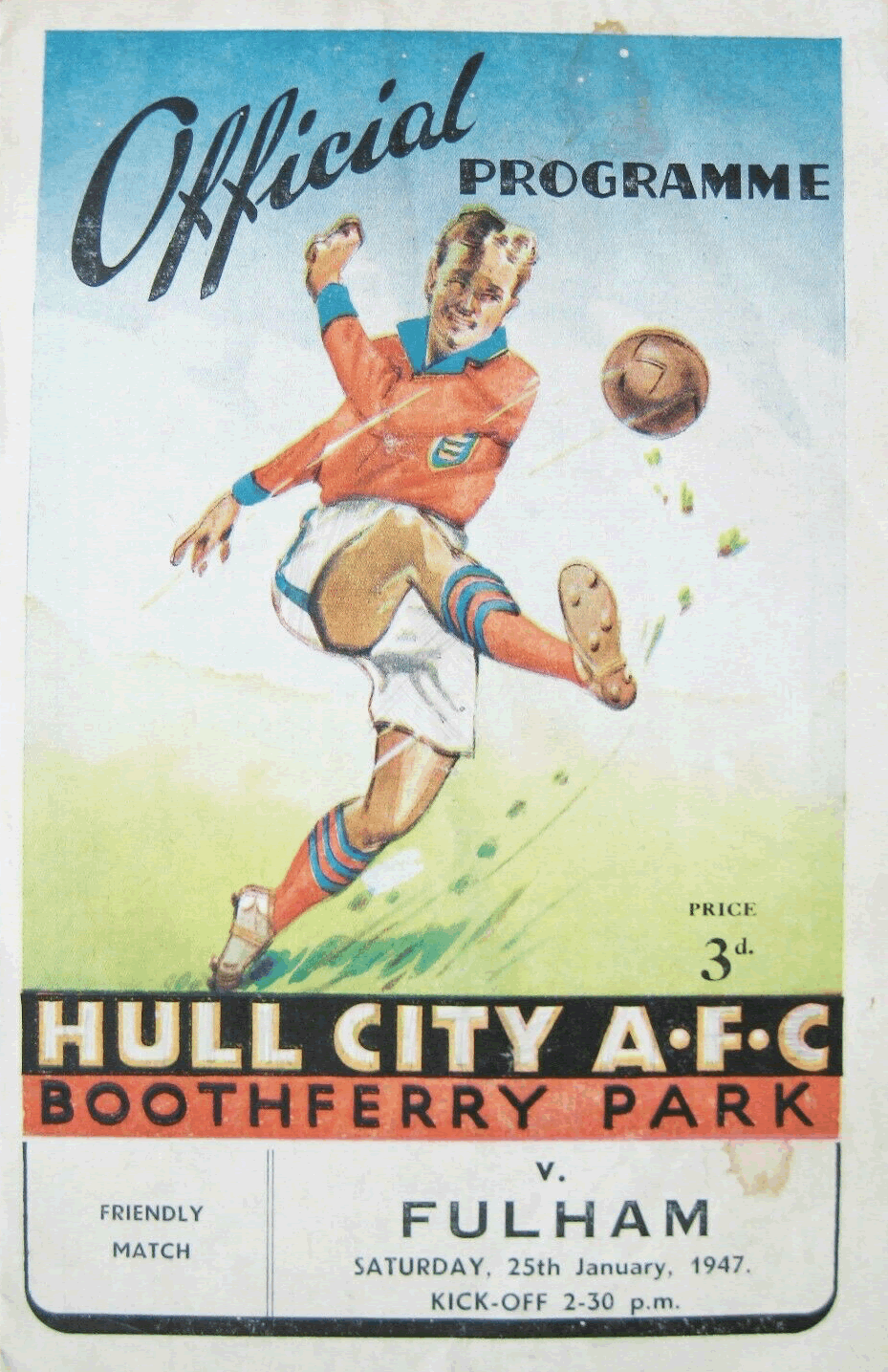 the club adopted
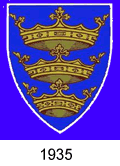
the city's municipal colours of ultramarine and white adorned with the coat of arms of Kingston upon Hull only to be relegated
once again. The traditional stripes returned the following season.
the club adopted
the city's municipal colours of ultramarine and white adorned with the coat of arms of Kingston upon Hull only to be relegated
once again. The traditional stripes returned the following season.
After the Second World War Hull's new owner, Harold Needler, had wanted to rebrand the club as Kingston upon Hull AFC and adopt orange, blue and white but he could not obtain the new kits because of the rationing of clothing so light blue shirts were worn instead  and the name change did not materialise.
In 1949, now wearing plain amber shirts with a bold tiger's head badge, City returned to Division 2 and enjoyed another stirring cup campaign, losing 0-1 to Manchester United in the quarter-final. There was little to celebrate during the Fifties and by the early Sixties, City were in Division 3.
 The roaring tiger appeared without a background shield between 1957 and 1960 when it was dropped before it was reinstated in 1971.
After a period wearing stripes once again, an unusual all
amber strip with black bands was introduced only to be universally derided
by fans who called it the  banana-strip. 1966 brought another FA Cup quarter-final
and a return to Division 2 where the club stayed until 1978.
banana-strip. 1966 brought another FA Cup quarter-final
and a return to Division 2 where the club stayed until 1978.
Stripes appeared once more in 1975 when white was introduced to the strip for the first time. The club's initials were embroidered onto these shirts until 1979 when the tiger's head  appeared once more. The club always used the suffix "AFC" to distinguish them from the town's two rugby league clubs, Hull RFC and Hull Kingston Rovers RFC.
The Eighties brought disaster as the club slipped briefly into the Fourth
Division. They recovered and climbed back to Division 2, finishing in
sixth place in 1986 but then they 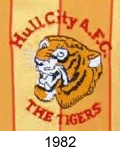 slipped down the leagues
once again, alternating with some regularity between the lowest two divisions.
slipped down the leagues
once again, alternating with some regularity between the lowest two divisions.
Hull have not been afraid to experiment with their playing kit, including
a bizarre tiger-print design adopted in 1992 generally regarded as one
of the worst strips of all time. 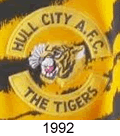 Despite being met with widespread derision at the time, Hull fans became very attached to the outrageous design. When Matchwinner's contract was cancelled in late 1993, the company refused to hand over the design templates to Pelada, who had replaced them as Hull's kit supplier. As a result Pelada produced their own version with a finer print in a sort of dirty brown colour: supporters consider this version infinitely inferior to the
  original.
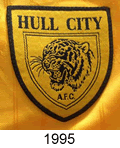
A return to a comparatively sober kit in 1995 featured the familiar tiger's head printed on a shield. The complicated Olympic Sports kit introduced in 1998 included white in the shirts and this was reflected in the redesigned crest, which was retired after one season.
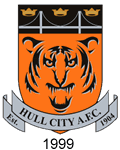
In 1999 the club crest was given an overhaul with the addition of the Humber Bridge along with three crowns, the municipal symbol of  Kingston upon Hull, as well as a slightly comical looking tiger. This proved unpopular and was retired in favour of a rather more traditional design in 2001.
 In recent years, the club has often consulted
fans when choosing a strip for the new season. Supporters have consistently
favoured plain amber shirts in the belief that the little success the
club has enjoyed has been when they played in plain shirts. Despite this,
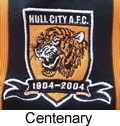
stripes regularly re-appear, including in 2004, the club's centenary season and a promotion season. Since then support has increased for the striped shirts, not least because they are unique in the top tiers of English football and when Hull gained promotion to the Premier League in 2008, they were adopted for their
In recent years, the club has often consulted
fans when choosing a strip for the new season. Supporters have consistently
favoured plain amber shirts in the belief that the little success the
club has enjoyed has been when they played in plain shirts. Despite this,
stripes regularly re-appear, including in 2004, the club's centenary season and a promotion season. Since then support has increased for the striped shirts, not least because they are unique in the top tiers of English football and when Hull gained promotion to the Premier League in 2008, they were adopted for their 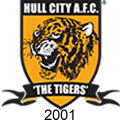 first ever campaign in the top tier.
The Tigers managed two seasons in the Premier League before they were relegated back into the Championship in 2010 but three seasons later they returned to the top tier after finishing in second place.
 In 2013, Hull City's owner, Dr Assem Allam, changed the name of the limited company that owns the club to Hull City Tigers and then announced his intention to change the playing name of the club (which requires the approval of the FA) to Hull Tigers. This led to peaceful protests from fans that infuriated Allam, who described them as hooligans. Chants of "City Till We Die" provoked an even more intemperate response and Dr Allam was quoted in the press as
 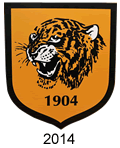 saying, "They can die as soon as they want." In April the FA turned down Allem's formal application to change the club's name: in an apparent response, a new crest was introduced in June that had no wording on it at all.
In 2013-14 Hull reached the FA Cup final for the first time and although they were 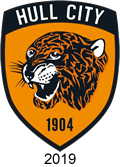 narrowly beaten by Arsenal after storming into a 2-0 lead, they had the compensation of qualifying for the Europa Cup and playing in Europe for the first time. The following season they were relegated to the Championship but to their supporter's delight they bounced back via the play-offs in 2016, only to finish last and drop back down.
In 2018 Dr Allam appeared to have a change of heart and a consultation with supporters was organised that culminated in the introduction of a redesigned crest that restored the club's name.
Head coaches came and went as Hull struggled over successive seasons. The team started 2019-20 well but, in a season interrupted by the Covid-19 outbreak, they lost 16 of their last 20 matches including an 8-0 hammering at Wigan. In July they were relegated to League One after finishing last. Recovery followed the season after when the Tigers won the League One title with two points to spare.
Sources
- (a) Hull City FC (Images of Sport - C Elton)
- (b) Hull City Official Website
- (c) Hull City Online
- (d) empics
- (e) Paul Alterskye
- (f) Tom Darvell
- (g) Trevor Bugg
- (h) Association of Football Statisticians - provided by Pete Wyatt
- (i) David King
- (j) Alick Milne
- (k) Mark Alden
- (l) Pete's Picture Palace
- (m) Simon Monks
- (n) Ralph Pomeroy
- (o) Ray's Virtual Programme Museum
- (p) Christopher Worrall
- (q) Darren Thompson
- (r) Les Motherby of Amber Nectar has detailed reviews of recent Hull kits
- (s) Keith Ellis (HFK Research Associate)
- (t) Lewis Markham
- (u) Clive Thornes
- (v) Kjell Hanssen
- (w) Hull City Kits
- (x) Nick Bruzon
- (y) seniortigers.org.uk
Crests are the property of Hull City AFC.