




Fulham
Formed 1879
Elected to Division Two 1907
Kit History
St Andrews
1879
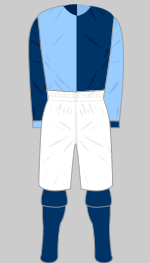
1883-1886 a q
Fulham St Andrews
1886
1886-1888 q
Fulham
January 1889
1888-1889 q
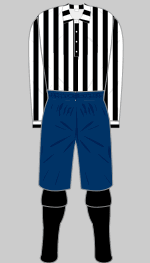
1889-1893 q
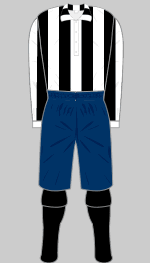
1893 alt q
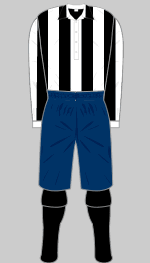
c1894-1896 p
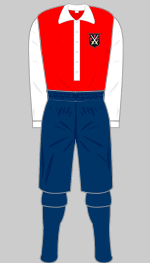
1896-1899 n
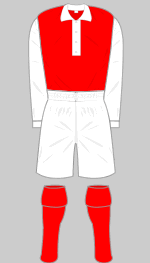
1899-1902 a
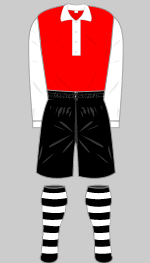
1902-1903 q s
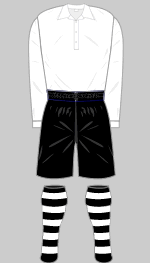
1903-1904 a p
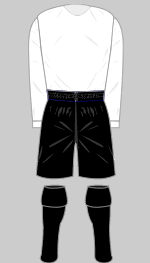
1904-1908 a p
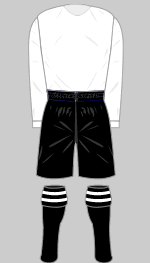
1908-1912 p
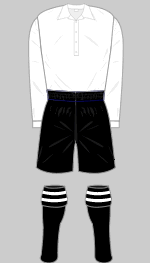
1912-1923 p t
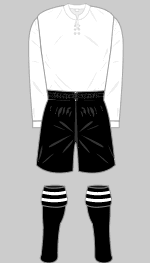
1923-1927 a
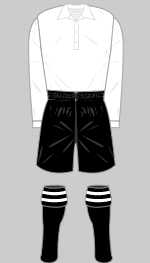
1927-1929 m p
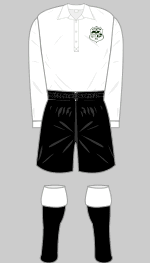
1931-1933 a m

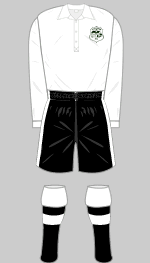
1933-1939 a m p
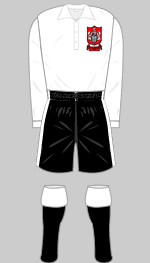
1945-1946 p
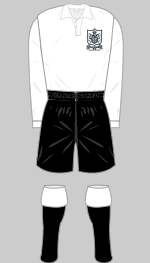
1946-1947 p
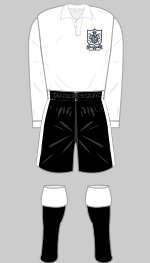
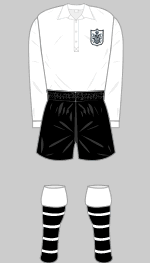
1951-1952 m
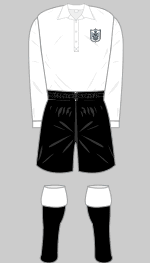
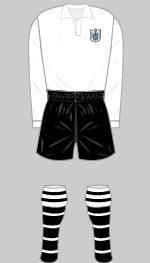
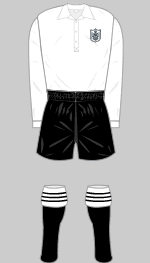
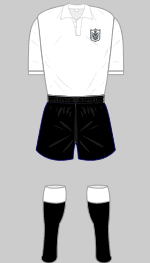
1957-March 1958 a
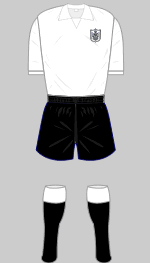
April 1958-1959 a p
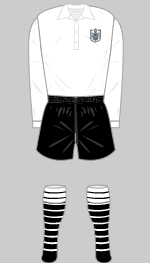
1959-1960 m n
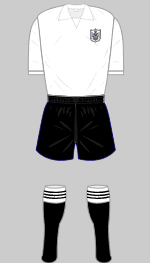
1960-1961 a e
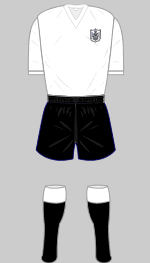
1961-Sept 1962 a e
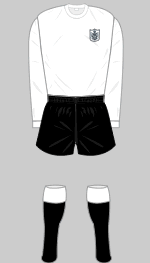
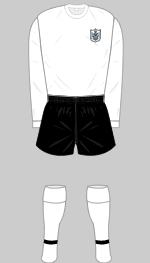
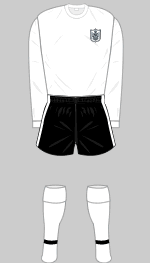
1966-1967 l

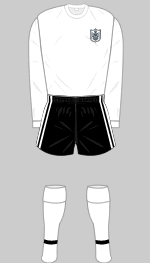
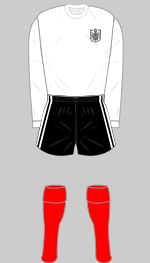
1970-1972 a c k p
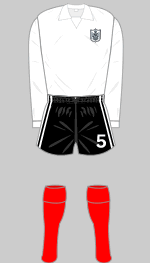
1972-1973 a r
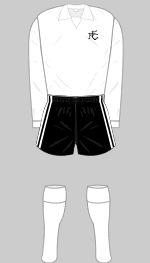
1973-1974 a f h
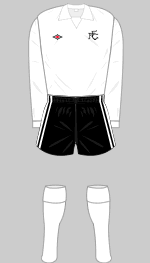
1974-1975 a f h
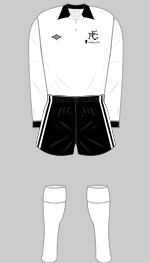
1975-1977 a h
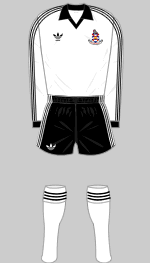
1977-1981 d g h i
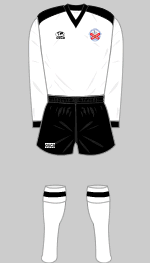
1981-1983 a g h
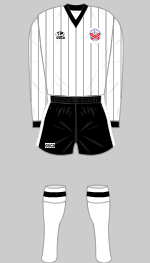
1983-1984 g h
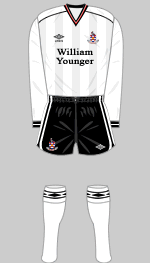
1984-1985 a d g
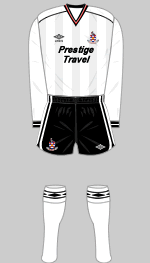
1985-1987 g j
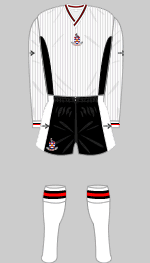
1987-April 1988 a g
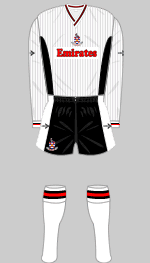
April 1988 a g
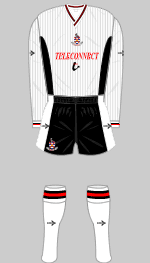
1988-1990 g
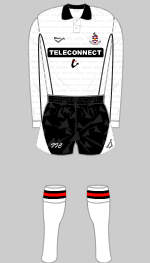
1990-1991 g
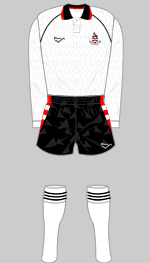
1991-1992 g
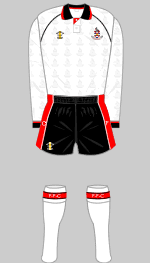
1992-1993 d g
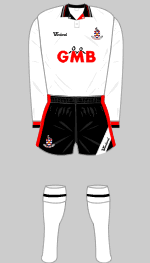
1993-1994 g
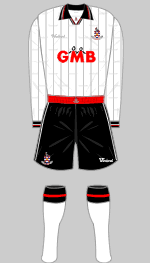
1994-1995 g
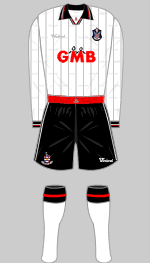
1995-1996 g
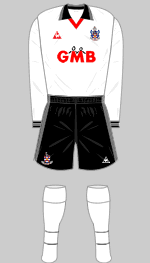
1996-1997 a
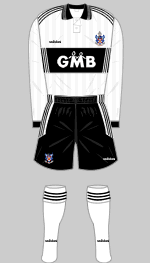
1997-1998 g
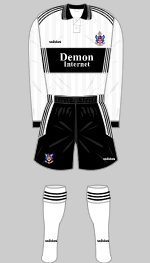
1998-1999 a
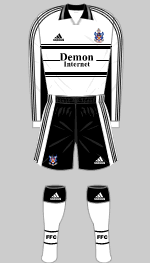
1999-2001 a f h
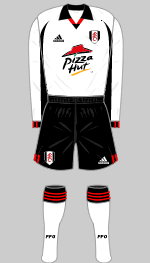
2001-2002 f h
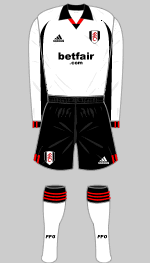
2002-2003 a h
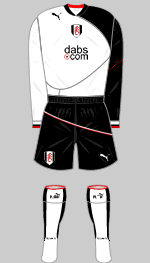
2003-2005 f

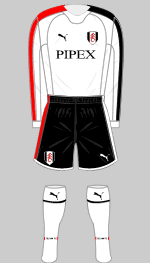
2005-2006 e
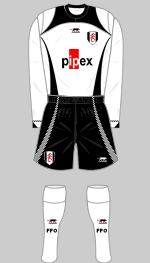
2006-2007 e
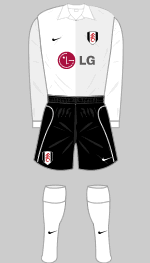
2007-2008 e
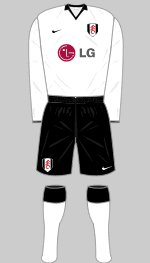
2008-2009 e
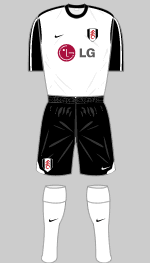
2009-2010 e
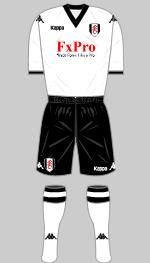
2010-2011 e
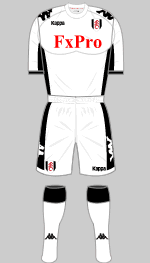
2011-2012 e
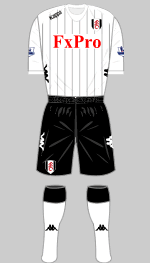
2012-2013 e
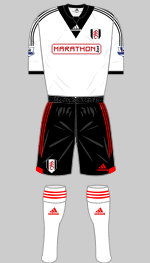
2013-2014 e
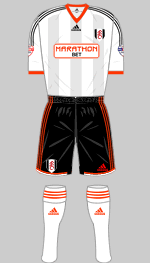
2014-2015 e
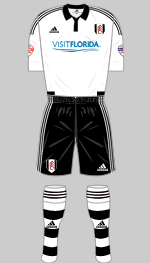
2015-2016 e
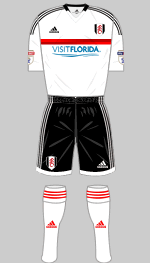
2016-2017 e
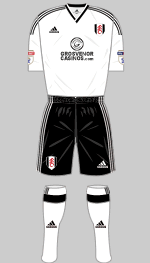
2017-2018 e
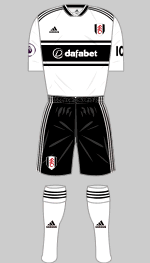
2018-2019 e
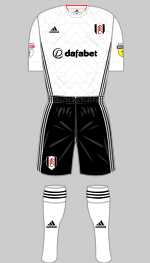
2019-2020 e
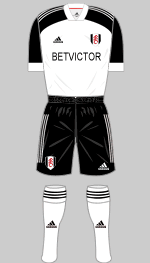
2020-2021 e
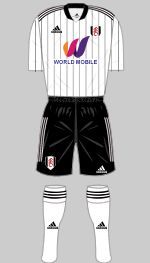
2021-2022 e
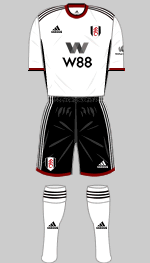
2022-2023 e
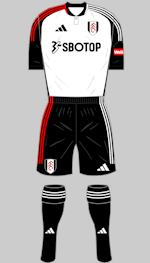
2023-2024 * e
Background
 With a history going back to 1879, Fulham are one of the oldest senior
clubs in London. They started out as a Sunday school team, leading a nomadic
life as St Andrews (Fulham St Andrews from 1886). Their earliest colours are recorded as light and dark blue. The first known match report, dating from 1883, indicates they wore halved tops (usually described as "quartered" at the time) although some players wore different shirts in the club colours, a not uncommon occurence in the days when players provided their own kit.
With a history going back to 1879, Fulham are one of the oldest senior
clubs in London. They started out as a Sunday school team, leading a nomadic
life as St Andrews (Fulham St Andrews from 1886). Their earliest colours are recorded as light and dark blue. The first known match report, dating from 1883, indicates they wore halved tops (usually described as "quartered" at the time) although some players wore different shirts in the club colours, a not uncommon occurence in the days when players provided their own kit.
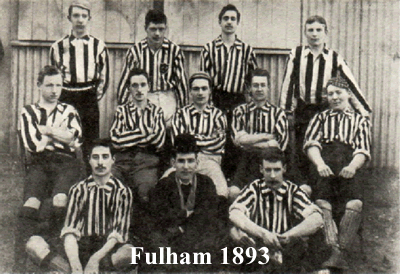
The club dropped "St Andrews" in December 1888 and the following season (1888-89) adopted black and white stripes. Our photograph shows that variations in the design of their shirts were still apparent and two players are wearing white knickers although an undated team photograph that appears to have been taken in the mid-1890s shows the whole team kitted out in 3" stripes.
In 1892, Fulham joined the West London League and won it
at the first attempt and two  years later they moved into Craven Cottage
which is still their home today. The ground was in such a state that it
was not until 1896, with the team now wearing red and white, that the first
years later they moved into Craven Cottage
which is still their home today. The ground was in such a state that it
was not until 1896, with the team now wearing red and white, that the first  match was held there. One year later
Fulham joined the Second Division of the Southern League and in December
1898, the decision to turn professional was taken. In 1903 the club was
promoted to the Southern League First Division and adopted their now traditional
white shirts and black shorts. The hooped stockings worn at the time were
highly unusual if not unique. After winning the championship in 1906 and
1907, Fulham were elected to the Football League, replacing Burton United
in the Second Division.
match was held there. One year later
Fulham joined the Second Division of the Southern League and in December
1898, the decision to turn professional was taken. In 1903 the club was
promoted to the Southern League First Division and adopted their now traditional
white shirts and black shorts. The hooped stockings worn at the time were
highly unusual if not unique. After winning the championship in 1906 and
1907, Fulham were elected to the Football League, replacing Burton United
in the Second Division.
 Fulham hardly set the world alight although they generally finished in
the top half of the table. During the 1920s they endured a gradual decline
and were relegated to Division Three (South) in 1928 although four years
later they returned to the Second Division.
Fulham hardly set the world alight although they generally finished in
the top half of the table. During the 1920s they endured a gradual decline
and were relegated to Division Three (South) in 1928 although four years
later they returned to the Second Division.
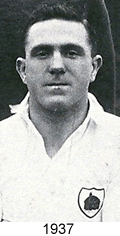
 A crest appeared on the team's shirts in 1931, a representation of Craven Cottage, which was worn until the outbreak of war in 1939.
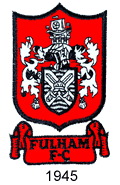
After the Second World War, Fulham began to enjoy greater success. For a start a new crest was introduced, basically the coat of arms of the old London Borough of Fulham. The earliest versions were gigantic but after 1951 these were replaced by smaller ones in white and black without the legend below the shield. This classic design was worn until 1973.
In 1949 they won the Second Division
championship and spent three seasons in the First Division before being
relegated in 1952. In 1959 they were promoted again and remained  in the
First Division for the next nine seasons, albeit constantly struggling
against relegation. Disaster struck finally when successive relegations
took
in the
First Division for the next nine seasons, albeit constantly struggling
against relegation. Disaster struck finally when successive relegations
took  Fulham down the Division Three in 1969. In 1971, they were promoted
back to the Second Division.
Fulham down the Division Three in 1969. In 1971, they were promoted
back to the Second Division.
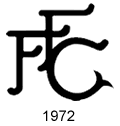
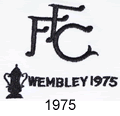
By this time the old coat of arms was looking distinctly old fashioned by the standards of the time so it was duly replaced by a a more up to date monogram in an unusual script.
In 1975, with former England players Bobby Moore and Alan Mullery in the side, Fulham reached the FA Cup final where they lost to West Ham. In the following years, George Best and Rodney Marsh joined the club. While the football was attractive to watch, success proved elusive.
 The monogram was replaced in 1977 by a simplified version of the Hammersmith & Fulham coat of arms. This was replaced after just
  one season by a circular badge but was reinstated in 1984.
During the 1980s Fulham moved between the Second and Third Divisions
but they found themselves in the basement in 1994 after a succession of
owners came and went, all with their sights set on acquiring the valuable
Craven Cottage real estate. Thanks to a vigorous campaign by supporters
co-ordinated by former player Jimmy Hill, the club secured their future
at the Cottage but their very survival was now in 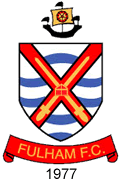 doubt. In January 1996,
Fulham, attracting a mere 4,000 spectators to their home games, were next to bottom
of the League and had debts spiralling out of control. Former player,
Micky Adams took charge and lifted the team to finish in 17th place. The following
doubt. In January 1996,
Fulham, attracting a mere 4,000 spectators to their home games, were next to bottom
of the League and had debts spiralling out of control. Former player,
Micky Adams took charge and lifted the team to finish in 17th place. The following 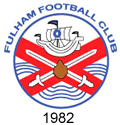 season, they won promotion to Nationwide Division Two
(previously the Third Division).
season, they won promotion to Nationwide Division Two
(previously the Third Division).
During this turmoil a new crest was introduced that was effectively identical to the 1945 version optimised for digital reproduction.
In May 1997, Harrods owner Mohamed al-Fayed bought the freehold of Craven
Cottage and the majority shareholding in Fulham FC. Al-Fayed dismissed
critics who predicted that he would asset-strip the club and laid out
his plans to take Fulham into the Premier League within five years. After
persuading Kevin Keegan out of retirement, al-Fayed opened his cheque
book to bring quality players to the club. In 1999, Fulham ran away 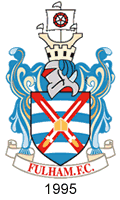 with
the Nationwide Division Two championship, finishing 14 points clear. Keegan's
departure to become England manager proved a setback but in summer 2000,
Jean Tigana, a member of the great French side of the 1980, was appointed.
Tigana brought modern coaching methods and revolutionised squad management.
with
the Nationwide Division Two championship, finishing 14 points clear. Keegan's
departure to become England manager proved a setback but in summer 2000,
Jean Tigana, a member of the great French side of the 1980, was appointed.
Tigana brought modern coaching methods and revolutionised squad management.
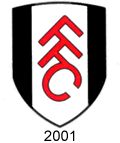 In 2001, al-Fayed's five-year plan reached fruition a year early as Fulham
won the Nationwide First Division championship. A smart new crest was introduced for the first Premier League campaign that broke with tradition and emphasised the new, forward-thinking approach.
In 2001, al-Fayed's five-year plan reached fruition a year early as Fulham
won the Nationwide First Division championship. A smart new crest was introduced for the first Premier League campaign that broke with tradition and emphasised the new, forward-thinking approach.
Having established themselves in the Premiership, Fulham announced plans to redevelop Craven Cottage but these were stalled by local residents. With legal and building costs spiralling out of control, the board abandoned plans for the new stadium in favour of a more modest refurbishment, completed in 2004.
After qualifying for the new Europa League in 2009-10, Fulham enjoyed a remarkable run that saw them reach the final where they were narrowly beaten by Atletico Madrid in Hamburg.
In July 2013 Mohamed al-Fayed sold the club to Shahid Khan, a Pakistan born billionaire based in the United States, for a figure reported to be between £150-£200m. During his ownership, al-Fayed had made £187m in interest-free loans to the club, which he converted into equity, leaving Fulham debt-free. Unfortunately this did not translate into performances and at the end of the season Fulham were relegated to the championship after 13 years in the top tier.
In 2017-18 Fulham overcame Aston Villa in the play-off final to make their return to the Premier League but their return was short lived, relegation following immediately. However, they won promotion through the play-offs in 2020 but once again went straight back down. Despite some shaky spells, Fulham secured promotion back to the top tier as champions - their second consecutive immediate return.
Sources
- (*) Graphic by Daniel Stoker
- (a) Fulham FC - The Official 125 Year Illustrated History (Dennis Turner 2004)
- (b) Doncaster Rovers FC - Images of Sport (Peter Tuffrey 2001)
- (c) Football Cards
- (d) Football Focus
- (e) Fulham FC Official Website
- (f) Sporting Heroes
- (g) True Colours (John Devlin 2005)
- (h) Pete's Picture Palace
- (i) Pete Pomeroy
- (j) David King
- (k) Football League Review provided by Simon Monks
- (l) Peter Bird
- (m) Simon Monks
- (n) Christopher Worrall
- (o) The Lord Price Collection
- (p) Keith Ellis (HFK Research Associate)
- (q) Jamie Glynn
- (r) Stein Jacobsen
- (s) Fulham.wikia.com
- (t) Football & the First World War
Old crest images sourced from Vital Fulham and Friends of Fulham. Crests are the property of Fulham FC.