Derby
County
Formed 1884
Founder member of the Football League 1888
Kit History
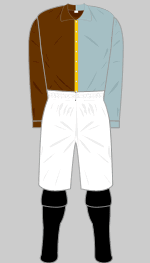
1884-1885 A
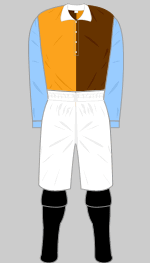
1885-1888 o q A C F
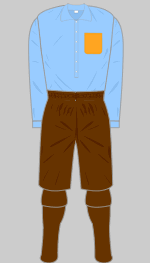
1889-1890 w A
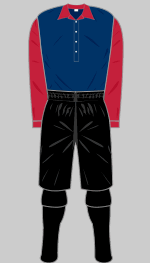
1890-1891 a o q v z A
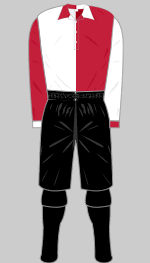
1891-1894 n q v A
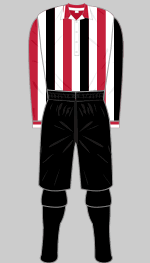
1894-1895 j n p
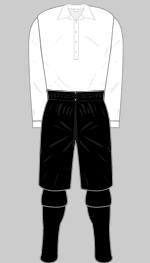
1895-1896 n w A
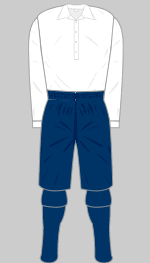
1896-1897 j n
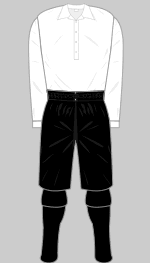
1897-1899 j n o
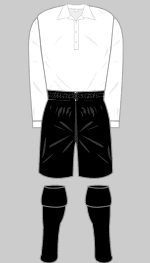
1901-1906 w
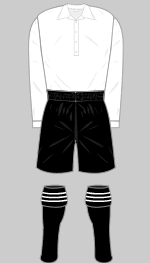
1906-1912 k n w
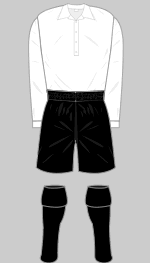
1912-1913 w
1913-1915 k w

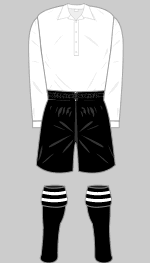
1918-1925 n u w
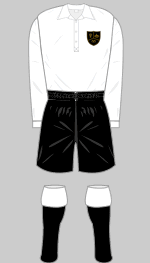
1925-1926 n w y
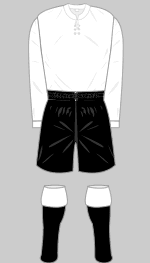
1926-1930 c o w
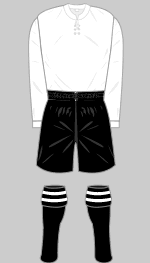
1930-1931 o
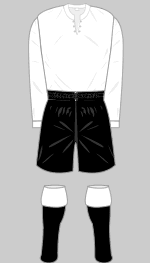
1932-1933 w
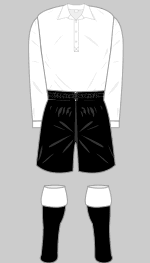
1933-1938 h w
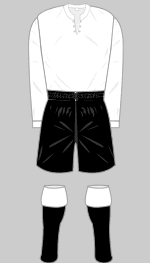
1938-1946 u w
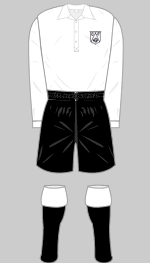
1946-1948 g
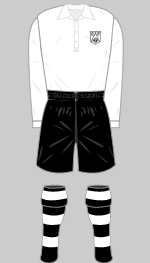
1948-1949 n w
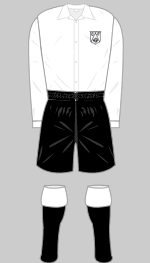
1949-1956 n
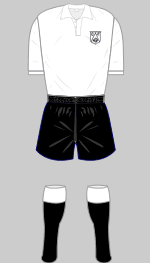
1956-1957 w
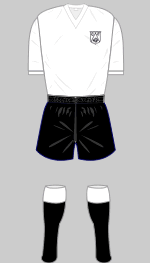
1957-1961 u

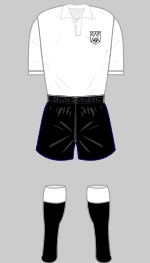
1961-1962 w
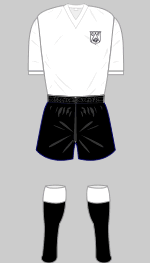
1962-1966 d w

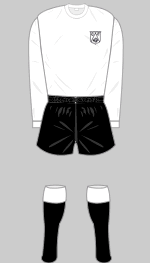
1962-1968 d
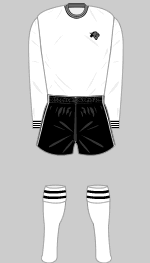
1968-1971 g E
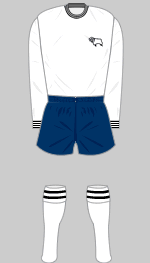
Aug-Sept 1971 g B
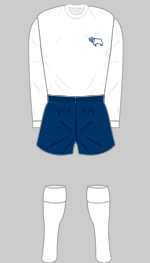
Sept 71-Nov 73 d B
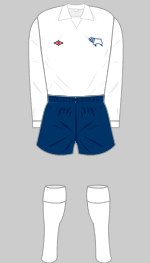
Dec 73-1 Jan 74 s B
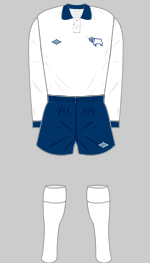
Jan 1974-1975 d s B
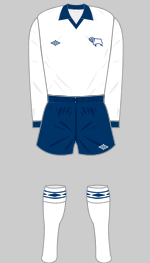
1975-1976 d s
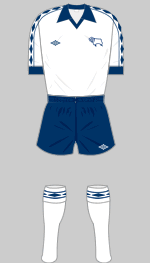
1976-1978 d x
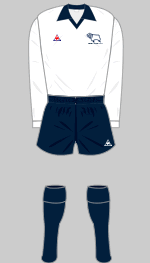
1978-1980 d
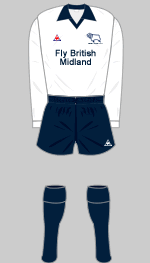
1980-1981 d
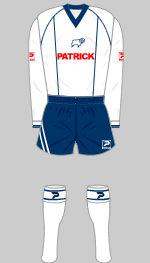
1981-1984 d l t

1984-1985 d t
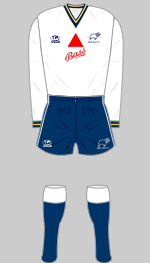
1985-1986 n t
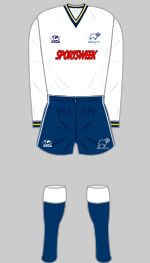
1986-1987 1 e t
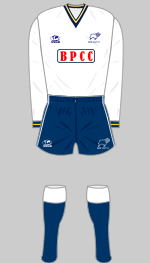
1986-1987 2 e t
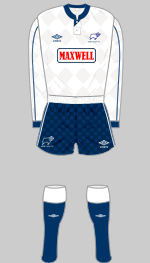
1987-1989 1 d m t
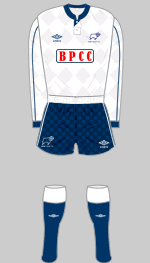
1987-1989 2 d m t
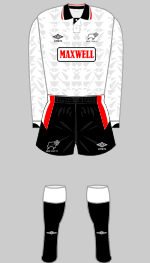
1989-1991 d t
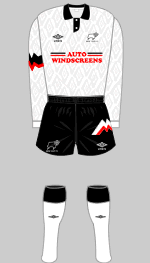
1991-1993 d m
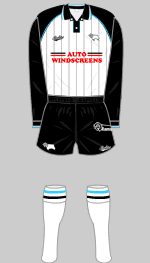
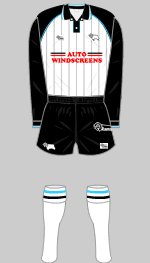
1994-1995 d m
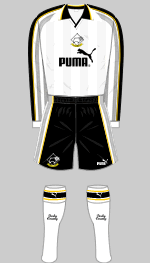
January 1995 d
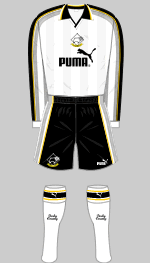
1995-1997 d m
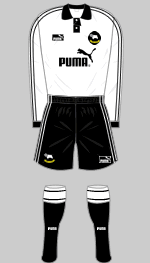
1997-1998 d m t
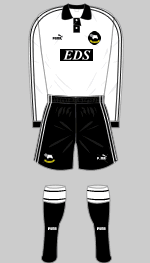
1998-1999 d m t
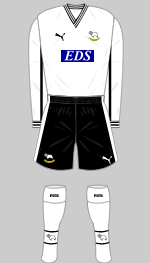
1999-2001 d m
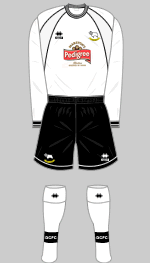
2001-2003 f
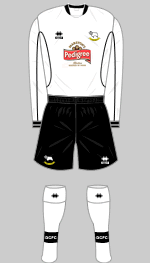
2003-2005 a
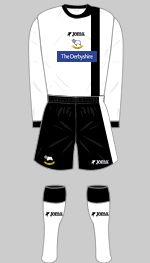
2005-2006 a
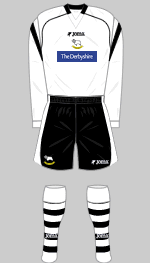
2006-2007 a r t
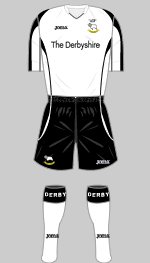
2007 PlayOff Final D
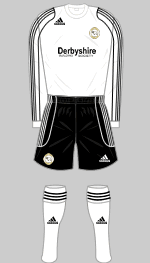
2007-2008 a
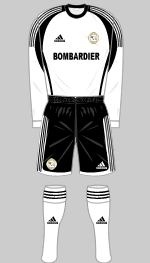
2008-2009 a
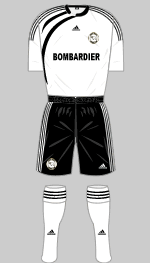
2009-2010 a
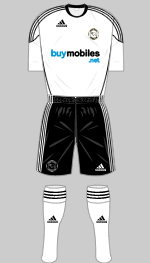
2010-2011 a
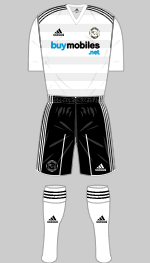
2011-2012 a
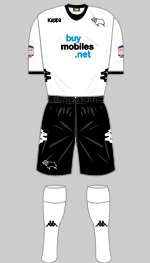
2012-2013 a
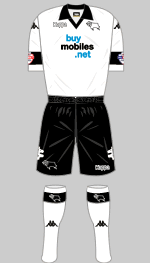
2013-2014 a
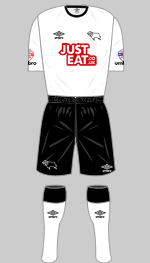
2014-2015 a
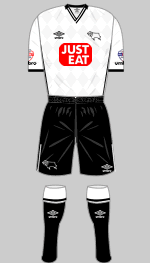
2015-2016 a
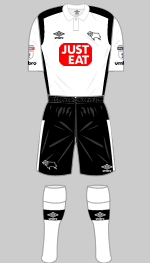
2016-2017 a
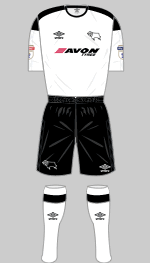
2017-2018 a
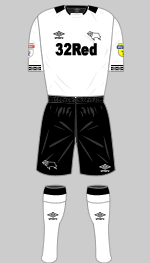
2018-2019 a
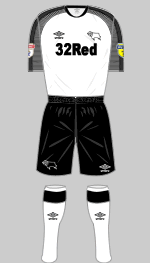
2019-2020 a
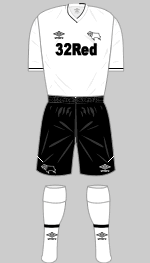
2020-2021 a
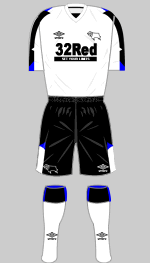
2021-2022 a
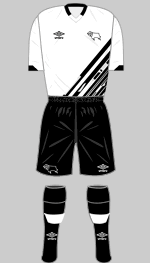
Aug-Nov 2022 a
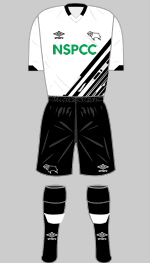
Nov 22-May 23 a
Background
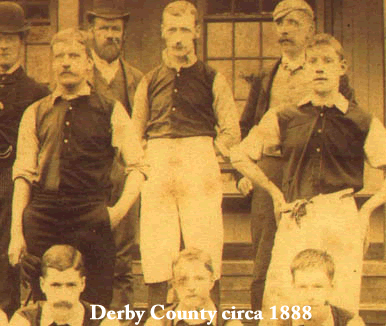 In 1884 attendances at Derby County Cricket Club were falling: a Midland
Railway clerk named William Morley discussed the formation of a senior
football team for Derby with his father William senior who happened to
be a committee member of the county cricket club. When William senior
officially proposed the idea the committee embraced the possibility of
boosting the ailing cricket club’s finances. The county FA objected
to the new club being called Derbyshire County FC so Derby County was
settled on as a compromise. Fans generally refer to the club as "Derby"
or "The Rams," since "County" is associated with their
Nottingham rivals, Notts County.
In 1884 attendances at Derby County Cricket Club were falling: a Midland
Railway clerk named William Morley discussed the formation of a senior
football team for Derby with his father William senior who happened to
be a committee member of the county cricket club. When William senior
officially proposed the idea the committee embraced the possibility of
boosting the ailing cricket club’s finances. The county FA objected
to the new club being called Derbyshire County FC so Derby County was
settled on as a compromise. Fans generally refer to the club as "Derby"
or "The Rams," since "County" is associated with their
Nottingham rivals, Notts County.
A contemporary newspaper report (The Football Field 20 September 1884) recorded County's colours as "Brown on one side and Green on the other, with a connecting trim of Gold from the neck to the waist." Research by George and Toby Shardlow suggests that the "green" may have been a shade of duck egg blue, which is similar to the colours of the cricket club. A rare photograph of this unique shirt shows a crest but this has been confirmed to be the badge of the Derbyshire FA, awarded to players who represented the county.
On Saturday 14th November 1885 Derby County came of age when they defeated the mighty Aston Villa in the second round of the English Cup, establishing themselves as one of the country's leading clubs. The Derby Daily Express documented that the team wore "new colours of Chocolate and Amber body with Blue sleeves" against Preston in October 1887 but a cutting from the Derbyshire Times found by Brian Webb (May 2016) suggests these novel shirts were worn in December 1886.
White shirts were worn for the first time against Notts County because of a colour clash on 31 March 1888.
When the Football League was formed in 1888, The Rams were invited to become founder members. The Shardlow brothers have found contemporary newspaper reports that confirm the team wore light blue shirts with an amber patch and chocolate knickers in 1889-90. The following season Football League records indicate the team wore navy blue shirts with cardinal red sleeves.
It was not until 1895 that the familiar white shirts were adopted.
Derby found competition at this higher level a struggle: they successfully
sought re-election in 1889 and 1891 and in 1895 they survived a test match
to avoid relegation to Division Two. There followed a period of 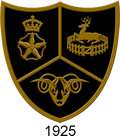 stability
until they were relegated in 1907. In 1912 the club won the Second Division
championship only to be go down again in 1914, returning to the top flight
the following season as Division Two champions for the second time.
stability
until they were relegated in 1907. In 1912 the club won the Second Division
championship only to be go down again in 1914, returning to the top flight
the following season as Division Two champions for the second time.
In 1921, The Rams were back in Division Two once more but in 1926 they
returned to Division One. The first evidence we have of the team wearing the club crest comes from a team photograph dated 1925. This incorporated a tudor rose with crown, a hart and a ram's head and was worn by the team for just one season.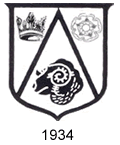
In 1934 a new club crest was introduced in which the ram's head became dominant. This did not appear on team shirts.
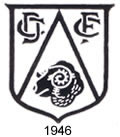 In 1946 Derby reached the FA Cup final but, perhaps due to austerity, the shirts worn in the final were devoid of any crest. The following season, however, a new crest was introduced with the club's initials intertwined in the two upper sections. This version was used on players' shirts consistently until 1968.
Derby remained in Division One until 1952 when they suffered a serious decline, winding up in Division Three (North) in 1955. From this
nadir, they recovered in 1957 when they returned to Division Two as Third
Division (North) champions. The club settled into mid-table mediocrity
until Brian Clough and Peter Taylor arrived in 1967 and transformed the
club.
One of the innovations Clough and Taylor brought about was a simplification of what was now considered a very old fashioned club crest. The new version dispensed with the shield and complicated monogramme and consisted simply of the ram's head.
 Having guided these perennial underachievers back into the top flight
as Division Two champions in 1969, Clough and Taylor created a side that
won the League championship in 1972 and narrowly missed reaching the European
Cup Final the following year. It was Clough who introduced dark blue shorts
in 1971 (intended to inspire his players to play as if they were turning out for England) as well as a new crest, which consisted of a modernistic line drawing of a ram. Initially these were worn with the old black and white trimmed shirts and stockings but plain white versions apeared at the end of September. For a club that had played in a virtually
unchanged strip for more than 70 years these were radical departures and a much needed breath of fresh air associated with success.
Having guided these perennial underachievers back into the top flight
as Division Two champions in 1969, Clough and Taylor created a side that
won the League championship in 1972 and narrowly missed reaching the European
Cup Final the following year. It was Clough who introduced dark blue shorts
in 1971 (intended to inspire his players to play as if they were turning out for England) as well as a new crest, which consisted of a modernistic line drawing of a ram. Initially these were worn with the old black and white trimmed shirts and stockings but plain white versions apeared at the end of September. For a club that had played in a virtually
unchanged strip for more than 70 years these were radical departures and a much needed breath of fresh air associated with success.
 When this extraordinary duo left to manage
Brighton, Dave Mackay took over the side and guided them to a second championship
in 1975.
When this extraordinary duo left to manage
Brighton, Dave Mackay took over the side and guided them to a second championship
in 1975.
In the summer of 1978 Derby signed the first shirt sponsorship deal in the Football League with Saab, whose name appeared in red on players' shirts in the pre-season photo-shoot. The League would not sanction sponsorship at the time so these shirts never appeared in competitive matches. It fell to Liverpool the following season to carry the first shirt sponsorship in England (Hibernian were the first senior club in the UK to sport sponsored shirts in 1977-78.)
 In 1979 the ram crest was slightly modified to include the club's name.
In 1981, the club adopted a new white and navy strip designed by French manufacturers, Patrick, who saw fit to make the ram crest face right instead of left (incidentally also removing the  text). This coincided with a decline that took Derby into Division
Three by 1984, where the club celebrated their centenary with a special crest. The following season (1985-86) the text was restored but the ram still faced right.
text). This coincided with a decline that took Derby into Division
Three by 1984, where the club celebrated their centenary with a special crest. The following season (1985-86) the text was restored but the ram still faced right.
 Successive promotions in 1986 and 1987
brought Derby back to the top flight.
Successive promotions in 1986 and 1987
brought Derby back to the top flight.
During this period Derby were backed
by self styled socialist millionaire and international states person, Robert Maxwell whose various publishing
companies appeared on the team shirts in addition to his own moniker. When
Cap'n Bob  fell into disgrace and then off his yacht in November 1991, the
money dried up and Derby dropped into Division Two. In 1993, Bukta took over from Umbro and Derby's ram once again turned left and the script was removed.
fell into disgrace and then off his yacht in November 1991, the
money dried up and Derby dropped into Division Two. In 1993, Bukta took over from Umbro and Derby's ram once again turned left and the script was removed.
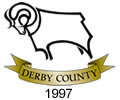
In 1995 Puma took over the contract as Derby's kit supplier and took 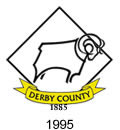 the opportunity to introduce their own design for the club crest. This was redesigned in 1997, when the diamond was removed as was the date of Derby's formation.
 After several seasons
in or near the play off places, Derby were promoted to Division One once
more in 1996. The club became established in what became the Premiership
as a mid table side until 2002 when they were once again relegated. After struggling to maintain a place in the second flight for several seasons, Derby returned to the Premier League in 2007 but found themselves completely at sea.
After several seasons
in or near the play off places, Derby were promoted to Division One once
more in 1996. The club became established in what became the Premiership
as a mid table side until 2002 when they were once again relegated. After struggling to maintain a place in the second flight for several seasons, Derby returned to the Premier League in 2007 but found themselves completely at sea. 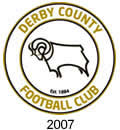 Having won only a single League game all season, they were relegated in last place, 24 points adrift.
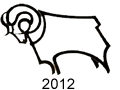 Adidas took over in 2007 as the club's kit partner and once again no-one could resist yet another makeover for Derby's long suffering ram. The original gold text was changed to black in 2009. When Kappa started providing Derby's kits in 2012, the 1971 version made a welcome return.
For the 2021-22 season touches of blue were added to the first choice strip as a tribute to Brian Clough's team (who wore dark blue shorts) on their way to the club's first ever League title 50 years previously.
In January 2021, Wayne Rooney, who had joined Derby as a player/coach in August 2019, retired from playing and assumed the role of full-time manager. However, the club's affairs rapidly descended into total chaos around him. The chairman, Mel Morris, had overseen a period of unprecedented spending, investing more than £200 milliion but despite this the club faced enormous debts and in September 2021, Derby County entered administration, suffering a 12-point penalty. A further 9 points were deducted for breaches of the EFL accounting rules leaving Derby on -3, 18 points from safety. Several attempts to sell the club foundered over uncertainty of the extent of its debts and the status of the stadium. Inevitably Derby were relegated to League One at the end of the season.
On 1 July 2022 Derby emerged from administration after Pride Park and the club itself were purchased by local property developer, David Clowes. Rooney had resigned a week earlier to take up a post as head coach of DC United, the team he had played for before joining Derby.
Sources
- (a) Derby County Official Website
- (b) Bristol City FC 1894-1967 (Images of Sport - Tom Hopegood)
- (c) The West Ham United Collection (2003)
- (d) Sporting Heroes
- (e) Classic Kits
- (f) Ram Zone
- (g) Football Focus
- (h) Picture the Past
- (i) The Mighty Mighty Whites
- (j) Association of Football Statisticians - provided by Pete Wyatt
- (k) Robert Salmon
- (l) Bjørn-Terje Nilssen
- (m) David King
- (n) Derby County Kit History - fascinating site by Steve Eyre with detailed history and commentary.
- (o) Derby County - The Complete Record (Gerald Mortimer 2006)
- (p) This is Derby
- (q) Graham Hales
- (r) Andrew Warwick
- (s) Alick Milne
- (t) True Colours 2 (John Devlin 2006)
- (u) Simon Monks
- (v) Bygone Derbyshire
- (w) Keith Ellis (HFK research Associate)
- (x) Christopher Worrall
- (y) George Shardlow
- (z) Burnley Express 11 July 1981 researched by Kjell Hanssen
- (A) Established 1884 - exceptionally well researched site by George & Toby Shardlow
- (B) Tony Sealey
- (C) Derbyshire Times and Chesterfield Herald (11th December 1886) submitted by Brian Webb
- (D) @DanStock37
- (E) The Senior Tigers Club
- (F) Charles Alcock's Football Annuals 1869-1891 researched by Robin Horton
1925 crest by George Shadlow: 1934 crest by Steve Eyres. All crests are the property of Derby County FC.