



Coventry
City
Formed 1883
Elected to Division Two 1919
Kit History
Singers
1883
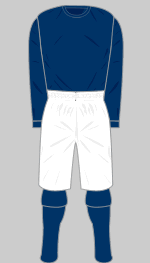
1883-1887
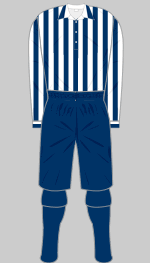
1887-1888 t
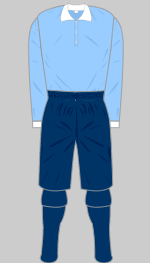
October 1889 t
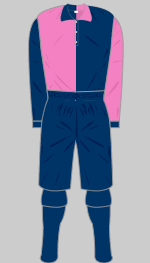
November 1889
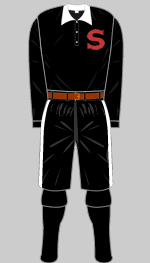
1890-1891 a r t
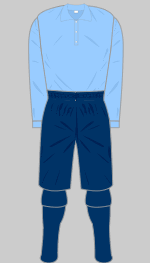
1891-1892 t
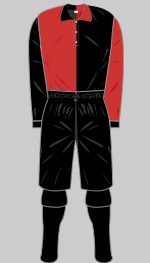
1892-1898 a r t
Coventry City
1898
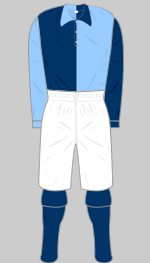
1898-1904 a r
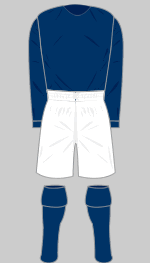
1904-1906 a r
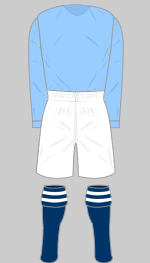
1906-1907 r
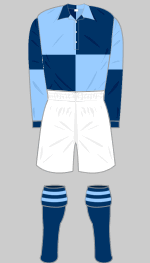
1907-1909 y
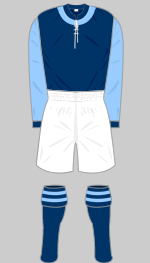
1909-1910 a r w
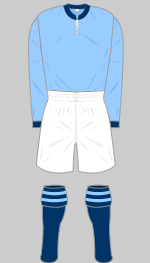
1910-1914 a r
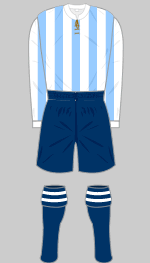
1914-1915 w
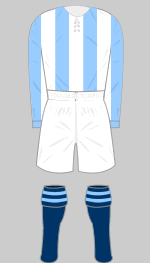
1919-1922 a
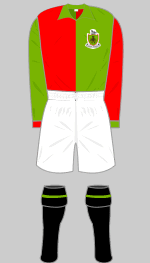
1924-1925 a f
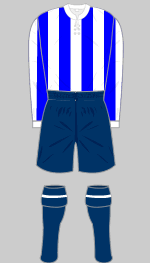
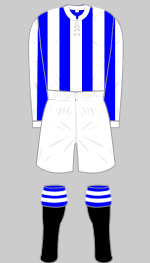
1925-1927 a g r s w x
1927-1928 w
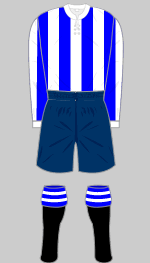
1928-1930 a
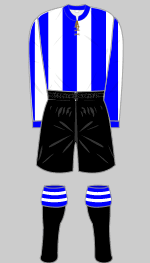
1930-1931 a
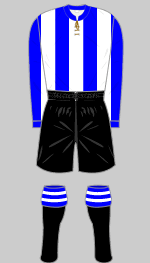
1932-1933 x
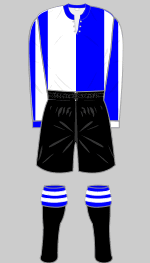
1934-1936 a r w
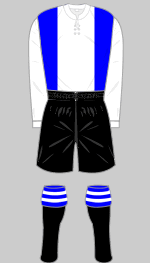
1936-1937 a w
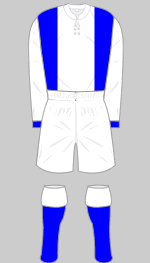
1937-1948 a r w
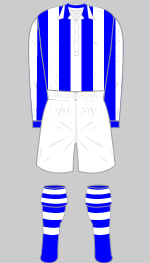
1948-1952 a w
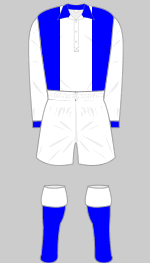
1952-1957 a e s w
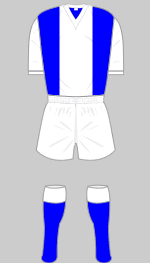
1957-1959 a w
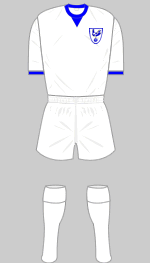
1959-1961-1 a o w

1959-1961 2 a o w
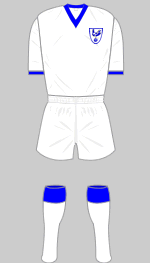
Aug-Nov 1961 o

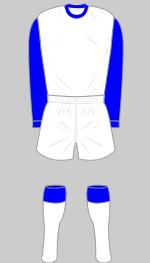
Nov 61-1962 i o z
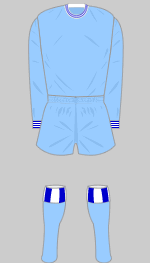
1962-1967 a
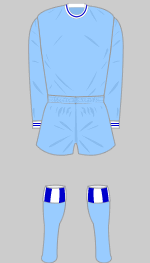
1967-Jan 68 a z
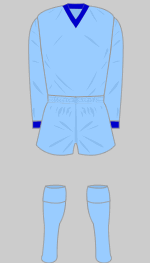
27 Jan 1968 z
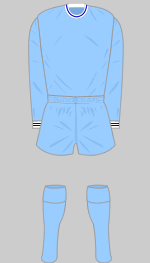
Jan-March 1968 a e z
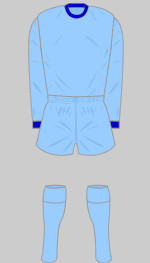
March-May 1968 z
1968-1969 z
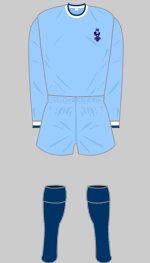
1969-1972 a e
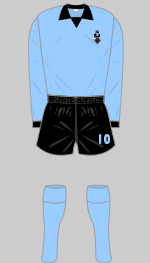
1972-1974 a
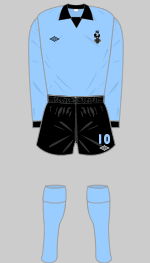
1974-1975 a
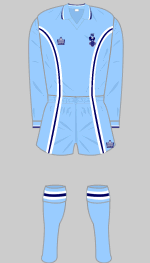
1975-Oct 77 a
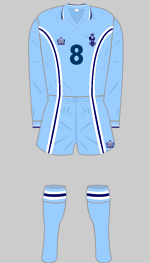
Nov-Dec 1977 A
Dec 77-May 78 a

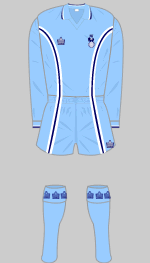
1978-1980 a e
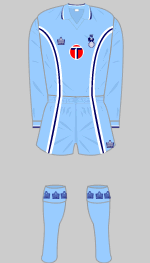
1980-1981 e l
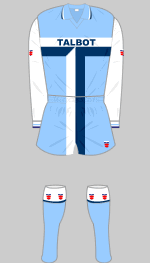
1981-1983 a
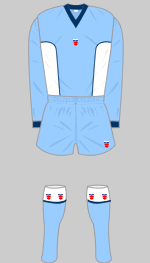
1981-1983 b
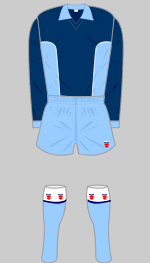
1981-1983 p

1983-1984 1a h j
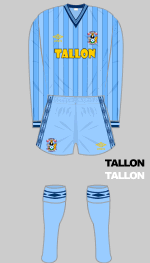
1983-1984 2 1a h j
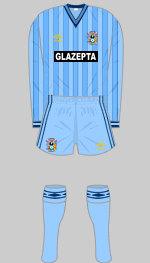
1984-1985 a h
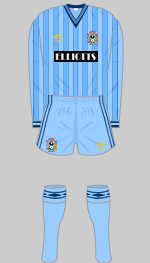
1985-1986 a h
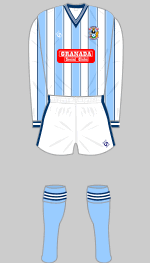
1986-1987 1 a l q

1986-1987 2 a l q
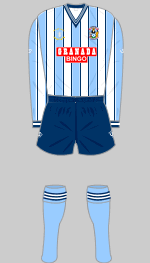
1987 FA Cup Final
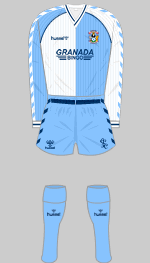
1987-1988 a l q
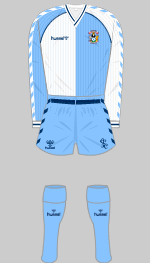
1988-1989 h q
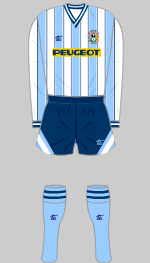
1989-1991 a j
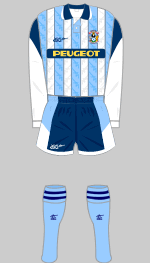
1991-1992 a j l
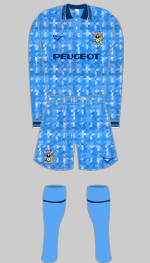
1992-1993 m
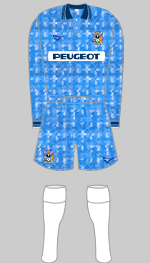
1993-1994 a b u
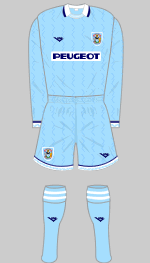
1994-1996 a k l q
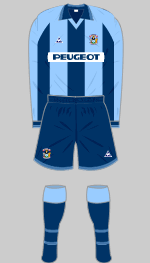
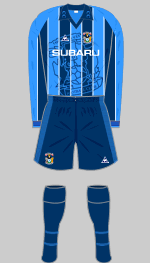
1997-1998 b l
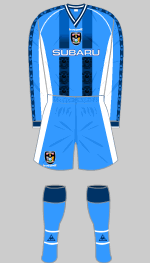
1998-1999 b
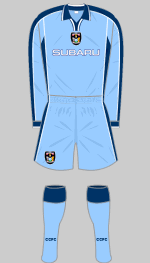
1999-2000 b j l
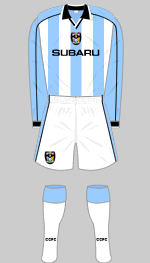
2000-2001 b j
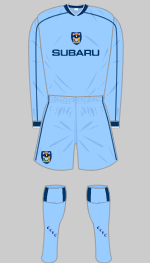
2001-2002 b
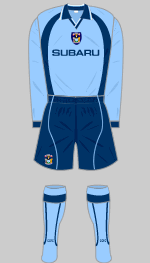
2002-2003 c q
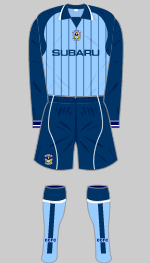
2003-2004 d
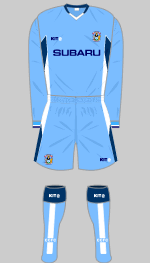
2004-2005 c q
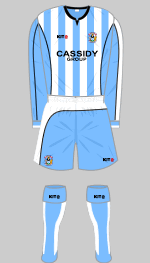
2005-2006 c q
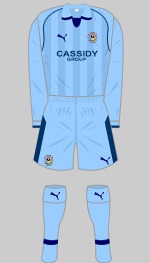
2006-2007 c q
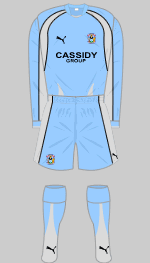
2007-2008 c n
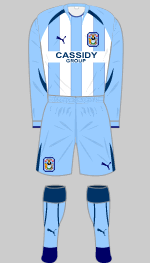
2008-2009 c
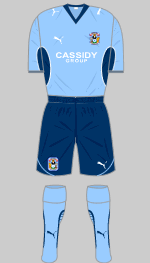
2009-2010 c
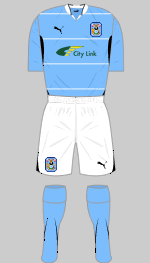
2010-2011 c
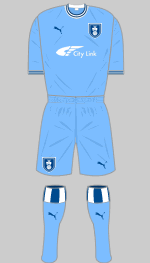
2011-2012 c
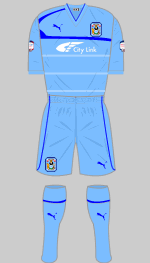
2012-2013 c
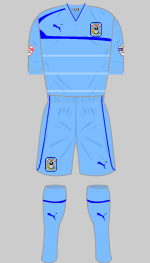
Aug-Sept 2013 c
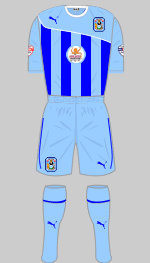
Sept 2013-2014 c
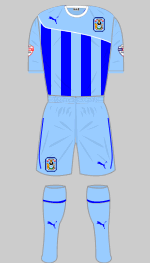
Aug-Sept 2014 c
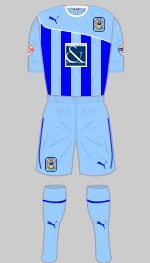
Sept 2014-2015 c
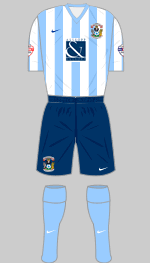
2015-2016 c
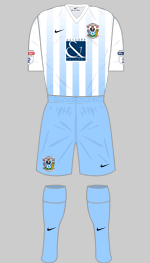
2016-2017 c
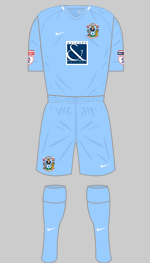
2017-2018 c
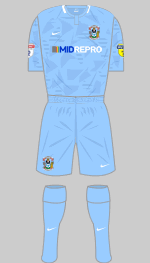
2018-2019 c
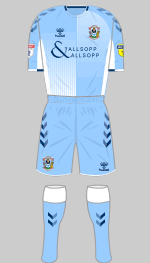
2019-2020 c
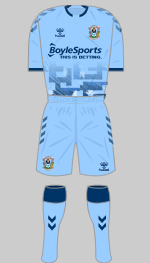
2020-2021 c
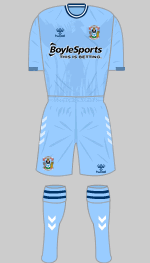
2021-2022 c
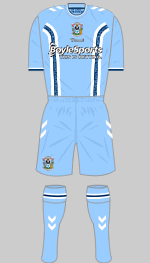
2022-2023 c
Background
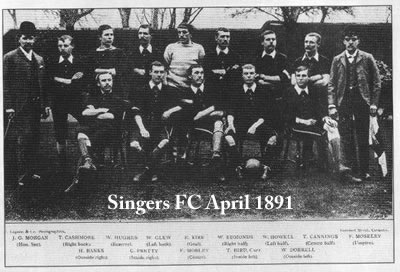 The club was formed as a works
team by employees of Singers, who manufactured bicycles. The team were known as "The Vocalists," a rather witty play on words. A rare photograph of the early team shows nine players in dark jerseys (probably navy), one in narrow hoops and one in shirt and tie. As we may expect, various knickers were worn.
The club was formed as a works
team by employees of Singers, who manufactured bicycles. The team were known as "The Vocalists," a rather witty play on words. A rare photograph of the early team shows nine players in dark jerseys (probably navy), one in narrow hoops and one in shirt and tie. As we may expect, various knickers were worn.
In 1887, under the guidance of the club secretary, JG Morgan, the club moved into an enclosed ground and started charging 2d (less than 1p) admission.
In 1889 Singers FC adopted
the corporate colours of pink and navy, although they appear to have worn light blue shirts earlier in the season (it is possible this was a change strip). The following season they turned out in an al-black outfit with white trim and, HFK believes, a large letter "S" on the left breast, giving rise to a new  nickname, "The Little Blackbirds."
In 1891 and 1892, Singers won the Birmingham Junior Cup twice in succession and on the back of this success were admitted to the Birmingham & District League in 1894. In 1898, Singers FC became Coventry City and a year later the club moved into their present home at Highfield Road. Despite mediocre performances, Coventry achieved election the Southern League in 1908, having reached the second round of the FA Cup the previous season. After a disastrous first season, Coventry went all the way to the FA Cup quarter-finals in 1909. There was little further progress and when the First World War brought the suspension of professional football, Coventry were languishing in the Second Division of the Southern League.
In 1919, the Football League was expanded and Coventry
succeeded in being elected to one of the vacant positions. For 12 years
the club fought against relegation on the pitch and boardroom instability
off it. As an experiment, the club briefly adopted the municipal colours
of red and  green in March 1922, painting the offices and stands to match. The crest based on that of the city of Coventry was worn on the halved shirts. Finally,
in 1925, Coventry were relegated to Division
Three (North). A year later they were transferred to the southern section
and they remained there until 1936.
green in March 1922, painting the offices and stands to match. The crest based on that of the city of Coventry was worn on the halved shirts. Finally,
in 1925, Coventry were relegated to Division
Three (North). A year later they were transferred to the southern section
and they remained there until 1936.
In 1937, with the club now in Division Two, complaints in the local press about the scruffy state of players' blue and white halved shirts led to the introduction of distinctive new blue shirts with a broad white stripe and white sleeves. Although these were replaced after World War Two, this unusual design was revived in the mid-Fifties. In 1952, City were relegated back into Division Three (South) and in 1958 they were placed in Division Four when the regional divisions were scrapped, achieving promotion after only one season.
 In 1959, Coventry retired their blue and white shirts, now considered old-fashioned, and wore all-white instead with an unusual V inset attached to the crew neck of the shirts. For the first and last time, a crest bearing a bantam cock was worn, representing the team's official nickname at the time, "The Bantams."
In November 1961, the flamboyant Jimmy Hill was appointed manager. As general secretary of the Professional Footballers' Association, Hill had led the campaign that brought about the abolition of the maximum wage. He now set about a root and branch reorganisation of Coventry City. A new all-sky blue strip was introduced, the first time that matching shirts and shorts were worn (aside from white). Meantime the ground was modernised, young fans were encouraged to meet the players and collect autographs while chartered "Sky Blue Special" trains took fans to away fixtures. Hill proved to be just as shrewd with his players, leading them to the Third Division championship in 1964 and then in 1967, City clinched the Division Two title.
 Two days before their first ever game in Division
One, Hill left to start a new career in television and most pundits wrote
off the club's chances of retaining their place at the top. The Sky Blues
proved to be inveterate survivors, surviving relegation scraps year after
year. Three times they appeared in the top seven (1970, 1978 and 1989)
and in 1987 they had their finest hour, when they came from behind to
beat Spurs and win the FA Cup, the clubs only major trophy.
Two days before their first ever game in Division
One, Hill left to start a new career in television and most pundits wrote
off the club's chances of retaining their place at the top. The Sky Blues
proved to be inveterate survivors, surviving relegation scraps year after
year. Three times they appeared in the top seven (1970, 1978 and 1989)
and in 1987 they had their finest hour, when they came from behind to
beat Spurs and win the FA Cup, the clubs only major trophy.
In 1969 navy trim was introduced to the all-sky blue strip, replacing the royal blue previously used. A new crest was also adopted, featuring the elephant and castle from the Coventry coat of arms. This popular motif appeared in black between 1972 and 1975, when the team played in sky blue and black, and a little later, in white and navy.
In 1975, Jimmy Hill returned to the club as Managing Director and later, Chairman, roles that he combined with his successful career as a TV commentator and pundit.
Coventry have always been innovative in their choice
of playing strips. The most controversial was the so-called "Talbot
 strip" of 1982. Shirt sponsorship had recently been accepted by the
Football League but was banned in matches televised by the BBC. The blatant
use of the Talbot logo as the main theme of the strip led to the BBC refusing
to cover City's matches until they introduced an alternative strip worn
only when the cameras were present. It is well documented that, had Hill had his way, the club would have been renamed "Coventry Talbot" at this time.
strip" of 1982. Shirt sponsorship had recently been accepted by the
Football League but was banned in matches televised by the BBC. The blatant
use of the Talbot logo as the main theme of the strip led to the BBC refusing
to cover City's matches until they introduced an alternative strip worn
only when the cameras were present. It is well documented that, had Hill had his way, the club would have been renamed "Coventry Talbot" at this time.
 To coincide with the club's centenary in 1983, a new crest was adopted. This combined elements from the city crest (including the ubiquitous elephant and castle with a football motif.
In 1987 Coventry reached the FA Cup final for the first time in their history where they met Tottenham Hotspur who had won the cup in 1981 and 1982. City twice came fom behind and the match went to extra time. The game was settled in Coventry's favour when the bal took a deflection off the Spurs' captain and ballooned over Clemence into the net.
In 2001, Coventry's 34 year stay in the top flight came to an end when relegation to (Nationwide) Division One finally overtook the club. Only three other clubs have stayed at the top level for longer.
After 106 years at Highfield Road, the club relocated to the 32,600 capacity Ricoh Arena in 2005. To mark the occasion, the club's board announced that a new, modern crest would be introduced for the new 2005-06 season. The design met with universal disapproval from supporters and after a vigorous campaign, the board was forced to back down .
.
In 2007 the club faced a financial crisis and narrowly avoided entering administration when Ray Ranson, a former professional footballer who had gone on to make a fortune out of insurance and sports finance, bought the club and installed himself as chairman.  The following year the club celebrated its 125th anniversary. Rather than repeat the mistake of the previous board, the club consulted its supporters on the design of the commemorative crest that would be worn through the 2008-09 season.
For the 2011-12 season the club introduced a special crest based on the elephant and football design popular in the Sixties. This was worn on the home kit only and just for one season. Unfortunately the retro look had little effect on the field and Coventry were relegated to the third tier at the end of the season, having gone into administration with debts of £30m (incurring a ten-point penalty).
By this stage City were involved in a bitter row over back rent with Arena Coventry Ltd (ACL), who managed the Ricoh Arena on behalf of its owners, Coventry City Council and the Alan Higgins Trust. Despite an offer from ACL to reduce their rent from £1.2m to £150,000, ownership of the club was transferred by Sisu (a City hedge fund) to a related firm, Otium Entertainment Group, who announced, to the fury of supporters, that their home games would be played at Northampton Town's Sixfields Stadium until 2016. When ACL and HMRC rejected a Company Voluntary Agreement, the club faced a further 15-point penalty and the prospect of liquidation. Because of the uncertain future, the club was unable to sign a bulk order for replica kits so it was announced that the team would start the season wearing their 2012-13 kit with the sponsorship covered up pending the delivery of a limited number of new strips in September.
To the relief of supporters, the club returned to the Ricoh Stadium on 5 September 2014, after the intervention of the Football League's chief executive in negotiations. This followed the comprehensive High Court defeat of Sisu who were roundly condemned by Mr Justin Hickinbotham for conducting a rent-strike in order to cause financial distress to ACL so that they could buy a stake in the stadium at a knock-down price.
This was not the end of Coventry's problems. As the team headed for relegation to League Two in 2016-17, matches were disrupted by supporters protests and the local Coventry Telegraph ran a front page editorial caling for the owners to "Sell Up and Go." Wasps rugby club bought the controliing stake in the Ricoh Arena from under SISU/Otium's noses leading to concern that the club may be ousted once their tenancy expires. Furthermore it was thought that the club's training ground might be sold off for housing.
Coventry spent one season in League Two, enjoying a fine FA Cup run, knocking out Premier League Stoke City and winning the play-off final to make an immediate to the third tier. However, Sisu was unable to reach agreement with Wasps Rugby over their tenancy and were forced to share St Andrews with Birmingham City during 2019-20. Despite these difficulties the Sky Blues finished top of League One on points-per-game. In July 2020 a partnership with the University of Warwick was announced which would provide land on its main campus at the south-west edge of the city where the club could build a new stadium. The following March a 10 year deal between Wasps RFC and City was announced under which the football club would return to what was now called the Coventry Building Society Arena in 2021-22. A break clause would allow the club to leave for their new stadium should this go ahead. The club's first choice shirt for 2021-22 bore a rising phoenix to mark their return to the city.
Sources
- (a) Coventry City: An Illustrated History (Jim Brown 2002)
- (b) Sporting Heroes
- (c) Coventry City Official Website
- (d) Classic Kits
- (e) Football Focus
- (f) Pictures of Coventry
- (g) The Football Encyclopaedia (Associated Sporting Press 1934) - information provided by Arthur Fergus
- (h) Bjørn-Terje Nilssen
- (i) Pete's Picture Palace
- (j) David King
- (k) Derek Hart
- (l) True Colours 2 (John Devlin 2006)
- (m) Craig Mark Sully
- (n) Football Shirt Culture
- (o) Paul Bates
- (p) Jon Jones
- (q) Phil Arnold
- (r) Coventry City A-Z - featured a fine set of early team photographs but is no longer available
- (s) Keith Ellis (HFK Research Associate)
- (t) Lionel Bird author of The Vocalists (History of Singers FC 1883-1898) available here from the Coventry City Club Shop.
- (u) Nik Yeomans
- (v) Brendan Staunton
- (w) Coventry Telegraph Team Photo Collection submitted by Phil Arnold
- (x) Simon Monks
- (y) Norwich City FC Handbook 1909
- (z) Jim Brown
- (A) Tony Sealey
Photograph courtesy of Coventry City A-Z. Crests are the property of Coventry City FC.