
Cambridge
United
Formed 1919
Elected to Division Four 1970. Relegated to the Conference 2005.
Promoted to League Two 2014.
Kit History
Abbey United
1919

1919-1924
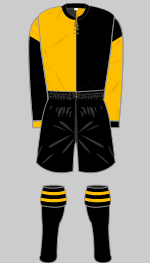
1924-1925 a s
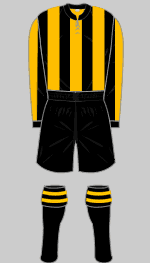
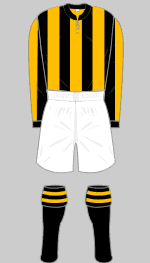
1928-1929 a
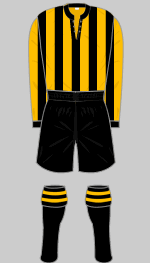
1930-1933 a s
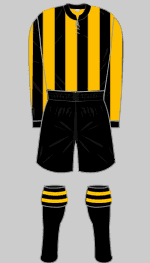
1933-1936 a s
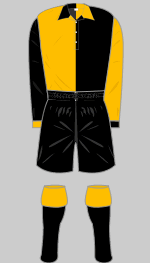
1938-1939 a s
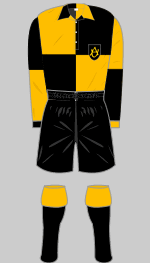
1947-1948 a s
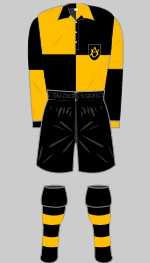
1948-1949 l s
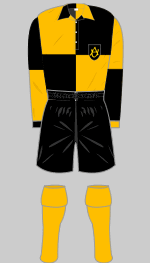
1949-1950 l s
Cambridge United
1951
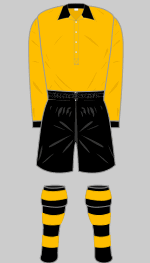
1950-1951 l s
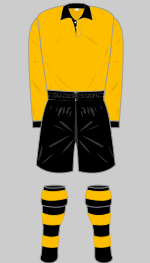
1951-1952 a s
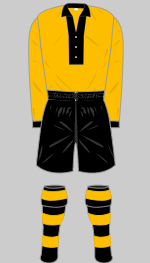
Aug 1963 s
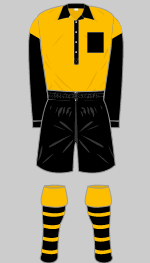
Nov-Dec 1953 a l s
March 1954-1956 a s
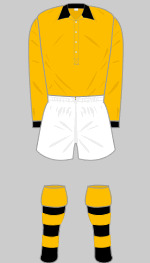
1956-1957 a s
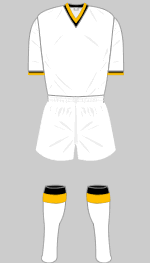
1957-1960 a l s
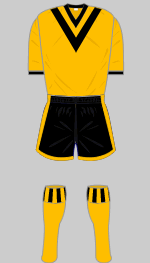
1960-1962 j l m s
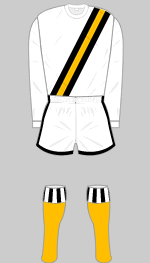
1961-1963 a s
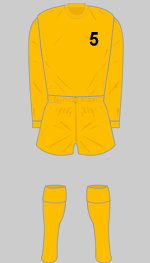
Aug-Sept 1963 s
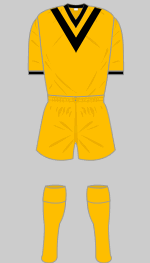
Oct 1963-1964 l s
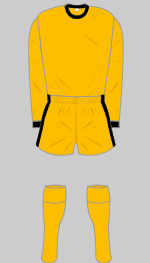
1964-1965 a
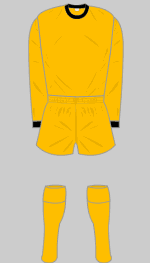
1965-1967 a
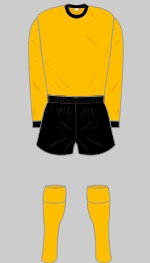
1967-1968 a s
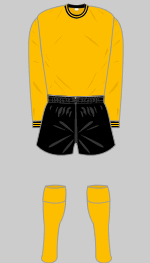
1968-1969 l p s
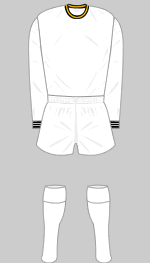
1969-1971 a l s

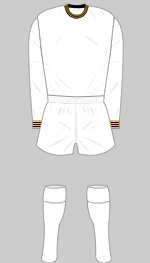
1971-1972 l
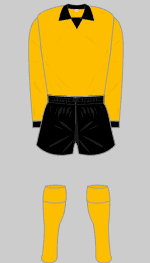
1972-1974 a d l
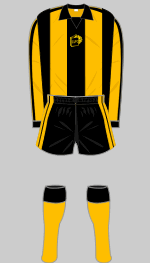
1974-1975 a f g r
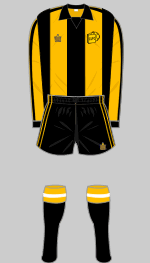
1975-1976 g r
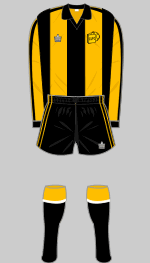
1976-1977 a g l r
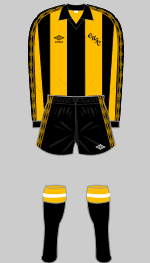
1977-1978 a d g l
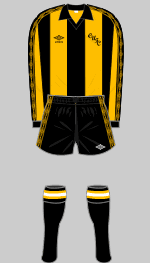
1978-1979 l
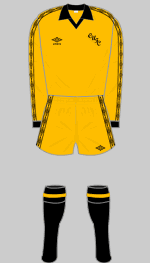
1979-1982 a
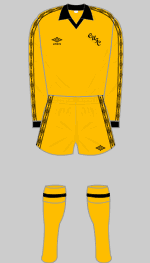
1982-1983 a
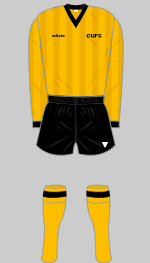
1983-Feb 1985 a l
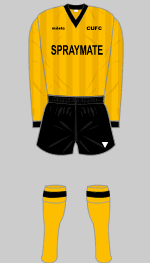
Feb-Nov 1985 a l
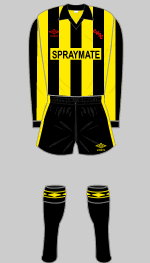
Nov 1985-1986 f k
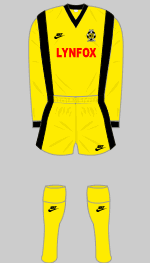
1986-1987 a k l
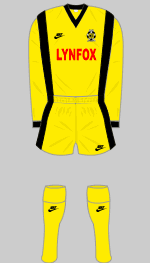
1987-1988 l
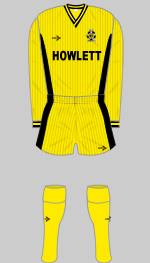
1988-1990 a f k l
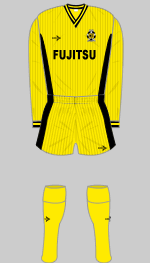
1988-1990 a f k l
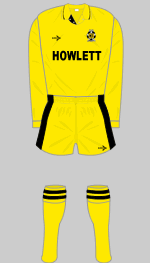
1990-1991 1 f k
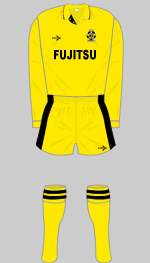
1990-1991 1 f k
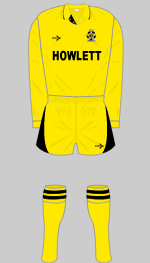
1990-1991 2 e f k
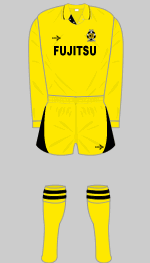
1990-1991 2 e f k
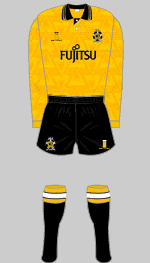
1991-1993 a e
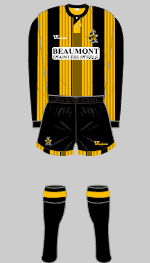
1993-1995 a k n
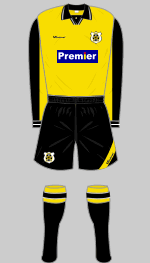
1995-1996 a
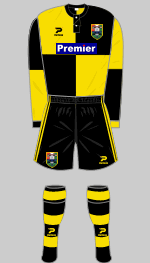
1996-1998 a q
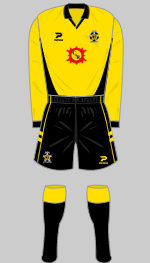
1998-1999 a k
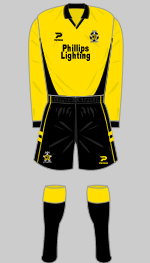
1998-1999 a k
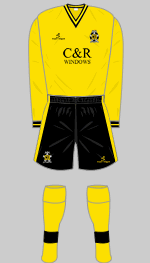
1999-2001 a i
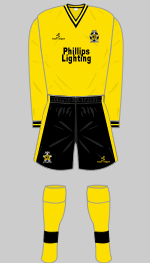
1999-2001 a i
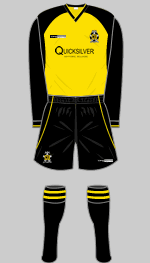
2001-2003 b f
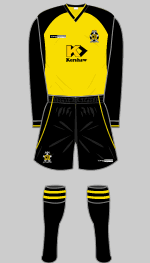
2001-2003 b f
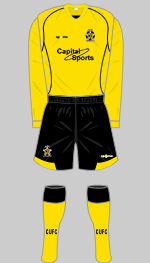
2003-2005 c f q
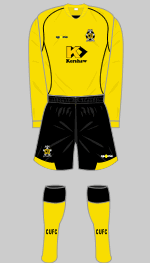
2003-2005 c f g
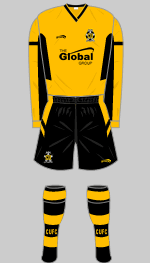
2005-2007 c
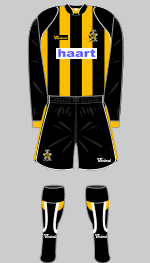
2007-2008 c h
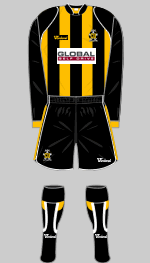
2008-2009 c
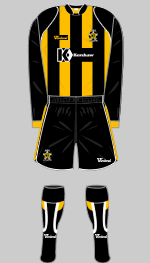
2007-2009 c
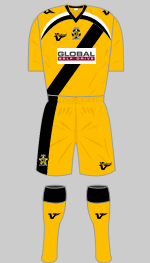
Aug-Oct 2009 c
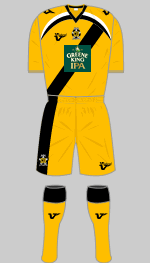
Oct 2009 c
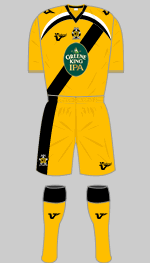
Nov 2009-2010 c
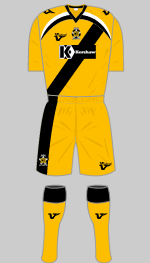
2009-2010 c
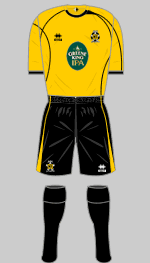
2010-2012 o
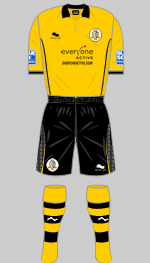
2012-2013 c q s
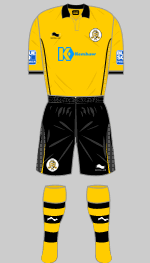
2012-2013 c q s
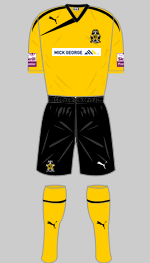
2013-2014 c
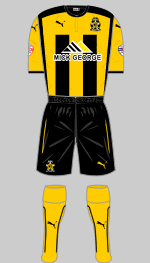
2014-2015 c
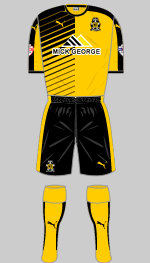
2015-2016 c
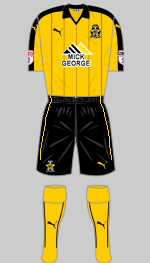
2016-2017 c
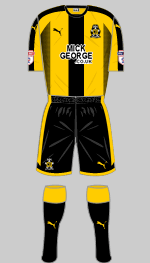
2017-2018 c
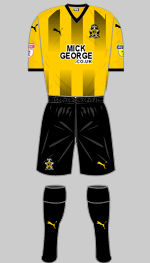
2018-2019 c
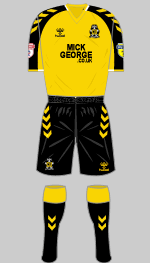
2019-2020 c
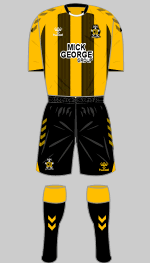
2020-2021 c
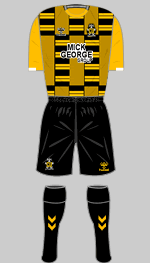
2021-2022 c
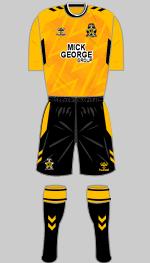
2022-2023 c
Background
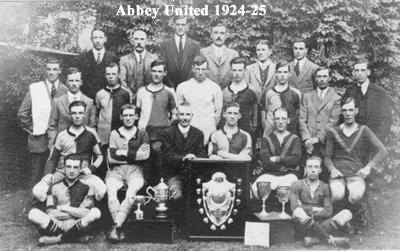 The first Cambridge United FC was formed
in 1908 followed four years later by a second club known as Abbey United. With the outbreak
of the First World War both teams disbanded. When the young men who had
survived the fighting returned, Abbey United was re-formed in 1919 and
this date is taken as the formation of the modern football club. Until
the Second World war, Abbey United were no more than a minor club on a
par with a decent village or works side. The major team in the city was
Cambridge Town (who became Cambridge City in 1951) and although the two
clubs met frequently in local competition, it was not until 1952 that
Abbey United recorded their first win over their rivals.
The first Cambridge United FC was formed
in 1908 followed four years later by a second club known as Abbey United. With the outbreak
of the First World War both teams disbanded. When the young men who had
survived the fighting returned, Abbey United was re-formed in 1919 and
this date is taken as the formation of the modern football club. Until
the Second World war, Abbey United were no more than a minor club on a
par with a decent village or works side. The major team in the city was
Cambridge Town (who became Cambridge City in 1951) and although the two
clubs met frequently in local competition, it was not until 1952 that
Abbey United recorded their first win over their rivals.
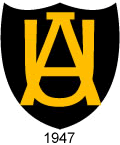 In 1947, Abbey United introduced a crest, a simple black shield with the letters "AU" superimposed in amber, which was used until 1951. After the war the mood of the club changed: United signed their first professional
player in 1949 and a more ambitious approach brought a change of name
to Cambridge United in 1951. The club now competed in the Eastern Counties
League but later moved up to the Southern League. In 1956 they sensationally
signed Wilf Mannion after he had been banned from the Football League
after making allegations of illicit payments in the newspapers. During
the 1960s United forged a reputation as one of the leading non-league
sides in England with their sights firmly set on League status.
In 1947, Abbey United introduced a crest, a simple black shield with the letters "AU" superimposed in amber, which was used until 1951. After the war the mood of the club changed: United signed their first professional
player in 1949 and a more ambitious approach brought a change of name
to Cambridge United in 1951. The club now competed in the Eastern Counties
League but later moved up to the Southern League. In 1956 they sensationally
signed Wilf Mannion after he had been banned from the Football League
after making allegations of illicit payments in the newspapers. During
the 1960s United forged a reputation as one of the leading non-league
sides in England with their sights firmly set on League status.
 On 2 May 1970, United won the Southern League championship for the second
season running and four weeks later the club was elected to the League at
the expense of
On 2 May 1970, United won the Southern League championship for the second
season running and four weeks later the club was elected to the League at
the expense of 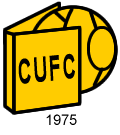 Bradford Park Avenue. United changed from their traditional
amber and black to wear an all-white strip in their inaugural season.
After narrowly avoiding re-election, they reverted to amber and black
in 1972 and were rewarded with promotion to Division Three. Although they
managed to stay only one season before they were back in the basement.
The young Ron Atkinson took charge in 1974 and United stormed up to Division
Two with successive promotions in 1977 and 1978. Atkinson reintroduced
the striped jerseys worn in the club's early days and this certainly appeared
to inspire his team. Another innovation was the introduction of a crest, representing the
Bradford Park Avenue. United changed from their traditional
amber and black to wear an all-white strip in their inaugural season.
After narrowly avoiding re-election, they reverted to amber and black
in 1972 and were rewarded with promotion to Division Three. Although they
managed to stay only one season before they were back in the basement.
The young Ron Atkinson took charge in 1974 and United stormed up to Division
Two with successive promotions in 1977 and 1978. Atkinson reintroduced
the striped jerseys worn in the club's early days and this certainly appeared
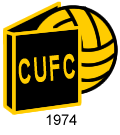
to inspire his team. Another innovation was the introduction of a crest, representing the 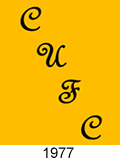 connection between the club and academia, which appeared in 1974. The "book and ball" badge was dropped in 1977 and for the next nine seasons, a simple cypher (which appeared in several formats) was used.
 After five seasons in the Second Division Cambridge plummeted back into
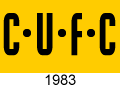
Division Four and had to apply for re-election in 1986. Perhaps the board thought a change of image would help revive the team's fortunes: a new badge was introduced and over the next five seasons United's traditional amber was replaced by a paler shade of yellow. In the Nineties,
history repeated itself when United gained successive promotions in 1990
and 1991 to return to Division Two. The following season they even qualified
for the play-offs. They could not sustain their achievements, however,
and in 1993 they started on the downward path that would take them back
to
After five seasons in the Second Division Cambridge plummeted back into
Division Four and had to apply for re-election in 1986. Perhaps the board thought a change of image would help revive the team's fortunes: a new badge was introduced and over the next five seasons United's traditional amber was replaced by a paler shade of yellow. In the Nineties,
history repeated itself when United gained successive promotions in 1990
and 1991 to return to Division Two. The following season they even qualified
for the play-offs. They could not sustain their achievements, however,
and in 1993 they started on the downward path that would take them back
to 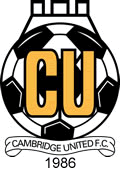 the lowest division.
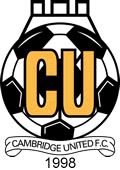
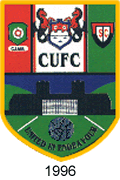 In 1996, Patrick designed quartered shirts inspired by those of Abbey United in the late 1940s. To complement this retro design an old-fashioned crest was designed but this failed to catch on and was replaced by the familiar "football badge" when this strip was retired in 1998.
After thirty-five years of League status, Cambridge United returned to non-league competition in 2005, having finished last in Coca Cola League Two (once the old Fourth Division). Facing debts in excess of £1m, and with relegation inevitable, the club went into administration before the end of the season, taking a ten-point penalty rather than face sanctions in the Conference the following season.
 For the clubs centenary in 2012-13, a smart retro strip was introduced while a re-creation of the white outfit worn when they
 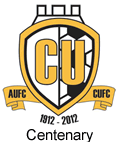 first joined the Football League was used as their change kit. A commemorative crest was comissioned that combined elements from the old Abbey United badge with the modern version. This was worn only on the home strip.
After nine years in the Conference, Cambridge were promoted back to the Football League in 2014. Promotion to League One followed in 2021.
Sources
- (a) Cambridge United FC (Images of Sport) by Brian Attmore & Graham Nurse
- (b) empics
- (c) CUFC Official Website
- (d) Football Focus
- (e) David King
- (f) James King
- (g) Alick Milne
- (h) Football Shirt Culture
- (i) Chris Worrall
- (j) United in Endeavour
- (k) 25 years of United strips
- (l) Christopher Worrall and Doug Shulman
- (m) Richard Ralph
- (n) Keith Ellis (HFK Research Associate)
- (o) Fabrizio Taddei (Errea)
- (p) Margate FC History submitted by Richard Ralph
- (q) Kyle Goddard
- (r) Crest details found by Simeon Ayton
- (s) 100 Years of Coconuts submitted by Simeon Ayton
Modern crests are the property of Cambridge United FC.