
Bury
Formed 1885
Elected to Division Two 1894. Expelled August 2019.
Kit History
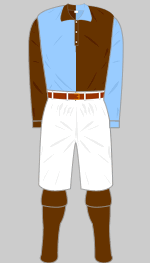
1885-1887 a l
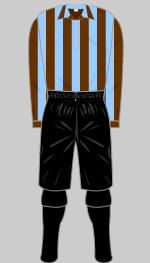
1887-1888 l
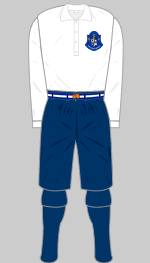
1888-1890 a l
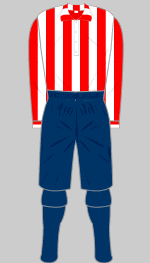
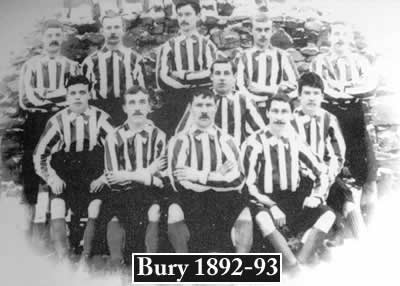
1892-1893 h
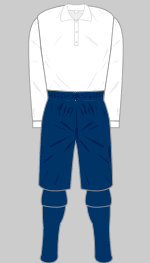
1894-1900 a l o
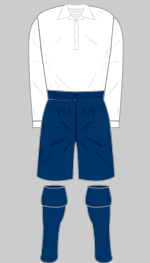
1900-1906 a l o p

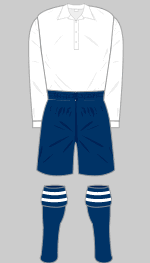
1906-1917 l o

1918-1921 a l u
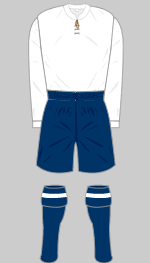
1921-1930 a l
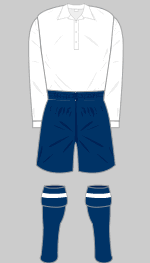
1930-1931 b
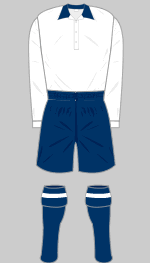
1931-1948 a l
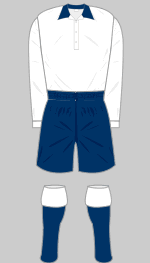
1948-1950 l
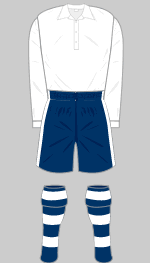
1950-1952 a c
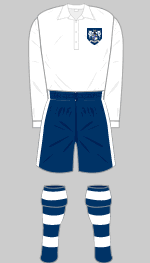
1952-1955 a l
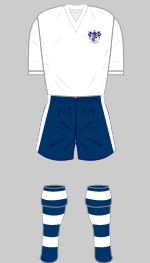
1955-1956 o
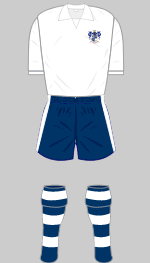
1956-1958 a l u

1958-1962 la c l t
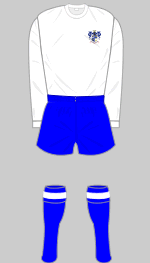
1962-1967 i l o

1967-Oct 1969 a e
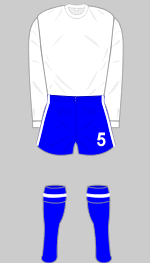
Nov 1969-1970 a
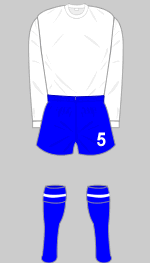
1970-1973 a
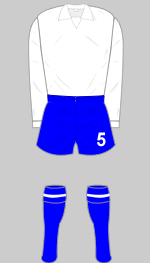
1973-1974 1

1973-1974 2 l
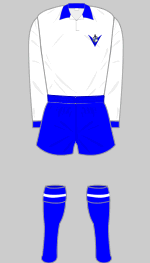
1974-1977 a l
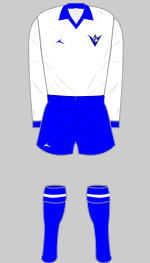
1977-1978 a l
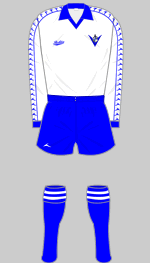
1978-1979 n
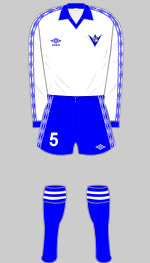
1979-1981 a l
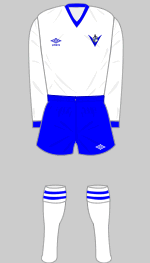
1981-1982 s
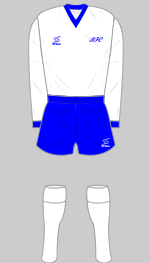
1982-1983 a q
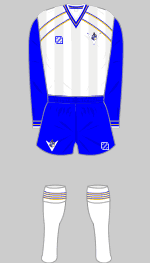
1983-1984 l n q
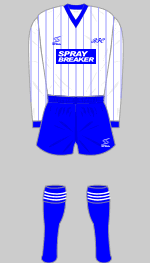
1984-1985 a l
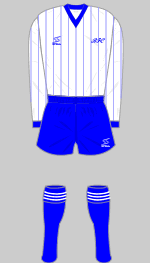
1985-1986 l
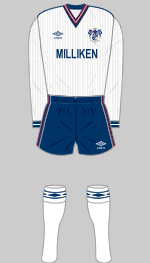
1986-1987 k q
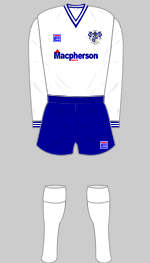
1987-1988 k

1988-1989 a
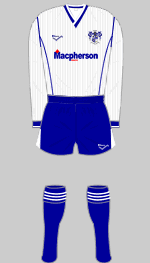
1989-1990 a
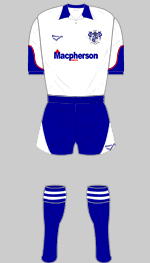
1990-1991 f
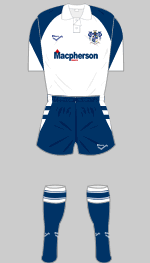
1991-1992 a g m q
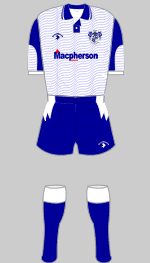
1992-1993 m
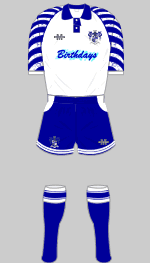
1993-1994 a m
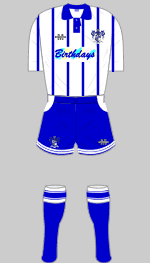
1994-1995 a g
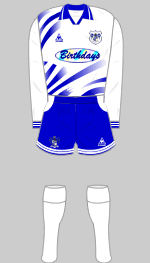
1995-1996 m r
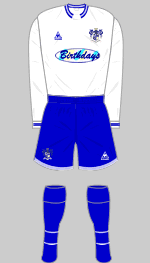
1996-1997 a g
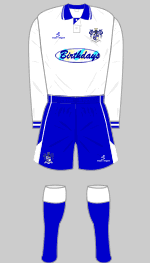
1997-1998 m
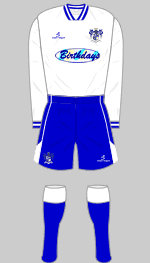
1998-1999 g m
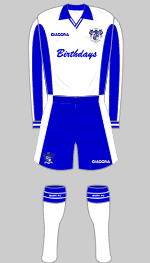
1999-2001 g m
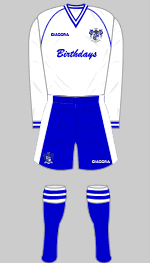
2001-2002 g
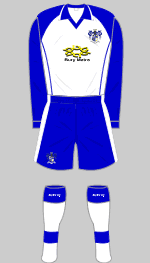
2002-2003 g
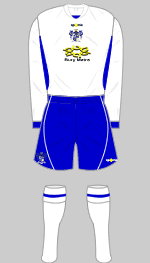
2003-2004 g
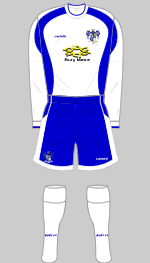
2004-2006 h
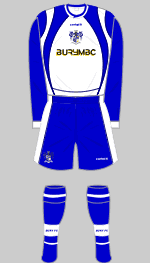
2006-2007 h
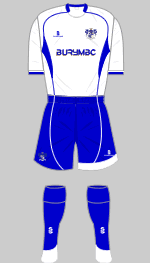
2007-2008 h
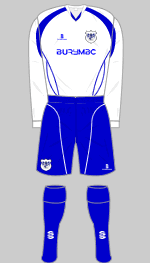
2008-2009 h
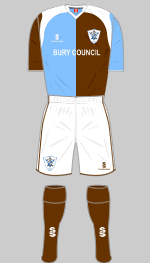
2009-2010 h
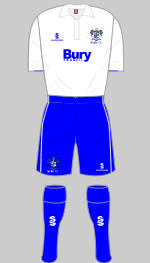
2010-2011 h
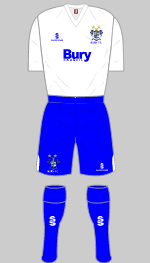
2011-2012 h
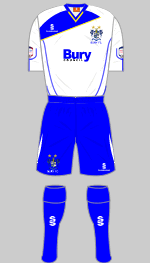
2012-2013 h
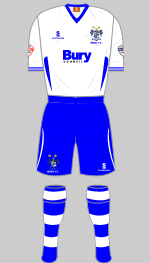
2013-2014 h

2014-2015 h

2015-2016 h
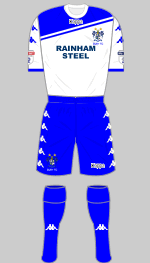
2016-2017 h
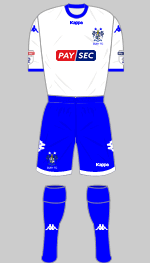
2017-2018 h

2018-2019 h
Background
 For the past 100 years Bury were a modest club, struggling to survive
in the Manchester metropolitan area against competition from big city
clubs but once they were among the aristocrats of Lancashire football.
Formed in 1885 at a public meeting in the White Horse Hotel in the centre
of the town, the club rose to local prominence very quickly.
For the past 100 years Bury were a modest club, struggling to survive
in the Manchester metropolitan area against competition from big city
clubs but once they were among the aristocrats of Lancashire football.
Formed in 1885 at a public meeting in the White Horse Hotel in the centre
of the town, the club rose to local prominence very quickly.
Passed over
when the Football League was formed, Bury became founder members of the
Lancashire League in 1889. Before a Lancashire Senior Cup match against
Everton, the club chairman JT Ingham announced, "We'll give 'em a
shakin'. In fact, we are the Shakers." This has remained the club's
nickname to this day. They started out wearing chocolate and light blue
shirts but in 1888, plain white shirts were adopted. A team photograph taken in 1889 reveals that a 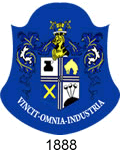 crest was worn, apparently a version of the town's coat of arms.
In 1894 Bury successfully applied for a place in
the expanded Football League Second  Division. After winning all 15 of
their home games, they won a test match against Liverpool, who had finished
bottom of Division One, to secure promotion in their first season in the
League. In 1900 the Shakers won the FA Cup, beating Southern League Southampton
4-0 at Crystal Palace. In 1903, they won the cup again, beating Derby
County by 6-0, still a record score for a final. In 1912, Bury were relegated
and spent the next 12 years in Division Two. Immediately after the First
World War, the club was unable to get hold of their traditional white
shirts so turned out in red and white hoops for a couple of seasons. Promoted
in 1924, they remained for five seasons in Division One, finishing in
in fourth place in 1926, before dropping back into the Second Division
and
Division. After winning all 15 of
their home games, they won a test match against Liverpool, who had finished
bottom of Division One, to secure promotion in their first season in the
League. In 1900 the Shakers won the FA Cup, beating Southern League Southampton
4-0 at Crystal Palace. In 1903, they won the cup again, beating Derby
County by 6-0, still a record score for a final. In 1912, Bury were relegated
and spent the next 12 years in Division Two. Immediately after the First
World War, the club was unable to get hold of their traditional white
shirts so turned out in red and white hoops for a couple of seasons. Promoted
in 1924, they remained for five seasons in Division One, finishing in
in fourth place in 1926, before dropping back into the Second Division
and 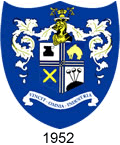 they have never returned to the top flight since. For the next
  twenty-six years, the Shakers stayed
in Division Two, generally in or below mid-table.
twenty-six years, the Shakers stayed
in Division Two, generally in or below mid-table.
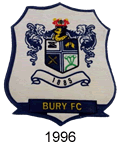
The town crest appeared again between 1952 and 1955 against a shield.
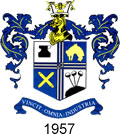
In 1957 Bury were relegated to Division Three (North) where they played for a single season. The crest reappeared the following season, now without a shield, and was used for the next ten years.
When the regional divisions were scrapped
in 1958, the club were placed in the new national Division Three. 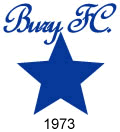 In 1961, Bury were promoted as champions and remained in the Second division for the next six years. With
  more clubs
now promoted and relegated each season, Bury went up and down with bewildering
frequency. Relegated to Division Three in 1967, they were back after only
one season only to suffer relegation again immediately and in 1971 they
dropped into the Fourth Division.
more clubs
now promoted and relegated each season, Bury went up and down with bewildering
frequency. Relegated to Division Three in 1967, they were back after only
one season only to suffer relegation again immediately and in 1971 they
dropped into the Fourth Division.
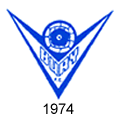
Between 1967 and 1973 Bury's shirts did not carry a crest and then, for the 1973-74 season a rather curious badge was adopted, consisting of a single star underneath the legend, "Bury FC." This was replaced the following season with the distinctive "V" design that proved both popular and recognisable, surviving until 1982.
 1974 brought promotion back to the Third
but six years later they
1974 brought promotion back to the Third
but six years later they 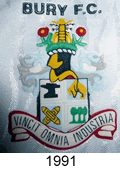 were back in the basement. The V crest was dropped and "BFC" was embroidered onto the shirts in cursive script between 1982 and 1986 when the old town crest was revived.
The pattern of promotion and relegation continued with Bury moving between the lowest two division until successive promotions in 1996 and 1997 took them up to Nationwide Division One (the old Second Division).
In 1999 Bury slipped back down to the third tier on goal difference and by 2002 they had dropped into the lowest division where they faced a constant struggle to survive, selling on promising players at the expense of building long-term success.
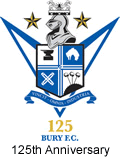 To mark their 125th anniversary in 2009-10, Bury adopted a home kit based on their original strip from 1885 alongside a change strip based on that from 1892-93. The specially designed crest combined the traditional coat of arms with the iconic V design from the Seventies. The two gold stars represent Bury's FA Cup wins from 1900 and 1903.
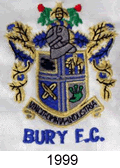 The old crest was reinstated the following season with "Bury FC" embroidered underneath and in 2011, the two gold stars appeared again.
In 2014 the association with Bury Metropolitan council ended after 12 years and new shirt sponsorship appeared for a JD Sports brand. The team won automatic promotion at the end of the season and for 2015-16 New Balance became their technical sponsor, the first time that the US sportswear company had supplied a 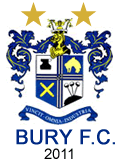 club in the lower divisions.
Bury were relegated back into the fourth tier in 2018 having finished nine points adrift at the foot of League One. They bounced back immediately despite a financial crisis that threatened to overwhelm the club. The owner, property developer Stewart Day had taken out a series of mortgages on Gigg Lane to meet spiralling wage costs as his own property empire was on the point of collapse. An investigation by The Guardian revealed that 40% of the money raised was paid over to unknown third parties as "introduction fees."
In December 2018 the club was sold to businessman Steve Dale for £1 who took over without complying with the EFL's rules requiring new owners to provide proof that they have the funds to sustain the club they are acquiring. A winding-up order taken out by HMRC was dismissed after Dale settled the outstanding tax bill but by April it emerged that the players had not been paid for two months and another winding-up order was taken out by former head coach, Chris Brass. By this stage the EFL expressed "extreme concern" about the club's financial situation. A Company Voluntary Agreement (CVA) was approved by creditors on 18 July that would ensure payment in full to football creditors while all unsecured creditors would get 25%. The Guardian revealed that RCR Holdings had bought £7m of the club's debt for £70,000 and it was their vote that ensured the CVA was adopted. The company had been formed days before the crucial meeting and its sole owner and director was Kris Richards, the partner of Dale's daughter.
The EFL imposed a 12-point penalty (a CVA is an insolvency event) and required Dale to produce evidence that he had access to the funds required to meet the cost of the CVA and the estimated £1.6m loss the club would incur over the 2019-20 season. The teams opening fixtures were suspended. After a series of previous deadlines were missed, Dale was given until 27 August to provide proof of funds, sell the club or face expulsion. Two hours before the deadline a proposed deal with C&N Sporting Risk collapsed: their statement made it clear this was due to problems relating to the mortgage on Gigg Lane and "the overall financial state of the club...reflective of ... systemic failings...over a number of years."
In a statement released at 11.04pm the EFL board announced that Bury's membership had been withdrawn.
Sources
- (a) Bury FC - Images of Sport (Peter Cullen 1998)
- (b) Gillingham FC - Images of Sport (Roger Triggs 1999)
- (c) Football Focus
- (d) Leyton Orient FC - Images of Sport (Neilson N Kaufman 2001)
- (e) Rotherham United - Images of Sport (Gerry Somerton & Chas Robinson 2000)
- (f) Southend United FC - Images of Sport (Peter Miles & David Goody 2000)
- (g) empics
- (h) Bury FC Official Website
- (i) Pete's Picture Palace
- (j) Mighty Shakers
- (k) Ralph Pomeroy
- (l) The Official History of Bury FC - provided by Greger Lindberg
- (m) David King
- (n) Alick Milne
- (o) Keith Ellis (HFK Research Associate)
- (p) Richard Essen
- (q) Christopher Worrall
- (r) Michael Spokes
- (s) Chris Ashton
- (t) Grandad's Football Blog
- (u) Simon Monks
Crests are the property of Bury FC.