
Bradford
City
Formed 1903
Elected to Division Two 1903
Kit History
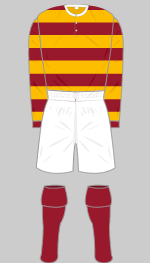
Sept 1903 a j p r

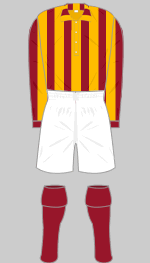
1903-1907 a m r
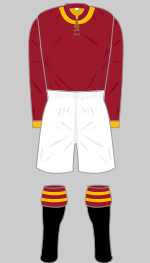
1907-1908 a m r
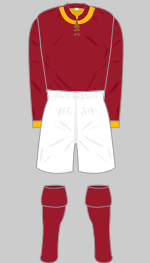
1908-1909 a s
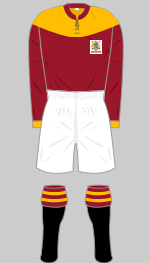
1909-1915 a m r
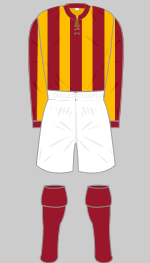
1919-1920 a r
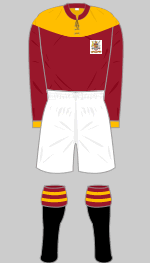
1920-1923 a r
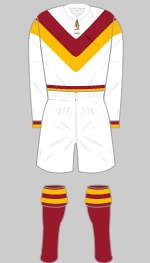
1923-1924 a r
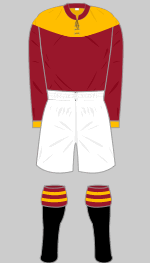
1924-1928 a r
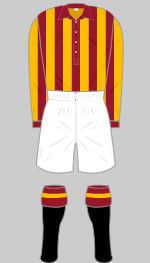
1928-1929 a r
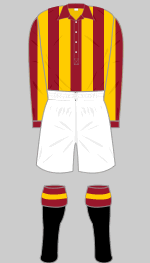
1929-1931 a k r
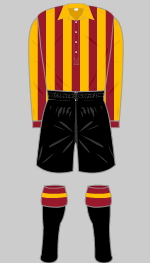
1932-1933 r
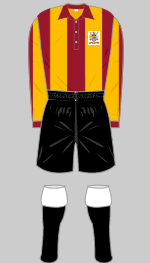
1933-1934 a r
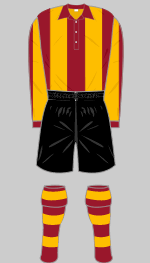
1934-1935 a r
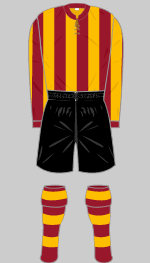
1935-1938 a
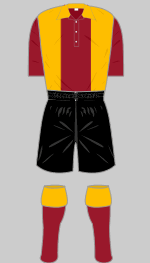
1938-Sept 48 a l m r
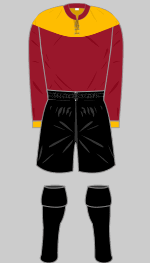
Oct 48-March 49 a m r
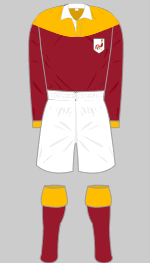
April-May 49 a c r
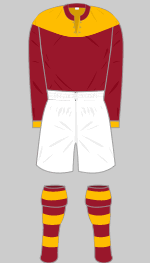
Aug-Sept 1949 r
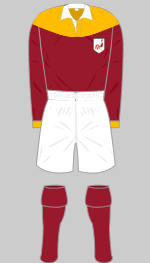
Sept 49-1950 r
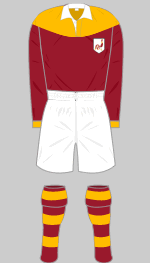
1950-1951 r
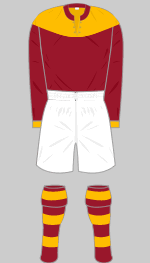
1951-1952 a r
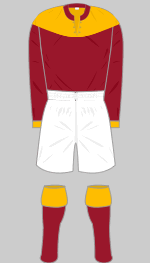
1952-1953 a r
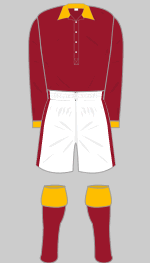
1953-1956 a r
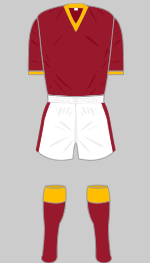
1956-1959 a r
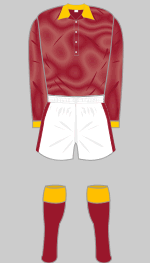
April 1957 r
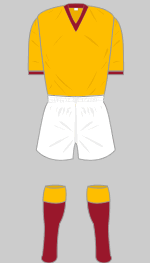
1959-1960 f r
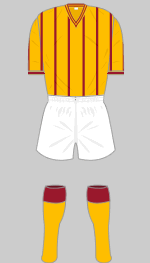
1960-1962 a k r
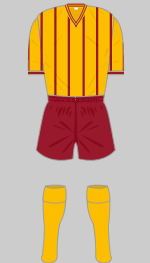
1962-1963 q t
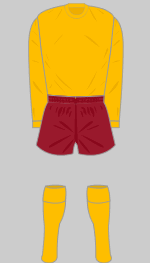
1963-1964 a r
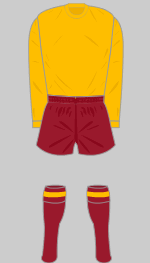
1964-1965 a
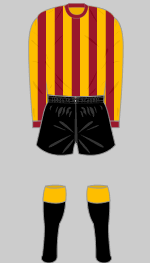
1965-1968 a k r
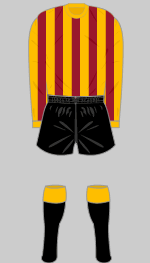
1968-1969 a r
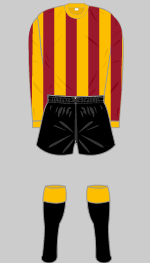
1969-1972 a
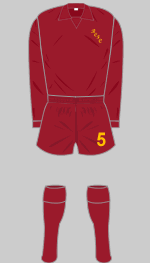
1972-1973 a g
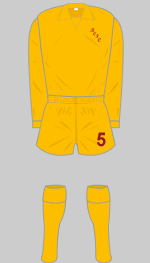
1973-1974 a
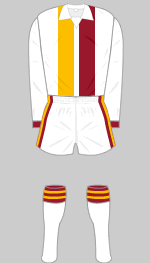
1974-1975 a
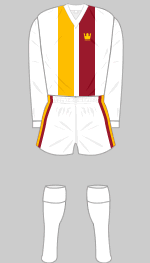
1975-March 76 a g
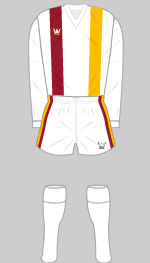
March-May 76 w
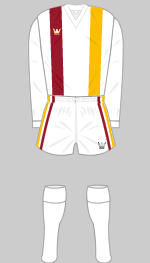
1976-1977 w
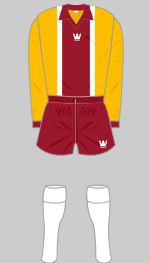
1977-1978 a g
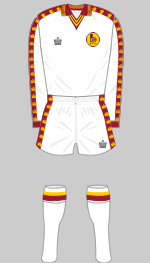
1978-1979 a g
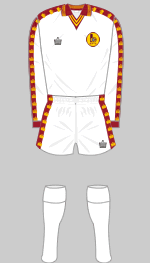
1979-1981 a
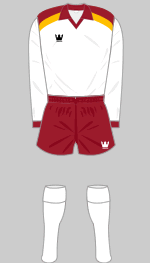
1981-1982 a
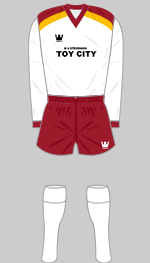
1982-1983 a i
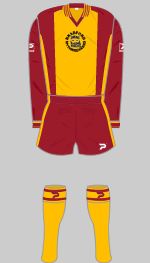
1983-1984 1 a d e
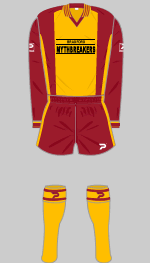
1983-1984 o
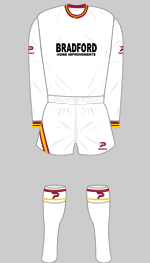
1984-1985 a
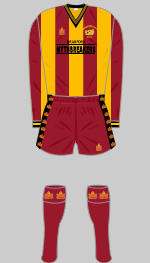
1985-1987 a
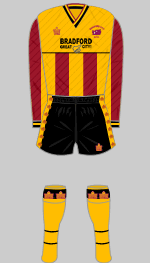
1987-1988 a
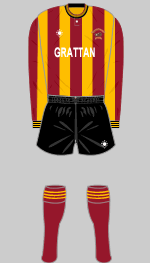
1988-1990 a i
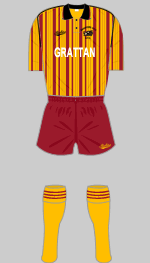
1990-1991 a v
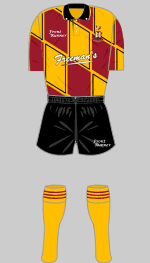
1991-1993 a v
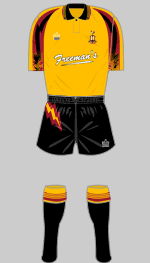
1993-1994 a v
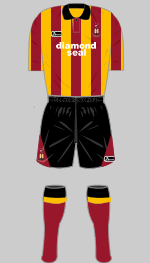
1994-1996 a i v
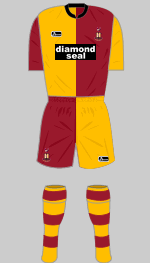
1996-1997 1 a i v
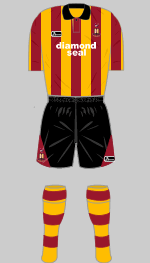
1996-1997 2 i
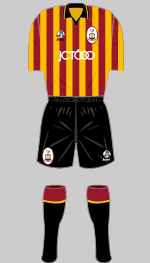
1997-1999 a v
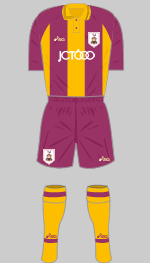
1999-2001 a v

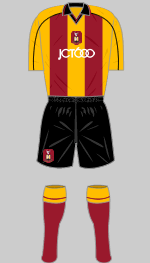
2001-2003 a v
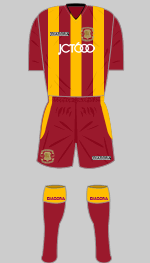
2003-2004 a v
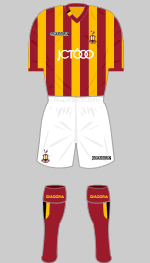
Aug-Sept 2004 a
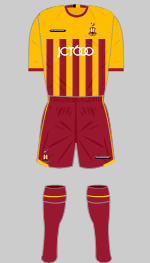
Oct 2004-2006 a o v
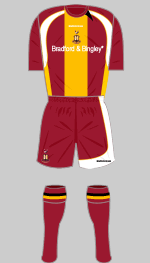
2006-2007 a b
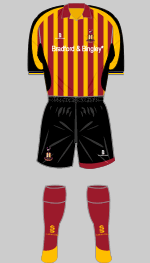
2007-2008 b h v
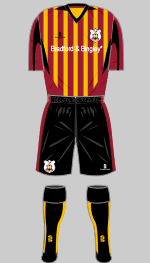
2008-2009 b v
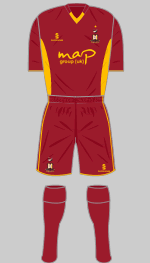
2009-2010 b v
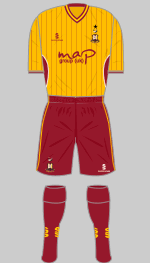
2010-2011 b v
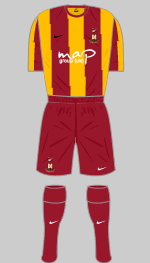
2011-2012 b
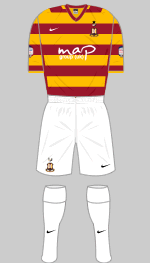
2012-2013 b
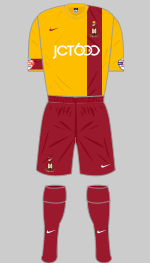
2013-2014 b
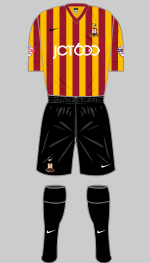
2014-2015 b
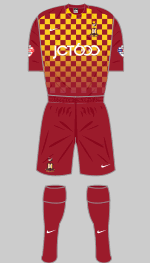
2015-2016 b
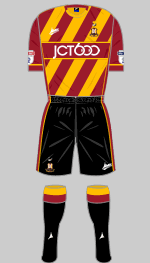
2016-2017 b
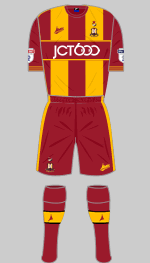
2017-2018 b
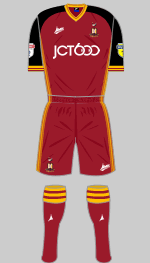
2018-2019 b
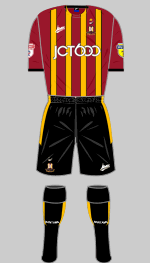
2019-2020 b
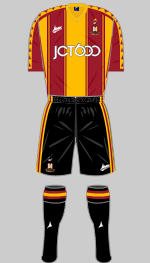
2020-2021 b
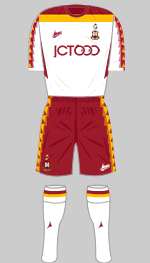
2021-2022 b
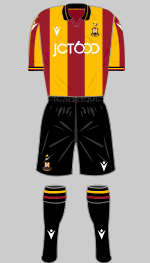
2022-2023 b
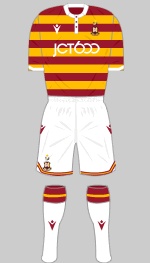
2023-2024 b
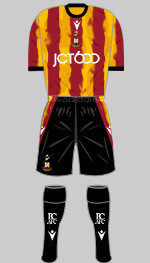
2024-2025 b
Background
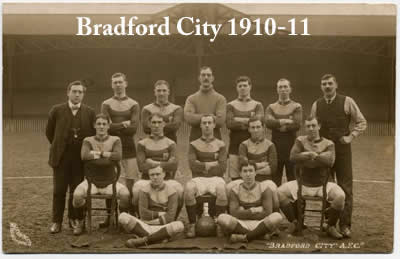
In 1895, a dispute over broken time payments led to rugby clubs from Lancashire and Yorkshire breaking away from the Rugby Football Union to form the Northern Rugby Union (which evolved new rules that would become Rugby League). At the time Bradford FC*, which drew its membership from the city's upper and middle classes was the leading rugby side in the city while Manningham FC*, whose members were mainly from the working class, were a second-string team.
By the turn of the century, Manningham had fallen on hard times, recording a loss of £660 in the 1902-03 season. Across the Pennines, the professional Lancashire clubs playing the association game were thriving and following an Extraordinary General Meeting on 26 March 1903, it was decided to form a professional association team, to be called Bradford City AFC, and play rugby and soccer on alternate weekends.
A delegation traveled to London on 25th May to apply for admission to the League, despite the fact that Bradford City had no players and had never played a game. The infant club was accepted with open arms and the delegation returned to Bradford in triumph. At the Belle Vue public house they celebrated what was described as ‘the greatest football scoop ever known’. City had joined the League without having played a single match. At the AGM five days later the decision to adopt football was ratified and the idea of playing rugby on alternate weekends was quietly dropped. Over the following years, several more struggling professional rugby teams in Yorkshire followed Manningham's example and switched codes.
For the first few months of their inaugural season, City wore the claret and amber hooped jerseys of the rugby team before their new vertically striped shirts were delivered. It is incidentally believed that the claret and amber colours, unique in the League, were those of the Prince of Wales Own (West Yorkshire) Regiment.
By the end of 1906, Bradford City AFC were attracting an average of over 11,000 spectators while Bradford FC's gates had fallen to 4-5,000, A proposal was put forward in April 1907 to merge the two clubs and play at the rugby club's far bigger Park Avenue stadium. With City on the brink of the First Division, there were clear advantages to a merged club playing in a larger stadium, not least of which was that they would no longer compete for paying spectators. Initially the proposal was rejected by Bradford's overwhelmingly middle-class membership who furthermore resolved to leave the Northern RU and rejoin the RFU. Bradford's chairman, Arthur Briggs, refused to accept the result and steam rollered the merger proposal through. It was then the turn of Bradford City's members to vote: there was fury at what many saw as an attempt by the wealthier rugby club to co-opt everything that City had worked so hard to achieve and the proposal was thrown out by 1,031 votes to 487.
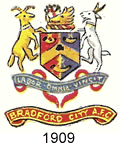 City won the Division Two championship in 1908 and gained promotion to Division One. In 1903 the team had adopted the crest of the borough of Bradford, and this featured on their shirts from 1909 until 1923 (making a final appearance in the 1933-34 season). In 1911 City finished fifth in Division One, their highest ever placing
and won the FA Cup, beating the then powerful Newcastle United 1-0 in
a replay. The distinctive, yoked shirts of the period became forever associated
with this side and were to be revived on several occasions.
City won the Division Two championship in 1908 and gained promotion to Division One. In 1903 the team had adopted the crest of the borough of Bradford, and this featured on their shirts from 1909 until 1923 (making a final appearance in the 1933-34 season). In 1911 City finished fifth in Division One, their highest ever placing
and won the FA Cup, beating the then powerful Newcastle United 1-0 in
a replay. The distinctive, yoked shirts of the period became forever associated
with this side and were to be revived on several occasions.
The nickname of "The Bantams" dates from 1909 after a horseshoe, their previous lucky charm, was lost and was the suggestion the daughter of Tom Fattorini, a club director and owner of the firm that made the second FA Cup which the club won in 1911.
There was to be no further glory, however, and
City went into long term decline, dropping into Division Two in
1922 and then into Division Three (North) in 1927. Although the club returned
to Division Two only two years later, it would be a temporary recovery
and in 1937 The Bantams found themselves back 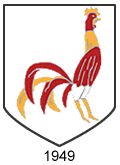 in Division Three (North)
where they would remain for 23 years before being relegated to Division
Four in 1961.
in Division Three (North)
where they would remain for 23 years before being relegated to Division
Four in 1961.
In October 1948 a new board was appointed and re-launched the club. As part of this process the old yoked shirts were revived part way through the season and the previous nickname of The Bantams replaced the Paraders. According to John Dewhirst, an authority on City's history, a bantam appeared on the players' shirts briefly in the early 1950s and this can now be confirmed by reference to Wool City Rivals (see credits).
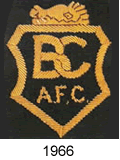 Throughout the early 1960s, City experimented with various combinations of claret and amber before settling on iconic striped shirts with black shorts in 1965. In 1966 a new crest, featuring the boar's head (taken from the civic coat of arms) was adopted but this did not appear on team shirts.
 Further experimentation with playing strips followed in the 1970s, with first plain claret and then all-amber kits being worn, both being embroidered with a simple cypher.
Aside from the 1977-78 season, the team now wore predominantly white strips with claret and amber trimmings. The Admiral strips worn  between 1978 and 1981 had yet another new badge in a very modernistic style embroidered on to them.
The early Eighties were a bleak period for the club, with Valley Parade in a state of advanced disrepair and financial problems mounting. In December 1981 they were re-launched as "The Bantams" and over the following four years three new crests were introduced but, presumably to save costs, these were not embroidered on to the team shirts. The 1983 version included the  wrong year for City's formation and was dropped after one season.
In the summer of 1983, despite having been promoted back into Division Three, the club faced bankruptcy. A pre-season photograph shows the players wearing an all-white kit but when the 1983-84 season started, the team turned out in a claret and amber kit designed by Patrick for Motherwell FC. The following season an all-white kit (favoured by manager Trevor Cherry, a former Leeds player) was adopted.
 In 1985 things were looking up for the club and the boar's head was re-introduced on a strip that featured the familiar stripes (albeit with a very peculiar shade of claret). On 11 May 1985 fans were celebrating promotion
back to Division Two when tragedy struck. The wooden Main Stand was engulfed
in flames and fifty-six fans died in the inferno. The horror concentrated
the minds of football authorities on safety and throughout the League
old stands were hastily closed and demolished while, following the Popplewell Enquiry, the construction of new wooden structures at sports grounds was prohibited. The town rallied to
support the club who enjoyed five seasons in Division Two before being
relegated once again. Ever since that disaster, black has featured in the home shirts as a mark of respect to those who died.
In 1985 things were looking up for the club and the boar's head was re-introduced on a strip that featured the familiar stripes (albeit with a very peculiar shade of claret). On 11 May 1985 fans were celebrating promotion
back to Division Two when tragedy struck. The wooden Main Stand was engulfed
in flames and fifty-six fans died in the inferno. The horror concentrated
the minds of football authorities on safety and throughout the League
old stands were hastily closed and demolished while, following the Popplewell Enquiry, the construction of new wooden structures at sports grounds was prohibited. The town rallied to
support the club who enjoyed five seasons in Division Two before being
relegated once again. Ever since that disaster, black has featured in the home shirts as a mark of respect to those who died.
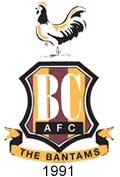 In 1991 the boar's head was retired for the second time and new badge introduced with the bantam cock again in evidence, although it now looked more like a full-sized cockerel than a fighting bantam.
In the late Nineties, City climbed up from Nationwide
Division Two (the old third Division) 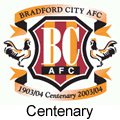 all the way to the Premier Division
where they spent two unforgettable seasons 1999-2001.
In 2003-04 the Bantams marked their centenary with the obligatory special crest.
all the way to the Premier Division
where they spent two unforgettable seasons 1999-2001.
In 2003-04 the Bantams marked their centenary with the obligatory special crest.
The following season City briefly wore a replica of their original claret and amber vertically striped shirts with white shorts but the deal with the manufacturer, Diadora, collapsed after the supplier used images of the Bradford City fire in their promotional material without the consent of the club. Surridge supplied City with kit from their catalogue for the rest of the season.
The Nike strip for 2012-13 was chosen to evoke City's first ever kit, inherited from Manningham RFC. In a memorable season, City reached the Capital One League Cup final after knocking out Wigan Athletic, Arsenal and Aston Villa on the way. Although they were beaten by Swansea City in the final, they were the first fourth-tier club to reach a Wembley final, earning a cool £2.3m in the process.
The team continued to turn out in various combinations of their traditional colours over the following decade but in 2021-22 they adopted a revival of the white shirts with claret and amber shoulder flashes worn forty years previously when they became known as "The Bantams" and won automatic promotion from the fourth tier.
As 2023 marked the club's 120th anniversary, they adopted a replica of their original hooped jerseys matched with white shorts. A similar strip was worn a decade earlier.
With acknowledgements to Richard Sanders' "Beastly Fury" (Bantam Press 2009), from which much of the detail of the failed merger between Bradford City and Bradford RFC is derived and John Dewhirst for his help with the crest history.
Sources
- (a) Bantams Past: The original Bradford City historical site with an exceptional collection of early team photographs but these no longer accessible.
- (b) Bradford City Official Site
- (c) Geoff Charles Collection at the National Library of Wales
- (d) John Dewhurst
- (e) Glyn Watkins
- (f) Ralph Pomeroy
- (g) Alick Milne
- (h) Football Shirt Culture
- (i) Paul Town
- (j) British Film Institute Archive (Youtube)
- (k) Keith Ellis
- (l) Michael Gluck
- (m) John Dewhirst
- (n) Phil Cordingley
- (o) David King
- (p) Football and the First World War
- (q) Arthur Morris
- (r) Wool City Rivals (George Chilvers & John Dewhirst 2020) available from bantamspast.
- (s) Scottish Sport History
- (t) Yorkshire Sports & Cricket Argus (Aug 4 1962) submitted by John Dewhirst)
- (u) Telegraph & Argus
- (v) Old Football Shirts
- (w) Tony Sealey
* Prior to the First World War rugby was the dominant team game in Yorkshire and rugby teams used the suffix "Football Club (FC)" in their name. The new teams that played the association game generally used the term "Association Football Club (AFC)" to distinguish them from their rugby rivals.
Crests are the property of Bradford City AFC.