



Birmingham
City
Formed 1875
Founder member of Division Two 1892
Kit History
Small Heath Alliance
1875
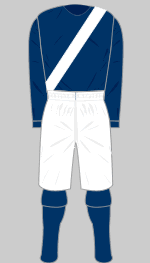
1875 a
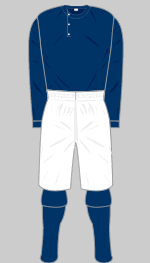
1882-1885 b o
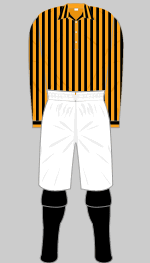
1885-1888 j x
Small Heath
1888
Sept-Dec 1888 b x
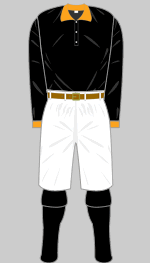
Jan 1889-1890 a j s
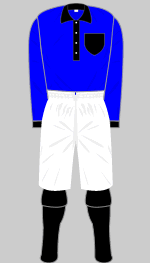
Sept 90-1899 b i v w
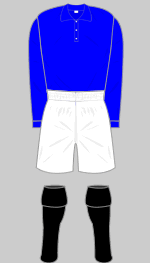
1901-1905 j

Birmingham
1905
1905-1912 b o
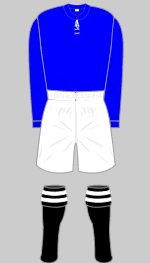
1912-1913 b
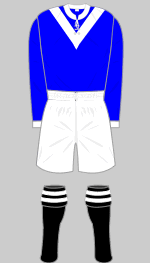
circa 1913 b k n o
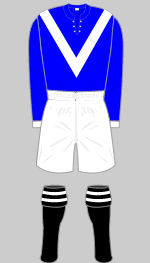
1914-1915 u
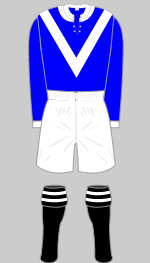
1919-1922 n o
1922-1923 o
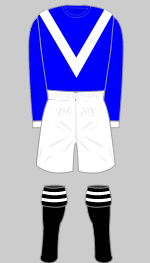
1924-1925 u
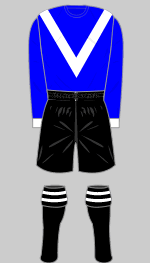
1925-1926 t
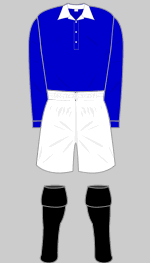
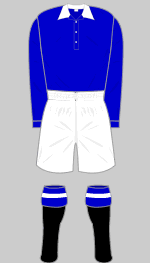
1932-1933 n
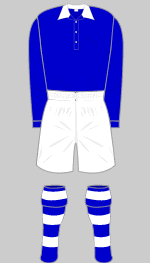
1933-1934 n
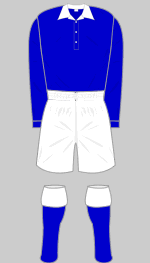
1934-1935 b
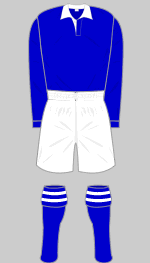
1935-1938 b g o
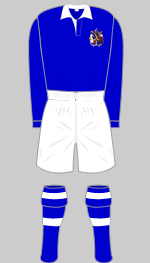
1938-1939 h
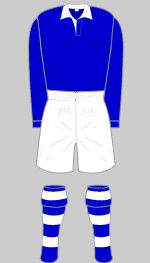
1939-1940 b
Birmingham City
1944
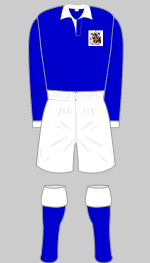
1945-1946 b

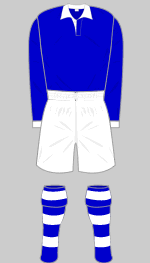
1946-1947 o
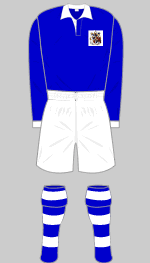
1947-1949 b o
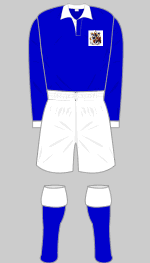
1949-1955 b
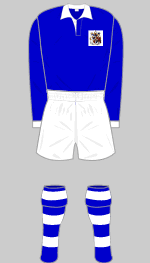
1955-1956 b o
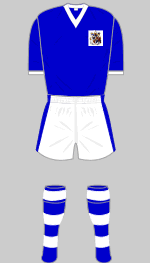
1956-1958 g o
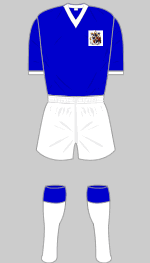
1958-Nov 1960 b o
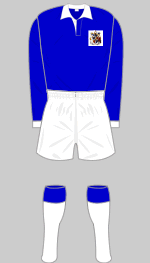
Nov 1960-1961 r
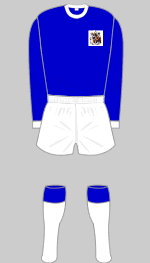
1961-1962 k
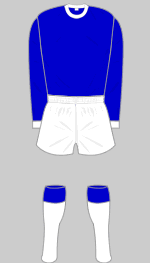
1962-1963 early b k
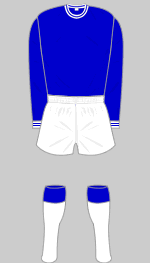
1962-1963 late b k
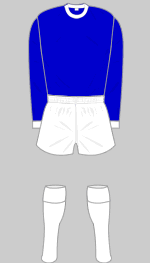
1963-1964 b
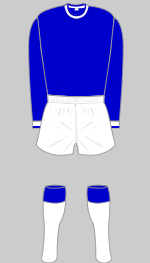
1964-1965 h
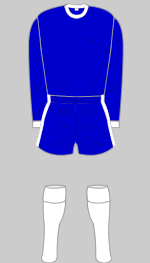
1965-1967 a h
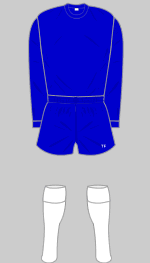
1967-1970 b h
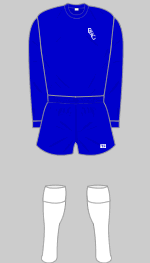
1970-1971 b h
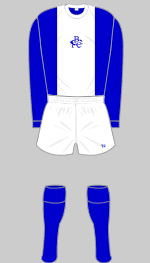
1971-1975 b p
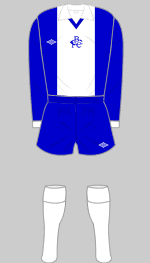
1975-1976 a
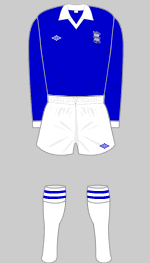
1976-1977 b
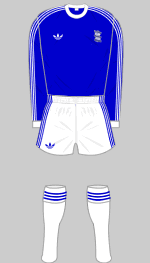
1977-1980 b
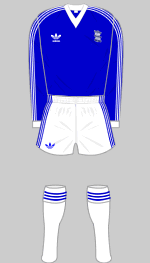
1980-1982 b
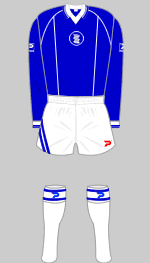
1982-1983 b
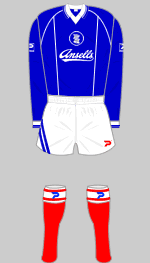
1983-1985 a
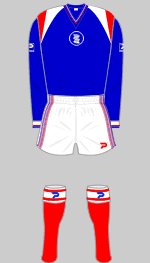
1985-1986 c
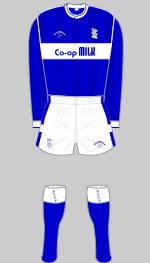
1986-1987 d

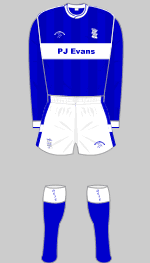
1987-1988 d
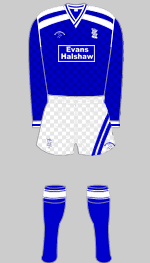
1988-1989 b
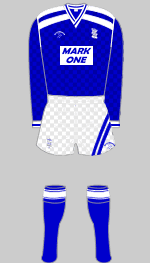
1989-1990 b
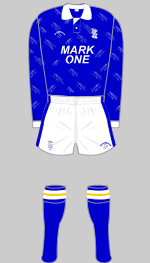
1990-1991 f
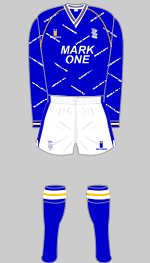
1991-1992 f
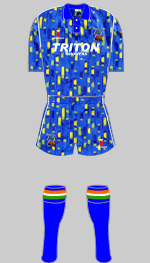
1992-March 1993 b f
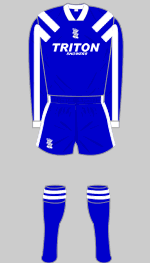
March-May 1993 h
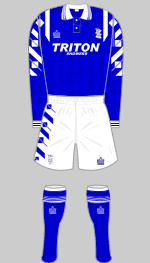
1993-1994 b
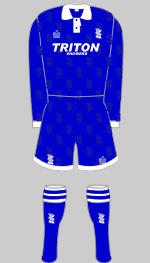
1994-1995 f
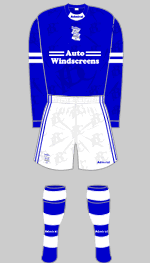
1995-1996 f
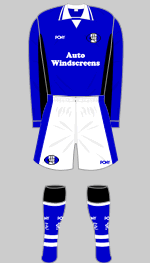
1996-1997 c
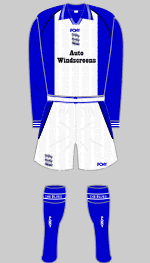
1997-1998 c
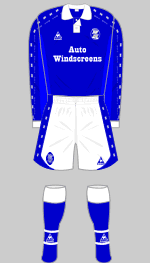
1998-1999 c
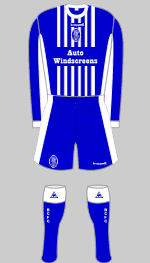
1999-2000 c
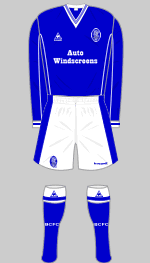
2000-2001 c
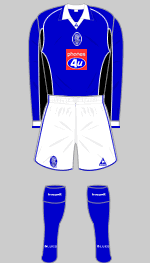
2001-2002 c
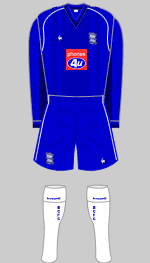
2002-2003 e
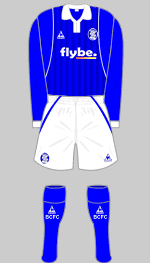
2003-2004 e q
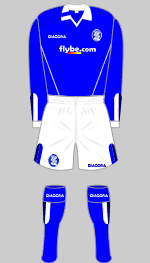
2004-2005 e q
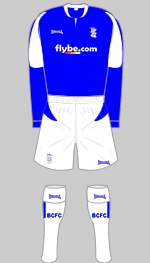
2005-2006 e
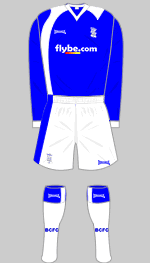
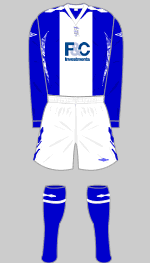
2007-2008 e
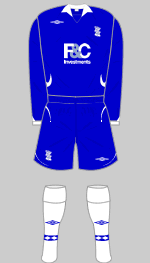
2008-2009 e
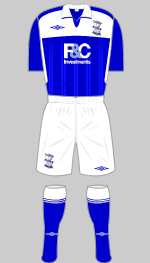
2009-2010 e
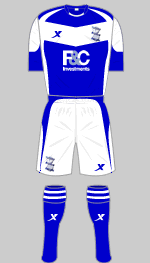
2010-2011 e
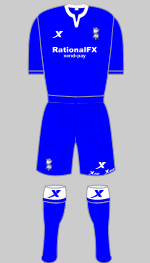
2011-2012 e
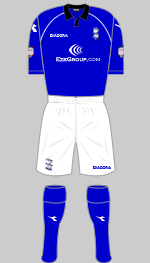
2012-2013 e
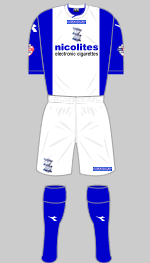
2013-2014 e
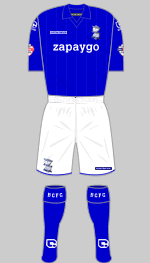
2014-2015 e
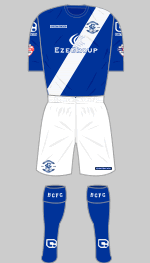
2015-2016 e
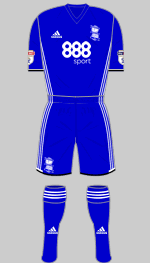
2016-2017 e
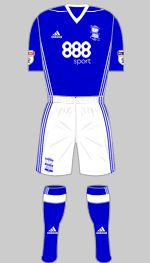
2017-2018 e
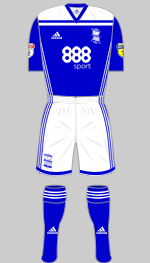
2018-2019 e
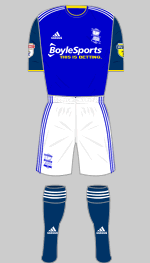
2019-2020 e
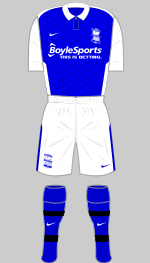
2020-2021 e
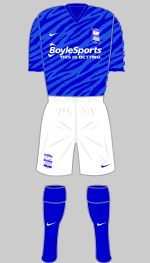
2021-2022 e
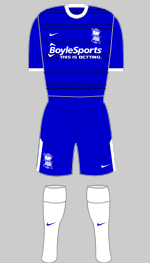
2022-2023 e
Background
 Although Birmingham City were
formed only a year after their great rivals, Aston Villa, the club have
remained firmly in the shadow of their illustrious neighbour. City had
humble beginnings and were originally formed by a group of cricketers
as Small Heath Alliance in order to provide a winter activity. In 1885
the club became professional, the players receiving half the gate receipts.
Three years later Small Heath became the first football club to became
a limited company and dropped "Alliance" from their name.
Although Birmingham City were
formed only a year after their great rivals, Aston Villa, the club have
remained firmly in the shadow of their illustrious neighbour. City had
humble beginnings and were originally formed by a group of cricketers
as Small Heath Alliance in order to provide a winter activity. In 1885
the club became professional, the players receiving half the gate receipts.
Three years later Small Heath became the first football club to became
a limited company and dropped "Alliance" from their name.
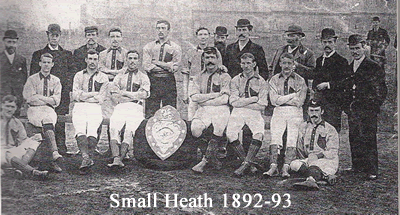
The club started out wearing dark blue jerseys but switched to amber and black after turning professional. An experiment with black tops in 1889 proved unpopular, players and spectators complaining that the team were virtually invisible. A set of royal blue jerseys were ordered for the following season but these were not delivered in time so the team turned out in their old gold-trimmed black tops for the first few games of the 1890-91 season. Although the shirts in the photograph above appear to be pale blue this is an illusion caused by the orthographic film stock used. All contemporary references describe the team as playing in "royal blue."
The Blues became founder members of Division Two in 1892 and won the championship at the first attempt only to miss out on promotion by losing to Newton Heath in the test matches. In 1893 the club were promoted to Division One after finishing second (beating Darwen in their test match). They made little impression and were relegated in 1896 after which the Heathens regularly bounced between the two divisions.
 In 1905 the club changed its name to Birmingham
FC ("City" was not added until 1944) in a bid to gain wider
support and a year later moved into St Andrews, the club's
present home. After the First World War, wearing a darker shade of blue,
the club became established in Division One, reaching the FA Cup Final
in 1931. 1939 brought relegation and after the Second World War, Birmingham
City, as they now styled themselves, moved between the two top divisions with some frequency.
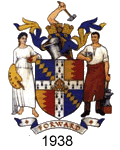
The change in name was no doubt engineered to encourage support from throughout the city and to emphasise this, the coat of arms of Birmingham now appeared on their shirts regularly although these had been the club's official crest since 1905 and made an appearance in the 1938-39 season. In 1956 Birmingham City finished sixth in Division One and were beaten finalists in
the FA Cup for the second time - their most successful season to date.
In 1905 the club changed its name to Birmingham
FC ("City" was not added until 1944) in a bid to gain wider
support and a year later moved into St Andrews, the club's
present home. After the First World War, wearing a darker shade of blue,
the club became established in Division One, reaching the FA Cup Final
in 1931. 1939 brought relegation and after the Second World War, Birmingham
City, as they now styled themselves, moved between the two top divisions with some frequency.
The change in name was no doubt engineered to encourage support from throughout the city and to emphasise this, the coat of arms of Birmingham now appeared on their shirts regularly although these had been the club's official crest since 1905 and made an appearance in the 1938-39 season. In 1956 Birmingham City finished sixth in Division One and were beaten finalists in
the FA Cup for the second time - their most successful season to date.
 In 1963 City won the League Cup their first major
trophy. Although the competition was not taken very seriously at that
time, their victory was all the sweeter because they overcame Aston Villa
over the two-leg final.
In 1963 City won the League Cup their first major
trophy. Although the competition was not taken very seriously at that
time, their victory was all the sweeter because they overcame Aston Villa
over the two-leg final.
 A monogram was adopted in 1970-71 but was replaced the following season by the famous intertwined lettering that appeared on the much-loved penguin strip.
After a spell in Division
Two City returned to the top flight in 1972. To celebrate this achievement, the Sports Argus newspaper ran a competition to design a new crest for the club. The winning entry, by Michael Wood was a globe and a football entwined with ribbon bearing the club's name. This proved a design classic and is still in use today. It did not, however, appear until 1976, when plain royal blue shirts were reinstated and it has appeared, with 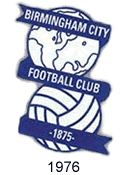 various backgrounds, basically unchanged ever since.
The late Eighties brought disaster as they slipped all the way down to
Division Three for the first time in 1989. In April 1989 the Kumar brothers, owners of a clothing chain, bought the club. Their regime brought a rapid turnover of managers and a threat from the players en masse to refuse to renew their contracts. On the other hand, the club  won the Associate Members Cup at Wembley and once Terry Cooper took charge as manager, promotion was secured. The collapse of the Bank of Credit & Commerce International (BCCI) in 1992 put the Kumars out of business and the football club was put into administration while BCCI's liquidator put their 84% shareholding up for sale. This was bought by David Sullivan of Sports Newspapers, who installed Karren Brady as Managing Director and dropped the unpopular "paint box strip" (with its multicoloured
  crest and colours of India on the socks).
The Nineties brought a return to the second level
and by the new millennium, the Blues were regularly in contention for
promotion to the Premiership. Traditionalists, however, pointed out
that the shade of blue then in vogue was not the rich royal blue that
is associated with the club. A version of the old monogramme crest made a brief reappearance in the 1996-97 season before  the popular 1976 design was restored.
The latest version of the "penguin" kit, unveiled in 2007 to mark City's brief return to the Premier Division, proved very popular. Relegation followed but City bounced back in 2009 and in October of that year David Sullivan and David Gold sold their controlling stake to Hong Kong business man Carson Yeung for £81m.
In 2010 City signed a contract, reported to be worth £7.8m over five seasons, with Xtep, a Chinese sportswear manufacturer. That season they beat Arsenal 2-1 to win the Carling Cup (formerly League Cup) to bring some rare silverware to St Andrews and were then relegated. Even so City had a Europa League place, the first time the team had played competitive football in Europe in almost fifty years. Disaster, however, lurked in the wings when the club's owner, Carson Yeung faced charges of money laundering in Hong Kong. If convicted, Yeung's 23% shareholding could be confiscated by the courts, precipitating a financial crisis that the club, with a £24m hole in its accounts, would be unlikely to survive. Because the club failed to file accounts for 2010-11 they were handed a transfer embargo that was eventually lifted in July 2012. Meanwhile Yeung's prosecution rumbled on. To make matters worse, Xtep's sponsorship was cancelled at the end of the 2011-12 season and allegations of dubious financial transactions emerged in 2013.
 In February 2014, Yeung stepped down from all involvement in Birmingham City and a
  month later was sentenced to six years' imprisonment for money laundering by the Hong Kong courts. As a result share trading in the club's holding company, Birmingham International Holdings (BIH), suspended since 2011, resumed and efforts to sell the club intensified.
To mark the club's 140th anniversary in 2015, a special crest was introduced that incorporated the 1970 monogram to be worn on a kit that was based on the original Small Heath Alliance colours from 1875.
Sources
- (a) BCFC Archive Site
- (b) Birmingham City FC (Images of Sport - T Matthews)
- (c) Sporting Heroes
- (d) kitclassics
- (e) Birmingham City Official Website
- (f) True Colours (John Devlin 2005)
- (g) Pete's Picture Palace
- (h) Russell Mann
- (i) Association of Football Statisticians - provided by Pete Wyatt
- (j) Rob Horton
- (k) Peter Moor
- (l) Willie Kay
- (m) Kjell Hanssen
- (n) Simon Monks
- (o) Keith Ellis (HFK Research Associate)
- (p) Derek Fairlie
- (q) Harry Meadows
- (r) Alan Whatton
- (s) Sporting Life (23 January 1889) submitted by Brian Webb
- (t) @pics_blues
- (u) Michael Gluck
- (v) Athletic News (23 Oct, 19 Nov 1894, 20 April 189) submitted by Brian Webb
- (w) Age Fotostock
- (x) Charles Alcock's Football Annuals 1869-1891 researched by Robin Horton
Photograph by courtesy of Birmingham City FC (Images of Sport - T Matthews). Crests are the property of Birmingham City FC.