



Barnsley
Formed 1887
Elected to Division Two 1898
Kit History
Barnsley St Peters
1887
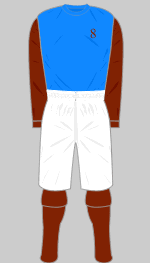
1887-1889 a v w
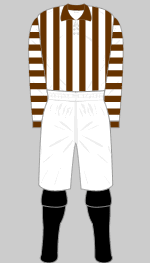
1889-1891 b u w
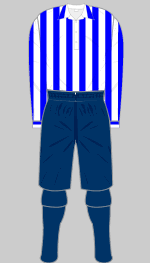
1891-1897 h w
Barnsley
1897
1897-1898 h w
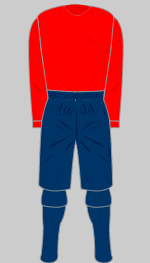
1898-1900 w
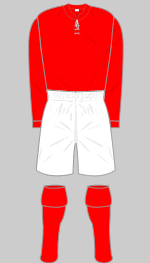
1901-1903 k
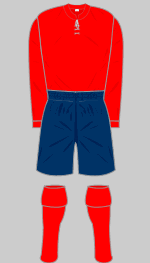
1903-1904 k
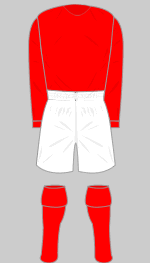
1904-1907 t x

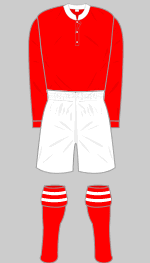
1907-1908 h
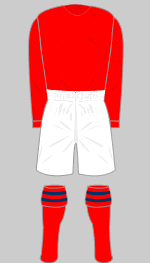
1909-1912 a
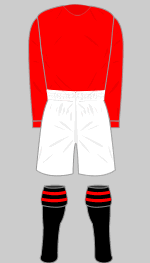
1913-1914 B
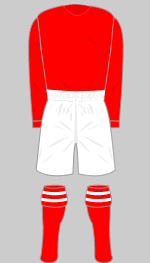
1914-1915 t
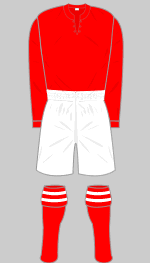
1916-1917 t
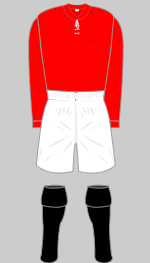
1920-1921 t
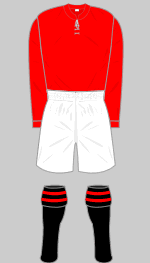
1921-1923 b t
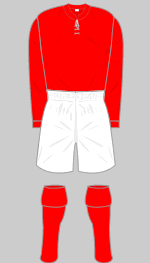
1923-1924 t
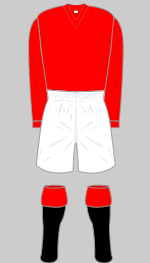
1926-1927 b t
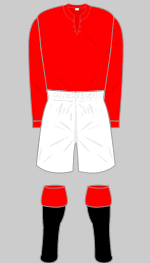
1927-1928 t
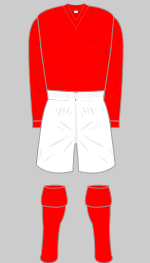
1928-1929 q
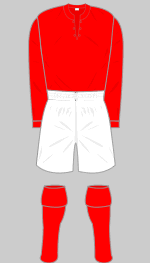
1929-1930 t
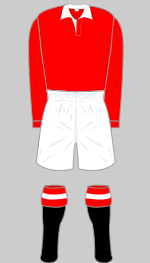
1931-1932 g
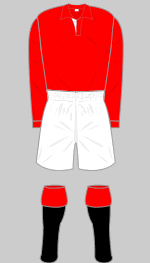
1932-1936 b t
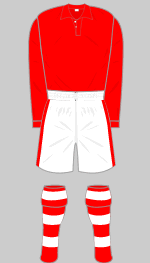
1937-1938 t
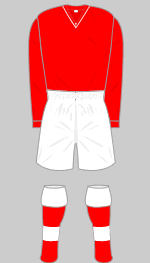
1938-1939 b t
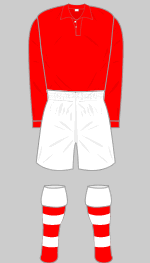
1939-1940 s
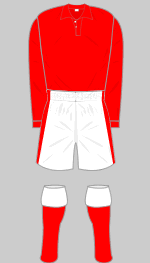
1945-1947 q t
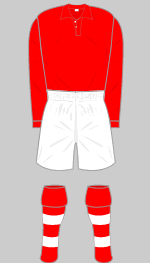
1947-1948 b
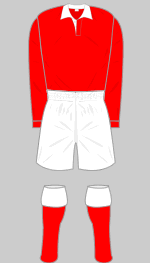
1948-1949 (1) t
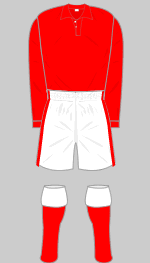
1948-1949 (2) t
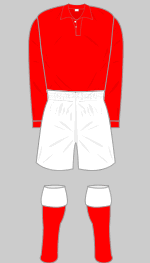
1949-1951 b f t
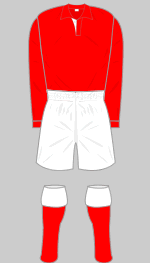
1951-1953 f q
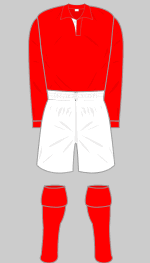
1953-1954 q t
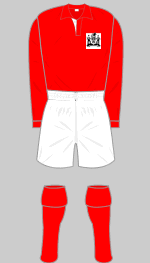
1954-1955 t
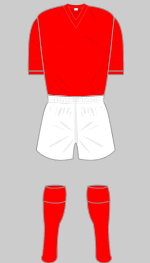
1955-1960 q
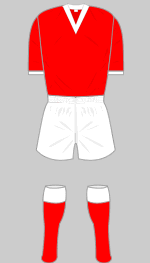
1960-1961 q
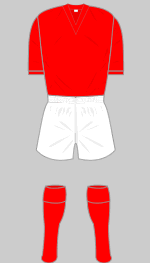
1961-1962 t
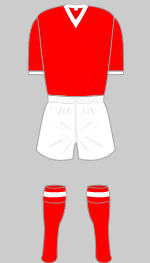
1962-1963 t
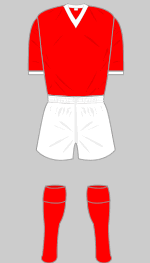
1963-1964 j
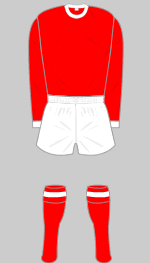
1963-1964 t
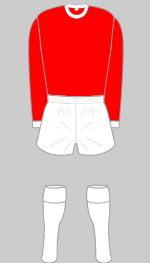
1964-1965 C
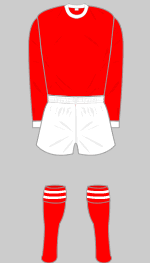
1965-1966 a

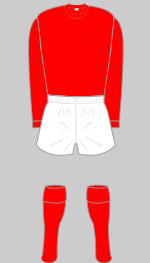
1966-1968 c t
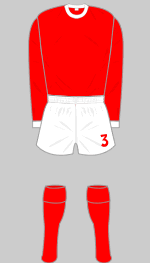
1968-1972 a m
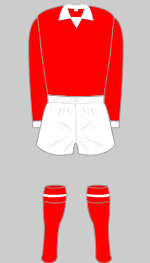
1972-1973 j n
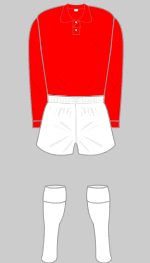
1973-1974 j n
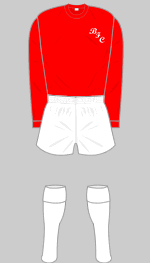
1974-1975 n
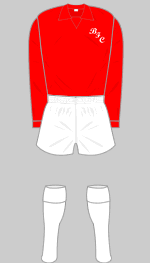
1975-1976 n t
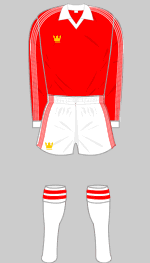
1976-1977 n
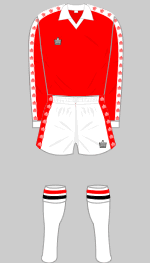
1977-1978 n
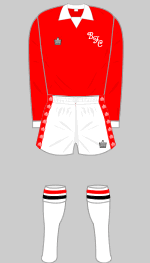
1978-1979 r
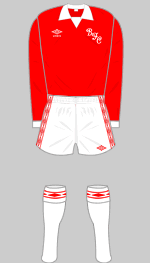
1979-1980 n o
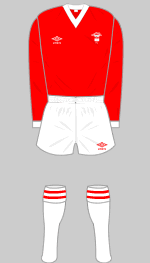
1980-1981 (1) t
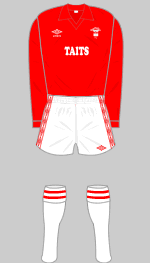
1980-1981 (2) n o
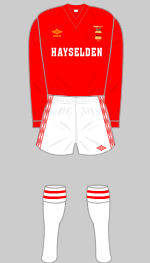
1981-1982 n o y
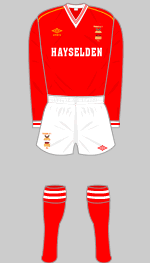
1982-1984 n d o
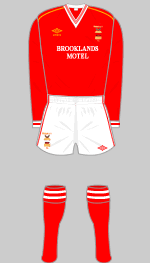
1984-1986 o
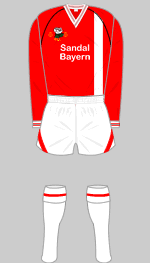
1986-1988 f j o w
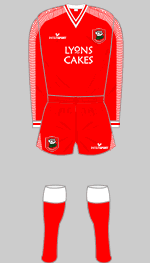
1988-1989 e o
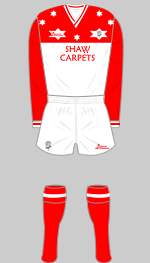
1989-1990 j
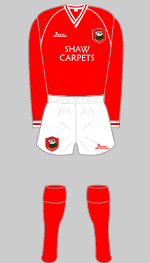
1990-1991 j
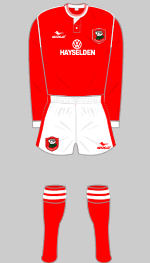
1991-1992 o
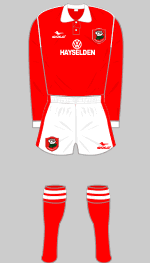
1992-1993 d j o
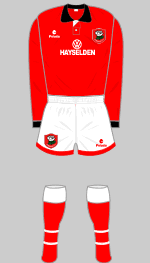
1993-1994 d o
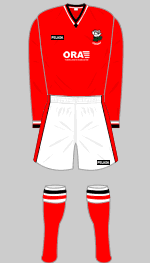
1994-1995 d o t w
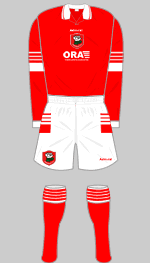
1995-1996 d o
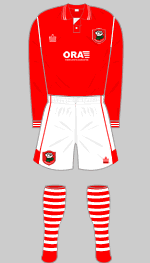
1996-1997 d o
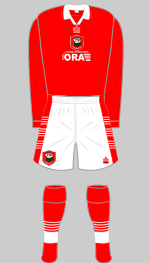
1997-1998 d o z A
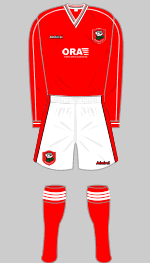
1998-1999 d o
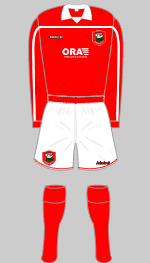
1999-2000 d o
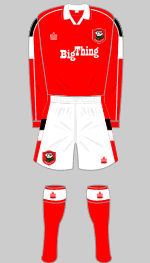
2000-2001 d o
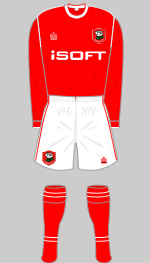
2001-2002 d o
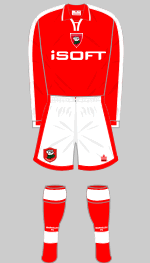
2002-2003 d o
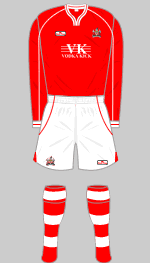
2003-2004 d l o
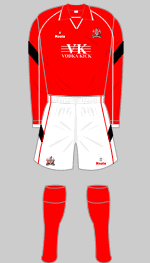
2004-2005 d o
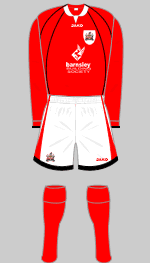
2005-2006 a o
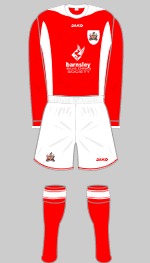
2006-2007 a o
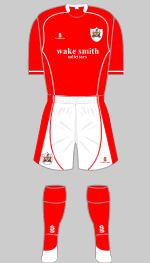
2007-2008 a p
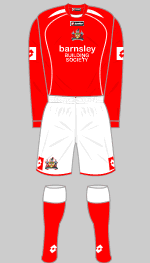
2008-2009 a
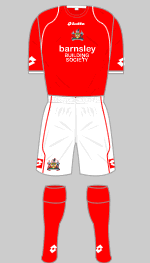
2009-2010 a
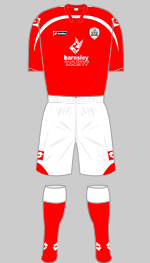
2010-2011 a
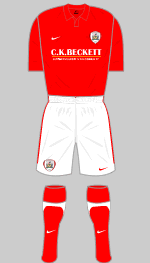
2011-2012 a
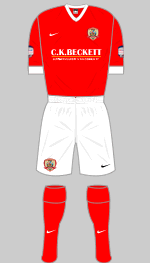
2012-2013 a
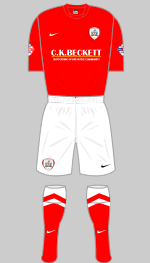
2013-2014 a
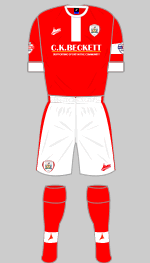
2014-2015 a
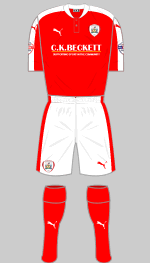
2015-2016 a
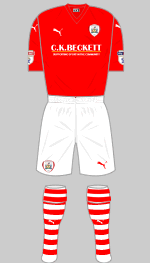
2016-2017 a
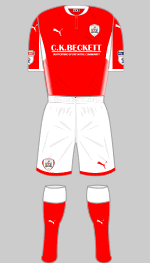
2017-2018 a
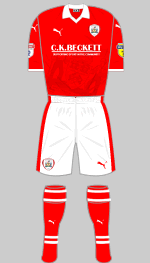
2018-2019 a
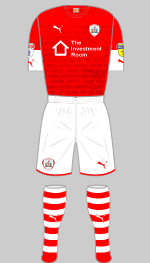
2019-2020 a
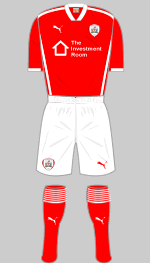
2020-2021 a
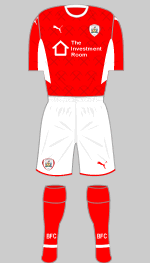
2021-2022 a
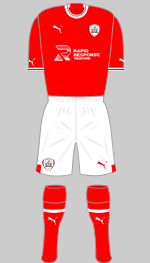
2022-2023 a
Background
 In the late nineteenth century, rugby was by far the most popular game in South Yorkshire. However, association football was gaining a following, not least because the risk of serious injury was considerably lower, an important factor for working men who could ill afford to lose wages because they were injured.
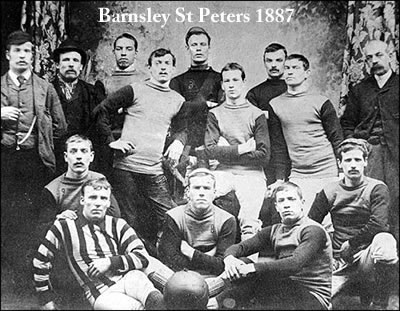
According to an early history of Barnsley FC posted on the BBC website the club was formed "For no good reason, other than he wanted to. The Reverend Tiverton Preedy, cleric at the church of St Peter in Barnsley decided he wanted to “build a soccer team that the Rugbyites will not crush!”. A committee was formed and less than two weeks later, Barnsley St Peters Football Club played their first friendly match against Manor House, a team from Worsborough Bridge. Barnsley won 4-0, and wore navy and maroon striped shirts. However, David Wood, the club's official historian believes that the team photograph shown here was taken in 1887 and clearly shows players in a variety of tops, the majority appearing to be light blue and maroon. We believe the player seated on the front row, left is wearing the striped shirts that would be adopted in 1889. A second point of interest, uncovered by David is that several players have numbers embroidered onto the front of their jerseys, almost certainly the first example of numbered shirts in the history of the game.
St Peter's won support from
outside the parish and went on to compete in the Sheffield & District
League in 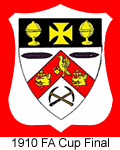 1890 before joining the Midland League in 1895. In 1897 the
club dropped its association with the church and as Barnsley FC, applied
to join the Football League when the Second Division was enlarged. They
were successful and joined Glossop and New Brighton in the expanded division. The visitors for Barnsley's opening game in the football league were Loughborough Town, who arrived with their usual blue and white striped shirts forcing Barnsley to change into a set of red jerseys. The Yorkshire side won 9-0 and have retained red tops ever since.
1890 before joining the Midland League in 1895. In 1897 the
club dropped its association with the church and as Barnsley FC, applied
to join the Football League when the Second Division was enlarged. They
were successful and joined Glossop and New Brighton in the expanded division. The visitors for Barnsley's opening game in the football league were Loughborough Town, who arrived with their usual blue and white striped shirts forcing Barnsley to change into a set of red jerseys. The Yorkshire side won 9-0 and have retained red tops ever since.
 Remarkably, Barnsley were to remain in the Second
Division until 1932, a consistent if unexciting mid-table side. In 1910,
however, the club reached the FA Cup Final, losing to Newcastle United
in a replay. A crest appeared in this match consisting of the central motif of the town's coat of arms. Two seasons later, "The Tykes" went one better
to win the FA Cup, this time beating West
Remarkably, Barnsley were to remain in the Second
Division until 1932, a consistent if unexciting mid-table side. In 1910,
however, the club reached the FA Cup Final, losing to Newcastle United
in a replay. A crest appeared in this match consisting of the central motif of the town's coat of arms. Two seasons later, "The Tykes" went one better
to win the FA Cup, this time beating West 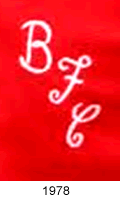 Bromwich Albion in a replay.
Relegated twice in the Thirties (1932 and 1938), Barnsley bounced back quickly on each occasion. In the Fifties the club spent two seasons in Division Three (North) before returning to the Second Division.
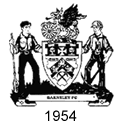
The Barnsley coat of arms, which include a miner and a glass-blower, symbolising the traditional heavy industries of the area were adopted as the club's official crest at some stage but did not appear on the players' shirts apart from during the 1954-55 season.
 Relegation in 1959 proved a more serious matter and the club
went into long term decline that took them down to the Fourth Division
in 1965. The rest of the decade and all of the 1970s was spent in the
lower divisions but fortunes changed in 1979 when ex-Leeds star Allan
Clarke led the team to promotion from Division Four. Clark rebuilt the
team the
Relegation in 1959 proved a more serious matter and the club
went into long term decline that took them down to the Fourth Division
in 1965. The rest of the decade and all of the 1970s was spent in the
lower divisions but fortunes changed in 1979 when ex-Leeds star Allan
Clarke led the team to promotion from Division Four. Clark rebuilt the
team the 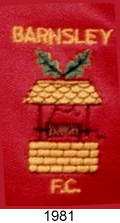 following year before returning to Leeds: his role was taken
by another former Leeds star, Norman Hunter who took the club back into
the Second Division in 1981.
following year before returning to Leeds: his role was taken
by another former Leeds star, Norman Hunter who took the club back into
the Second Division in 1981.
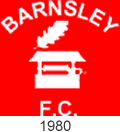
Barnsley wore a simple "BFC" monogram on their shirts from 1978 until 1981 when they adopted a curious badge consisting of a water well with a oak-leaves above, a play on words for Oakwell, the name of their stadium. This derives from the brewery that stood behind the East Stand that had its own source of water which made the famous Barnsley Bitter and Mild unique. Nearby was a stand of oak trees, giving us the name "Oak Well." The ground itself had rather less romantic origins, being built on an old waste tip full of ash from coal fires.* The Oak Well crest was used for several seasons until it was replaced 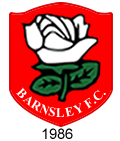 by a version based on the white rose of Yorkshire in 1986.
Throughout the Eighties and Nineties, Barnsley returned to their perennial role of a mid-table Second Division team.
In 1994 a sponsorship deal with FPW was cancelled and the entire stock of newly made shirts was destroyed (although a few survived and have been posted on the internet). The team played in plain shirts until December 1994 when the ORA logo appeared for the first time.
 In 1997 Barnsley confounded everyone by winning promotion to the
Premier League. A dramatic season followed which ended in relegation but
few fans would ever forget seeing their favourites playing at the
In 1997 Barnsley confounded everyone by winning promotion to the
Premier League. A dramatic season followed which ended in relegation but
few fans would ever forget seeing their favourites playing at the 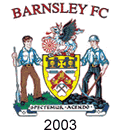 highest
level for the first time in their history. There would be no quick
return and in 2002, Barnsley were relegated to (Nationwide) Division Two
(third tier) and went into administration, narrowly avoiding the drop into the lowest
division.
highest
level for the first time in their history. There would be no quick
return and in 2002, Barnsley were relegated to (Nationwide) Division Two
(third tier) and went into administration, narrowly avoiding the drop into the lowest
division.
The mayor of Barnsley, Peter Doyle, bought the club, saving it from liquidation before handing it over to Gordon Shepherd and Patrick Cryne. The civic connection was marked by the reintroduction in 2003 of the traditional crest now surmounted by the club's name.
In 2006, The Tykes were promoted to the Championship (second tier) after winning a 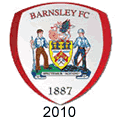 penalty shoot-out against Swansea City in Cardiff. Then in 2007-08 they reached the FA
  Cup semi-finals, having knocked out both Liverpool and Chelsea but were beaten by Cardiff City.
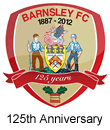
For the 2010-11 season, the crest was slightly revised to appear out of a shield, edged in red, and the year of the club's formation was added. For their 125th anniversary, celebrated in 2013-14, a special commemorative version was worn. Unfortunately the season did not end well and finished with Barnsley being relegated to League One. They were promoted back to the Championship the following season. Two seasons later they went down again but bounced straight back in season 2018-19.
When the 2019-20 season finished Barnsley were in 22nd place and faced relegation but they were reprieved after Wigan Athletic were handed a 12 point penalty for going into administration that resulted in their being relegated instead. They were not so fortunate in 2021-22, when they were relegated after finishing last in the Championship.
Sources
- (a) Barnsley FC Official Website
- (b) Barnsley FC Museum
- (c) Tranmere Rovers FC - Images of Sport
- (d) empics
- (e) kitclassics
- (f) Football Focus
- (g) Bury FC - Images of Sport (Peter Cullen 1998)
- (h) George W Reeves website - a curious site charting the brief career of George Reeves
- (i) Ralph Pomeroy
- (j) Pete's Picture Palace
- (k) Association of Football Statisticians - provided by Pete Wyatt
- (l) David King
- (m) Football League Review provided by Simon Monks
- (n) Alick Milne
- (o) bsfl - a very useful collection of modern shirts with notes
- (p) Football Shirt Culture
- (q) Simon Monks
- (r) Steve Browne
- (s) Paul Heasman footballnotmuggybonehead
- (t) Keith Ellis (HFK Research Associate)
- (u) bbc.co.uk
- (v) bbc.co.uk (2)
- (w) David Wood (Official Historian to Barnsley Football Club)
- (x) Richard Essen
- (y) Heidi Carter
- (z) Mark Littlewood
- (A) Old Football Shirts
- (B) Pavel Shalaev
- (C) The Senior Tigers Club
- (*) Graham Burton
Photograph courtesy of bbc.co.uk. Crests are the property of Barnsley FC.